|
 |
Hi, y’all. Welcome back to The Opposition. As I mentioned last week, one of the goals of this newsletter is to ask tough questions that challenge our prior beliefs about how politics works. After all, Democrats can’t win back power if they bury their heads in the sand and don’t sort through the complex reasons why they lost. Today’s newsletter is all about trying to do just that: to see political reality a little more clearly. To participate in the comments section and tell us what you think—and to access all our locked content—sign up for a Bulwark+ membership today at 20 percent off the usual price. We’d love to have you aboard!
–Lauren
The Never-Ending Chase for the Mythical Non-Voter Bloc
Some Democrats insist their path back to power will come through higher turnout. The facts say otherwise.
|

| |||||||||||||||


 |
TO HEAR SOUTHERN DEMOCRATS TELL IT, the path to salvation is simple: If the party gets more people to show up to vote, it can win.
During his 2018 campaign for Senate, Beto O’Rourke would often say: “Texas isn’t red or blue; it’s a non-voting state,” pointing to restrictive voting measures and racial gerrymandering to explain why Texas has one of the lowest voter-turnout rates. He lost.
Democratic nominee Lupe Valdez argued that she would defeat Republican Gov. Greg Abbott in the 2018 gubernatorial election because Texas “is not a red state, it’s a non-voting state.” She lost.
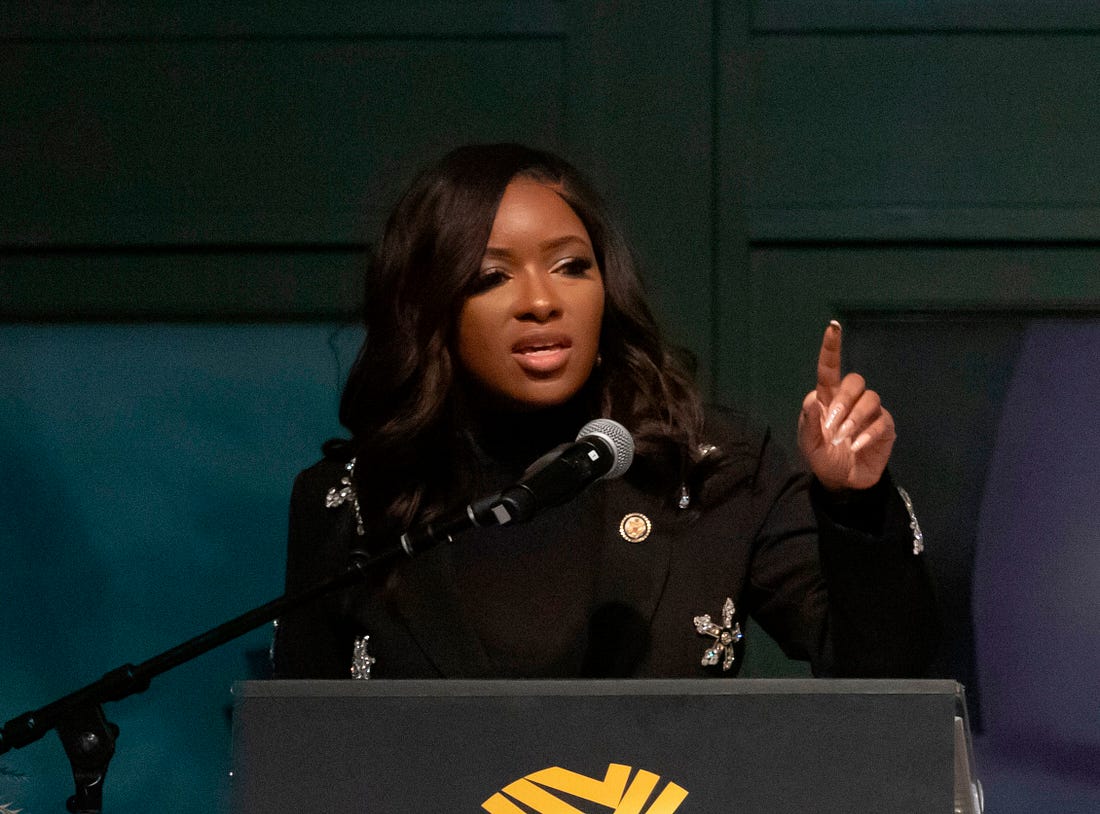
And in a speech launching her 2026 Senate campaign, Rep. Jasmine Crockett stated: “They tell us that Texas is red. They are lying. We’re not. The reality is that most Texans don’t get out to vote.” Crockett’s results are TBD.
This mindset exists far beyond the Lone Star State. I’ve heard versions of it from Democratic leaders in Arkansas, Alabama, Tennessee, and South Carolina.
“Tennessee is not a red state, but it’s a state that ranks fiftieth in voter turnout,” Justin Jones, the Tennessee state lawmaker who was expelled for leading a gun-control protest on the floor of the state House of Representatives, told me in an interview last year.
This slogan—[X] is not truly a red state; it’s *really* a nonvoting state—is plastered all over the Instagram and Facebook pages of local chapters of the Democratic party down in the South. It’s repeated like gospel among the party’s dedicated base voters. And it’s often used to justify why candidates running in these states don’t need to move to the center but instead spend their time trying to activate base voters depressed by years of Democratic moderation.
But is it true?
“There’s always this kind of progressive belief that there are hidden millions of people who are dormant and are waiting to be awakened by the trumpet of true progressivism,” veteran Democratic strategist James Carville told me over the phone from his home in Louisiana. “That’s almost a doctrinaire belief of the American left—and it’s also a singularly stupid argument. There’s no evidence that it has ever worked. And it also says we don’t need to persuade anybody other than our lethargic voters.”
Younger, more progressive Democrats find it easy to dismiss Carville as a creature of the past—a disgruntled elder party member who thinks that kids don’t appreciate that politics is a game of tough choices and tradeoffs. But he is not wrong about some basic facts. Democrats have become the party of educated elites. And increasingly they’re harmed, not helped, by high-turnout elections.
Indeed, there’s been ample evidence that the more voters show up, the worse it is for the party. Democratic data guru David Shor found in his post-2024 election analysis that, had everyone in the country voted, Donald Trump would have won by an even wider margin. In their own analysis of the 2024 electorate, Nate Cohn and colleagues at the New York Times wrote that “the least frequent voters are the most Republican.” The elections analyst David Wasserman likewise argued that the “defining data point of the 2020s” was that Trump performed “the best with the most peripherally-engaged voters” while Democrats made gains with “the most civic-minded voters who not only show up in presidential years, but reliably vote in midterms, primaries and special elections as well.”
Yet many operatives and politicians still believe higher turnout means Democrats will win. They’re resistant to the fact that low-propensity voters are now more likely to be Trump supporters and still holding on to a belief that they’re just one well-funded voter-registration drive away from flipping states across South.
The party’s commitment to this idea has even perplexed Republicans. In a 2022 interview, former Texas GOP chair Steve Munisteri told Texas Monthly that Democrats were misunderstanding the partisan allegiance of unregistered voters and argued that they were investing too heavily in voter registration. “They just don’t understand the numbers or haven’t done the research,” he said.
Reporting that matters. Commentary that clarifies. And a growing pro-democracy community. Become a Bulwark+ member today for 20 percent off the usual price.
D