| |  | The Lead Brief | The Supreme Court struck down some of President Donald Trump’s tariffs that impacted the health industry — such as medical devices — but that doesn’t mean the threat of tariffs on imported goods (and components to make them) is over. After the high court nixed the tariffs that Trump imposed using a 1977 emergency economic powers law, the president said he’d be imposing a new global tariff of 10 percent using another decades-old trade law. There are also other tariffs the U.S. is exploring, including implementing fees related to national security protections. → Many industries are trying to unwind what the decision means for them, in addition to figuring out what additional actions the administration may be taking next. What we know - The Supreme Court, in a 6-3 ruling, decided that Trump didn’t have unilateral power to implement tariffs under the International Emergency Economic Powers Act (IEEPA). The administration imposed several tariffs under this law, including ones targeting imports from China.
- Following the ruling, Trump said he would be imposing a 10 percent global tariff under Section 122 of the Trade Act of 1974, which allows the imposition of tariffs of up to 15 percent for a maximum of 150 days unless Congress extends them.
- The medical device industry — and users of their products, such as hospitals — have been lobbying the Trump administration to exempt their products from tariffs, arguing that it raises health care costs.
- Some parts of the health care system, such as pharmaceuticals, have been mostly exempt from Trump’s tariff spree — so far.
- But the Trump administration is conducting investigations under Section 232 of the Trade Expansion Act of 1962, evaluating whether to impose tariffs on sectors including pharmaceuticals, medical devices, protective equipment, and consumables such as syringes and IV bags for national security reasons.
- There have also been potential threats of imposing tariffs on industries, including pharmaceuticals, using Section 301 of the Trade Act of 1974, which targets countries for “discriminatory” trade practices.
- The Supreme Court ruling does not impact Section 232 or Section 301 tariffs. Trump said he used the threat of these tariffs to bring large drugmakers to the table to negotiate lowering their prices to align with other wealthy nations, a key part of Trump’s platform known as most-favored nation (MFN) pricing. The 16 companies that cut drug pricing deals with the administration received a three-year exemption from tariffs.
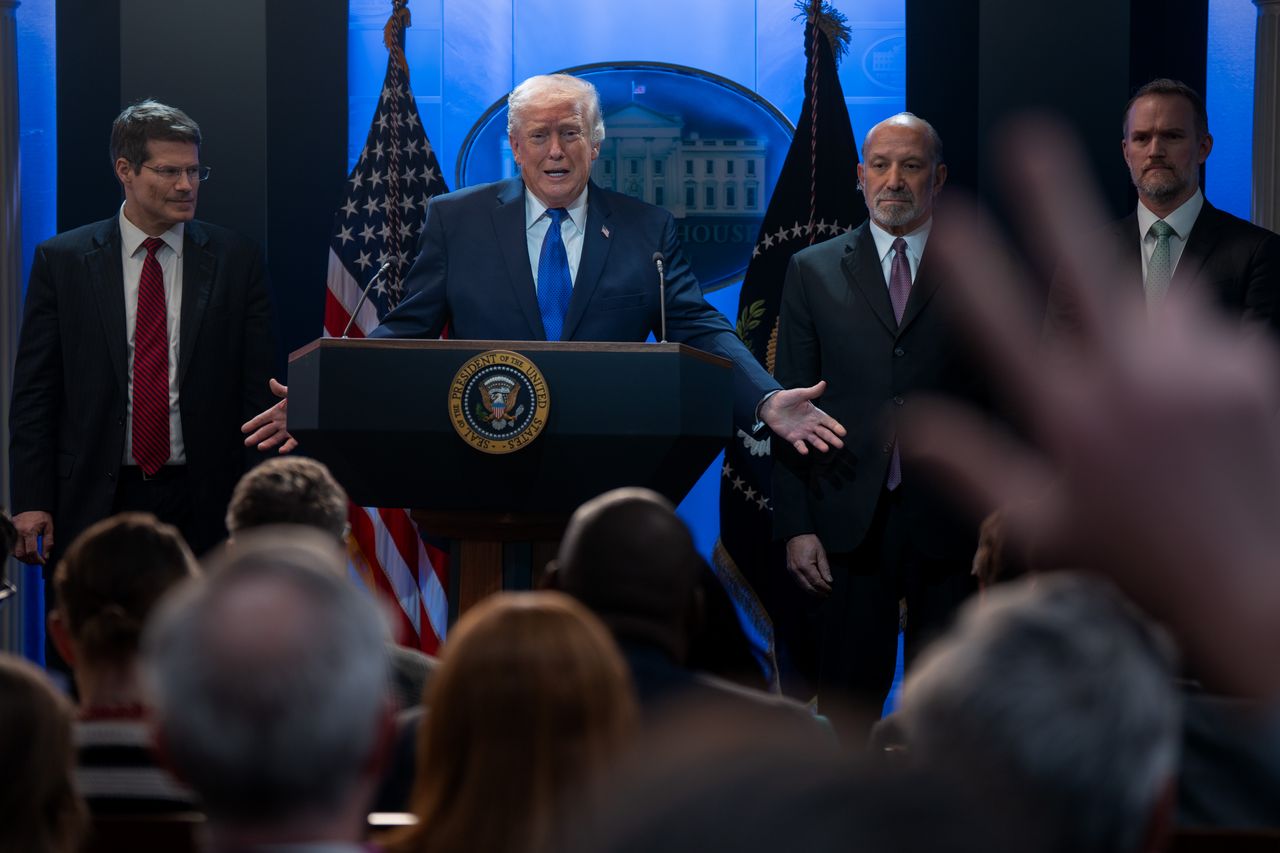
What the ruling says about refunds In short, nothing. The Supreme Court decision doesn’t address whether the federal government would have to refund companies for the IEEPA tariffs they’ve already paid. In his dissenting opinion, Justice Brett M. Kavanaugh wrote that the refund process “is likely to be a ‘mess.’” In a press briefing at the White House on Friday, Trump lamented the court not weighing in on refunds, suggesting that the government would dispute having to pay back any fees. “Wouldn’t you think they would have put one sentence in there saying that, keep the money or don’t keep the money?” Trump said, referring to the ruling. “I guess it has to get litigated for the next two years.” → There is a process in place for companies to dispute the duties they’ve paid when importing items, my colleague in the WaPo newsroom, Rachel Lerman, writes in her latest story. Although some may try to exercise that option, one lobbyist I spoke with suggested that companies will likely be weighing whether to file for a refund if a clear pathway emerges. “Do I file for a refund and then face the backlash of the administration?” asked one lobbyist who represents medical device companies, speaking on the condition of anonymity citing internal deliberations. “That’s very real.” What the ruling means for existing bilateral trade deals The Trump administration has cut deals with individual countries that cut out medical products from any tariff burdens, but it’s not clear whether the White House will seek to reopen the agreements. - An agreement in principle with the U.K. from December exempts medicines, pharmaceutical ingredients and medical technology from tariffs under Section 232. The U.S. will also “refrain from targeting U.K. pharmaceutical pricing practices” involved in any Section 301 investigation.
- A recent interim agreement with India also addresses pharmaceutical tariffs and nontariff barriers to medical devices.
- Last year, the administration cut deals with the E.U., Switzerland, Argentina and Japan, among others, that impacted drugmakers and medical device companies.
During Friday’s briefing, Trump didn’t directly answer questions about whether the deals could be reopened. What’s next The industries that had been lobbying for exemptions from the administration’s tariffs are now likely to increase their asks. Companies and industry groups have been touting their domestic footprint or increased investments in the U.S. — such as a recent announcement from Johnson & Johnson that it is carrying out part of a promised multibillion-dollar investment, as part of an effort to position themselves as policy partners rather than targets. Following the ruling, Trump and his deputies signaled that there are even more tariffs to come. - Treasury Secretary Scott Bessent told the Economic Club of Dallas on Friday that the administration “will invoke alternative legal authorities” to replace the tariffs struck down by the Supreme Court, including Section 232 and 301 tariff authorities.
- “We have Section 301 investigations, which are incredibly legally durable, where we can address, investigate and address unfair trading practices that led to our huge trade deficit,” Jamieson Greer, the U.S. trade representative, told reporters at the White House on Friday. “So you can look forward in the coming days and weeks to seeing all of that come out.”
Neither specified which industries would be hit by the additional tariffs. |


_tstmp_1756933376-1920-1080.png)