What matters in U.S. and global markets today

Global news you can trust.

Download the Reuters App.


Morning Bid U.S.

Morning Bid U.S.

A Reuters Open Interest newsletter

What matters in U.S. and global markets today


By Mike Dolan, Editor-at-Large for Finance and Markets

Nvidia beat the street again, but there were no market fireworks this time. After topping analysts’ revenue estimates for the latest quarter and their forecast for the next one, the AI giant's shares popped up about 3% out of hours - but they've given back most of that since.

Questions about rising competition and the narrowness of the chip giant's customer base continue to rumble.

I’ll get into that and more below.

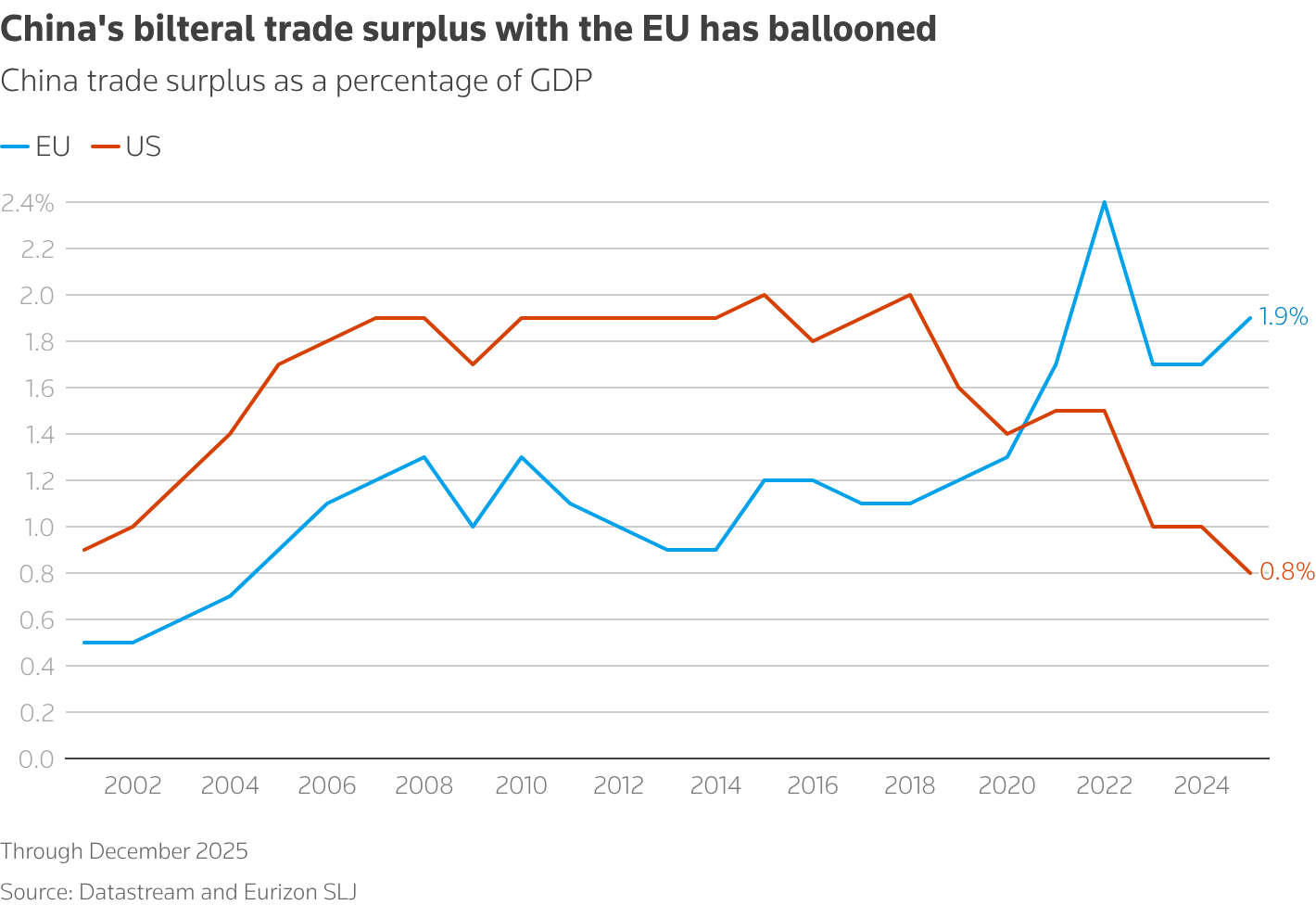
But first, check out my latest column on the key bone of contention standing in the way of deeper EU-China trade ties.

And listen to the latest episode of the Morning Bid daily podcast. Subscribe to hear Reuters journalists discuss the biggest news in markets and finance seven days a week.


Data refreshes every time you open this email. For more U.S. market news, click here. Please send any feedback to morningbid@thomsonreuters.com.


Today's Market Minute

  • Chipmaker Nvidia posted better-than-expected quarterly results on Wednesday and beat current-quarter revenue forecast estimates, but traded flat afterhours.
  • Suppliers to U.S. aerospace and semiconductor firms face worsening rare earth shortages, with two turning away some clients, industry insiders said.
  • Iran pledged to show flexibility at indirect talks with the United States on their longstanding nuclear dispute on Thursday.
  • Geopolitical turmoil gives OPEC+ cover for a possible April output hike, despite growing signs of rising supply, writes ROI Energy Columnist Ron Bousso.
  • Recent fears about AI's disruptive potential have battered investor sentiment so much that a reality check is warranted, argues ROI Markets Columnist Jamie McGeever.
 

Nvidia's damp squib

The broad takeaway seems to be that Nvidia is now already well priced for the AI boom, even if the surge in overall AI infrastructure spending is clearly going up a gear.

That much can be seen in rallying Asia markets where big chipmakers and computing hardware sellers dominate - with the staggering rise in South Korea's Kospi index adding nearly 4% on Thursday. The Seoul benchmark is now up a whopping 50% for the year so far and has doubled in six months.

It wasn't all sweetness and light in the tech world, however. Even though the software sector at large continued its recovery on Wednesday, Salesforce fell back 4% overnight after its latest results, while HR software firm Workday dropped another 8% to five-year lows.

The overall S&P 500 still managed a punchy 0.8% gain on Wednesday and futures held those gains ahead of Thursday's bell. European stocks were firmer during a busy earnings day there.

Meantime, Japan's Nikkei pushed slightly higher as attention focused on the Bank of Japan. The focus this week has been on Prime Minister Sanae Takaichi's nomination of two dovish names to the BoJ board, which some likened to the Federal Reserve independence worries in the U.S. The yen initially weakened on that news.

However, many investors have downplayed the impact of the nominations as they replace two similarly dovish policymakers, and BoJ independence from government has always been much more tenuous anyway. The yen caught a foothold against the dollar today as a result.

There's no stopping China's yuan, however. Not only does it continue to strengthen against the dollar to its best levels in almost three years, but it hit its highest in 9 months against the euro today too.

Elsewhere, energy markets turned their attention back to Geneva, where nuclear talks between the U.S. and Iran resume on Thursday. With betting markets still seeing more than a 50% chance of a limited U.S. military strike over the next month, crude oil prices seemed calm, helped by reports that OPEC+ was considering boosting production at its next meeting.


To win Europe's embrace, China needs to uncap the yuan

With Washington raising barriers, China's push to shift trade toward Europe is running into one big demand: let the yuan rise against the euro and level the playing field.

German Chancellor Friedrich Merz landed in Beijing this week to meet Chinese President Xi Jinping, the most prominent European Union leader to visit since last month's rancorous standoff with U.S. President Donald Trump's administration over Greenland.

Other EU leaders have traveled to China this year, including Finland's Petteri Orpo and Ireland's Simon Harris. French President Emmanuel Macron visited as recently as December.

Europe has once again frozen a trade deal with Trump because of confusion over U.S. tariff policy and wider concerns about bilateral relations. The political optics of a re-embrace of China are not lost on anyone.

But there are brass tacks at stake here.


Graphics are produced by Reuters.

Read the full column