Hello!
It’s yet another climate regulatory rollback in today’s focus as Argentina’s lawmakers prepare to vote on sweeping changes that would water down glacier protection laws, while countries in the European Union gave their final approval to scale back sustainability rules.
The focus could have been on the recent wave of lawsuits and scrutiny against social media and AI firms, but keeping track of sustainability policy cuts took precedence. That said, I didn’t want to leave you wondering what might’ve topped the newsletter, so here are the stories that were almost front and center: |
|
|
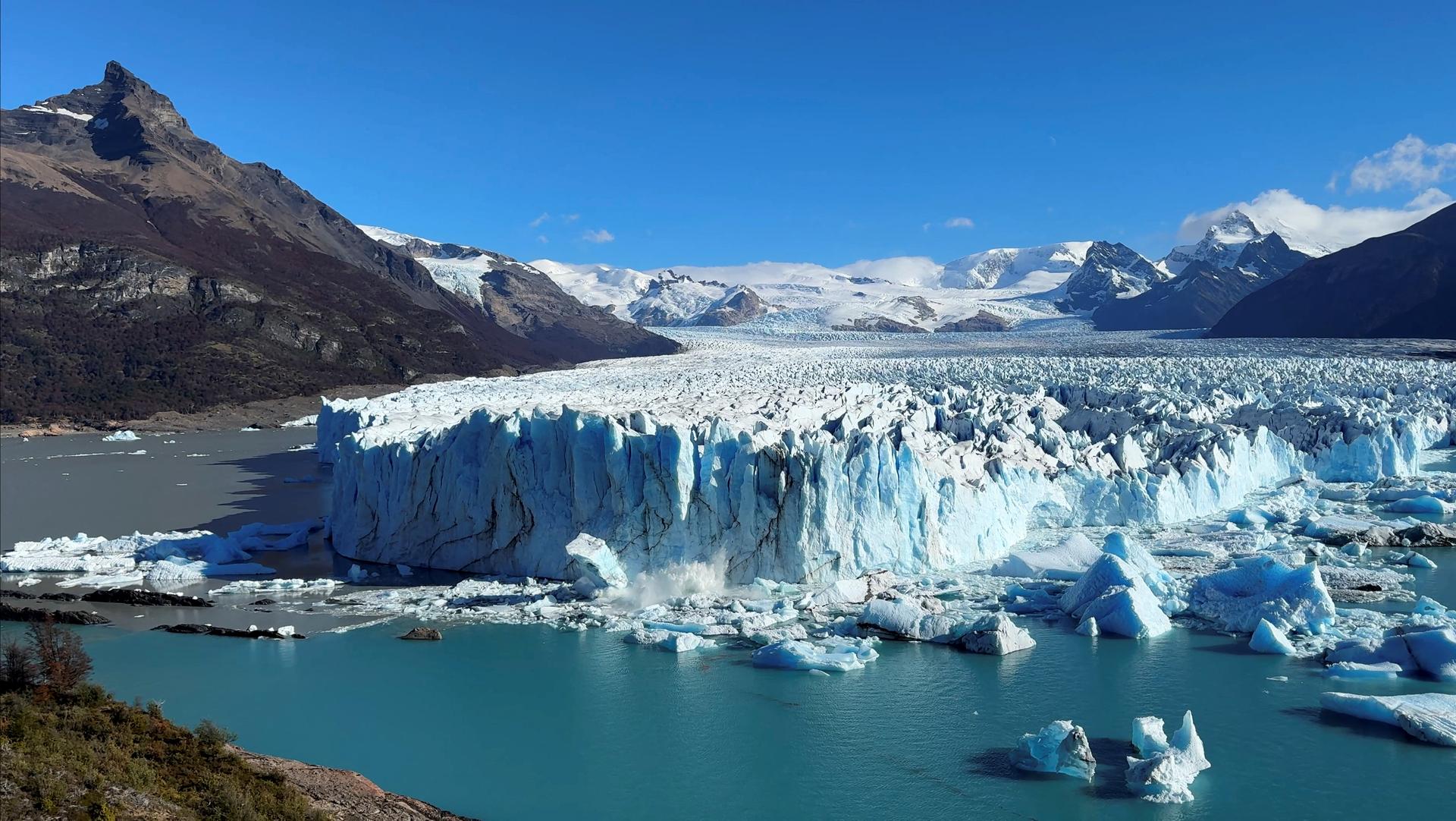
Ice calves off from the Perito Moreno glacier into the Argentine Lake, in the Parque Nacional Los Glaciares, near the Patagonian province of Santa Cruz. Reuters TV/via REUTERS |
Under the current glacier law, all glaciers identified through a national scientific inventory are automatically protected under minimum environmental standards, and activities such as mining, oil exploration and infrastructure development are prohibited in those areas.
Despite growing protests from environmental groups, President Javier Milei’s libertarian government seeks to "end arbitrary interpretations" of the glacier law, which the government says has stalled investment and economic development. It also aligns with his flagship special investment regime, known as RIGI, which is designed to ease regulatory hurdles that officials say have deterred large‑scale mining. The new bill, up for debate by Argentina's Senate this week, would allow provinces to set their own standards for protecting glaciers and periglacial environments that serve as key freshwater reserves. The debate has exposed deep divisions from businesses to environment groups opposing the move.
Argentina's wine sector, which depends heavily on Andean meltwater, has said any new activity would need to abide by current regulations and guarantee rigorous environmental controls.
Environmental organizations say the reform would weaken safeguards for vital water sources. Thirty groups signed a statement arguing that the existing law provides a "uniform base of environmental protection" and that the proposed changes would prioritize "economic interests in detriment of environmental and conservation objectives." |
|
|
EU countries gave their final approval to scale back rules that require companies to address environmental and human rights risks in their supply chains, after months of pressure from businesses and governments including the U.S and Qatar.
They follow criticism from some industries that EU red tape and strict regulation hindered competitiveness with foreign rivals. But the weaker laws have dismayed environmental campaigners and some investors who said it would become harder to identify genuinely sustainable companies.
Under the changes, the EU will limit its corporate sustainability due diligence directive (CSDDD) to only the largest EU corporations – those with more than 5,000 employees and 1.5 billion euro ($1.8 billion) annual turnover.
The U.S. and Qatar had demanded the EU scale back CSDDD, warning that it risked disrupting their gas supplies to Europe. U.S. oil and gas major ExxonMobil has criticised the changes as not going far enough.
The EU also delayed the deadline to comply with CSDDD to mid-2029 – versus mid-2027 previously for larger companies – and dropped a requirement for companies to adopt climate change transition plans.
The changes also cover the EU's corporate sustainability reporting directive, which requires companies to disclose their environmental and social impact to make this more transparent to investors and consumers. The changes will pass into law in the coming weeks. |
A man and child react as they attend the funeral of 11-year-old Bernardo Lopes Dutra, one of the victims of heavy rains in Juiz de Fora, Minas Gerais state, Brazil. REUTERS/Pilar Olivares |
- Brazil heavy rains: Flooding and landslides in Brazil’s southeastern state of Minas Gerais have killed 46 people, displaced around 3,600 people in the cities of Juiz de Fora and Uba, while 21 people remain missing, according to the state fire department.
-
Jesse Jackson memorial: Memorial events honoring the life and legacy of civil rights leader Jesse Jackson begin on Thursday in Chicago, likely drawing elected officials, advocates and community members to celebrate a man whose decades-long activism reshaped American politics and amplified Black communities and communities of color. Click here to learn more.
-
Press freedom: A record 129 journalists and media workers were killed in the course of their work last year, two-thirds of them killed by Israel, the Committee to Protect Journalists said. The New York-based independent organization which documents attacks on the press said it was the second straight year that press killings set a record and the second straight year that Israel was responsible for two-thirds of them.
-
Mexico workers’ rights: Mexico has approved a bill to gradually reduce the workweek from 48 to 40 hours, which is expected to be implemented from next year. While Mexico seeks to ease its work hours, Argentina’s been enforcing rules that extend the standard workday from eight to 12 hours.
-
Zimbabwe critical minerals export ban: Zimbabwe has suspended exports of all raw minerals and lithium concentrates with immediate effect, after the government alleged malpractices and leakages, its mines ministry said. Most of the concentrate is exported to China for further processing into battery-grade materials, but Zimbabwe has been pressing the miners to process more of the minerals in the country as it seeks greater benefits from the global shift to cleaner sources of energy.
|
|
|
Zahra Afshar, head of legal, human rights & sustainability, Ahmad Tea, at a tea tasting. Screen grab of Reuters video. Winchester, England, UK. Reuters TV/via REUTERS |
Today’s spotlight is brewing up a solution to tea cultivation’s impact on climate change.
A University of Bristol researcher is turning to 200-year-old tea leaves in a bid to help protect one of the world's most consumed beverages from the growing toll of climate change on plantations. Click here for the full Reuters video. |
|
|
Sustainable Switch was edited by Susan Fenton. |
|
|
| |
|
|
|
Sustainable Switch is sent three times a week. Think your friend or colleague should know about us? Forward this newsletter to them. They can also sign up here.
Want to stop receiving this email? Unsubscribe here. To manage which newsletters you're signed up for, click here.
| | | |
|
|
|