| | Pakistan said it’s in an “open war” with Afghanistan, Anthropic’s boss rejects the Pentagon’s demand͏ ͏ ͏ ͏ ͏ ͏ |
| |  Islamabad Islamabad |  Ottawa Ottawa | Kinshasa |
 | Flagship |  |
| |
|
The World Today | 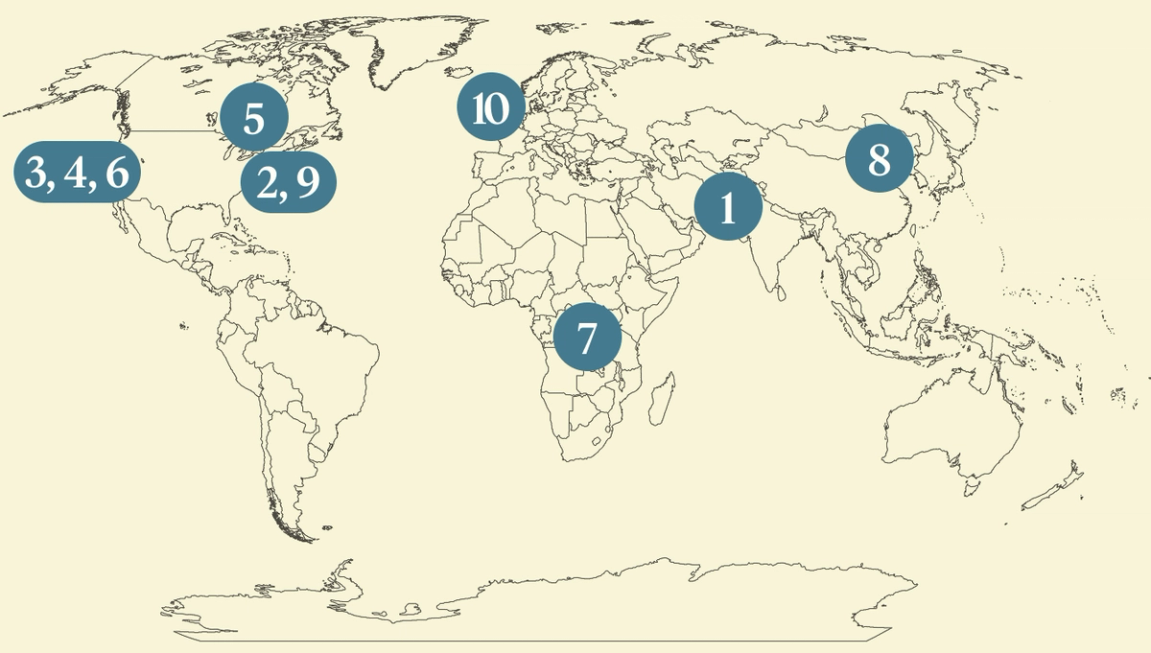 - Pakistan-Afghanistan ‘war’
- Anthropic-Pentagon row
- Dorsey’s Block cuts staff
- Netflix drops WBD bid
- Canada’s USMCA concerns
- RAM costs hit PCs, phones
- US, DRC sign health deal
- The rise of Chinese unis
- Clinton’s Epstein testimony
- Cities’ pedestrian push
 Revisiting a classic comedy sci-fi series from the ‘golden age’ of BBC sitcoms. |
|
Pakistan at ‘war’ with Afghanistan |
 Pakistani security forces/Handout via Reuters Pakistani security forces/Handout via ReutersPakistan said it is in “open war” with Afghanistan after both sides carried out cross-border strikes. Islamabad claimed to have killed more than 130 Taliban targets in Kabul and elsewhere, with Pakistan’s defense minister warning “there will be chaos and reckoning.” The attacks follow years of tensions: Pakistan accuses the Afghan authorities of doing little to halt militant groups operating in the region, with their porous border providing a safe haven for militants. The fraying ties prompted Islamabad to return almost three million Afghan nationals in recent months, straining Kabul’s scant resources. The conflict also threatens to worsen Afghanistan’s already grave humanitarian crisis, exacerbated by Western aid cuts following the Taliban’s return to power in 2021. |
|
Anthropic holds firm in DoD face-off |
 Anthropic CEO Dario Amodei. Denis Balibouse/Reuters Anthropic CEO Dario Amodei. Denis Balibouse/ReutersAnthropic said it “cannot in good conscience” accede to US Department of Defense demands to allow its AI model to be used for wider military purposes. The Pentagon threatened to cancel Anthropic’s $200 million defense deals and potentially label it a “supply chain risk” if it did not change the terms of its contracts to permit its use in domestic surveillance and autonomous weapons. Anthropic CEO Dario Amodei refused the request, saying that using existing AIs for those purposes would undermine “fundamental liberties” and put “America’s warfighters and civilians at risk.” The AI-focused writer Scott Alexander said that Amodei “having a spine” and choosing “principles over profits” makes him “a precious resource that must be defended.” |
|
Jack Dorsey’s Block to slash staff |
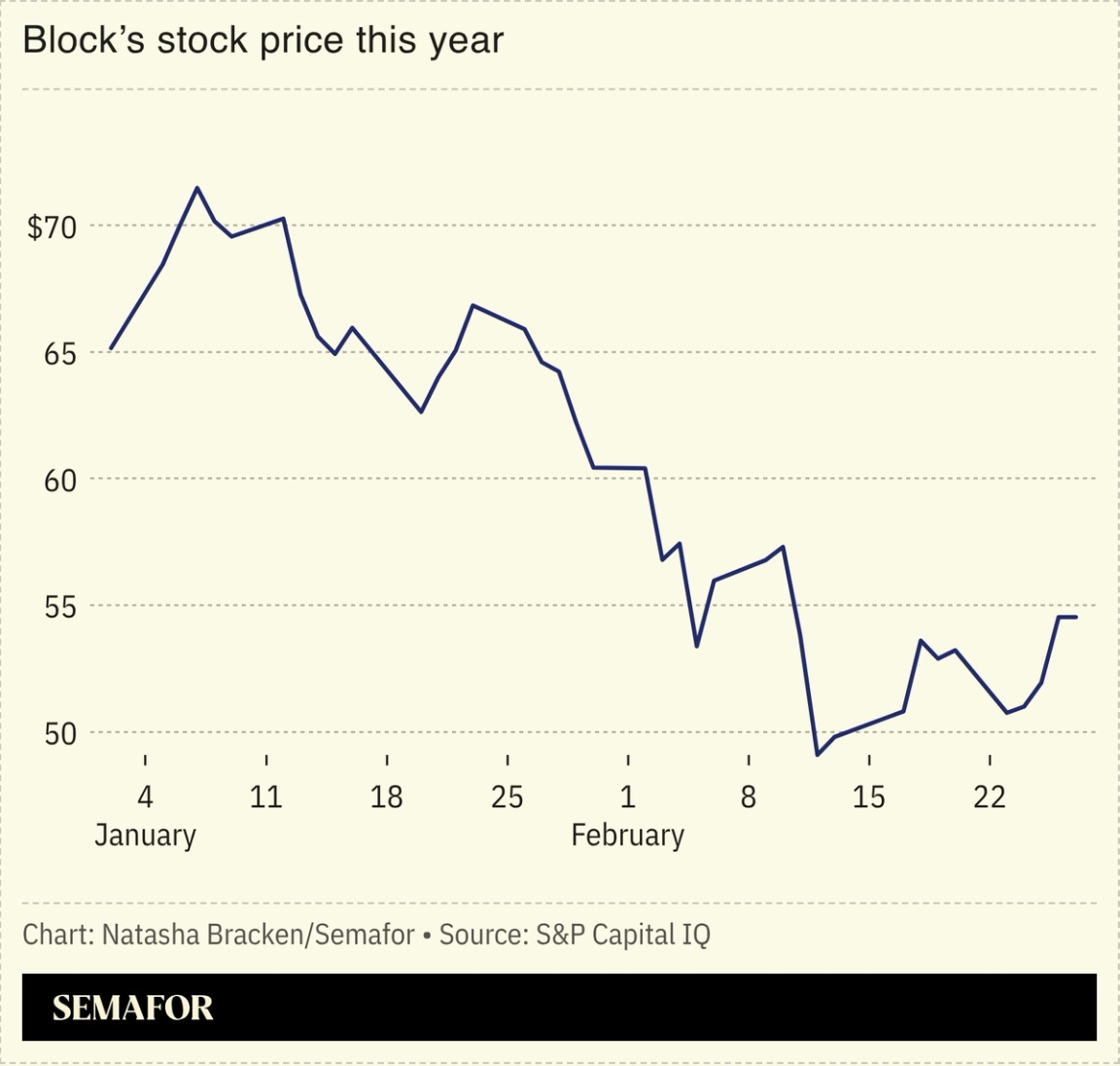 The financial services company Block will cut its headcount by 40%, citing AI advancements, and predicted that other businesses would follow suit. The firm’s co-founder, former Twitter boss Jack Dorsey, said “intelligence tool capabilities are compounding faster every week” and a smaller team could “do more and do it better.” Block’s shares went up 24% on the news. Other companies have made similar moves, including Amazon and JPMorgan, although skeptics suspect they are ordinary layoffs under an AI smokescreen: Tech firms in particular saw hiring sprees during the pandemic, and are returning to 2019 numbers, CNN reported. Nonetheless, AI tools have become more powerful, and software firms’ stocks cratered when Anthropic unveiled more powerful coding tools. |
|
Netflix withdraws Warner Bros. bid |
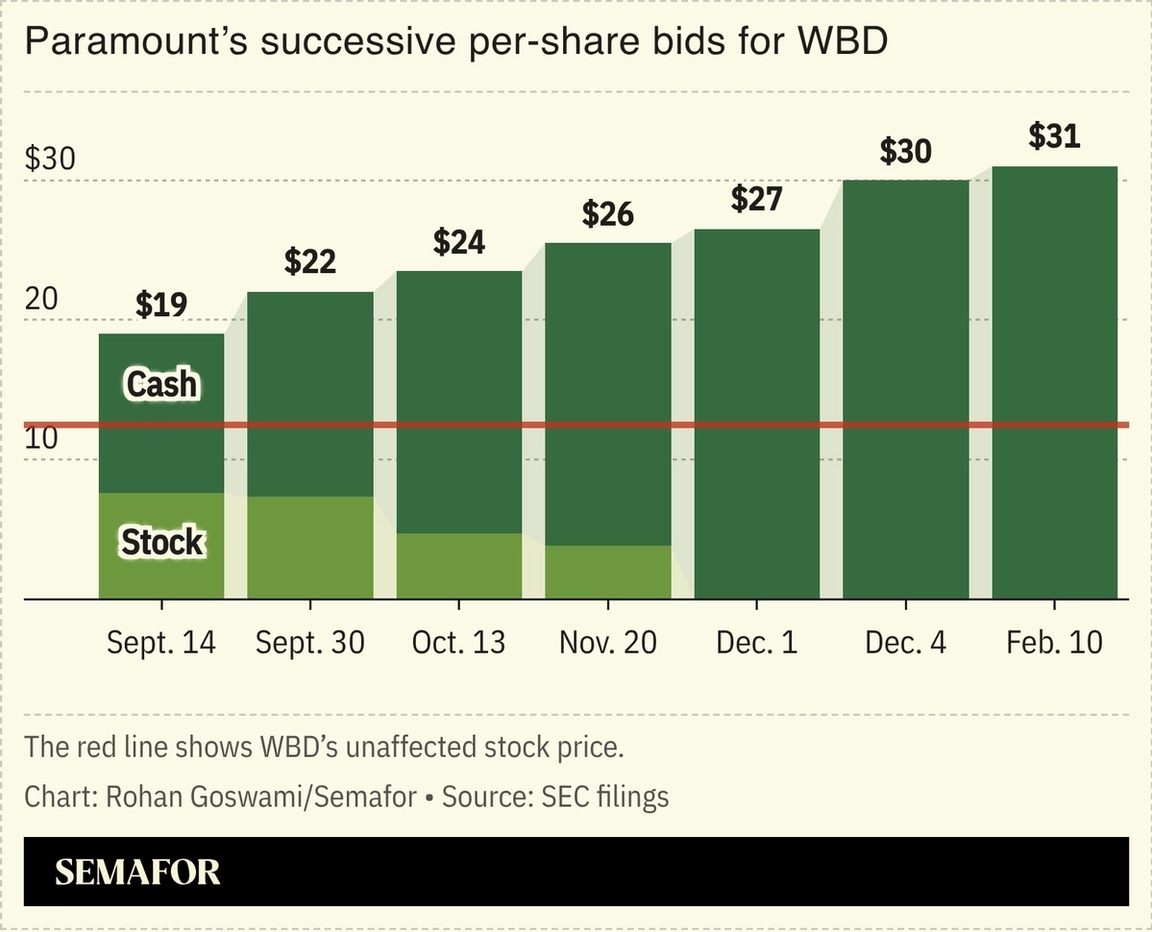 Netflix ditched its offer to buy Warner Bros. Discovery, leaving the field open to Paramount. Netflix had offered to buy WBD’s streaming and studio assets for $82.7 billion; Paramount went directly to shareholders with a hostile $108 billion bid for the entire company. The WBD board originally preferred the Netflix deal, but changed its mind after Paramount upped its numbers. The takeover must pass antitrust scrutiny, but Paramount will likely end up with WBD’s storied movie studio and rich content library. It’s been a “bruising lesson” for Netflix, Semafor’s business reporter argued: In particular, it made an enemy of US President Donald Trump, which is an impediment to making large deals in today’s Washington. |
|
USMCA faces further uncertainty |
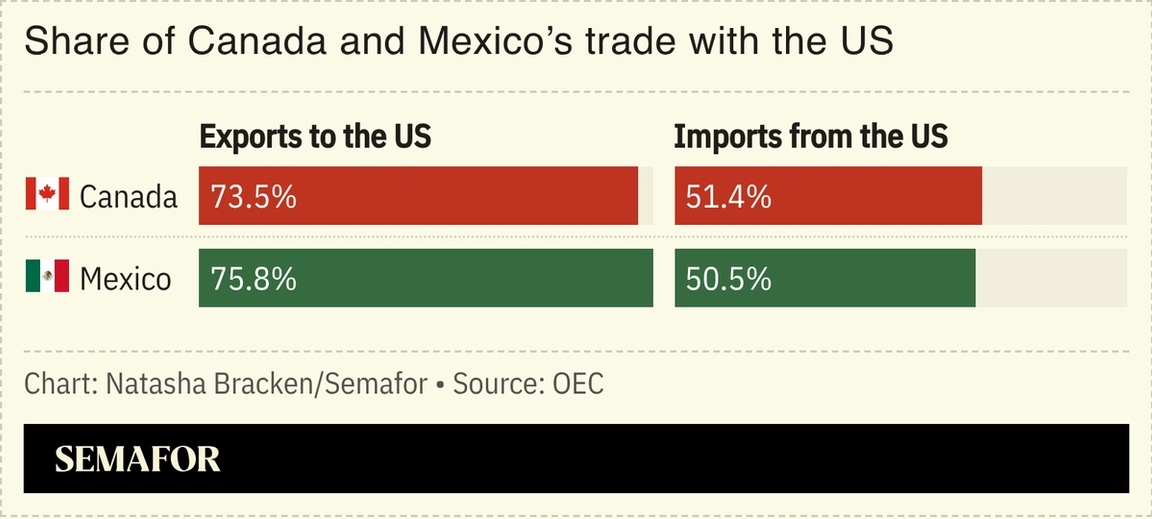 The trilateral trade agreement between Canada, Mexico, and the US could require annual reviews if Washington refuses to sign an extension, risking huge trade upheaval, Ottawa warned. USMCA’s signatories must reconfirm the deal every six years, or it reverts to yearly checks. The first renewal falls in July, and Canada’s Minister for US Trade Dominic LeBlanc warned that the US may block it. President Donald Trump has repeatedly threatened to withdraw from the accord, agreed during his first term; Canada and Mexico both rely on the US for the vast majority of exports, and are seeking trade ties elsewhere. The uncertainty over whether the agreement will continue could be a deliberate strategy on Washington’s part, LeBlanc said. |
|
RAM demand drives up PC costs |
 Florence Lo/Illustration/File Photo/Reuters Florence Lo/Illustration/File Photo/ReutersHP said that RAM chips now account for 35% of the cost of materials in a new PC, up from 18% in the previous quarter, as AI demand drives a memory shortage. The computer manufacturer told investors that the doubling of memory costs would likely drive up prices and reduce sales. AI hyperscaling is hitting consumer products elsewhere, too: The RAM shortfall will cause smartphone shipments to fall 12.9% this year, analysis firm IDC predicted, the biggest single-year dip in more than a decade, as average selling prices rise 14%. The lower end of the market will be hardest hit, IDC said, as sub-$100 smartphones become uneconomical, meaning shipments to developing countries will fall the most. |
|
 On this week’s episode of Mixed Signals, former BBC News boss Deborah Turness joins Ben for her first public interview since resigning amid a controversy over an editorial mishap involving a speech by US President Donald. She talks about whether the BBC is truly impartial, how she handled newsroom blind spots around rising populist movements like the UK’s Reform party, and why she believes public media can survive a polarized age. (The interview was recorded at Semafor’s Trust In Media summit). Listen to the latest Mixed Signals now. |
|
US, DRC sign $1.2B health deal |
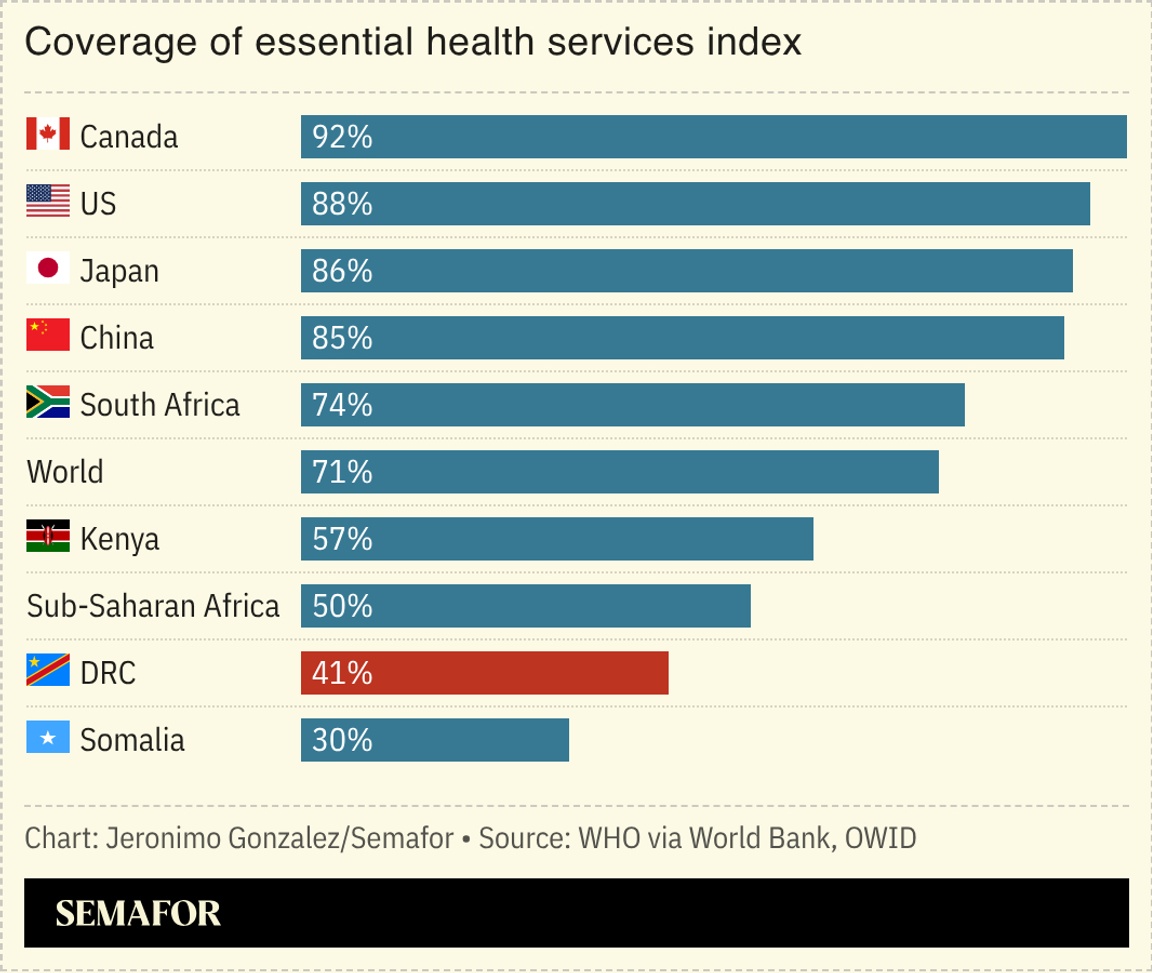 The US and the Democratic Republic of Congo signed a $1.2 billion health agreement, as part of Washington’s new “trade-not-aid” strategy for Africa. Under the deal, Washington will provide three-quarters of the funding over the next five years; Kinshasa will make up the rest. The co-investment structure marks a stark shift from the traditional aid-led engagement model. The deal is Washington’s latest on the continent, with more than a dozen nations agreeing to similar pacts recently. The White House’s sudden strategy shift has nonetheless left many regional nations struggling to get by, and experts have warned that aid cuts could lead to many more deaths. |
|
China’s ‘genius’ program pays off |
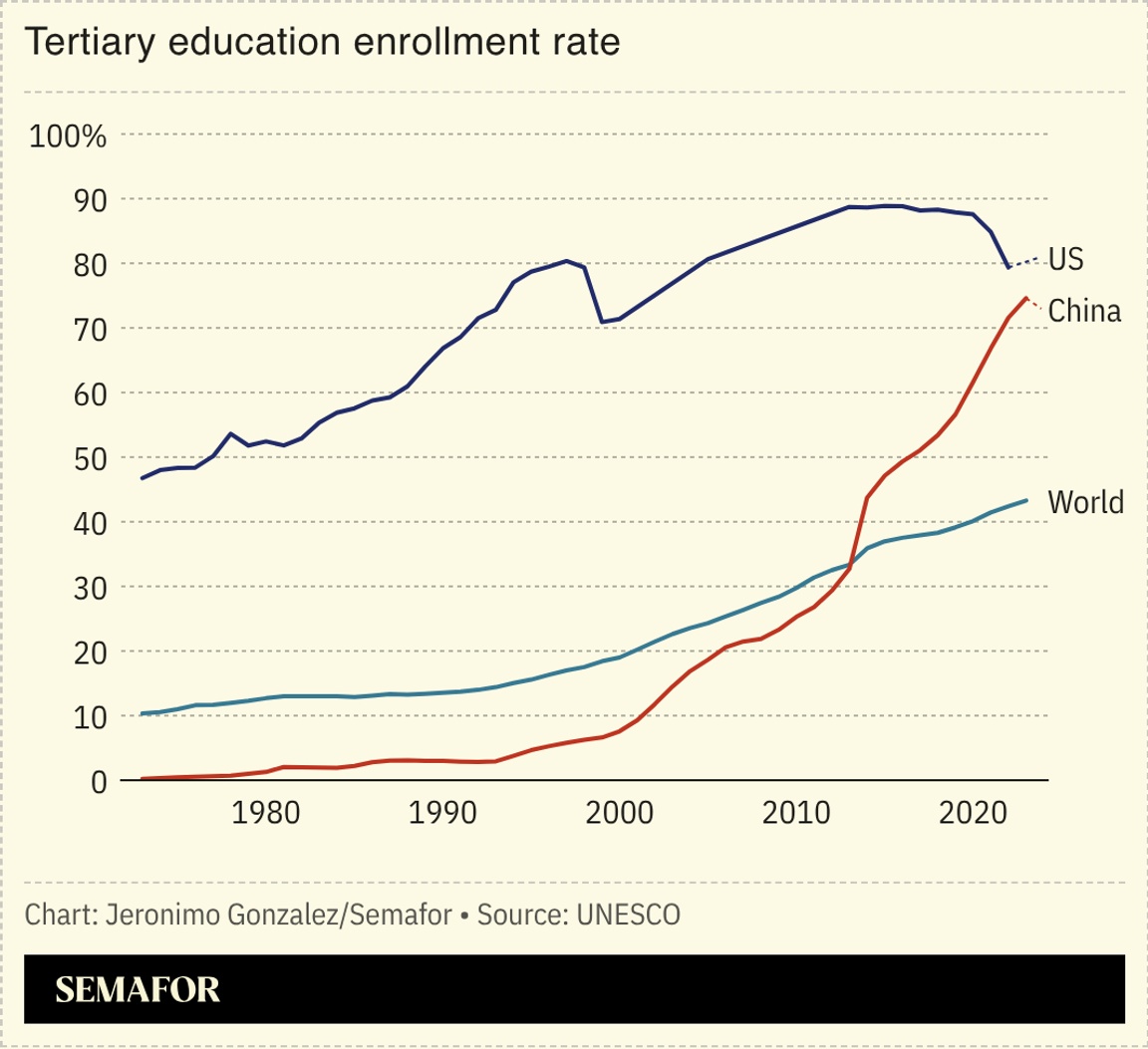 Beijing’s massive education investments have helped to create dozens of elite institutions, pushing Chinese universities up the global rankings. China’s ascent has been underpinned by heavy spending in science and technology: Chinese STEM graduates outnumber US ones by more than eight to one. Quality is up too. Beijing’s so-called genius program now recruits 100,000 talented teenagers every year, often fast-tracking their education through to the end of tertiary education. Rising anti-Chinese sentiment in the US has also fed the return of some of the country’s brightest minds. One American researcher said the trend was not coincidental: “It’s not a ‘mystery bounce’ but the result of three decades of sustained, targeted investment,” he told the Financial Times. |
|
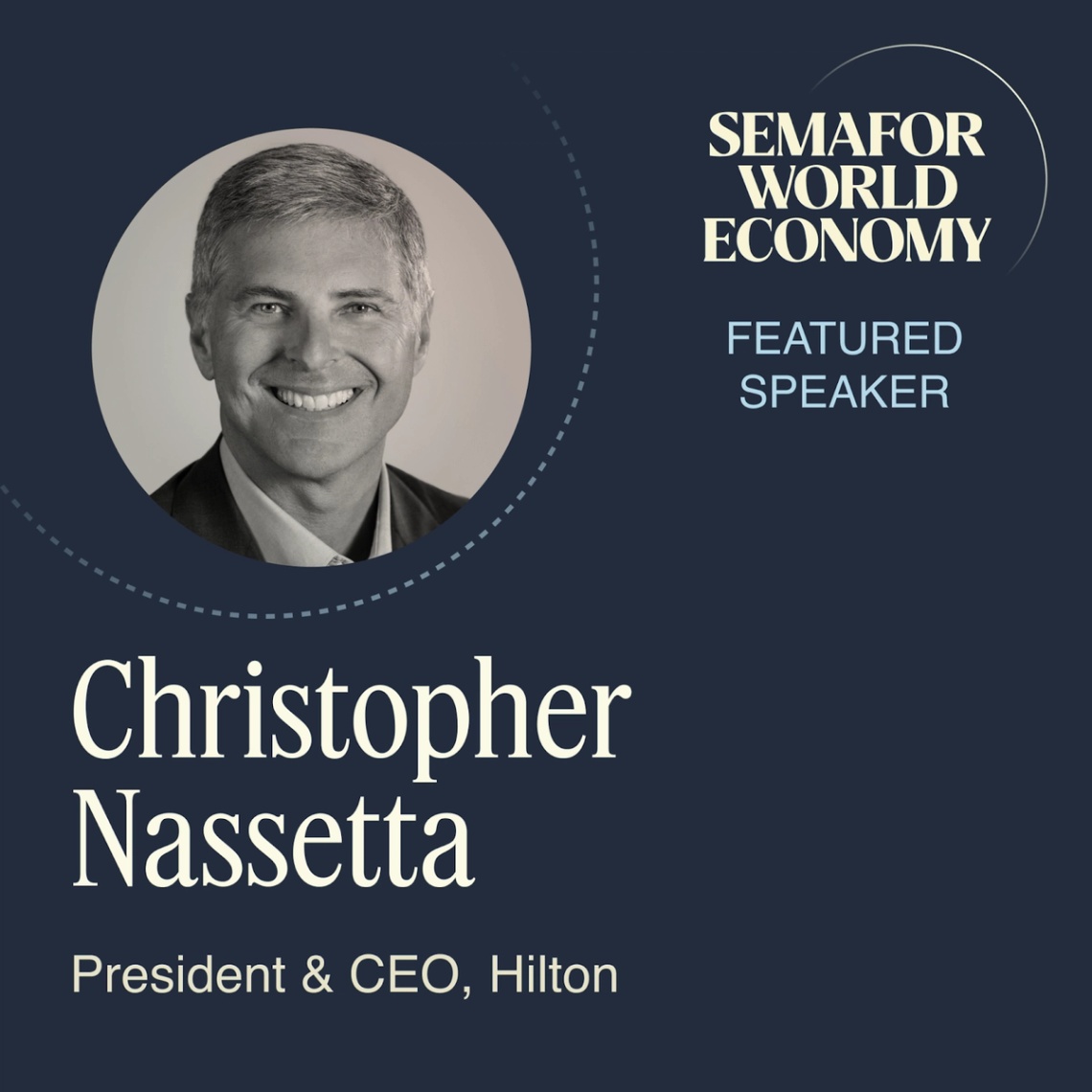 This April, President and CEO of Hilton, Christopher Nassetta, will join global leaders at Semafor World Economy — the premier gathering for the world’s top executives — to sit down with Semafor editors for conversations on the forces shaping global markets, emerging technologies, and geopolitics. See the first lineup of speakers here. |
|
|


