| | In this edition, why the end of the mobile era is nearing, and Amazon’s new VP on how AI security is͏ ͏ ͏ ͏ ͏ ͏ |
| |  | Technology |  |
| |
|
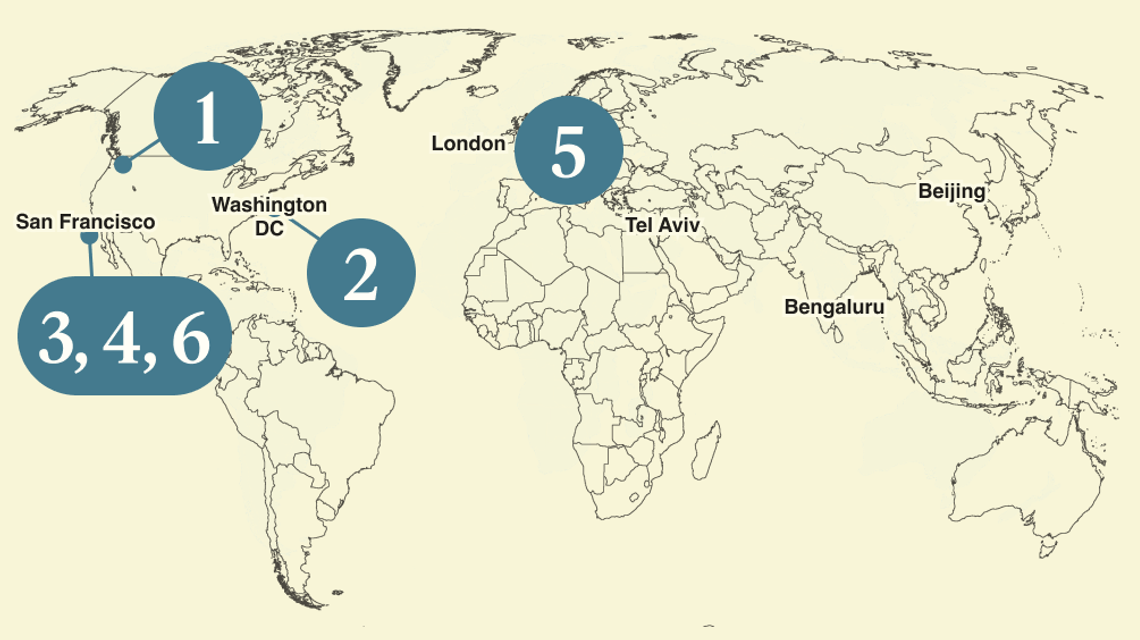 - Amazon on AI’s security
- Anthropic nears deadline
- Faster deliveries
- Perplexity’s agent surprise
- Sharper images
- Block blames AI for layoffs
 Why the end of the mobile era is nearing, and a Dara-bot for Uber employees. |
|
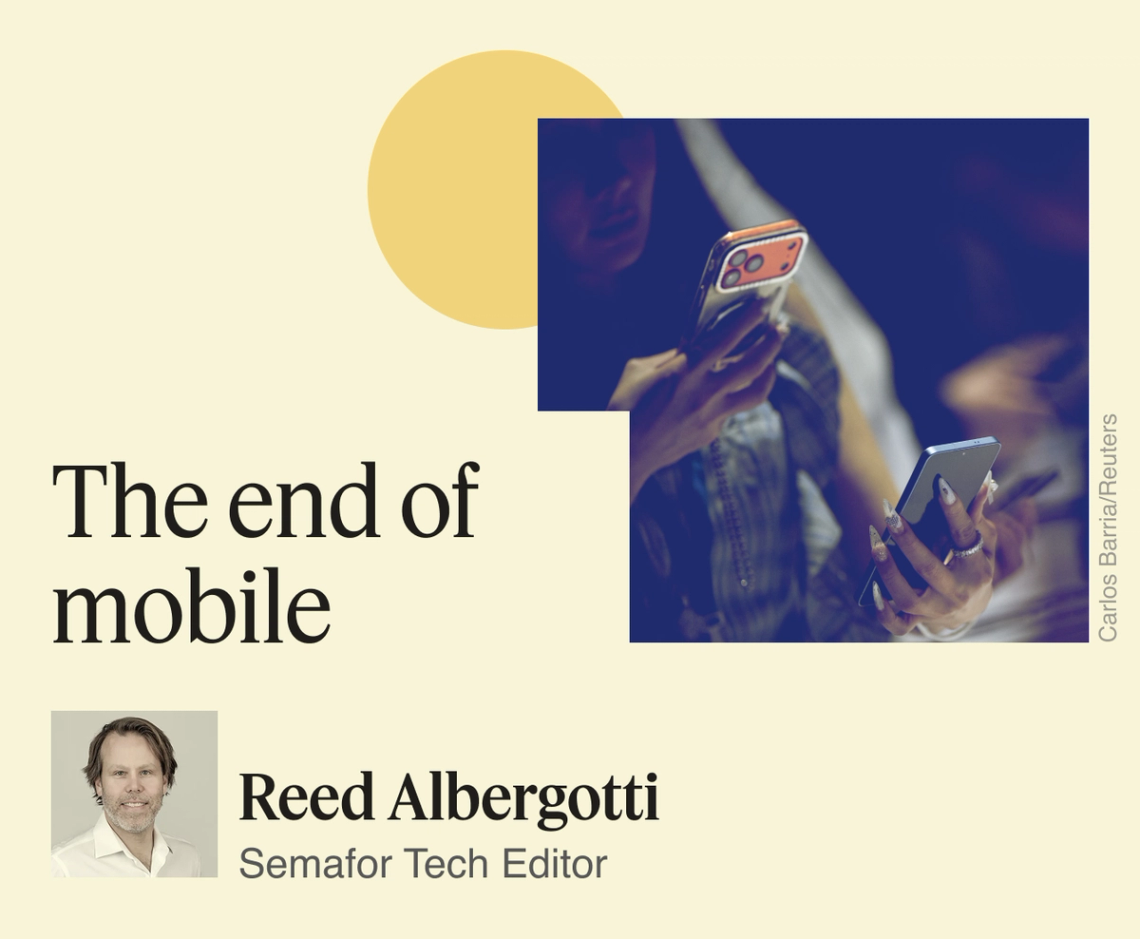 Samsung gathered reporters in San Francisco this week to highlight new mobile AI features and showcase the future of smartphones. I left with the opposite takeaway: The end of the mobile era is near. Samsung should be worried, and Apple should be terrified. Many of Samsung’s and Apple’s newest AI features — like message summaries and photo recommendations — seem quaint when you think about how AI power users are now hooking up hundreds of AI agents with tools like OpenClaw to schedule appointments, answer emails, and zoom through work tasks. The Samsung rollout reminded me of covering tech in the 2000s mobile transition, when legacy tech giants clung to desktop computing and missed the magnitude of the shift to phones. Now, companies are treating AI as a smartphone feature. In fact, it’s a novel technology that reduces the need to use a handset at all. This shift won’t happen overnight — and it won’t impact handset makers equally. Google, for instance, designs custom AI chips for its own data centers, leads in AI research, and has its own mobile operating system. There’s also a larger moat around Samsung, which also makes chips and displays. But Apple is the most exposed. Its business centers around the iOS walled garden and the services and accessories that depend on it. It’s not a hyperscaler like Google, and its AI expertise is lacking. It’s great at building hardware — but as we’re about to find out, again, the hardware business is a perpetual race to the bottom. |
|
Amazon’s security exec on watching AI’s data |
 Semafor SemaforI spoke with Chet Kapoor, Amazon’s new security chief, about how security firms will do in the age of AI given how much SaaS companies have been getting hammered as Anthropic and others take aim at their businesses. Kapoor disagrees with the notion that security systems will be replaced with more powerful AI. As AI agents proliferate on corporate networks, observing what, exactly, those agents do creates work for security firms, and generates data that will require even more AI to parse. “The amount of signals you capture are going to exponentially increase,” he tells me. Likewise, the proliferation of software code in the AI era will also be riddled with mistakes and bugs that can only be parsed by even more AI. And on the other end of the spectrum, we’re starting to see an explosion in AI-enabled cyberattacks that utilize tools like Claude to make even sophisticated hackers look like state actors. On second thought, shorting security stocks might be a bad idea. |
|
 Ludovic Marin/AFP via Getty Ludovic Marin/AFP via GettyAnthropic has until 5 pm today to give in to the demands of the US Department of Defense, which wants the company to remove any restrictions on what the military can do with the technology. Anthropic CEO Dario Amodei isn’t backing down. He published a blog post Thursday outlining his company’s moral stand against the use of Anthropic’s technology for surveillance of American citizens and autonomous weapons. Amodei is being cheered by a lot of people in Silicon Valley for sticking to his guns. The fracas has even revived the anti-military sentiment at Google, where a tiny fraction of its employees wrote a letter to the company imploring it to make a similar stand. So far, Google is available without any restrictions for unclassified use. Of course, the military already isn’t allowed to surveil American citizens. And Anthropic’s prohibition against autonomous weapons isn’t so much a moral one but a technological one: It doesn’t think AI is currently good enough to serve that purpose. It’s pretty clear where this is headed. The Pentagon is going to use the Defense Production Act to compel Anthropic to remove restrictions on its technology. Anthropic will probably sue the government, and in the end, it looks like both sides will get what they want. |
|
Coco’s new delivery robot hits the streets, literally |
 Courtesy of Coco Courtesy of CocoRobots will soon be street-legal, delivering your pad thai faster — and potentially cheaper — than human drivers can. Delivery robot creator Coco Robotics is launching its next-generation bot that operates fully autonomously rather than leaning on remote human drivers, and it can move across new terrain, the company exclusively told Semafor’s Rachyl Jones. The new Coco 2 robot will move from the sidewalk onto streets and bike lanes, where legal and appropriate, and travel up to 13 miles per hour. Smarter, fully autonomous robots mean Coco Robotics can deploy its bots in more neighborhoods and at a lower cost than what consumers would pay for traditional delivery services — with availability during extreme weather, late at night, and when it’s difficult to get human workers, the company said. But the expansion also means people will have to change their expectations of urban norms and drivers will have to pay closer attention. Continue reading for more about Nvidia’s involvement and Rachyl’s view on the biggest hurdles facing Coco. → |
|
|
Perplexity’s ‘Computer’ wasn’t always planned |
 Courtesy of Perplexity Courtesy of PerplexityPerplexity’s buzzy new ‘Computer’ super agent wasn’t in the product plans until recently. It emerged from breakthroughs in frontier AI models in December, Chief Business Officer Dmitry Shevelenko told Semafor. After Perplexity spent six months building its browser product Comet, it made Computer in two months. While the products aren’t a one-for-one comparison — browsers have their own set of complexities — Computer is a testament to a new sense of ease that AI has brought to building products and to the breakneck speed of development shaking the industries and the AI companies themselves. “Six months from now, I’m going to have a top-three priority that today I don’t know about,” Shevelenko told Semafor. “Only the paranoid survive.” Perplexity engineers spent the first month building Computer on Claude Code, and then employees used the tool itself to bring it to the finish line: Computer helped animate its own logo, modify its code, and develop its go-to-market strategy, Shevelenko said. When Computer went live, it was Perplexity’s biggest revenue-generating day in history. — Rachyl Jones |
|
No one is safe from AI, not even their bosses |
 A screenshot of the viral AI-generated Energym ad. Courtesy of AiCandy. A screenshot of the viral AI-generated Energym ad. Courtesy of AiCandy.A series of realistic, AI-generated videos inundated the internet this week — including a 15-minute superhero short by The Dor Brothers and a mock commercial for a gym where humans who lost their jobs to AI instead power it by exercising at “Energym,” and sales-pitched by AI-generated older versions of Sam Altman, Elon Musk, and Jeff Bezos. The spoof on the tech kingpins, created by Belgian startup AiCandy, is meant to mock AI’s insatiable demand for energy but it hits on a very real concern that we’re hurtling too fast toward a doomsday scenario. The irony here is that the videos also show just how good AI-generated content is getting (also, Nano Banana 2 dropped this week) and how much it can get away with, for now — fueling the even faster adoption of AI. |
|
Jack Dorsey’s Block to slash staff |
 Jonathan Raa/NurPhoto via Getty Images Jonathan Raa/NurPhoto via Getty ImagesThe financial services company Block will cut its headcount by 40%, citing AI advancements, and predicted that other businesses would follow suit. The firm’s co-founder, former Twitter boss Jack Dorsey, said “intelligence tool capabilities are compounding faster every week” and a smaller team could “do more and do it better.” Block’s shares went up 24% on the news. Other companies have made similar moves, including Amazon and JPMorgan, although skeptics suspect they are ordinary layoffs under an AI smokescreen: Tech firms in particular saw hiring sprees during the pandemic, and are returning to 2019 numbers, CNN reported. Nonetheless, AI tools have become more powerful, and software firms’ stocks cratered when Anthropic unveiled more powerful coding tools.
|
|
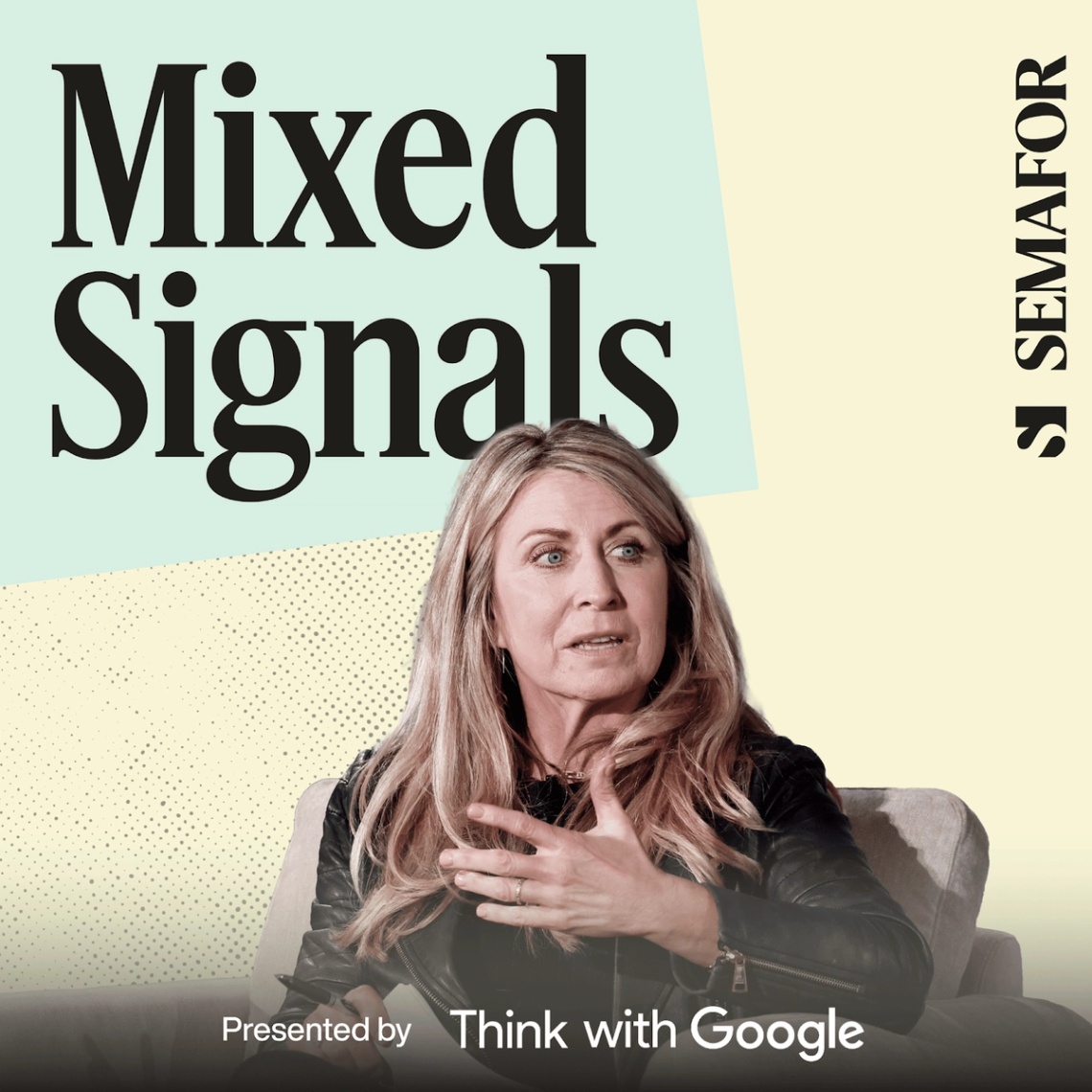 On this week’s episode of Mixed Signals, former BBC News boss Deborah Turness joins Ben Smith for her first public interview since resigning amid a controversy over an editorial mishap involving a Trump speech. She talks about whether the BBC is truly impartial, how she handled newsroom blind spots around rising populist movements like the UK’s Reform party, and why she believes public media can survive a polarized age. The interview was recorded at Semafor’s Trust In Media summit. Listen to the latest Mixed Signals now. |
|
 Andrew Kelly/Reuters Andrew Kelly/ReutersUber employees have built an AI clone of the company CEO to help them prepare for making presentations to him. Dara Khosrowshahi said the “Dara AI” lets staff fine-tune their pitches by mimicking his responses. The tool is essentially a toy at this stage, but CEOs’ strategic decision-making could well be automated like many other white-collar jobs, as Google’s Sundar Pichai has said before: A 2024 Harvard Business Review report found that an LLM “consistently outperformed top human participants” in a corporate strategy simulation. Khosrowshahi said that for now, AIs still struggle to make decisions based on new information, but “When the models can learn in real-time… I’m going to think that, yeah, we are all replaceable.” |
|
|


