| Forwarded this email? Subscribe for more |



 |
| By The Free Press |
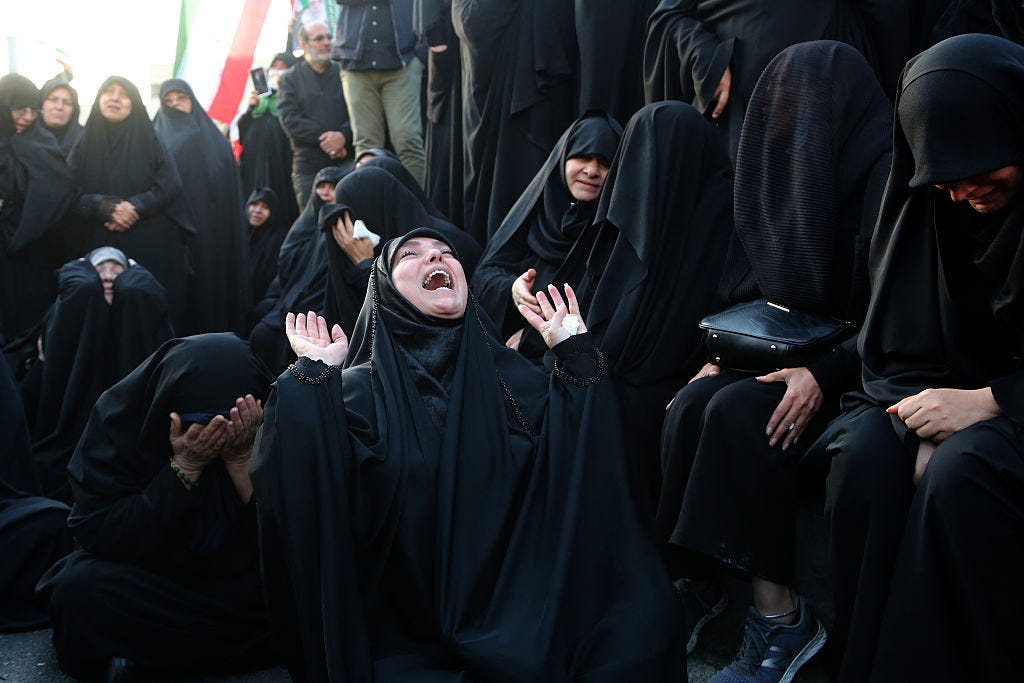
In the past 36 hours, the world has changed. Ayatollah Ali Khamenei was killed in joint U.S.-Israel strikes on Iran. Operation Epic Fury has birthed a new era in the Middle East. It is a moment full of both promise and peril. After the brutal dictator’s death, Iran has retaliated with drone and missile strikes across the region. U.S. and Israeli strikes continued into a second night Saturday. Today, Free Press writers help you make sense of these extraordinary developments.
Up first, the historian Simon Sebag Montefiore. In his essay for The Free Press, he puts this weekend’s momentous news in some historical context, explaining why Donald Trump, the greatest gambler of all the commanders in chief in American history, has rolled the dice like never before with his decision to attack Iran. Read Simon’s essay if you want to make sense of why the death of Khamenei is such a seismic development—and what might happen next.
What is Trump’s plan? For answers to that question, read Michael Doran, one of the most astute observers of the Middle East. He describes how the president shifted from a “strategy of coercion” to a “strategy of decapitation,” and reports on the plans for the “day after” that have long been in the works. To understand what the president is thinking, read this piece:
They say there is nothing worse in the world than war. Many Iranians would disagree, writes Roya Hakakian. What is worse? “A peace beneath whose facade a nation’s hope dies a thousand deaths every day.” Read Roya on why this war could be Iranians’ best chance at peace:
Perhaps the most pressing question right now is this: What will Iran do next? The answer, according to military analyst Aaron MacLean, is not a comfortable one. In the past, Iranian retaliations have been choreographed and limited. Not this time. Tehran is targeting everywhere from Tel Aviv to Dubai, and, writes Aaron, they won’t stop soon:
In both the buildup to the strikes and their immediate aftermath, the most common argument against the president’s action has been this: Trump does not have the legal authority to attack Iran. It’s a serious charge, and one that will dominate Washington, D.C., this week as Congress prepares war powers votes for this coming week. So what does the law actually say? Free Press legal columnist Jed Rubenfeld has the answer:
To listen to the chants at anti-war protests—or the denunciations from his opponents—Trump just started a war. But while it’s true that the president started this particular battle, this war has been going on for half a century, argues Peter Savodnik. In his column today, he recalls the Iranian hostage crisis, and how it took us too long to see our enemy for who they really were. Read Peter on why the strikes, rather than being the start of something new, could be the beginning of the end of something much older:
And in case you missed it, here’s more of our coverage of the Iran strikes and their fallout:

 |

