|
Wednesday 4/3/26
|

|
|
London
Paris
Zürich
Milan
Bangkok
Tokyo
Toronto
|
|
|
|

Practise what you preach
This week’s dispatch takes divine inspiration from a compact chapel overlooking a harbour by New Zealand-based studio Bull O’Sullivan. Then we talk about designing from a sense of place with British entrepreneur Tom Chapman before pulling Monocle’s March issue from an elaborate Viennese newspaper stand and flicking through it on the newest Kape chair from Danish furniture firm &Tradition. Here with introductory rites is Monocle’s design editor, Nic Monisse.
|
|
OPINION: Nic Monisse
In two minds
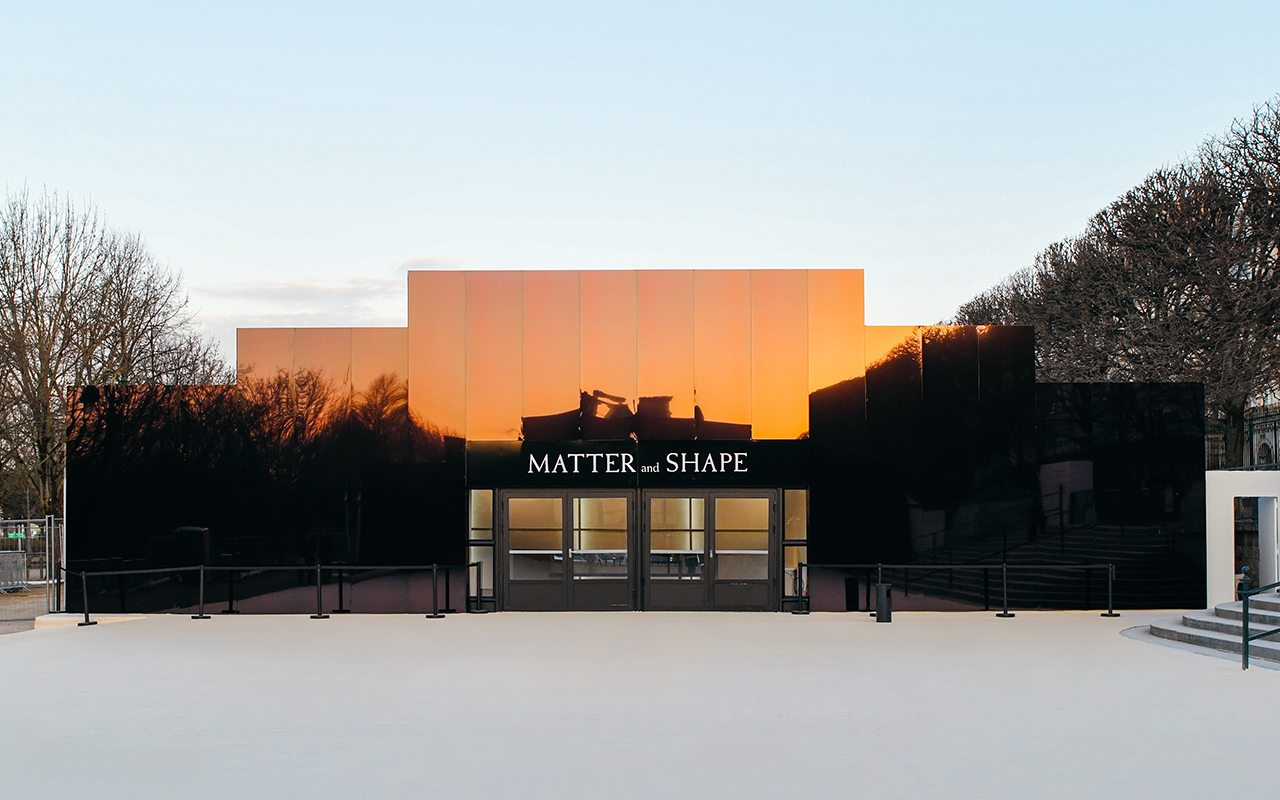
There are two pillars driving the design industry forward in 2026. First are sector heavyweights – from the Brianza-based family firms churning out high-end furniture to German and Swiss brands producing practical, industrial pieces – accounting for nearly 15 per cent of the world’s furniture market (valued at some €470bn in 2024). Second are collectable works made by small studios, ateliers and skilled craftspeople, which are experiencing record sales (a François-Xavier Lalanne hippo-shaped bar sold for €27m late last year). Both will be represented at the third edition of Matter and Shape in Paris, the business-focused design salon that kicks off this Friday and coincides with the final days of the city’s fashion week.
Artistic director Dan Thawley has centred this year’s iteration around the idea of scale. “It’s a playful yet pertinent umbrella, referring to the size and proportion of, or relationships between, objects, bodies, spaces and time,” said Thawley. “It invites visitors to consider the micro and the macro, the minute and the monumental, the immediate and the historical.” His editorial direction speaks to the industry’s two pillars, with everything from one-of-a-kind collectable pieces to industrially produced objects on show. What unites these works is their ability to have a significant impact on a personal and public scale.

|
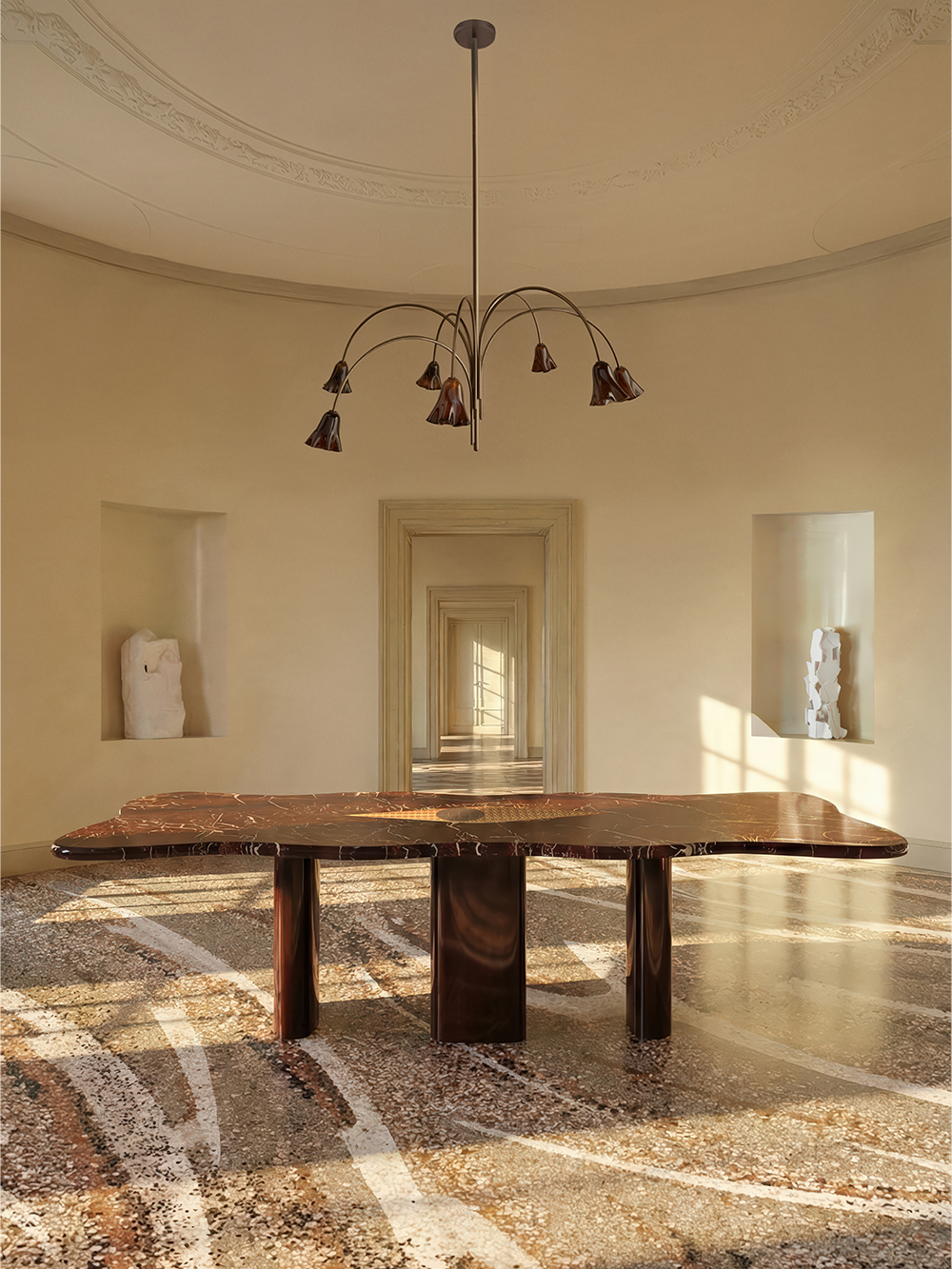
On a micro level many of the pieces presented at Matter and Shape can influence human behaviour: colourful textiles by industrial powerhouses such as Marimekko might dictate our mood, while Tavares 1922’s bespoke jewelry – a demonstration of Portugal’s craft legacy – might elevate our sense of self. On a macro level the works drive cultural and economic activity. Tiles produced by ceramic manufacturer Mutina strengthen Emilia-Romagna’s industrial economy, while Finland-based Studio Kukkapuro’s chairs (pictured above) and furniture from VandaVee (pictured below), a London-based design studio making work that blends Middle Eastern craftsmanship with Western minimalism, speak to the visual and aesthetic cultures of the people who create them.
|
The benchmark for good design, whether industrial or bespoke, should be products that lift our spirits, local economies and a region’s sense of self. Matter and Shape’s 76 exhibitors will be grappling with this dual responsibility. Every chair, textile and tile carries this weight – a reminder that design matters at every scale.
Nic Monisse is Monocle’s design editor and will be reporting from Matter and Shape this week, which is open to the public from Friday 6 March until Monday 9 March.
|
|
LA GALERIE DU 19M  MONOCLE MONOCLE
|
|
the project: Chapel of St Thérèse of Lisieux, New Zealand
Born again
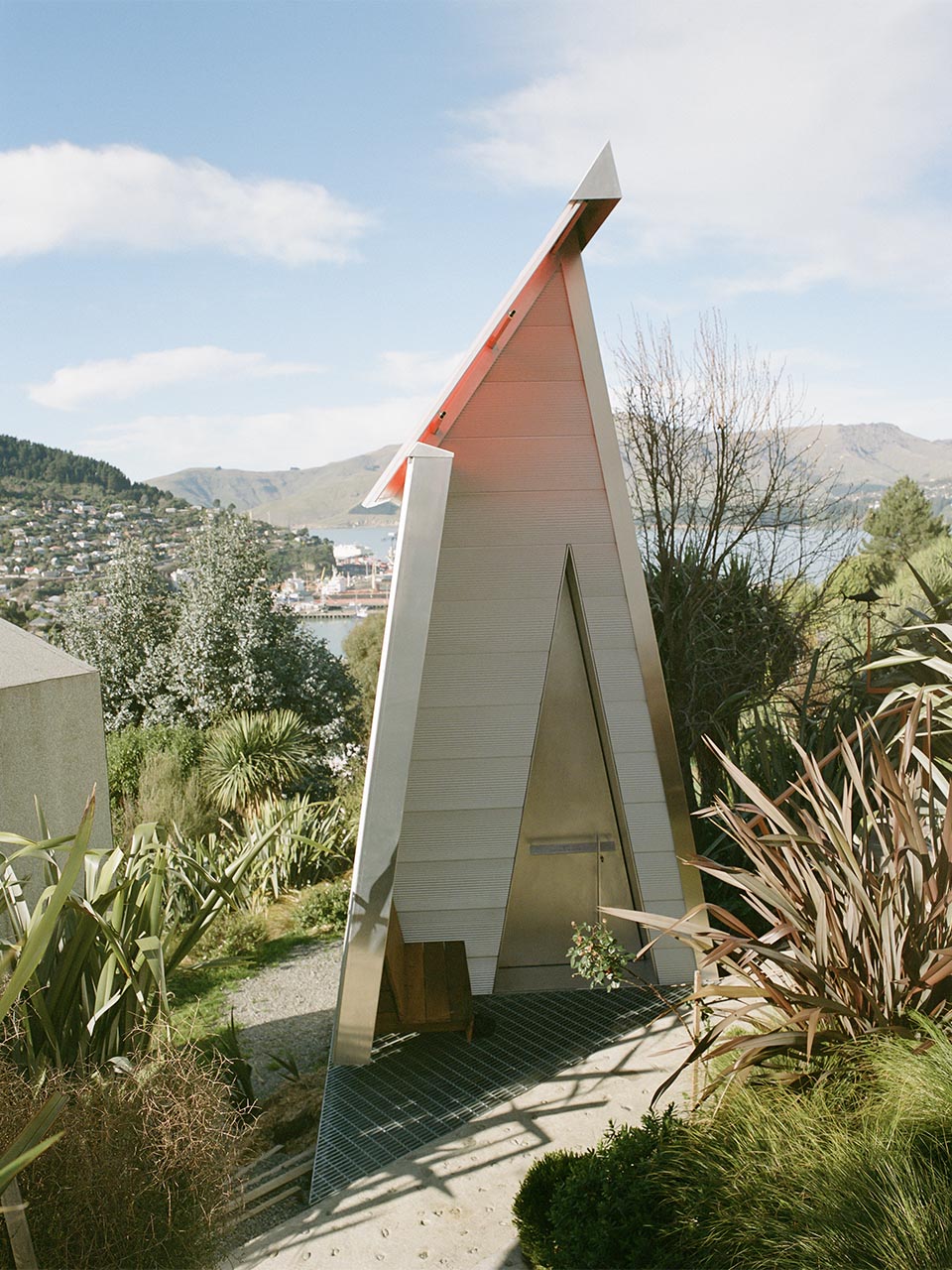
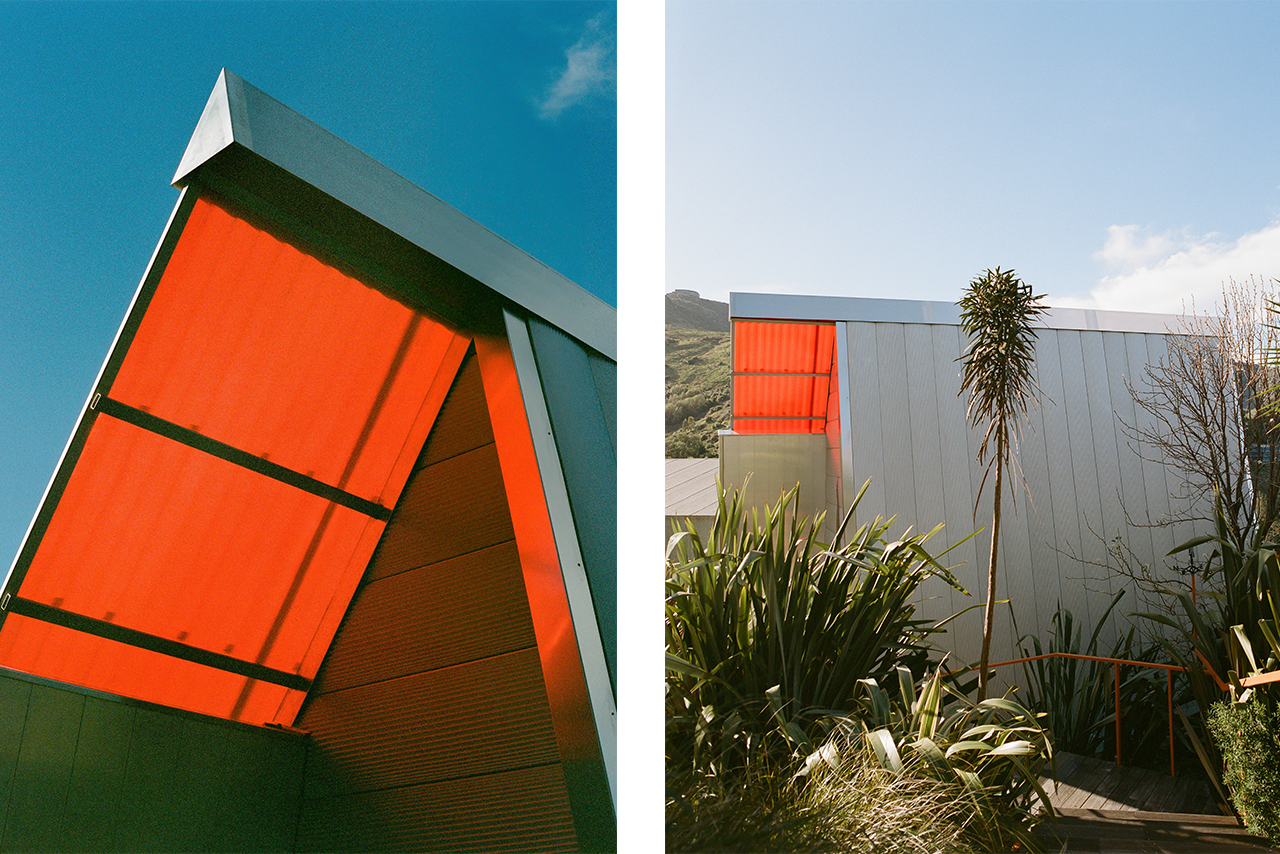
Charity – an approach to giving rooted in care for one’s neighbour – is a crucial tenet of Christianity. One edifice that nicely embodies this philosophy comes courtesy of Bull O’Sullivan, the Lyttleton-based practice of architect Michael O’Sullivan on New Zealand’s South Island. It designed and donated the Chapel of St Thérèse of Lisieux to the people of Christchurch. The structure is clad with an aluminium weatherboard developed in-house, a material that gives the project an ethereal atmosphere thanks to its soft, reflective quality. This is enhanced by a translucent red panel that runs over the chapel’s roof, diffusing a warm glow within. A triangular doorway beckons pilgrims to pass through the Holy Trinity.
|
|
Inside, a hushed, contemplative mood emanates from chocolate-hued wool carpets and walls clad with darkly coloured timber from a native rimu tree. “This particular tree was extracted from a river where it’s said to have been for 600 years,” says O’Sullivan. “Before that, it was alive for a millennium. There’s something quite beautiful about the idea.” This combination of a minimal palette of materials evokes the spirit of the chapel’s namesake, Thérèse of Lisieux. The Carmelite nun was known for her humble, simple approach to spirituality and was affectionately nicknamed “The Little Flower”. She is an appropriate patron, given that the compact chapel’s structure emerges gently from the landscape like a flower looking out at Lyttelton’s harbour.
bosarchitecture.co.nz
For more outstanding projects such as this chapel, pick up a copy of Monocle’s March issue, on newsstands now.
|
|
WORDS WITH... Tom Chapman, UK
Location, location, location
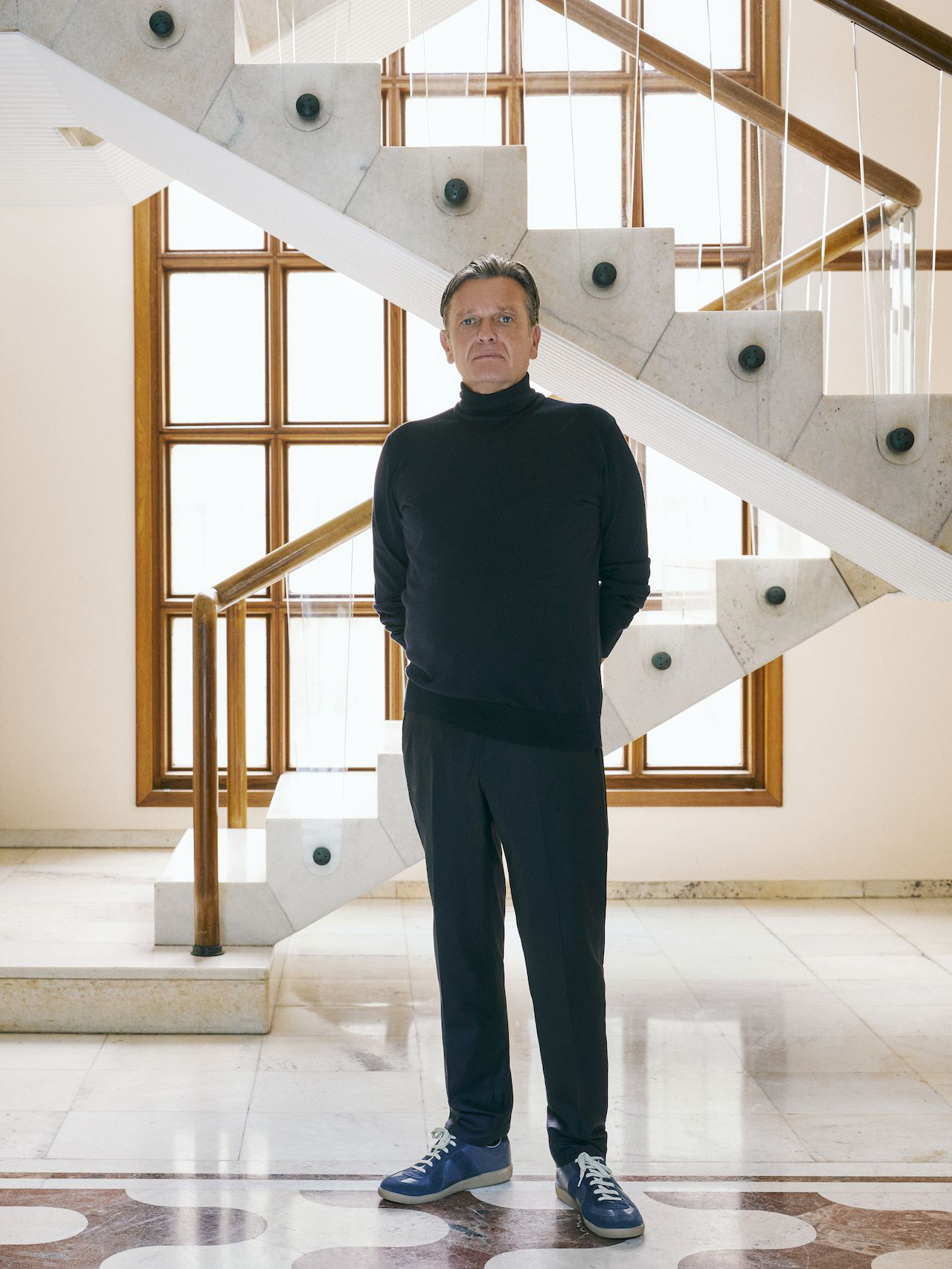
Tom Chapman has a reputation for building category-defining, design-minded businesses. The British entrepreneur established Matchesfashion with his wife, Ruth, and transformed it from a single London boutique into a global luxury platform. In 2022 he co-founded online collectable-design platform Abask, which connects collectors with more than 350 specialist artisans from around the world who are producing work that spans everything from ceramics to fine furniture.
|
What design movement has influenced you the most?
My appreciation spans millennia. I collect everything from ancient Greek amphorae to the work of modernist designers including Gio Ponti and Sergio Rodrigues, as well as more recent ceramicists and artists such as Betty Woodman, Etel Adnan and Amy Sillman. When I travel, I always seek out local designers and architects. A visit to Milan is never complete without visiting Villa Necchi Campiglio by Piero Portaluppi or, in Mexico City, Casa Estudio Luis Barragán. Having an appreciation of design that is intrinsic to its location is one of the most wonderful ways to understand different cultures.
The sky’s the limit: which piece of furniture would you love to own?
I’m a huge fan of Pierre Jeanneret and the work that he did with Le Corbusier in Chandigarh, India. There have been so many fakes and replicas of his oeuvre since it has risen in prominence and popularity. But I was at dinner the other evening and met a charming man who has collected more than 600 pieces of Jeanneret furniture with perfect provenance. He showed me the most extraordinary and unique desk.
What’s a recurring source of inspiration?
Inspiration is all around us, from works of the past to those of incredible artisans operating today. I never tire of hearing their stories or learning the techniques that they use. It’s these people who inspire me most. They drove me to create Abask so that I could continue to support them in bringing their work to a global audience.

|
A favourite trip you’ve taken recently?
A visit to Japan with the Abask buying team, which was a whirlwind journey. We travelled to six different territories and met more than 50 makers, who have little to no exposure outside Japan. We discovered porcelain in Imari and Arita, Nambu ironware in Iwate, volcanic stone glass in Niijima and so much more. It was wonderful to see these generational skills being so exquisitely preserved.
Which city has the best design scene? And where should we visit?
There is no one city in my view but there are, of course, places that are closely associated with movements that I draw inspiration from. These include Vienna for the Vienna Secession; Milan for Modernism; and Copenhagen for the Cobra avant-garde group. Each is so compelling in its individuality that it’s impossible to choose one. And, anyway, life is more interesting with a rich mix of protagonists.
For more from creatives such as Tom Chapman, tune in to ‘Monocle On Design’ on Monocle Radio.
|
|
SPONSORED BY LA GALERIE DU 19M
|
|
from the archive: NOTENSTÄNDER NR I, Austria
Bending news
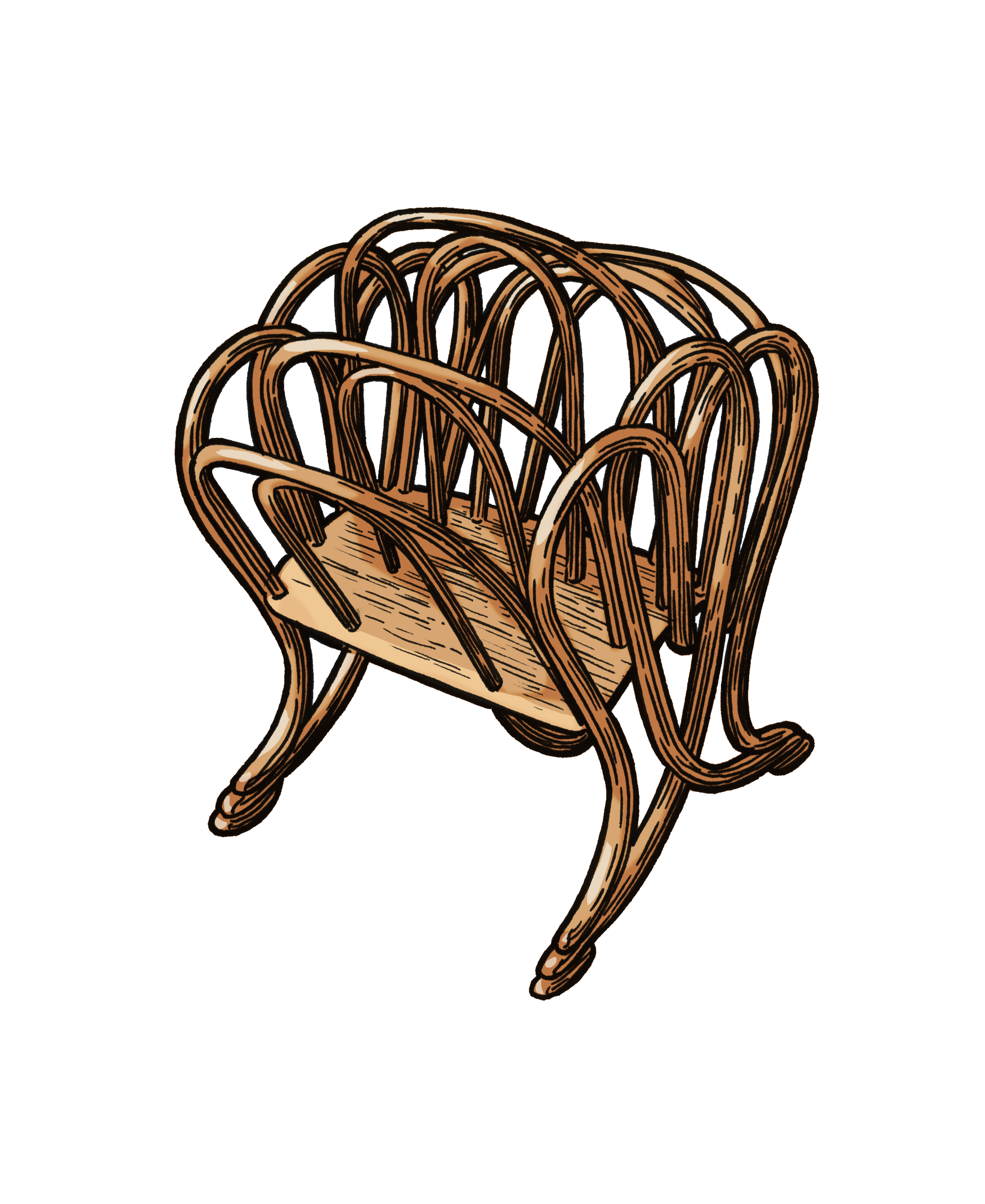
This magazine rack was made by a company that was clearly excited about its patented invention. In the 1840s, Michael Thonet devised a way to bend solid wood with a method that involved steaming rods of beech for six hours. He used it to build a chair. Soon the company was flourishing, with orders pouring in from seemingly every café in Vienna. Thonet expanded into auxiliary merchandise, such as this elaborate newspaper stand that is built from no less than 16 interlocking, delicately joined bentwood pieces.
|
The Notenständer Nr 1 was first produced in the 1880s and remained in production until at least the 1920s, including a standing variant that was perched on a pedestal. Nowadays few cafés supply their patrons with more than a magazine or two, while it would require a voracious newsprint reader to justify keeping this centrepiece at home. But as a representation of a city – one beloved for its old-world cafés, bentwood chairs and broadsheets on Zeitungsständer – this object manages to evoke all the charms of Vienna.
For more from Thonet, dip into our ‘Monocle on Design’ archive from Monocle Radio.
|
|
around the house: Kape, Denmark
Tailor made
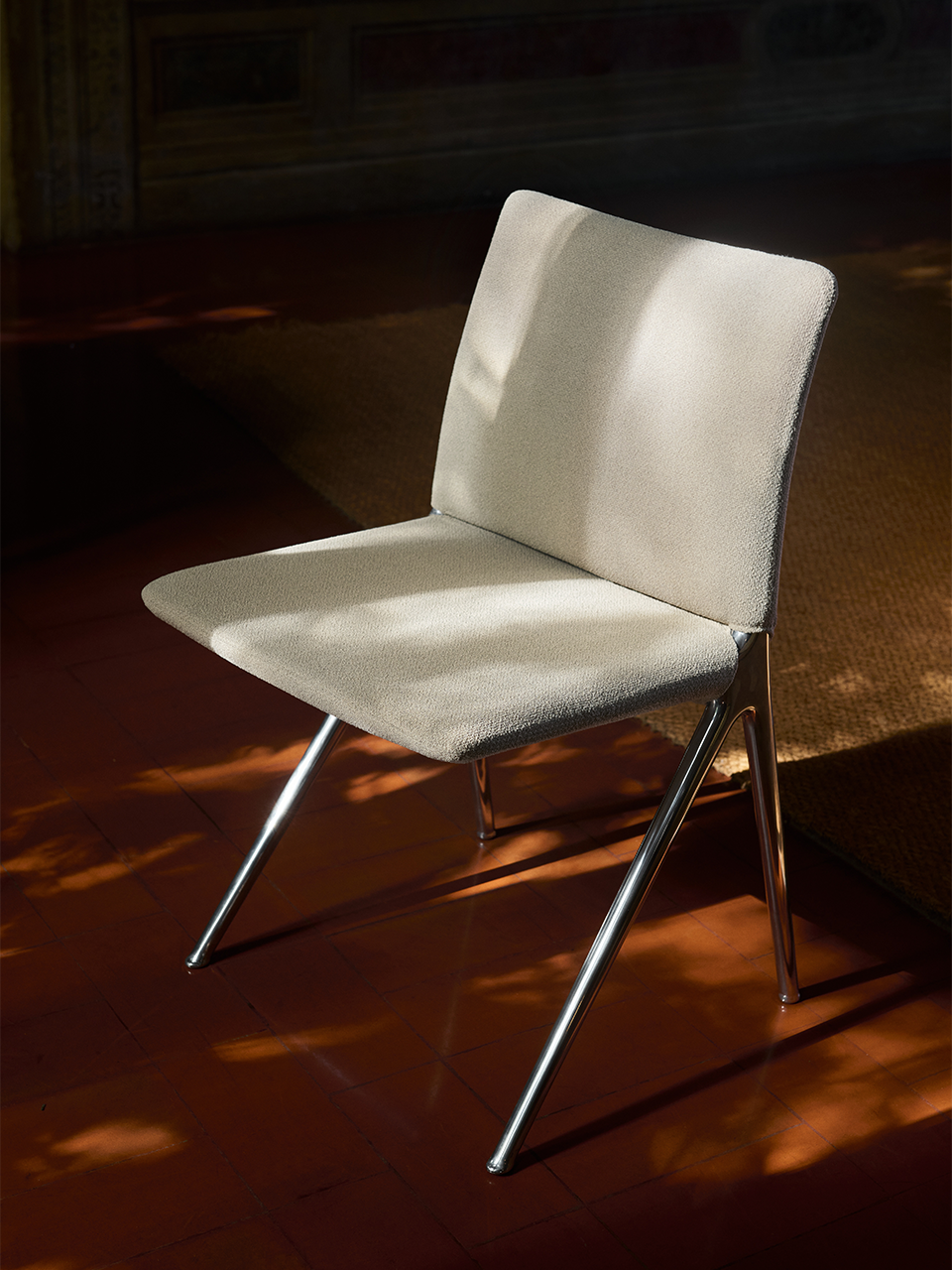
Kape is the newest chair from Danish furniture firm &Tradition. Designed by London-based studio Industrial Facility, it was born from the two firms’ shared appreciation for circular design. “The design for Kape was driven by a desire for the chair to enjoy a long life, including potential repairability and refreshing,” says Kim Colin, who co-founded Industrial Facility with Sam Hecht in 2002. “We made ‘longevity of use’ one of the chair’s functions, just as we expect comfort and strength to be functions.”
|
Kape’s K-profile frame is made from post-consumer recycled aluminium. Available in black or polished aluminium finishes, the sleek form has no visible joinery. For the upholstery of the seat and backrest, Industrial Facility took inspiration from suit tailoring – the fabric is carefully sized, cut and sewn to slip over the aluminium frame without obstruction. To ensure sustainability, it can be dry cleaned and re-fitted; replacements can be bought on a made-to-order basis. “Kape might be impactful visually,” adds Hecht. “But environmentally its impact is low.”
andtradition.com;industrialfacility.co.uk
For more on the work of Industrial Facility – and its ambition with its sister company, Future Facility – visit monocle.com.
|
|
| | |