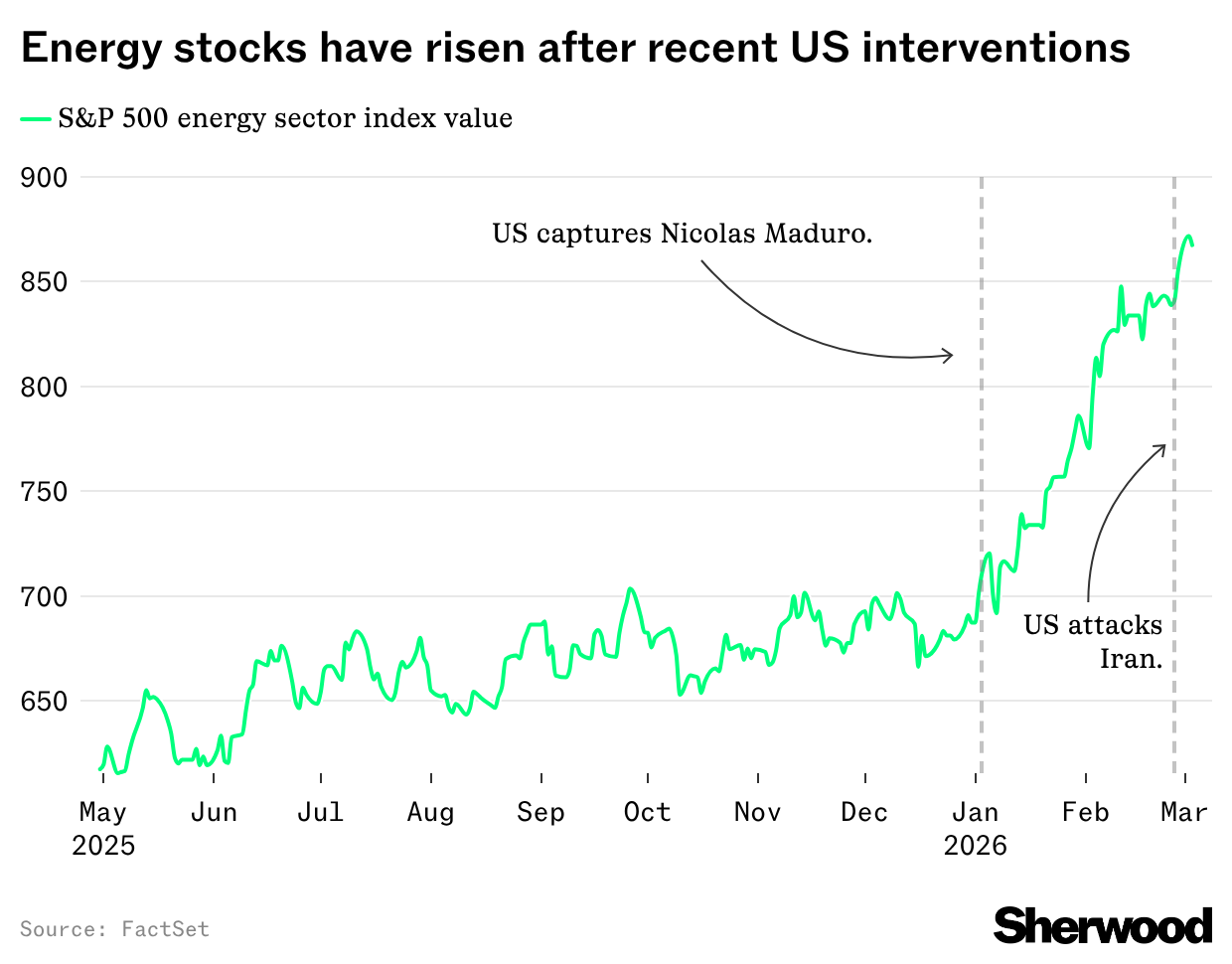
- This group of large-cap oil and gas producers, refiners, fuel retailers, and field services companies has jumped more than 20% since American special forces captured and extradited Venezuelan President Nicolás Maduro and launched a clampdown on sanctioned oil vessels seeking to transport Venezuelan crude.
- Energy stocks coasted to the top of the stock market charts thanks to new Iran-related risks, but the gains came before the rockets, drones, and F-35s actually started flying.
-
But going forward, further surges seem far from guaranteed. That’s partly because in a war, the enemy gets a vote.
|
Iran has responded with strikes on energy infrastructure throughout the region and the partial closure of the Strait of Hormuz — a crucial shipping choke point through which 20% of global oil and gas passes. The longer the partial closure lasts, experts say, the worse it will be for the world economy, and that includes oil and gas companies. |
- On Monday, Iran hit Saudi Arabia’s largest refinery, Ras Tanura, temporarily halting production.
-
Qatar Energy halted production of liquefied natural gas at its Ras Laffan facility — the world’s largest LNG plant — after an attack.
-
Iranian strikes have also reached a refinery in Kuwait, shuttered production in Iraqi Kurdistan, and closed down several Israeli gas fields, according to Reuters.
|
The disruptions help explain the evolving reaction of markets to the situation. After rising on Monday, US energy stocks had a mixed reaction to the spreading war on Tuesday. |
Commodities analysts are carefully watching whether any element of Iranian leadership emerges as a potential partner to work with the US, essentially reprising the role of Venezuela’s Delcy Rodríguez, who has been a relatively pliant acting president since the American military captured and transported her predecessor, Maduro, to face trial in the US. That sort of scenario is harder to imagine in Iran. Regime antipathy to the US has been central to the Iranian government since the founding of the Islamic Republic in the late 1970s. But it’s not impossible.
|
|
|
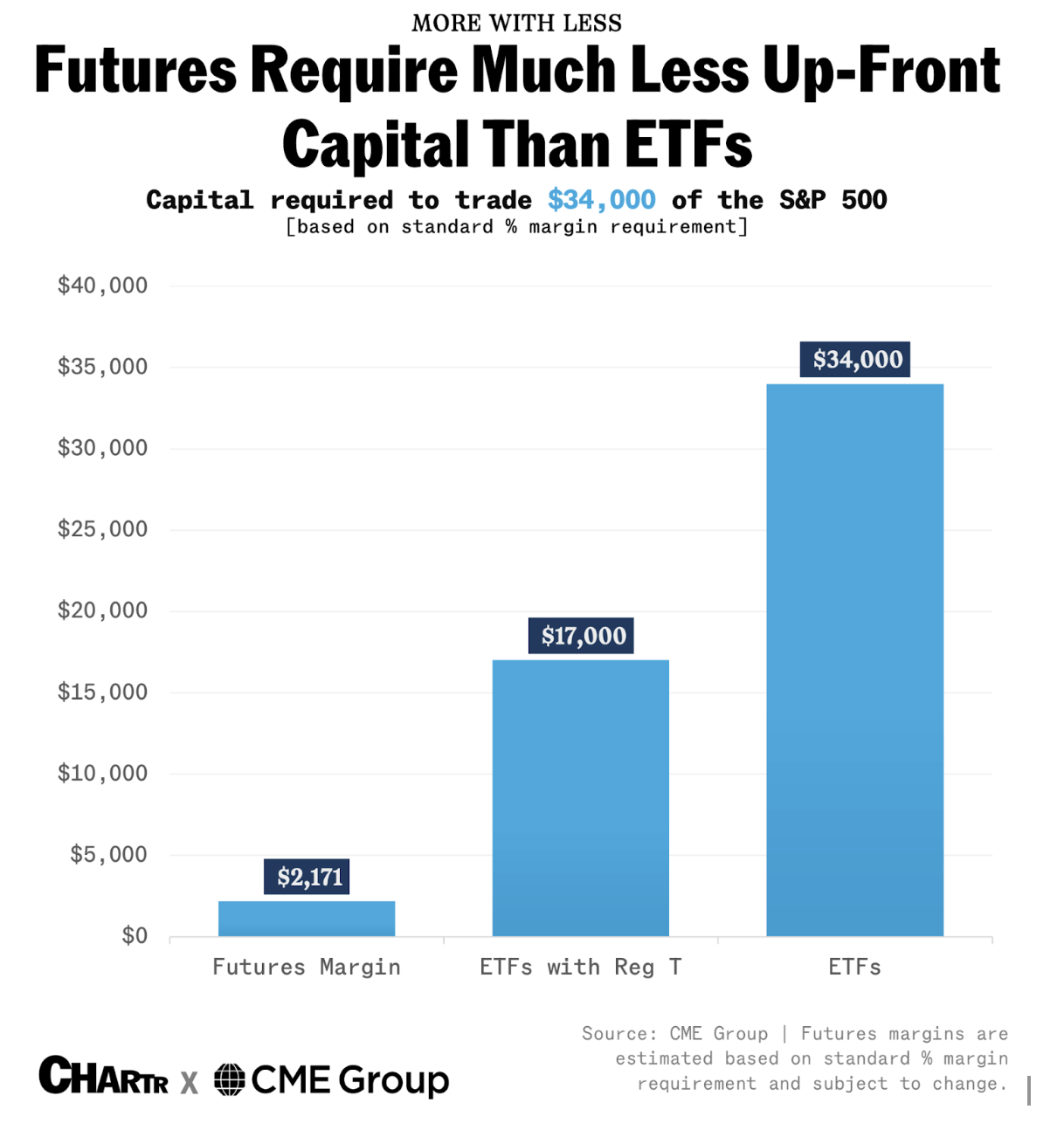
Actively trading the S&P 500? Futures offer unique capital efficiencies that give traders the opportunity to enter positions with 5-10% of the position size.1
For traders looking to learn about futures and practice in a risk-free environment, CME Group is hosting a trading challenge from March 8 to March 13.
Discover CME Group’s March Trading Challenge and register here. 1 Margin comes with increased risks. Losses as well as gains will be magnified with the greater amount borrowed. |
|
|
During his opening statement on Tuesday, David Dahlquist, attorney for the US Justice Department, told jurors: “The concert ticket industry is broken, in fact the concert industry itself is broken. It is controlled by a monopolist. It is controlled by Live Nation.”
|
- Live Nation posted record-breaking total revenues of $25.2 billion in 2025, up 9% from the year before, with its biggest quarter landing, as it often does, in the summer months of Q3.
- The company’s concert division posted around $20.9 billion in revenue across 2025 (equivalent to 83% of its year-end total) while its ticketing division accounted for just $3 billion (~12%).
-
Though concerts have long been the beating heart for revenue in the Live Nation business, its ticketing system is actually the profit center, with a 37% adjusted operating profit margin, netting $1.1 billion over the period — compared with a much smaller 3% margin for concerts (~$687 million).
-
Even with concert ticket prices much higher than before — a 2025 survey from Pollstar found that the average US ticket price for the top 100 tours in the US was $135.92, up 41% from 2019 — more people than ever are going to live events.
|
|
|
The intense drubbing in South Korean stocks, with the benchmark Korean index falling nearly 20% in its first two trading days of the week, represented a serious threat to the hottest AI trade: memory stocks like Micron, Sandisk, Western Digital, and Seagate Technology Holdings. South Korea’s market is dominated by two high-bandwidth memory giants: SK Hynix and Samsung. But on Wednesday, US investors rushed to buy the dip. And then Sherwood News Markets Editor Luke Kawa noticed something even more interesting.
|
|
|
|