Image

Daily News Brief

March 5, 2026

Welcome to CFR’s Daily News Brief. Today we’re covering efforts in the United States and abroad to shape the Iran war, as well as...

  • How Ukrainian drone strategies may be adopted in the Middle East 
  • China’s new economic growth target
  • A draft European Union (EU) industrial policy


Top of the Agenda

The U.S. Senate yesterday narrowly rejected a measure to limit President Donald Trump’s war powers in Iran, voting largely along party lines. A vote on a similar measure is expected in the House of Representatives, which is also unlikely to pass. The U.S. war effort shows no signs of slowing, with Defense Secretary Pete Hegseth saying yesterday “we are just getting started” and the White House press secretary declining to rule out the involvement of U.S. ground troops as the conflict proceeds. Iran likewise pledged to continue fighting, with Foreign Minister Abbas Araghchi vowing revenge after the United States sank a warship and killed dozens of Iranian sailors returning from a naval exercise in India.


The expanding battlefield. Iranian drones hit Azerbaijan’s Nakhchivan exclave today, Baku said, adding it is preparing a response. The war has killed people in at least six countries including Bahrain, Iran, Israel, Kuwait, Lebanon, and the United Arab Emirates. The vast majority were killed in Iran, where the Red Crescent Society said the death toll has surpassed one thousand. The single deadliest event of the war remains Saturday’s bombing of a girls’ elementary school in southeastern Iran, estimated to have killed more than 160 people. An Israeli military spokesperson told NPR Monday that Israel was not aware of any Israeli operations in the area, while Hegseth said yesterday the United States was still investigating the incident.


Growing economic costs. As fighting continues around the Strait of Hormuz, the United Kingdom (UK) maritime agency reported a “large explosion” on the side of an oil tanker near Kuwait yesterday, resulting in an oil spill. Shipping giant Maersk said yesterday it would temporarily suspend cargo reservations for seven Gulf countries. The cost of private shipping insurance in the Gulf jumped twelve-fold, the Financial Times reported yesterday, in spite of Trump’s pledge to help secure shipping through low-cost insurance and potential U.S. naval escorts. In addition to putting pressure on energy supplies, the war may affect global food production by limiting the supply of fertilizer, the prices of which have already spiked in the Middle East and Europe. 


“Americans need to be prepared for the possibilities across the range of outcomes here. The real concern here is potential chaos spilling out from Iran and the suffering of the Iranian people…There are limits to American power. And changing regimes from seven [or] eight thousand miles away, and primarily from the air, is a roll of the dice.”

—CFR expert Steven A. Cook, C-SPAN


How the Iran War Is Rippling Through Energy Markets

The Spillover podcast

Understanding the current energy price shock requires taking into account how structural shifts have reshaped oil’s geopolitical and economic role, CFR experts Rebecca Patterson and Sebastian Mallaby discuss on this episode of The Spillover.

Listen


Across the Globe

Ukraine’s drone expertise. Ukrainian President Volodymyr Zelenskyy spoke with U.S. and Gulf officials about Ukraine’s drone experience in Russia’s war and using that knowledge to counter Iranian drones, he wrote on social media. In addition, top EU diplomat Kaja Kallas said the bloc would discuss utilizing Ukraine’s expertise during a meeting today with Gulf officials.


European approaches to military basing. France will allow U.S. aircraft to temporarily use some of its domestic bases to bolster the defense of regional allies, a French army general staff official said today. France demanded that the resources part of this arrangement “do not participate in any way” in U.S. operations in Iran. Spain continues to deny U.S. military aircraft access to its bases, its foreign minister said yesterday, contradicting the White House’s claim that Spain was cooperating. 


China cuts growth target. The country is targeting economic growth of 4.5 to 5 percent of GDP in 2026, Premier Li Qiang announced in a speech today—the lowest such target since 1991. Li cited the “sluggish” global economy in his speech. China’s defense spending will rise 7 percent this year, he said, slightly down from a 7.2 percent increase in 2025.


Draft EU industrial policy. The EU proposed a plan yesterday to grow the country’s manufacturing sector to 20 percent of GDP by 2035, up from 14.3 percent in 2024. It includes requirements that a certain amount of products countries buy with EU money be made in Europe or partner countries such as the UK and Japan. It still requires approval by the European Parliament and EU leaders.


Bessent previews tariff hike. The United States will likely raise its 10 percent global tariffs—imposed with a different authority than the levies struck down by the Supreme Court last month—to 15 percent this week, Treasury Secretary Scott Bessent told CNBC yesterday. He said it was his “strong belief” that a variety of legal authorities would enable Trump to return tariffs to levels imposed before the ruling within five months.


Blackout in Cuba. Millions of Cubans in the country’s west lost power yesterday. The United States began restricting fuel imports to the island in recent weeks, and the country’s degraded electrical grid had already suffered from frequent power outages before. An official told government radio it could take seventy-two hours to restore power at the plant that sparked the outage.


UK’s China espionage probe. UK authorities detained three people yesterday on suspicions of spying for China, including a former Labour party advisor whose wife is a current Labour party lawmaker. They were then released on bail, police said today. The suspect did not immediately comment, though his wife said she was not being investigated and not part of his business activities. China’s embassy in London condemned what it called an effort to “fabricate facts.”


Pitch to onshore call centers. The Federal Communications Commission (FCC) is calling for public comment on proposals to onshore call centers, require their operators to be proficient in American Standard English, and crack down on illegal robocalls, chairman Brendan Carr announced yesterday. A merger between two broadband operators greenlit by the FCC last week included a pledge by the purchasing company to onshore jobs.  


A Top Administration Official Talks Trump’s Defense Strategy

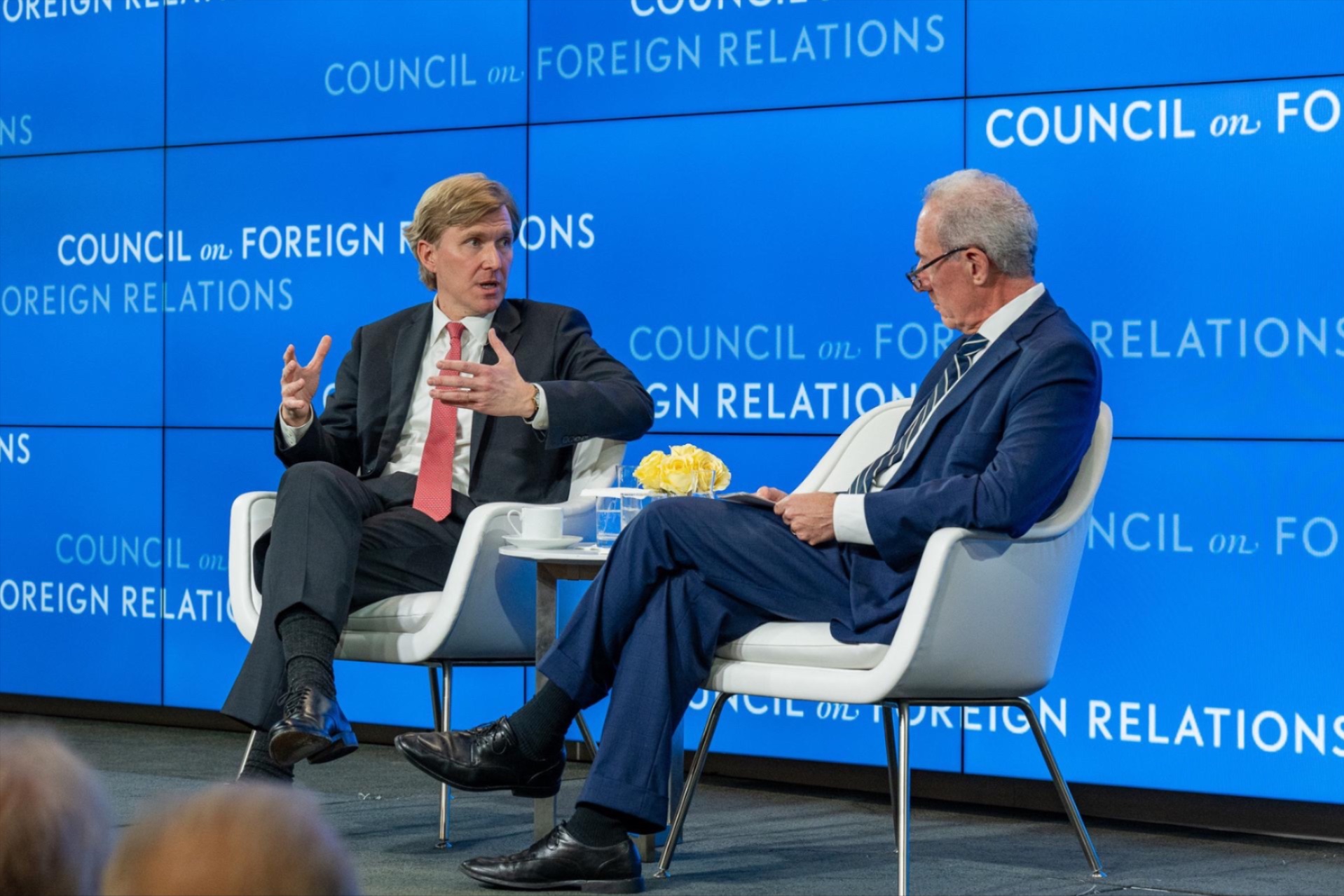
Elbridge Colby at CFR

Kaveh Sardari/CFR

The Trump administration’s actions reflect a commitment to flexible realism while operating from a position of strength, Under Secretary of Defense for Policy Elbridge Colby said at this CFR meeting.


What’s Next

  • Today, U.S. Interior Secretary Doug Burgum concludes a visit to Venezuela.

  • Today, Nepal holds parliamentary elections.

  • Tomorrow, the Winter Paralympics begin in Milan and Cortina, Italy.


What the Strikes on Iran Could Mean for Homeland Security

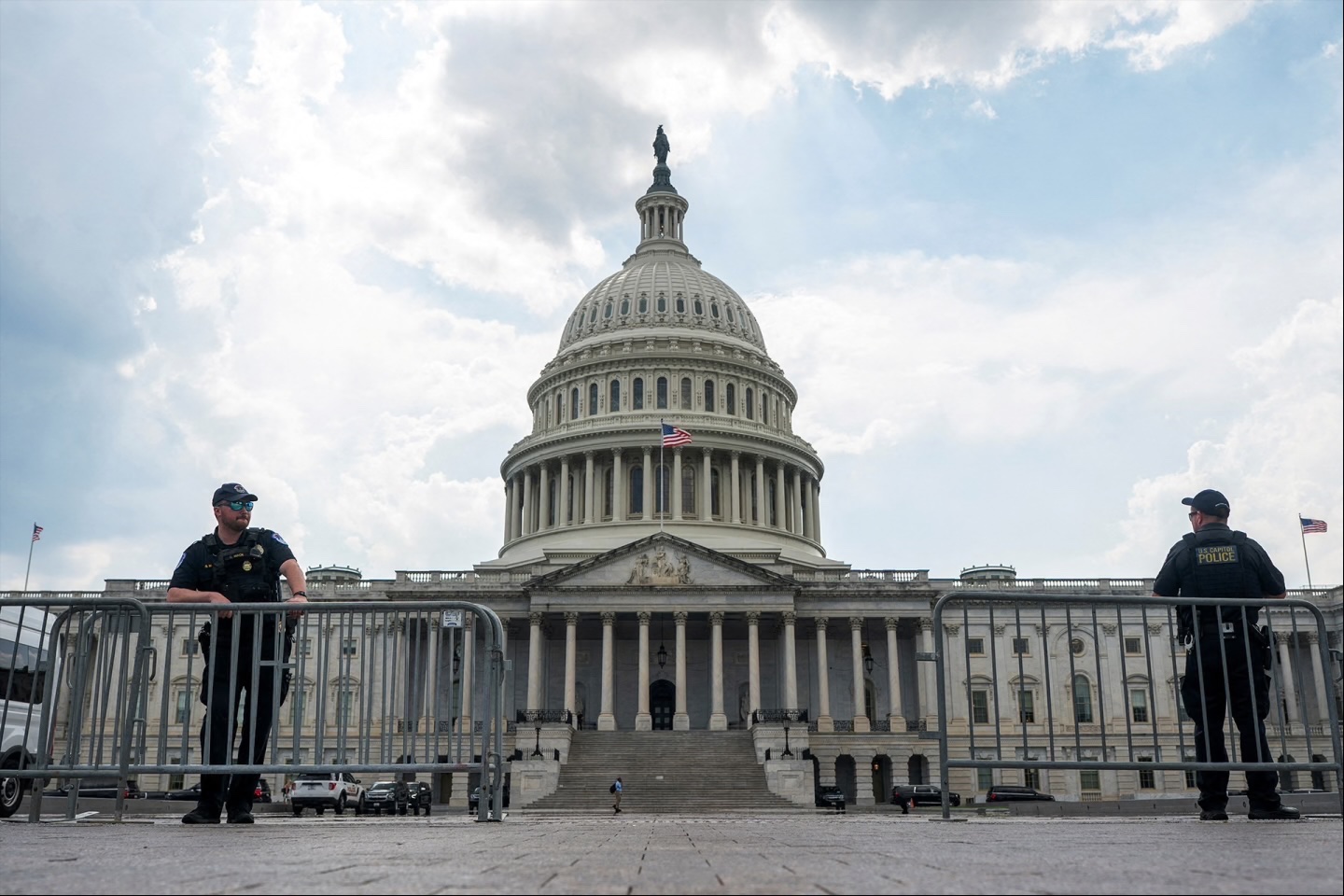
Members of the U.S. Capitol Police guard a check point near the U.S. Capitol on June 25, 2025.

Nathan Howard/Reuters

The longer the war in Iran goes on, the greater the incentive for the Islamic Republic to apply all forms of asymmetric warfare, CFR Senior Fellow Bruce Hoffman writes in this Expert Take.


Council on Foreign Relations

58 East 68th Street, New York, NY 10065

1777 F Street, NW, Washington, DC 20006