| | Iran’s new leader vows to keep the Strait of Hormuz closed, Anthropic writes a ‘constitution’ for it͏ ͏ ͏ ͏ ͏ ͏ |
| |  | Flagship |  |
| |
|
The World Today |  - Tehran’s new Hormuz threat
- Iran leader shows defiance
- The big political liability
- China’s energy security
- Europe’s security strategy
- A second AI jobs crisis
- CEOs’ new favorite word
- Anthropic’s AI constitution
- Russia no longer pariah
- Noma’s Redzepi resigns
 The new weapons of global economic warfare. |
|
Iran leader vows to keep Hormuz closed |
|
Khamenei remarks signal lengthy conflict |
 Majid Asgaripour/WANA (West Asia News Agency) via Reuters Majid Asgaripour/WANA (West Asia News Agency) via ReutersIran’s new supreme leader vowed vengeance in his first statement, signaling defiance over diplomacy. Mojtaba Khamenei, who has not been seen in public since succeeding his late father, gave no indication in his written statement that he would abandon the former ayatollah’s hardline policies and offered no specifics on an acceptable outcome for Tehran. Iran “believes it hasn’t exacted enough of a price on the US… and even the global economy,” a Bloomberg analyst said. US intelligence suggests the Islamic Republic’s leadership is not at risk of imminent collapse, Reuters reported, and overseas dissidents aren’t confident strikes will topple the regime. For his part, President Donald Trump said stopping Iran from having nuclear weapons is more important than oil prices, suggesting a protracted conflict. |
|
Energy crisis a global political liability |
 Energy-related inflation stemming from the Iran war will be an inescapable deciding factor in global politics, Semafor’s climate and energy editor argued. For US voters, gas prices are the most tangible touchpoint of the global economy, and infamously decisive in national elections; opponents of President Donald Trump have already sought to weaponize the pain at the pump. Hungarian Prime Minister Viktor Orbán used the crisis to amplify his reelection campaign’s argument that breaking away from Russian energy was a strategic blunder by Europe. Brazil, Nigeria, France, and other countries that have struggled with inflation also have upcoming elections, making “Trump’s decision to bomb Tehran a political liability for many other world leaders,” Semafor’s Tim McDonnell wrote. |
|
China to expand oil reserves |
 Maxim Shemetov/Reuters Maxim Shemetov/ReutersChina aims to expand its strategic oil reserves, according to its latest five-year plan, as Beijing confronts volatility from the Middle East conflict. The world’s largest crude importer, China is vulnerable to a lasting disruption in global energy flows — it tightened fuel export curbs this week — but Beijing has prepared for such turmoil by amassing large oil stockpiles and pursuing an aggressive green energy transformation. It is looking to double power generation from renewable and nuclear sources over the next decade. “The most durable hedge against oil shocks is to consume less oil, not merely to produce more,” two experts wrote in Foreign Policy, predicting the crisis could accelerate other countries’ pivot toward electrification in the name of energy security. |
|
Europe works on new security strategy |
 Stoyan Nenov/Reuters Stoyan Nenov/ReutersEurope is racing to reorganize its defensive capabilities as Iranian missiles threaten its southernmost states. The European Commission is consulting with EU member states to produce a sweeping new security strategy document, tentatively set to publish by June. How far the Commission is willing to go is unclear, but an ambitious version could mean putting more military decisions under EU control instead of leaving them to national governments — although the bloc has a “tendency to write new plans instead of delivering on the last,” Euractiv noted. Still, the continent is rearming fast and is expected to continue to do so, as evident in the German arms maker Rheinmetall projecting a 45% jump in sales this year. |
|
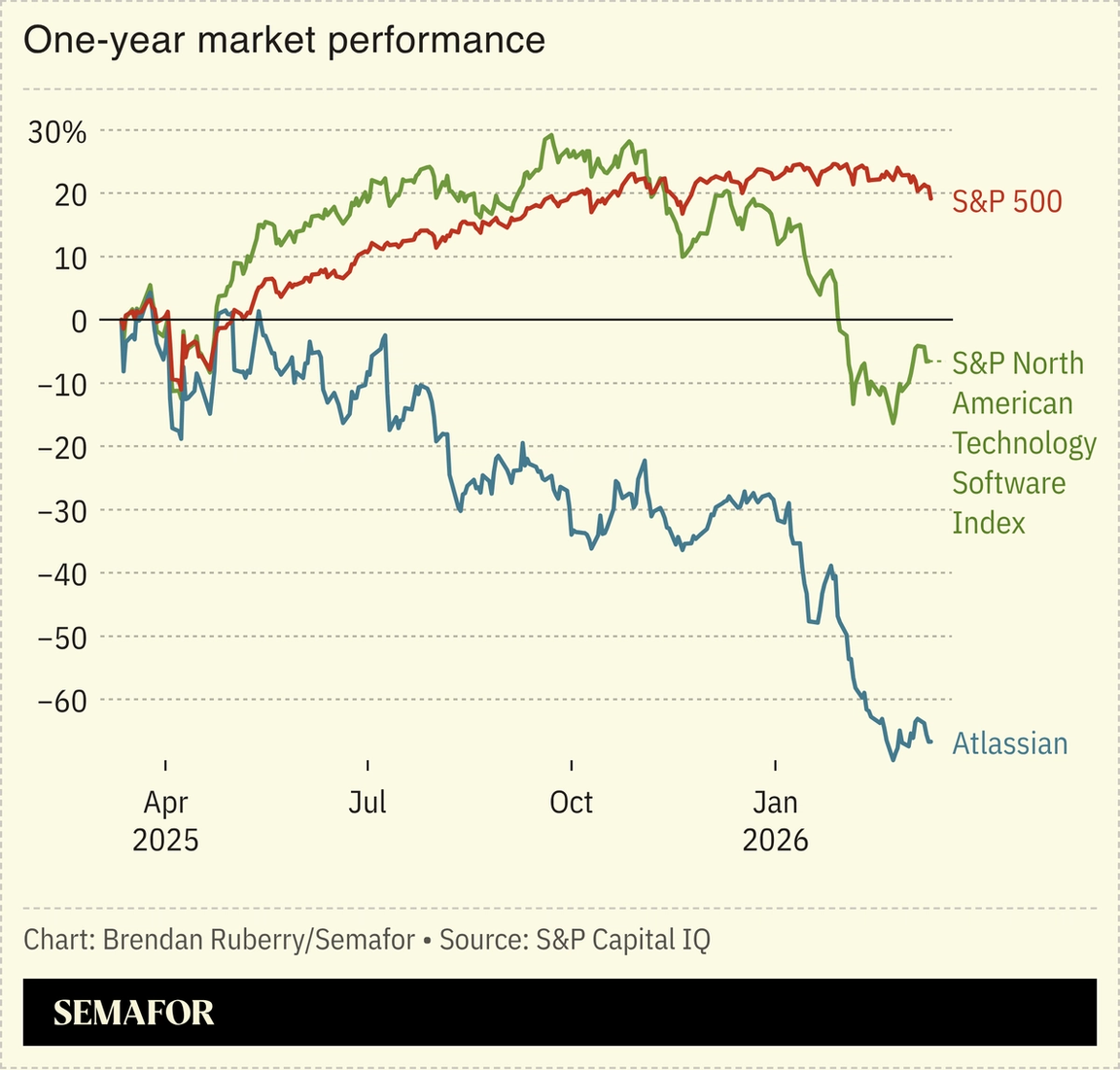 Australian software giant Atlassian said Thursday it was cutting about 10% of its workforce, marking the latest round of AI-linked layoffs to hit the global tech sector. US-based Block last month cut 4,000 jobs, saying AI could automate much of those employees’ work. Tech giants “have no idea the extent of the havoc AI is wreaking on white-collar jobs,” but are pivoting to support blue-collar jobs to build AI infrastructure and get ahead of public backlash, Semafor’s Liz Hoffman wrote. But that in turn could morph into a crisis of skilled labor shortages. AI “is going to create many jobs and we’re not prepared as a society to fulfill those jobs,” BlackRock’s Larry Fink told Hoffman Wednesday. |
|
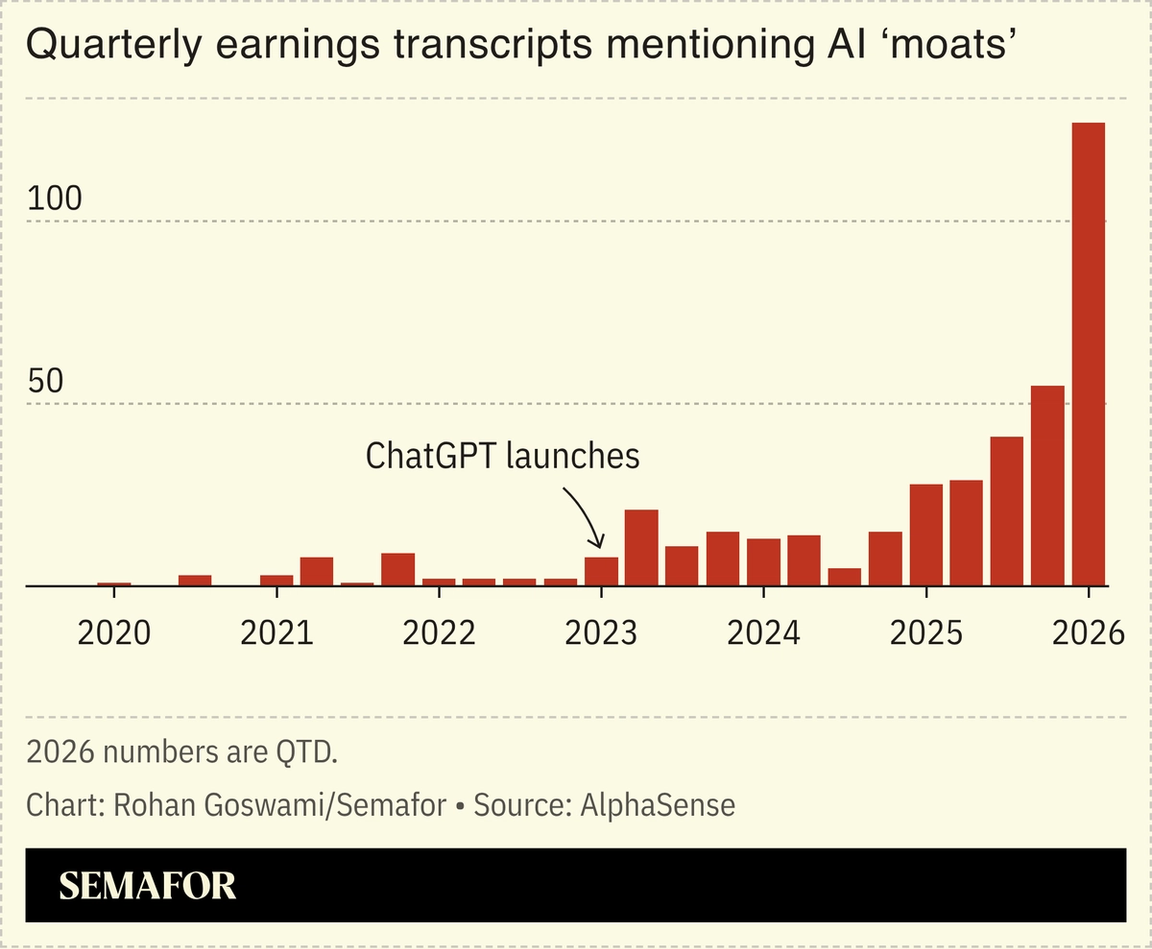 CEOs have a new favorite word: “moat.” At least 118 companies touted the moats they have, or are building, against AI this quarter, data from market research firm AlphaSense shows. They’re trying to pull up the drawbridge against the oncoming surge of agentic applications and tamp down investor panic about whether software businesses can survive. Etsy’s moat, for example, is its handmade goods in an AI art world. Banking app Dave cited its regulatory relationships. The moat discourse marks a reversal of the buzzwords of past earnings cycles, where executives were eager to signal an embrace of trending tech, Semafor’s Rohan Goswami noted. Now, they’re nervously watching their stock prices against AI, though there’s little evidence investors are buying the “moat” narratives. |
|
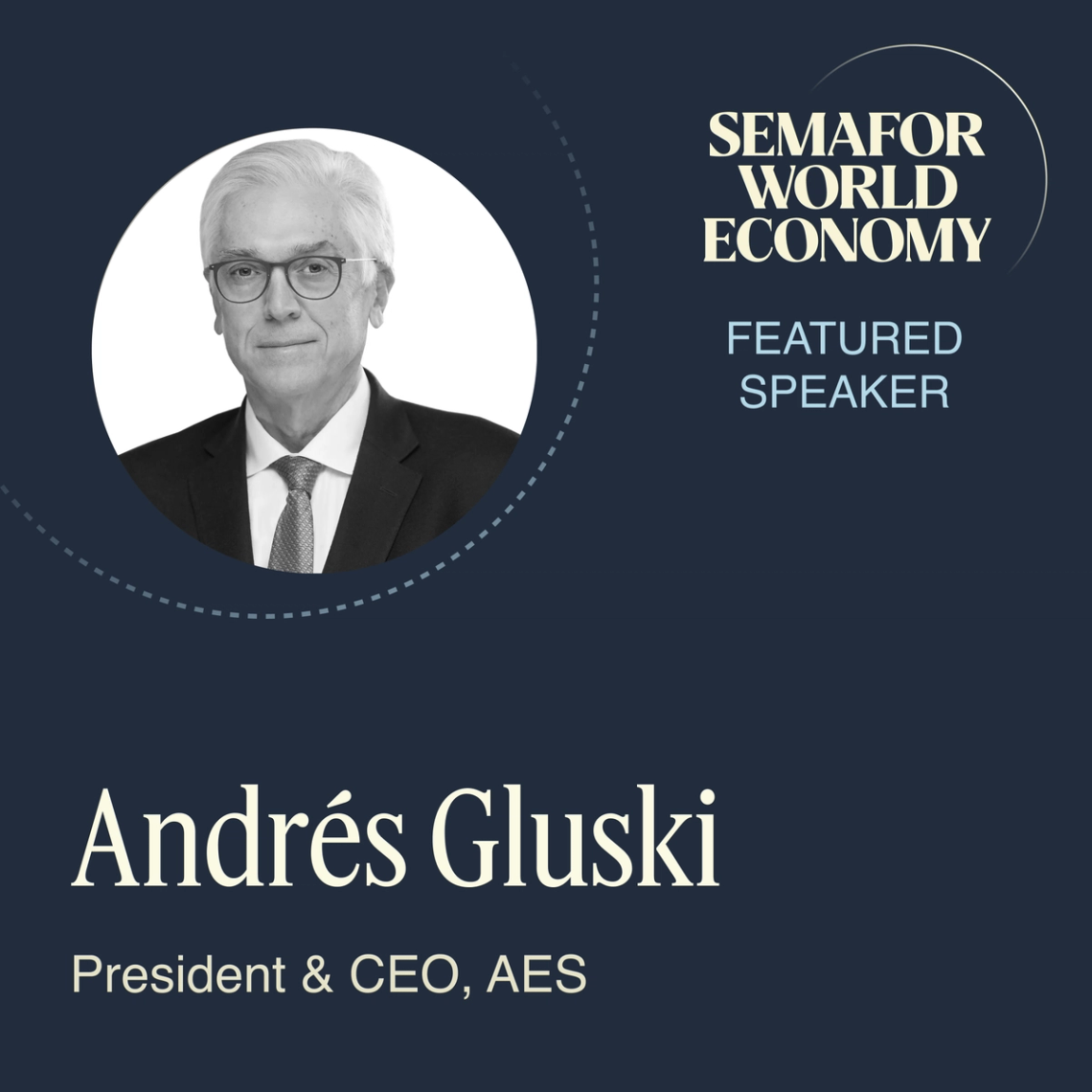 This April, Andrés Gluski, President & CEO of AES, will join global leaders at Semafor World Economy — the premier convening for the world’s top executives — to sit down with Semafor editors for conversations on the forces shaping global markets, emerging technologies, and geopolitics. See the first lineup of speakers here.
|
|
Anthropic writes ‘constitution’ for AI |
Anthropic’s attempt to write a 30,000-word “constitution” for its AI appears to be effective. The document constricts the Claude AI’s behavior, including limiting dishonesty and causing harm. Researchers split the document into 205 testable rules, and found that newer, constitution-trained models were much less likely to break them than older ones. AI-risk experts argue that human values are complex, and that smart AIs would find dangerous loopholes, so successfully instilling the constitution would be “a big deal for safety,” the authors said. The results are not perfect. Claude still occasionally fabricated data, and its rules sometimes conflicted: An AI instructed to lie must either break rules on dishonesty or following operator instructions. Still, the researchers were “fairly impressed.” |
|
Russia’s comeback in sports and arts |
 Sarah Meyssonnier/Reuters Sarah Meyssonnier/ReutersRussia’s pariah status in sports and art may be weakening. Russian athletes are competing in the Winter Paralympics, with one alpine skier taking the country’s first gold since 2014; they were banned in 2018 over doping allegations, and then from almost all sporting events after the 2022 invasion of Ukraine, but Moscow won a legal appeal in January. Russian artists are also staging a comeback at the Venice Biennale in May after skipping two previous editions. Organizers seem to have given tacit approval to their return, with Artnet suggesting the shift in stance follows the appointment of a right-wing journalist as Biennale president. The EU has threatened to pull its funding from the event over Russia’s participation. |
|
Noma chef resigns on abuse allegations |
|
|


