| | In this edition: S.Africa’s business leaders warn of Iran war risk, a Tanzanian tycoon buys East Afr͏ ͏ ͏ ͏ ͏ ͏ |
| |  Dar es Salaam Dar es Salaam | Harare | Johannesburg |
 | Africa |  |
| |
|
 - Iran war impact fears grow
- US diplomat rebuked
- Tycoon buys media giant
- Lithium shift benefits Beijing
- Sudan pressure in DC
- Fugitive fears extradition
 Knitted prostheses for Kenyan cancer survivors. |
|
Iran war raises S. Africa rate cut fears |
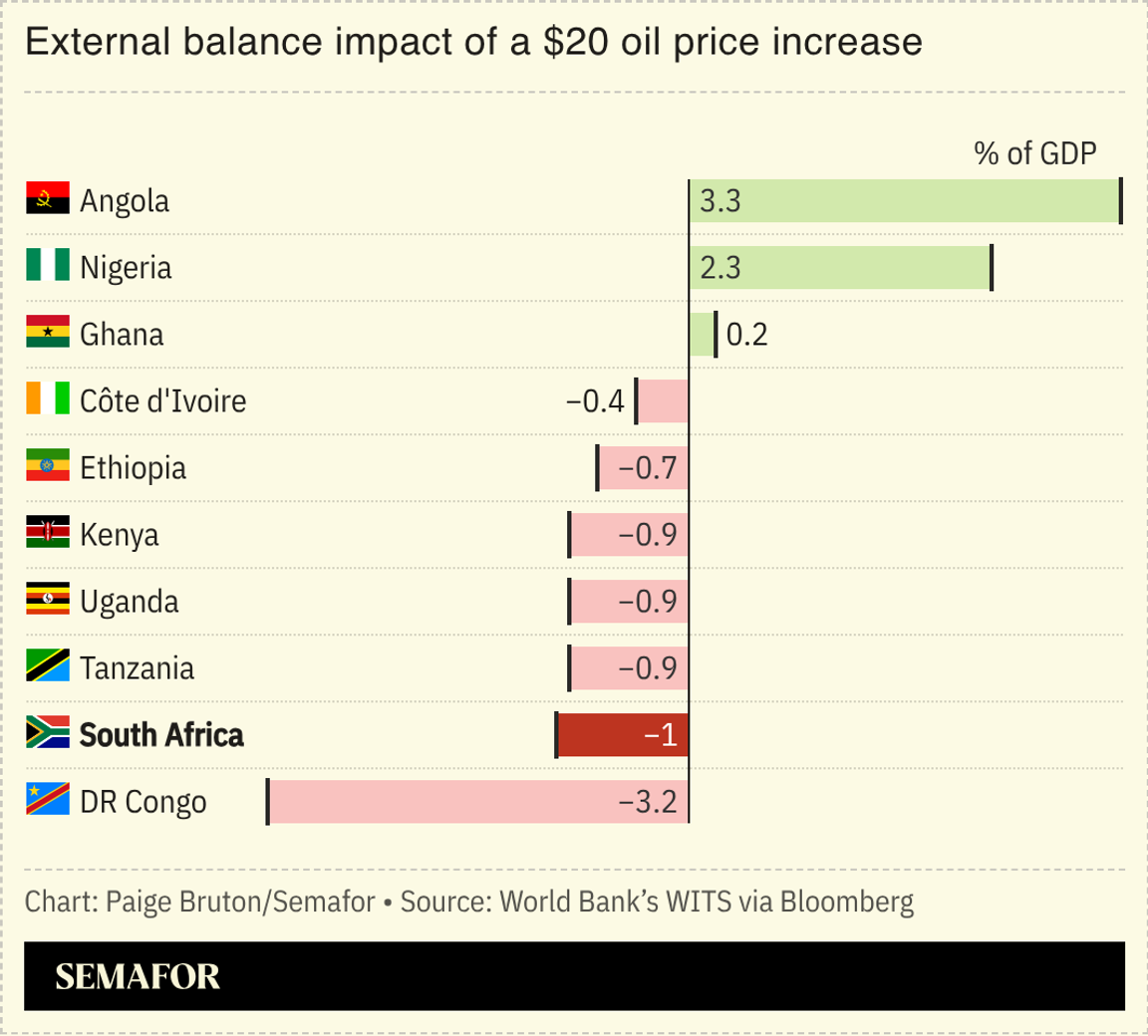 Standard Bank — Africa’s largest bank by assets — warned that the Middle East war will delay interest rate cuts in South Africa, its CEO told Semafor, joining a chorus of business leaders who say the conflict risks narrowing room for maneuver in Africa’s biggest economy. “Before this conflict, we expected South African interest rates to be cut three times this year. We now think it will be twice,” Sim Tshabalala said, citing the impact of higher oil and gas prices. Similarly, the CEO of South Africa’s biggest insurer, Sanlam, told Business Day the war will entrench inflation, force higher rates, and reduce asset rates. Other business leaders fear Pretoria, which in January allowed Iran to participate in naval drills in its waters, is perceived to be Tehran’s ally. FirstRand CEO Mary Vilakazi urged Pretoria to adopt a more “more neutral stance,” warning that adverse geopolitical optics could undermine South Africa’s economic recovery. National Treasury policymakers have already warned that their economic assumptions “need to be interrogated” following the Israel-US military attack on Iran. The South African Reserve Bank will also redraft risk scenarios in the wake of the war. — Tiisetso Motsoeneng |
|
South Africa rebukes US ambassador |
 Leo Brent Bozell. Kris Connor/Getty Images. Leo Brent Bozell. Kris Connor/Getty Images.South Africa summoned Washington’s new ambassador after he publicly dismissed a court ruling that the anti-apartheid chant “Kill the Boer” does not constitute hate speech. Leo Brent Bozell’s comments, later walked back with an apology, were read in Pretoria as “undiplomatic,” prompting a formal dressing down. The demarche, as it is referred to in diplomatic parlance, is a level below expulsion, signaling that South Africa regards his intervention as an affront to judicial independence. The rebuke comes less than a month after Bozell formally began his posting and adds to tension between the US and Pretoria. Relations are already strained following South Africa’s genocide case against Israel over its military operations in Gaza, Washington’s call for affirmative action laws to be rolled back, and the fallout from US President Donald Trump’s repeated false claims of a “white genocide” in South Africa. Meanwhile, South Africa plans to install a senior diplomat to lead its Washington affairs in an acting capacity. Its last ambassador, Ebrahim Rasool, was expelled last year after public comments in which he accused Trump of being a white supremacist. — Tiisetso |
|
 This April, Tom Greenwood, CEO of Helios Towers, will join global leaders at Semafor World Economy — the premier convening for the world’s top executives — to sit down with Semafor editors for conversations on the forces shaping global markets, emerging technologies, and geopolitics. See the first lineup of speakers here. |
|
Tycoon buys Nation Media Group |
| |  | Vivianne Wandera |
| |
 Thomas Mukoya/Reuters Thomas Mukoya/ReutersThe sale of Nairobi-based Nation Media Group, East Africa’s largest media house, to Tanzanian business magnate Rostam Azizi has raised concerns about potential political interference in the region’s most influential news outlets. The Aga Khan Fund for Economic Development this week sold its majority stake in Nation Media to Azizi’s Taarifa Group, ending the Aga Khan IV family’s 66-year stewardship and marking Kenya’s most significant media ownership change in decades. Azizi has pledged to uphold the company’s editorial standards. However, concerns center on his ties to regional leaders and the scale of Nation Media’s operations, which employ hundreds of journalists across television, radio, and print in Kenya, Rwanda, Uganda, and Tanzania. At stake is the group’s editorial independence and public trust in one of East Africa’s most influential media institutions. |
|
Zimbabwe’s lithium ambition needs China |
| |  | Ray Mwayera |
| |
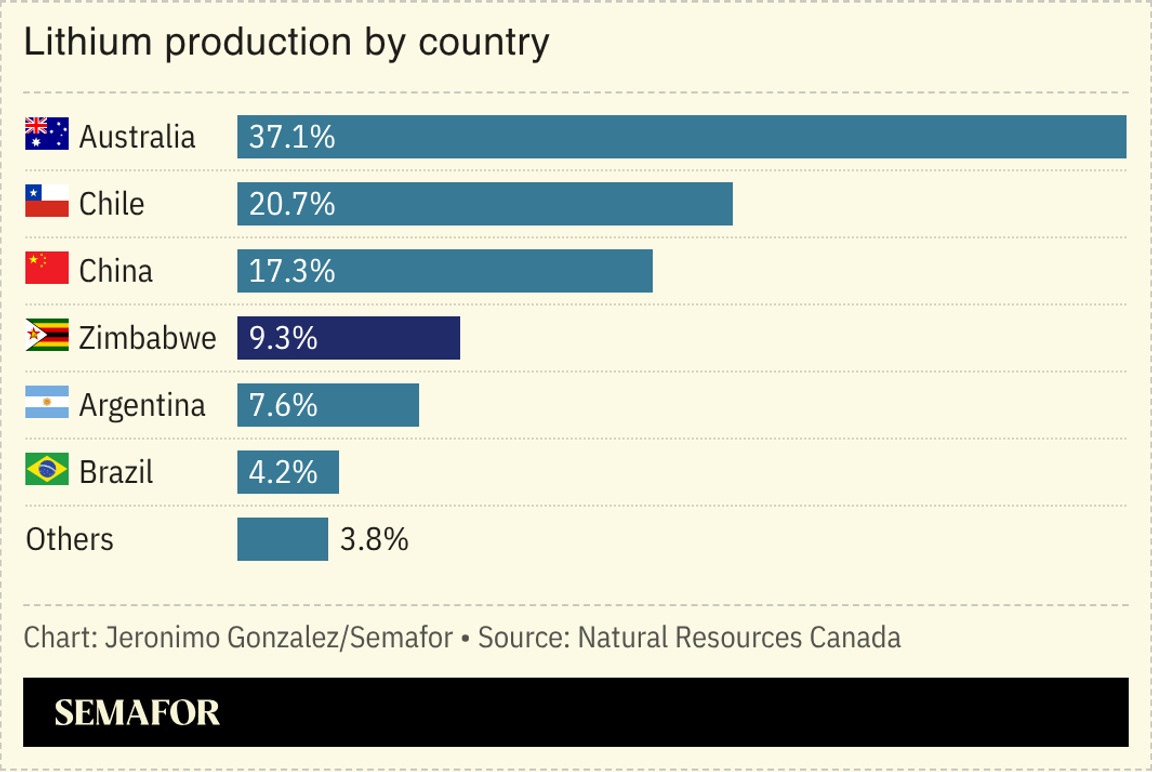 Zimbabwe’s push to refine lithium at home could reshape both its economy and the global battery supply chain — but it also risks reinforcing China’s dominant role in the local industry. Chinese producers are building lithium sulfate plants in the country as Harare forces mining companies to process more of the metal domestically instead of exporting raw materials. Lithium sulfate is used to produce battery-grade compounds for electric vehicles and energy storage systems. It is part of an aggressive beneficiation strategy by President Emmerson Mnangagwa’s government, which last month suspended lithium concentrate exports. Zimbabwe has rapidly become a major player in the lithium market, accounting for almost 10% of global mined supply last year, according to the US Geological Survey and around 15% of processed lithium in China. But the companies building that processing infrastructure are overwhelmingly Chinese, raising questions about whether the country is building an independent refining sector or simply deepening its role inside China’s battery ecosystem. |
|
Sudan concerns ramp up in DC |
 Sudanese army soldiers take part in a military parade. Ebrahim Hamid/AFP via Getty Images. Sudanese army soldiers take part in a military parade. Ebrahim Hamid/AFP via Getty Images.Washington is ramping up pressure on both sides of Sudan’s civil war as President Donald Trump’s administration pushes for an end to the nearly three-year conflict. The State Department said this week that it is designating the Sudanese Muslim Brotherhood as a foreign terrorist organization effective March 16. The move is widely seen as a win for the United Arab Emirates, which has long claimed the Sudanese Armed Forces’ Islamist allies are extremists blocking peace. US Secretary of State Marco Rubio said the Brotherhood had been “trained and supported” by Iran. But the announcement drew calls for similar penalties to be leveled at the UAE-backed Rapid Support Forces, the paramilitary group fighting Sudan’s armed forces. Sen. Jim Risch, chair of the US Senate Foreign Relations Committee, said the Trump administration should “seriously consider” the same designation for the “genocidal” RSF. The US Commission on International Religious Freedom, a federal body in Washington, also recommended labeling RSF an “entity of particular concern” — a category used for non-state actors accused of religious freedom violations. Meanwhile, Sudan hired Washington lobbying firm The Williams Group, signaling Khartoum’s intent to more aggressively shape its image in the US capital. — Adrian Elimian |
|
Fugitive ex-minister eyes US residency |
 Ghana’s former Finance Minister Ken Ofori-Atta. Ernest Ankomah/Getty Images. Ghana’s former Finance Minister Ken Ofori-Atta. Ernest Ankomah/Getty Images.A lawyer representing Ghana’s former Finance Minister Ken Ofori-Atta said his client is pursuing permanent US residency rather than returning to his home country, where he fears he would not be tried fairly on corruption charges. Ofori-Atta is being held in an ICE detention facility in Virginia after his arrest by US immigration officials in January for overstaying on a visa. Enayat Qasimi told Semafor his client has a “pathway to residency” that he would pursue. He claimed there were “serious questions” about the independence of the Ghanaian judiciary and said that Ofori-Atta had been subjected to a “political witch hunt” that meant he was unlikely to receive a fair trial over alleged financial impropriety while in office, from 2017 to 2024. The office of Ghana’s attorney general declined to comment. Ghana has issued an extradition request for Ofori-Atta’s return, which US officials told Semafor had been received. Ghana was gripped by the worst economic crisis in a generation under Ofori-Atta’s tenure, during the final years of the administration led by his cousin former President Nana Akufo-Addo. The pursuit of Ofori-Atta over alleged financial impropriety has become emblematic of the vow by President John Dramani Mahama, who came last year, to tackle corruption. — Alexis Akwagyiram, Nana Oye Ankrah and Adrian Elimian |
|
 - South Africa has increasingly found itself at the heart of far-right US conspiracy theories, which cite the country as an example of what could happen if an ethnically white population loses political and economic dominance. Two stories on the issue highlight the fear-mongering and baselessness of the myth of Afrikaner genocide and the Great Replacement Theory: The Guardian’s Eve Fairbanks outlines the various ways in which white South Africans were affected by apartheid, noting the high levels of censorship, crime, and corruption. Meanwhile, Reuters’ Nellie Peyton and Tim Cocks interviewed several formerly US-based Afrikaners who returned to South Africa in recent years in search of a better life.
- Beijing’s removal of import duties on African exports has been marketed as a “gift” by the Chinese government on the back of fluctuating new US tariffs. However, in reality, so much of Africa’s exports are based on raw or minimally processed metals and minerals — which are very often mined by Chinese companies. Therefore, the new duty-free policy is actually a win-win for Beijing on both sides of the transaction, Bonnie Girard argues for The Diplomat: “Having the state itself reduce, or in this case, wipe out duties is a major help to maintain downward price pressure,” pushing Africa further into an extractive trade dynamic.
- As a wave of coups d’état have overthrown governments across West Africa, in Benin, a failed plot last year left some military officers alive to tell the tale. Abou Issa, who is the chief of staff of Benin’s state army, awoke one night in December to a loud crashing sound in his reception room. He then received a phone call from a commander: Another general had been attacked in his home, and Issa could be next. But by that point, Issa’s assailants were already in his house.
|
|
|


