| | In today’s edition: What it takes to cold-call the president. ͏ ͏ ͏ ͏ ͏ ͏ |
| |  Austin Austin |  Washington Washington | New York |
 | Media |  |
| |
|
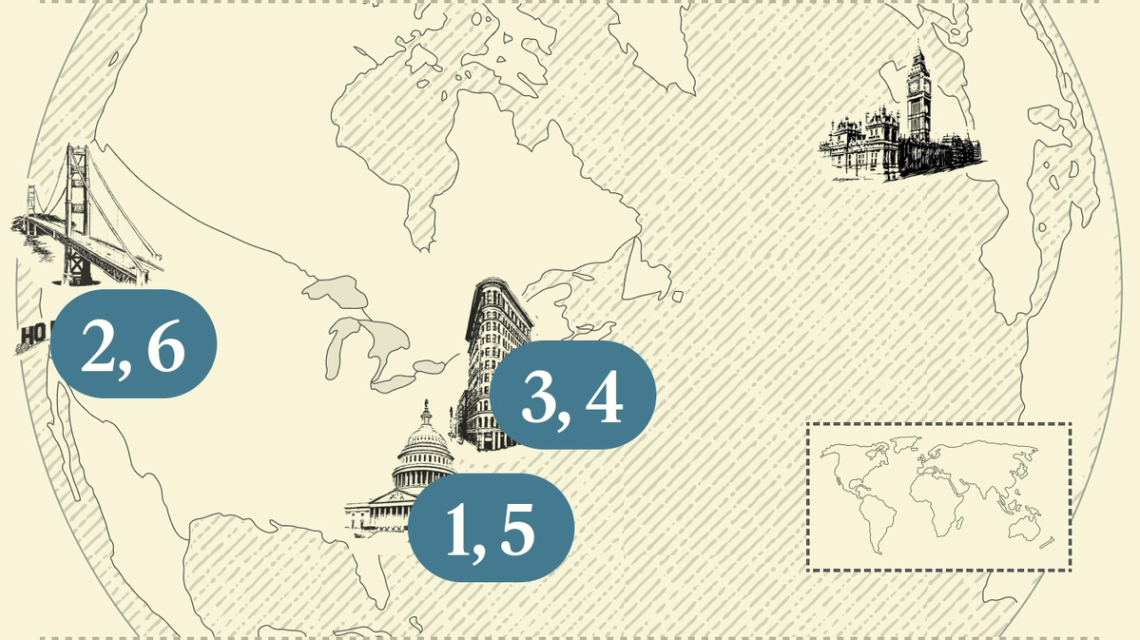 - Cold-calling the president
- Carr v. California
- A PR legal fight
- Mixed Signals
- Sky News and Bessent
- Oscars season
|
|
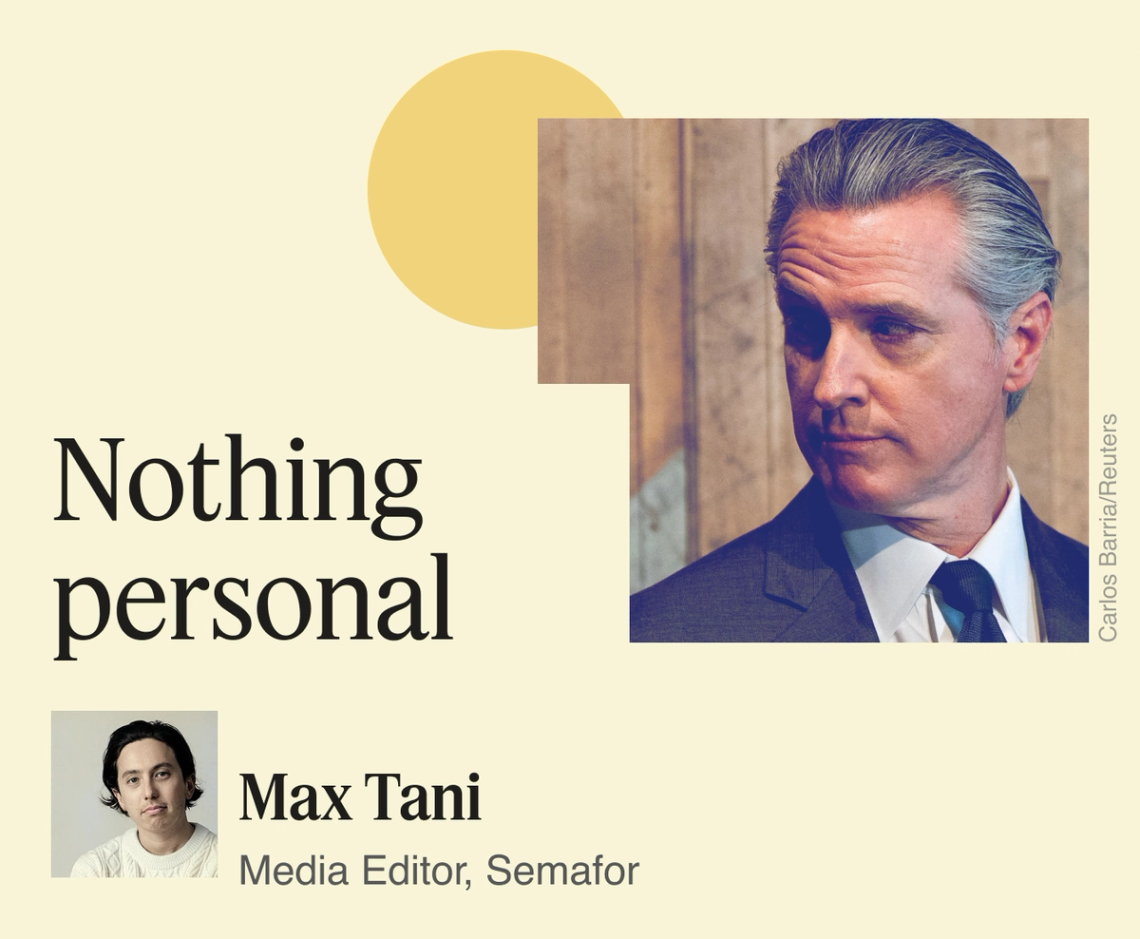 California’s probe into Paramount’s acquisition of Warner Bros. Discovery isn’t a personal attack on owner David Ellison. That’s what California Gov. Gavin Newsom told me when I caught him for a few minutes backstage after his Vox Media interview at SXSW to promote his new book. (You can judge for yourself whether he “mogged me” in the forthcoming video interview.) On the night of the Academy Awards, I was curious how the governor was thinking about the California attorney general’s inquiry into the deal, and how it will affect entertainment workers in a beleaguered Hollywood. Newsom told me he’s concerned about the amount of debt Paramount was taking on to acquire WBD, and whether it will inevitably lead to massive consolidation and job loss in the state. “We’re doing our job,” Newsom said. “The [California] Department of Justice is doing their job because we know the federal government will not. They’ve already basically signed off on it, which is just in and of itself extraordinary. It was ‘ready, fire, aim,’ as opposed to ‘ready, aim, fire,’ in terms of assessing the merits of this.” Newsom may be the Democrats’ current champion, but he has his own long relationship with the Ellison family (he once gifted Larry Ellison the key to the city of San Francisco, though that didn’t stop him from trying to get Newsom recalled). The Ellisons still employ a significant number of white-collar workers in California, via Oracle and Paramount. But now, the party that Newsom wants to lead is clamoring for Democrats to go after any major company or figure who appears to be capitulating to Donald Trump, with Ellison near the top of the list. “It’s not personal. It really impacts real people, communities — the entire ecosystem,” Newsom told me of the merger and looming potential cuts. “That creative economy is … why we dominate in this space. We can’t lose that.” Also: why (and how) every reporter seems to be calling Trump’s cell phone, what The Atlantic’s editor-in-chief told Jeff Bezos, and NOTUS’ impending hiring spree. |
|
What it takes to cold-call the president |
 Joey Pfeifer/Semafor Joey Pfeifer/SemaforTrump’s iPhone won’t stop ringing because his Palm Beach number has become the ultimate status symbol in a town obsessed with proximity to power and influence. So early last week, after reading what felt like the 50th exclusive phone interview with Trump, I set out to obtain the president’s number and call him. It would have been too easy to ask my colleague Shelby Talcott for it, and I wanted to test the impression number-possessors like to give out that it’s a kind of holy grail of access journalism. I quickly found that it’s the worst-kept secret in Washington. Few of the lightning-speed exclusive interviews reporters have scored with the president this way have generated significant news, but many tell me it’s hard to resist calling. “I feel like Frodo with the ring,” one Washington journalist who has spoken with Trump over the years said. “I know it’s dangerous, but it keeps beckoning me.” |
|
Newsom calls FCC chairman’s threats ‘sick’ |
 Paul Morigi/Getty Images for Semafor Paul Morigi/Getty Images for SemaforNewsom told me he’s alarmed by FCC Chairman Brendan Carr’s threats against media companies. On Sunday, Newsom said Carr’s warnings about revoking local broadcast licenses from affiliates carrying news networks that have covered negative information about the US’ attack on Iran were “sick.” The governor argued people from all political perspectives should be concerned about federal regulators weighing in on news content. “In the middle of a war, now we’re talking about propaganda that suits the Dear Leader, because [the Trump administration doesn’t] like independent media,” he said. “So we have to have state media and content that’s driven by state media that comports to their perspective of the truth.” When asked if Democrats should apply Carr’s tactics to right-leaning media outlets the next time a Democrat can appoint the FCC chair, Newsom said the next FCC chair should not overstep in regulating content, and should follow the existing guidelines more closely. “No, I want independent thinkers that hold people to account. I want people to appropriate the rules and regulations as they’re drafted, with the constitutional constraints and constructs, but also the laws that Congress has enacted, and you enforce those at the executive level with truth and objectivity. None of that is on display right now. It’s all subjectivity. It’s all about kissing the ring.” |
|
Reporter emails are collateral damage in NYC PR brawl |
 Stefanie Keenan/Getty Images for Hammer Museum; Pavlo Gonchar/SOPA Images/LightRocket via Getty Images Stefanie Keenan/Getty Images for Hammer Museum; Pavlo Gonchar/SOPA Images/LightRocket via Getty ImagesDueling lawsuits between Jonathan Orszag, a prominent economist and brother of Lazard chairman Peter Orszag, and FTI Consulting, Orszag’s former employer, read like a Michael Lewis novel: There are accusations of backroom deals, the poaching of senior executives, and secret negotiations with a Goldman Sachs unit to launch Orszag’s own economic consulting practice, Semafor has learned. FTI sued Orszag for breach of contract, alleging he conspired with other senior FTI executives to poach people for his new firm, Econic Partners, which has already notched a $1 billion valuation, according to a lawsuit seen by Semafor. Orszag then counter-sued FTI, arguing the New York PR shop is trying to torpedo his business, and has been looking to subpoena private messages between members of the press and FTI’s outside advisers to make the case. (We know this because our messages came up in an effort to comply with one of the subpoenas.) Orszag told Semafor FTI was “weaponizing litigation” to hurt his business, and that his pursuit of private press messages was to sustain those claims. A representative for FTI declined to comment. — Rohan Goswami |
|
Goldberg on ‘Mixed Signals’ |
 Atlantic editor-in-chief Jeffrey Goldberg joins Mixed Signals on the one-year anniversary of the scoop known as Signalgate — when he was accidentally added to a top-secret Trump administration group chat. Ben and I ask if anything actually changed after the scandal, how Trump reacted to the story, and what interior decorating tips he asked Goldberg for when the two met in the Oval Office afterwards. Goldberg also talks about his previously unreported recent conversation with Bezos about why The Washington Post has been struggling (Bezos blamed Google search; Goldberg pushed back), his falling out with Benjamin Netanyahu, and why he believes The Atlantic’s mix of magazine storytelling and newspaper reporting is the key to its success.
|
|
 Screenshot/The Master Investor Podcast with Wilfred Frost/YouTube Screenshot/The Master Investor Podcast with Wilfred Frost/YouTube“In the middle of an interview with my colleague @WilfredFrost, U.S. Treasury Secretary Scott Bessent is called away after a message from the White House Situation Room: ‘The President wants you right away,’” a Sky News presenter breathlessly posted Friday. “Minutes later he returns — visibly shaken, barely able to speak.” Hell of a story — as long as you don’t watch the basically unremarkable video. To this viewer, Bessent appeared slightly awkward in a rare digression into his personal life. (He also was gone for longer than a few minutes.) But the clip is part of a new genre of delusion in our video-centric media age, in which, somehow, nobody actually watches the video. — Ben Smith |
|
Live(?) from the red carpet |
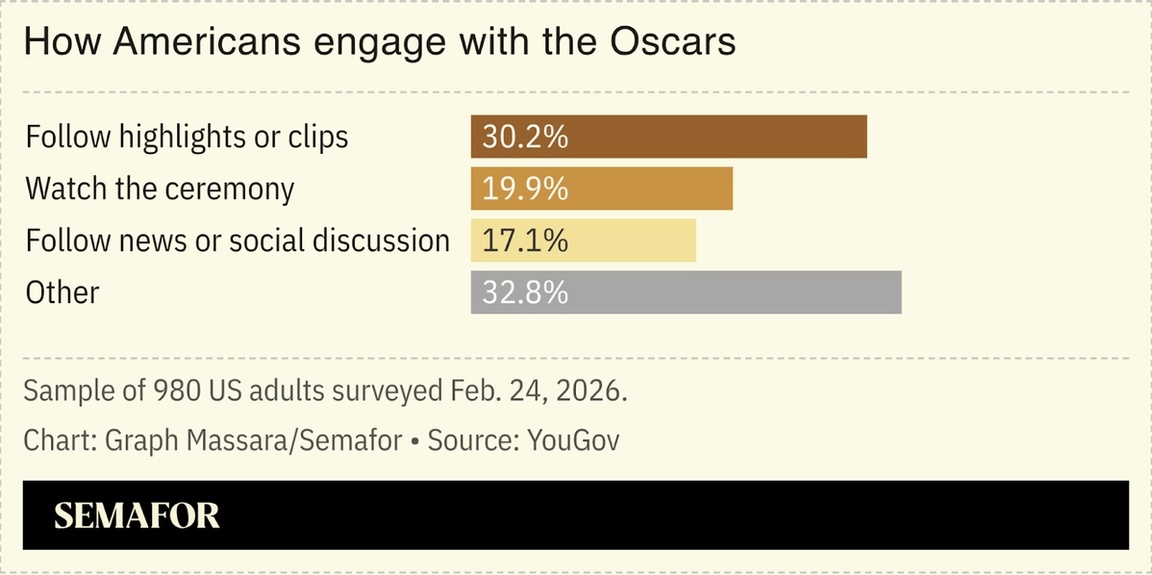 Most Americans are at least vaguely aware there’s an awards show in Los Angeles tonight — but if they’re watching at all, they aren’t necessarily tuning in live, according to a recent YouGov survey. Just one in five respondents said they tend to actually watch the Academy Awards show itself (live or taped), while 30% said they usually watch clips or highlights instead. That’s one reason why the Academy announced it had struck a deal last year to hand broadcast rights over to YouTube exclusively starting in 2029. In the meantime, last year’s 19.7 million viewers was enough to get advertisers excited again. Disney sold out of ad inventory across ABC and Hulu, and has been charging a cool $2 million for a 30-second Oscars spot, according to Deadline — not Super Bowl prices, but not bad for Conan O’Brien in a tux. — Graph Massara |
|
 What do the smartest leaders do when the pressure is on and the world is watching? Rapid Response goes inside the corner office, spotlighting the real-time decisions that define companies and industries. Host Bob Safian talks with CEOs, founders, and experts about navigating today’s uncertainty, responding to disruption, and the leadership challenges that shape the future of business. Listen wherever you get your podcasts. |
|
NYT: When warned that Bezos’ changes to the Post’s op-ed section would spur a reader exodus, the billionaire WaPo owner responded, “I don’t care,” Ben Mullin, Erik Wemple, and Katie Robertson write. WaPo: Defense Secretary Pete Hegseth banned press photographers during Iran war briefings over “unflattering” photos of himself, Scott Nover scoops. CNN: Carr was in Mar-a-Lago when he began threatening broadcasters over their reportage on the Iran war; Brian Stelter was on the same flight out of Florida. Axios: The White House is not pleased that CBS News has hired Jeremy Adler, a former staffer of Trump critic Liz Cheney, Alex Isenstadt and Sara Fischer report. Breaker: Time Magazine’s recent cover story on Anthropic’s battles with the Pentagon was written by a former fellow with the Silicon Valley-linked Tarbell Center, Lachlan Cartwright writes, following up on our Tarbell-focused reporting from earlier this year. |
|
|


