|
 |



A federal judge dealt a major blow to HHS Secretary Robert F. Kennedy Jr.’s antivax agenda yesterday, ruling that the Centers for Disease Control and Prevention’s attempted changes to the childhood vaccine schedule violated federal law. Our Jonathan Cohn will have much more on this in his Receipts newsletter later today, so watch for that—we could all use a little good news. Happy Tuesday.
 |
The Trump Doctrine
by Andrew Egger
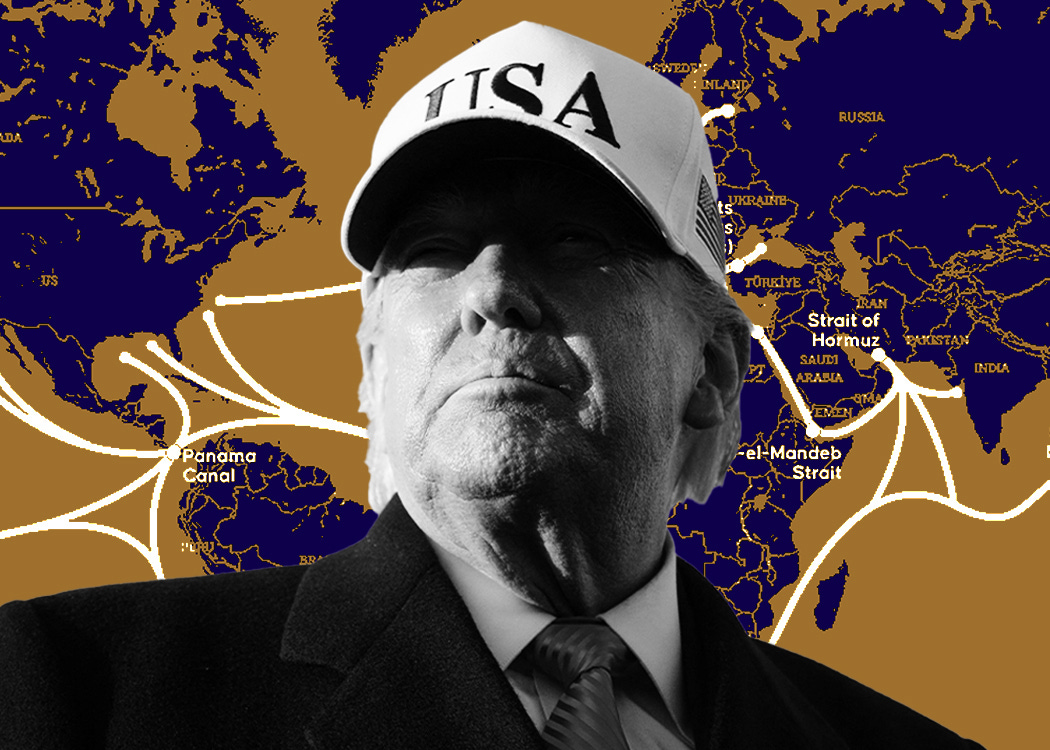
Defense Secretary Pete Hegseth spends a lot of time fuming at the media, but last Friday he was particularly irate. CNN had just reported, citing anonymous administration officials, that the war in Iran was escalating beyond U.S. expectations or control, with Iran proving infuriatingly and unexpectedly capable of snarling oil traffic in the Strait of Hormuz.
“Patently ridiculous, of course,” Hegseth scoffed. “For decades, Iran has threatened shipping in the Strait of Hormuz. This is always what they do, hold the strait hostage. CNN doesn’t think we thought of that.”
Maybe they should have thought harder. Oil prices are surging again, with Brent crude cracking $100 a barrel again today for the second time since the war began. And in a televised interview overnight, Mohammad Baqer Qalibaf, the speaker of the Iranian parliament, insisted that “the Strait of Hormuz cannot be the same as before and return to its previous conditions” so long as America and Israel continue military operations. He laughed off the idea that aerial bombardment alone would cripple Iran to the point it could no longer contest the strait: “They think they can destroy our facilities with bombers,” he said, “but they don’t know that our design has completely changed.”
And why wouldn’t he sound confident? The United States may still be pounding Iranian targets with total impunity, but Iran knows how badly it has us over a barrel when it comes to the strait. So intense is the pressure on the Trump administration to keep oil prices under control that nearly every other geopolitical consideration has fallen by the wayside. Not only has the White House waived sanctions on Russian oil—it’s even allowing Iranian oil tankers to travel through the strait, as Treasury Secretary Scott Bessent confirmed yesterday. Such are the bizarro conditions of today’s war: America has utter military supremacy in the region, but Iran is the only actor able to freely conduct commerce. Apparently, the White House would rather Iran make a killing selling their oil at ultra-premium prices mid-bombardment than allow the additional price pressure of blockading their tankers.
It’s not that the U.S.–Israeli coalition isn’t still making military headway. Just this morning, Israel announced it had successfully eliminated two of Iran’s top remaining officials—Supreme National Security Council Secretary Ali Larijani and Basij commander Gholamreza Soleimani—in overnight strikes. But even this, it should be said, may not be the White House’s preference: At some point there needs to be someone left to surrender. And Trump, always hunting for a “deal,” may want to take one that he can spin as a victory as long as it gets oil prices down again.
If there is no “deal”—whether because there are no Iranian leaders left to make it or because they just don’t want to—there simply is no economic plan to keep prices under control. And we don’t need to rely on anonymous leaks to CNN to see this; we can just pay attention to the things the American president is saying in public. To recap:
Three days after Operation Epic Fury began, Trump posted on Truth Social that he had ordered his government and his military to guarantee the safety of all maritime traffic in the strait. “If necessary,” he wrote, “the United States Navy will begin escorting tankers through the Strait of Hormuz, as soon as possible.” It immediately became clear that the Navy did not have the bandwidth to do this; traffic through the strait remained snarled.
Four days after that, Trump fired off a post against U.K. Prime Minister Keir Starmer, who was considering sending two aircraft carriers to support U.S. forces in the region. Trump, piqued Starmer hadn’t sent them sooner, told him not to bother: “That’s OK, Prime Minister Starmer, we don’t need them any longer—But we will remember,” he wrote. “We don’t need people that join Wars after we’ve already won!”
One week later—this past weekend—it seemed finally to occur to Trump that the United States could not keep the strait open singlehandedly. He therefore turned on a dime and once more began threatening repercussions for countries that didn’t send ships to help out, including America’s (erstwhile?) European allies . . . and China. “I’m demanding that these countries come in and protect their own territory, because it is their own territory,” Trump told reporters Sunday night. “The United States should not be very much involved” in the strait, he groused at a press conference the next day. “Why aren’t we being reimbursed for that?”
Unsurprisingly, our (still, despite everything, we hope) allies weren’t too impressed, and nobody is leaping to volunteer t