|
 |
Hi, y’all. Welcome back to The Opposition. One of the biggest debates among Democratic officials since the 2024 election has been how they ought to handle hot-button social and cultural issues. Recently, some Democrats have suggested that the best thing to do is just avoid these topics altogether and pivot back to talking about the economy. But can that really work? Do voters deserve real answers to these questions? The party doesn’t appear to agree.
One of the constant themes of this newsletter is how Democrats balance their ideals against the practical realities of politics. These are tough, sometimes uncomfortable questions to work through. But that’s the nature of politics in a country as big, diverse, and complicated as the United States.
To read today’s newsletter in full, sign up for a Bulwark+ membership. You can snag one today for 20 percent off the normal price—and once you do, say hi in the comments section! I’d love to hear from you.
–Lauren
Why the Shut-Up-And-Pivot Approach Won’t Work for Democrats
It’s not so easy to escape the culture wars.
|

| ||||||||||||


 |
IT DIDN’T TAKE LONG after the 2024 election—in which their party lost the White House and the Senate—for Democratic leaders to identify the problem: The party had drifted too far to the left on social and cultural issues.
It also didn’t take them long to come up with a solution: simply to shut up about it.
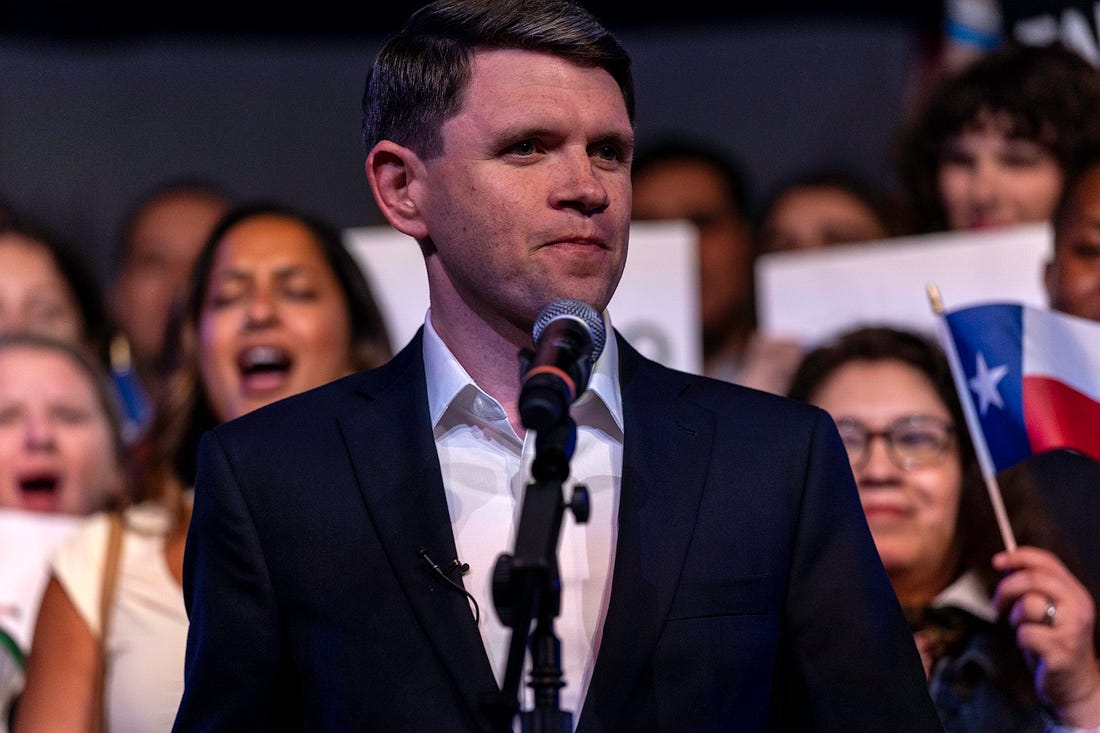
On the campaign trail, candidates like James Talarico in Texas have argued that “culture wars are a smokescreen.”
In an interview last year with NBC News, Rep. Greg Casar of Texas, the chair of the Congressional Progressive Caucus, said that the GOP’s “obsession with these culture war issues is driven by Republicans’ desire to distract voters and have them look away while Republicans pick their pocket.”
And in my conversations over the past few weeks, strategists and campaign staffers I’ve talked to across the country have argued that in order to win back working-class voters, Democrats just need to jiu-jitsu uncomfortable cultural questions about race or gender into criticism of the billionaire class.
“If I was running for governor of Tennessee, I wouldn’t say shit about guns. I mean, I own guns. I just wouldn’t talk about it,” Corbin Trent, former communications director for Rep. Alexandria Ocasio-Cortez and a cofounder of Justice Democrats (as well as a fellow Tennessean), told me in an interview last month. “It’s just not what I would talk about because I don’t think it’s the most pressing issue that people are facing.”
The shut-up-and-pivot approach is not without merit. As its proponents see it, people vote largely on economics. And for Democrats specifically, there’s little upshot in trying to formulate a nuanced position on cultural issues when they’re bound to either disappoint progressives or provide fodder to conservatives—or both.
But the dismissiveness of cultural issues as not ‘real issues’ that actually matter to voters—and therefore not worthy of formulating an opinion on—has left some party operatives on edge. They worry that by not engaging, Democrats will continue to be perceived as condescending and untrustworthy. They fundamentally don’t believe that the party can win back working-class voters and prevent a lasting GOP majority by pretending these issues simply don’t exist.
And it doesn’t require one to look too far back in political history to see another downside of not engaging. During the close of the 2024 election, Donald Trump’s campaign pummeled Kamala Harris over transgender rights, turning her support for transition surgery for inmates into one of the most-advertised issues in the race. Harris’s operation chose not to respond. At least one prominent Democrat with a history of effectively triangulating on these types of issues was beside himself.
Democrats are raising fears of repeating those mistakes. But what’s different this time is ...
Join The Bulwark to unlock the rest.
Become a paying member of The Bulwark to get access to this post and other subscriber-only content.
A subscription gets you:
| Unlimited access to articles and newsletters including The Triad by JVL and Receipts by Catherine Rampell. | |