| | The Iran war roils global commodities markets, central bankers warn of inflation risks, and China re͏ ͏ ͏ ͏ ͏ ͏ |
| |  | Flagship |  |
| |
|
The World Today | 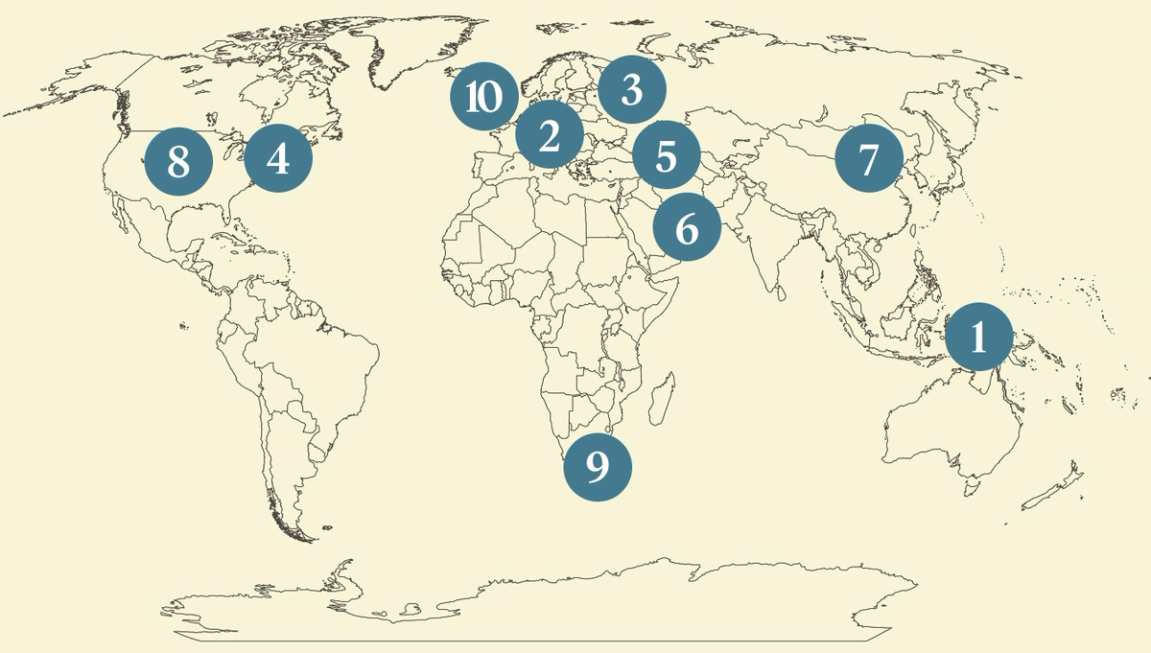 - Commodity market chaos
- Global inflation worries
- Iran war benefits Russia
- Trump, Takaichi meet
- Conservatives blast Trump
- Celebrating Eid during war
- Regulating alternative meds
- Rise of chicken thighs
- Shark history shakeup
- Doctor Who episodes found
 A superfan chases a K-pop star to Seoul, and our latest Substack Rojak digs into China’s OpenClaw frenzy. |
|
Gold falls despite safe-haven reputation |
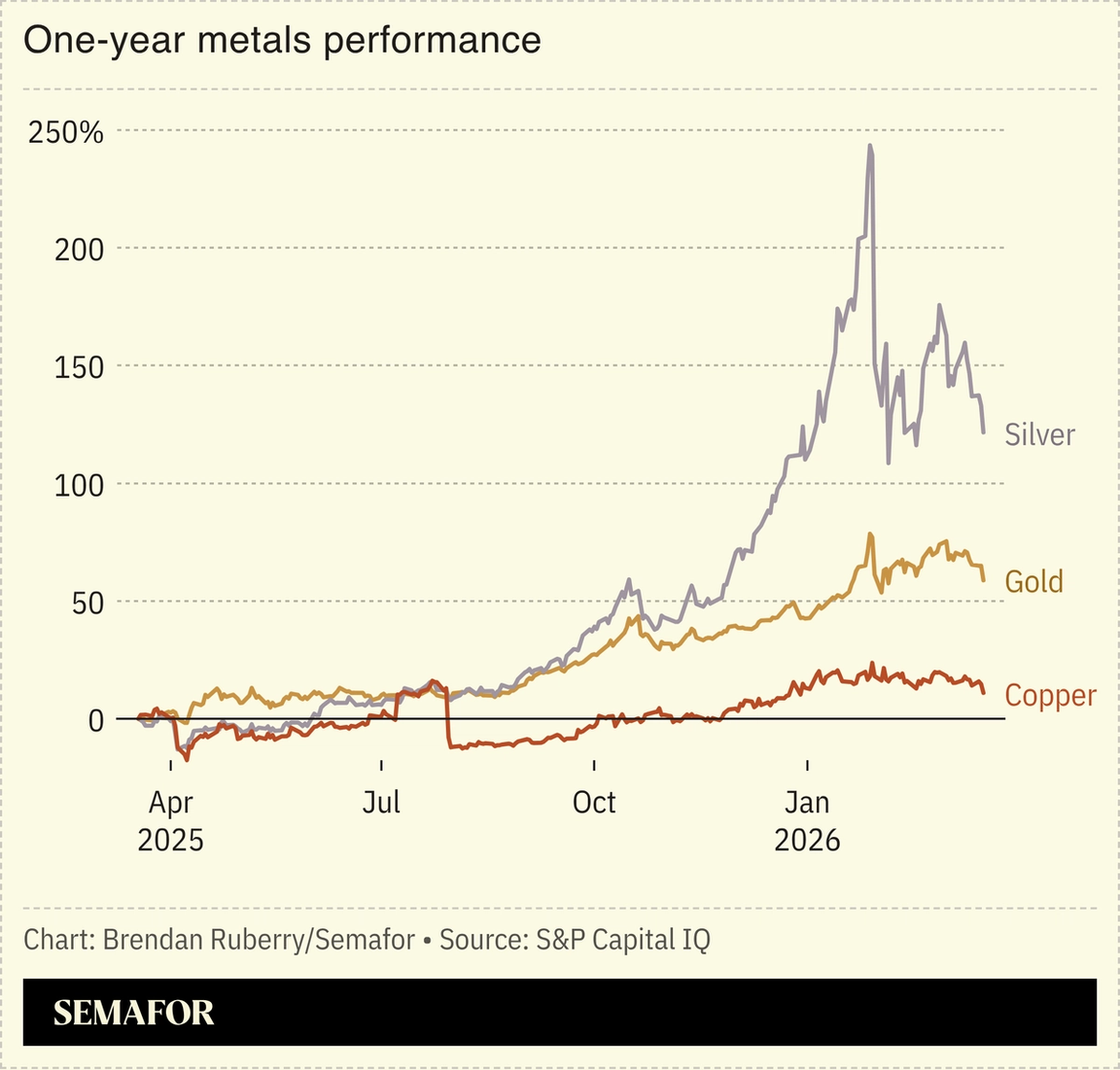 The prices of metals both precious and industrial fell Thursday as the Iran war roiled global commodities markets. The selloff hit copper and palladium, joining gold and silver, which have fallen since the war began. Gold is typically seen as a safe-haven asset, but surging oil prices have spurred concerns that rising inflation will keep interest rates up, weakening gold’s appeal. One analyst attributed the price drop to central banks selling gold to shore up cash: “In times of war… dollars and guns are king, not gold.” The rapidly changing battlefield developments have also left commodity traders with blind spots. Some are hiring security consultants with Gulf sources and using tanker fleets to track port disruptions, The Wall Street Journal reported. |
|
Central banks raise the inflation alarm |
 Kevin Lamarque/Reuters Kevin Lamarque/ReutersCentral bankers in major economies are voicing concerns about the risk of inflation stemming from the war in Iran. The US Federal Reserve Chair spoke of an accumulation of shocks — “the tariff shock, the pandemic, and now an energy shock” — that blunts progress on fighting inflation. The European Central Bank warned of a “material impact on near-term inflation.” Officials in Canada, England, and Japan also said they stand ready to act to address economic disruption, after facing criticism that they reacted too slowly to tame post-pandemic inflation. The attacks on energy infrastructure mark a turning point in the conflict, a Singapore-based strategist said, hitting “the plumbing of the global energy system. What is unsettling markets now is the growing stagflation risk.” |
|
Russia benefits from oil shocks |
|
Strain evident in Trump-Takaichi meet |
 Evelyn Hockstein/Reuters Evelyn Hockstein/ReutersJapanese Prime Minister Sanae Takaichi heralded her warm ties with US President Donald Trump in a White House meeting on Thursday, but the strain in the countries’ alliance was evident. Even as Trump praised Japan for joining several Western countries in pledging to help stabilize global energy markets, he said Tokyo should “step up” and support US efforts to unblock the Strait of Hormuz. Trump also jokingly compared the US’ surprise strikes on Iran to Japan’s 1941 attack on Pearl Harbor, eliciting an awkward reaction from Takaichi. The Japanese public overwhelmingly opposes the Iran war, which is pulling US military resources away from Asia, testing the limits of Takaichi’s close relationship with Trump. |
|
Conservatives deride Trump over Iran |
 Kylie Cooper/Reuters Kylie Cooper/ReutersTwo prominent conservative commentators argued that the Iran war has exposed US President Donald Trump’s character flaws in ways that could doom his MAGA movement. UnHerd US Editor Sohrab Ahmari, who once endorsed Trump, wrote that getting involved in an unpopular and expensive conflict betrays much of the diverse coalition that elected Trump on hopes of foreign-policy restraint: “Trump the war-wary populist has now fully given way to his liberal caricature.” And the Claremont Institute’s Christopher Caldwell declared the Iran attack could “mark the end of Trumpism as a project,” given how “wildly inconsistent” it is with the wishes of the president’s base. “Americans did not expect Trump’s character flaws to endanger them in the realm of foreign policy.” |
|
Celebrating Eid in wartime |
 Benoit Tessier/Reuters Benoit Tessier/ReutersMuslims across the Middle East and South Asia are celebrating Eid under the pall of war. For the Gulf, Ramadan will be remembered for the “air strike alerts, the limits on gathering in mosques, and the canceled iftars. It will also be remembered for heroism,” Semafor’s Gulf editor wrote. In Lebanon, under renewed Israeli attacks in the campaign against Hezbollah, “there’s no joy for Eid or for Ramadan or for anything,” said one woman displaced from her home. Pakistan and Afghanistan declared a temporary pause in fighting for Eid. The holiday this year lines up with Nowruz, Persian New Year, but within Iran, “war, economic strain and an atmosphere of uncertainty dampen the festive mood,” Iran International wrote. |
|
China to regulate traditional meds |
 Tingshu Wang/Reuters Tingshu Wang/ReutersChina will impose evidence-based requirements on its alternative medicines. Traditional Chinese medicine has a millennia-long history, mostly of powders and pills made from animals, plants, and minerals. From the 1940s physicians began to develop injections too. But while some of the medications are backed by research, many are not, and some deaths have been reported. Under Beijing’s draft rules, injectable products that cannot demonstrate safety and efficacy will be removed from the market, Science reported; analysts expect about a third to meet the requirements. It’s not the only step China has taken to regulate its medicine. A pangolin-derived medicine was removed from the official TCM pharmacopoeia last year, and trade in rhino horn and tiger bone has been restricted for decades. |
|
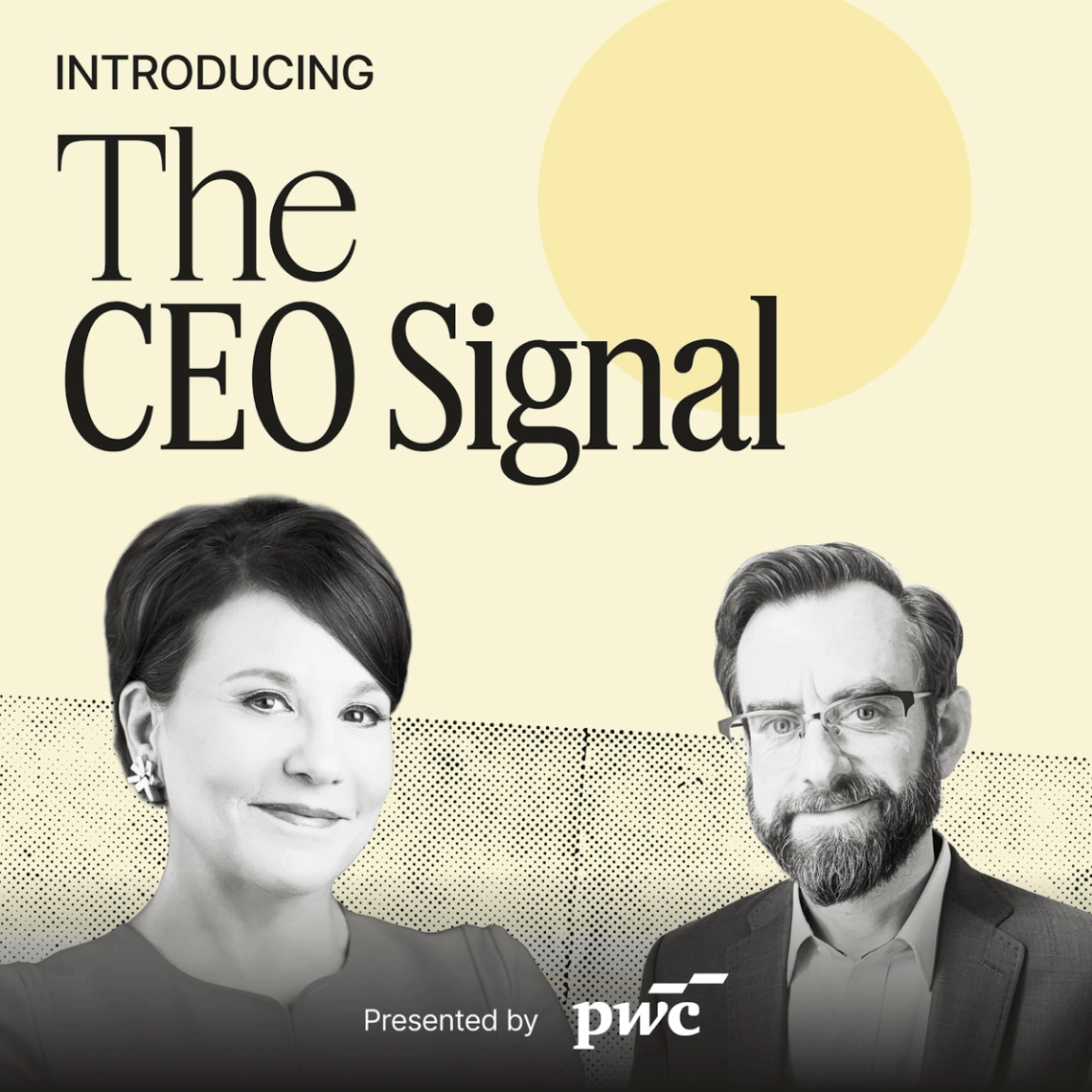 When the business world moves, these are the people turning the wheel. Introducing The CEO Signal, a new video & audio series hosted by Penny Pritzker, founder and chairman of PSP Partners and former U.S. Secretary of Commerce, and Andrew Edgecliffe-Johnson, CEO editor at Semafor. Episodes are released every two weeks. Building on The CEO Signal newsletter, the essential briefing read by the world’s top chief executives, the show brings that perspective to revealing conversations with the people steering the world’s biggest companies. In the debut episode, Andrew and Penny sit down with Starbucks CEO Brian Niccol. Now 18 months into his tenure, Niccol has launched his “Back to Starbucks” campaign — an effort to revive the brand’s classic coffeehouse feel, including baristas writing names on cups again. In the conversation, Niccol explains how he’s rallying Starbucks’ global workforce behind one of corporate America’s most closely watched turnarounds — and working to restore momentum to one of the world’s most recognizable brands. Niccol also reflects on why he tends to step into difficult situations — from Chipotle’s crisis to Starbucks’ reset — and what it takes to lead a company through moments of pressure. |
|
What’s behind the chicken thigh’s rise |
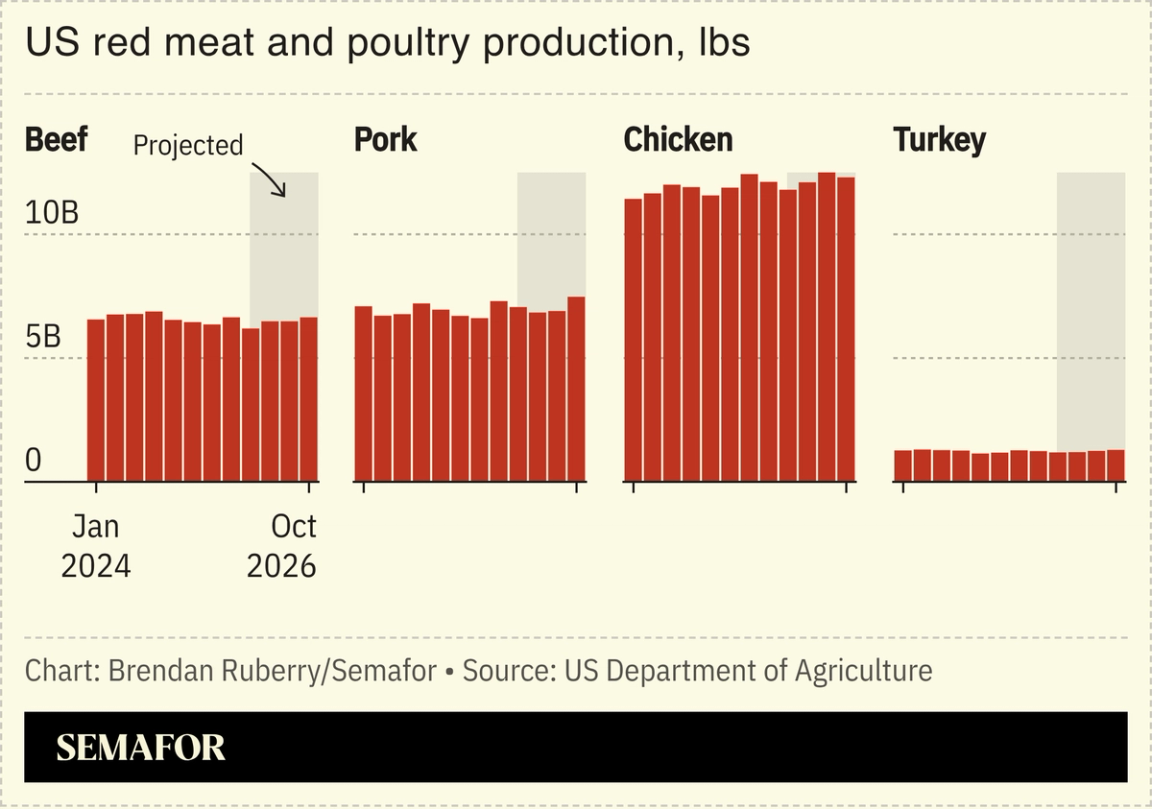 The rising popularity of the humble chicken thigh in the US represents a confluence of cultural and economic trends. Dark meat long carried a stigma of being less healthy, clean, and tasty than breasts and wings. But that negative connotation is eroding, The Wall Street Journal wrote, as thighs become commonplace in both high-end restaurants and fast-casual joints. Part of the story is economic, as Americans feel their cost of living increase. Thighs are also known for their high protein content, at a time of protein-maxxing. The shift can also be attributed to growing Asian and Hispanic populations in the US, for whom thighs are more of a culinary fixture. |
|
Shakeup in shark’s natural history |
 Ho New/Reuters Ho New/ReutersThe natural history of sharks may be more complicated than believed. The story goes that the elasmobranchs — fish with cartilage skeletons rather than bone — split into sharks and skates and rays (batoids) about 300 million years ago. But a new genetic study suggests that some of the odder sharks, hexanchiformes including sixgills and frilled sharks, diverged first, then (possibly) the squalomorphii, including sleeper sharks and dogfish. If true, it means classic sharks such as great whites are more closely related to stingrays than to many other creatures we call sharks. As evolutionary biologist Stephen Jay Gould once said there is “no such thing as a fish,” Nature wrote, it may be that there is no (single) such thing as a shark. |
|
|


