A fresh take on culture, fashion, cities and the way we live – from the desks of Monocle’s editors and bureaux chiefs.
|
Saturday 21/3/26
|

|
|
London
Paris
Zürich
Milan
Bangkok
Tokyo
Toronto
|
|
|
|

stepping out
This week’s dispatch is all about putting your best foot forward – and there’s no better way to do so than in a fresh pair from our selection of top shoe brands. We also suit up for a tour of Australia’s fashion capital, drop by Kwame Akoto’s first major European solo exhibition in Paris and seek out fresh perspectives in Singapore, which has plenty of soft-power ideas rooted in smart diplomacy. Hungry for more? You’re in luck: for starters, Andrew Tuck has a few lessons in business-lunch etiquette.
|
|
Don’t make a meal of your business lunch. Here are 20 rules that’ll help you avoid a two-course ordeal
By Andrew Tuck
|

|
A business lunch can be a fine thing. Over a couple of courses, you can find common ground, show your appreciation and navigate what might have seemed like a tricky relationship when it was all taking place online. But after years of video calls and working from home, people have grown shy of the idea. So here’s a starter pack of advice.
1.
You will probably have between an hour and 90 minutes so ensure that you choose the restaurant wisely. Tasting menus and wine pairings are painful at the best of times. At lunch, they are like a kidnapping with compote. Oh, and no sharing concepts.
2.
The restaurant should be easy to find. Your counterparts shouldn’t need the skills of Sir Ranulph Fiennes to locate “this really cool place that I’ve heard about”. You want this friendship – meet in the middle and respect their time.
3.
Don’t be scared to go low. It won’t work every time but sometimes modesty is the best policy. Fish and chips? Why not?
4.
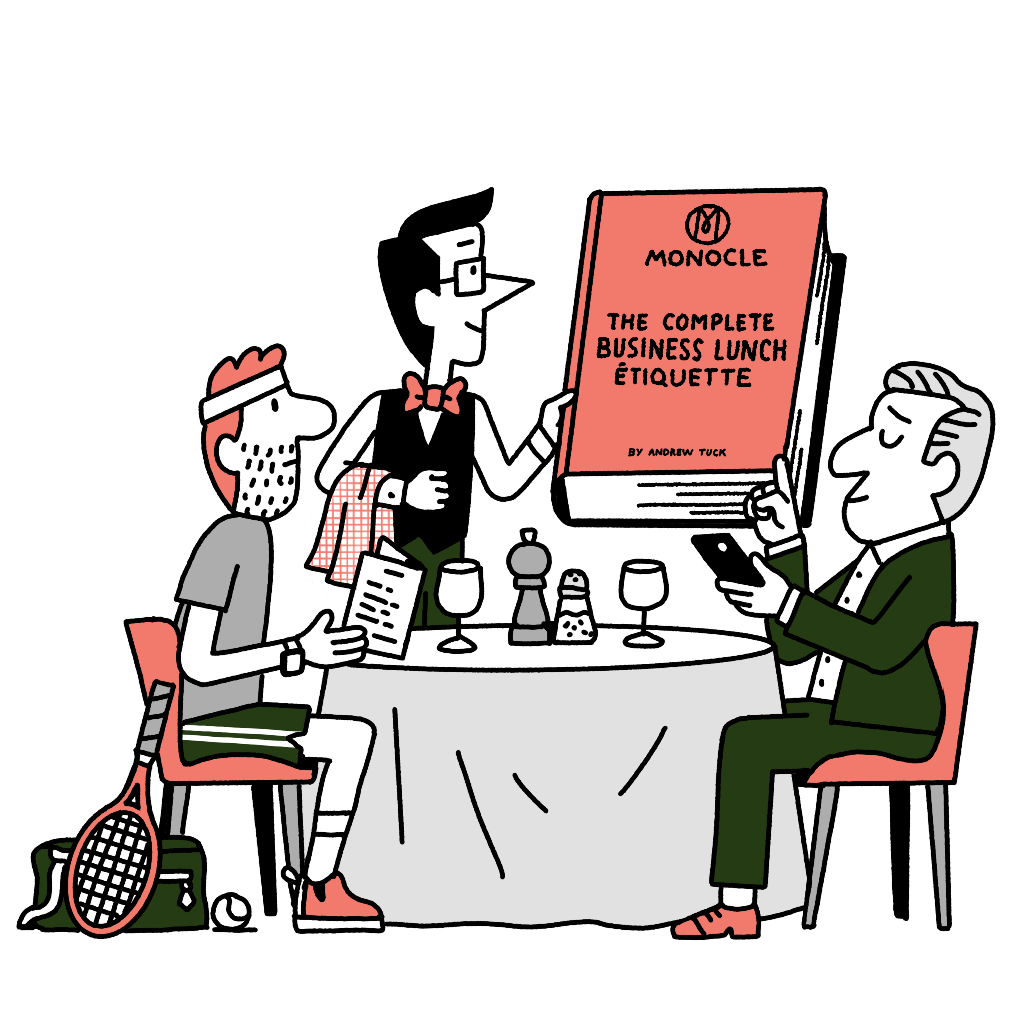
No laptops or phones. It’s a restaurant, not the Apple Store.
5.
An emergency call from the office? You may go outside once. But you are already losing the room. Twice? It will look as though you’re having an affair or are just rude.
|
6.
Know your neighbours. Don’t wander into sensitive territory and ask financial questions if half of the people in the club or restaurant are in the same trade as you. And if the key numbers can’t be written down on the back of a napkin, don’t attempt to pick apart spreadsheet-level details while dissecting a guinea fowl.
7.
Arrive on time. Sorry, I don’t care if your husband lost a leg this morning. The clock is ticking.
8.
Here are the lateness rules. Ten minutes are forgivable (ask the maître d’ for a newspaper or have an emergency novel in your pocket; don’t just scroll). Twenty minutes late? They’re paying. Thirty minutes? Have a nice lunch and finish your book.
9.
Be interesting. The best business lunches are with people who know stuff and can tell a story or two. No, they don’t want to see pictures of your children.
10.
Shut up. Listen. It’s a rare skill but one you should perfect.
11.
If you are American, don’t look horrified when a European orders a glass of wine at lunch. No intervention is needed.
12.
If you’re jabbing your thigh with semaglutide these days and have the appetite of a dormouse, why did you come? As soon as you asked the waiter if they could do a half-portion of the rocket salad, this was over.
13.
“I won’t have bread but if you want it, please go ahead.” Really, avoid all virtue signalling when ordering. Show that you’re the kind of person who knows how to let everyone get what they want from an agreement – even when it’s just the breadbasket that’s at stake.
14.
Be decent. That means to the restaurant staff too. At the end of a very nice lunch this week, my guest said to the waiter, “Your service has been exceptional. Indeed, it was a highlight of the meal.” It was one of those small interactions that underlined why I love working with this writer.
15.
How many courses? Having just a starter and a main is the industry standard. Just a main is also fine, though it can imply that you would rather be out of there. Puddings? They can work but the lunch now risks resembling a family outing with grandma.
16.
Coffee? Ordering espressos with the bill will leave everyone feeling caffeinated and on schedule. “Can I have a pot of your green tea?” is a sentence that will cause anxiety levels to rise among your fellow diners.
17.
Who’s paying? Splitting a bill for a business lunch is rarely wise. If you’re the one who selected the venue and set the dining pace, just pay. If your counterpart has been ascending to the Himalayan heights of the wine menu or ordering a labrador-sized steak, sit back.
18.
No doggy bags. You might not like to waste food but unless you’re working for an NGO, taking away a tub of slowly congealing dauphinoise potatoes won’t make you look cool, just parsimonious.
19.
They paid? Say thank you.
20.
You paid? Say thank you for their time and for being good company. Well, only if they were.
To read more columns by Andrew Tuck, click here.
|
|
Edo Tokyo Kirari  MONOCLE MONOCLE
|
|
wardrobe update: President-worthy footwear
Shoe-in for success: Power-dress your feet with pairs from John Lobb, Berluti and Alden
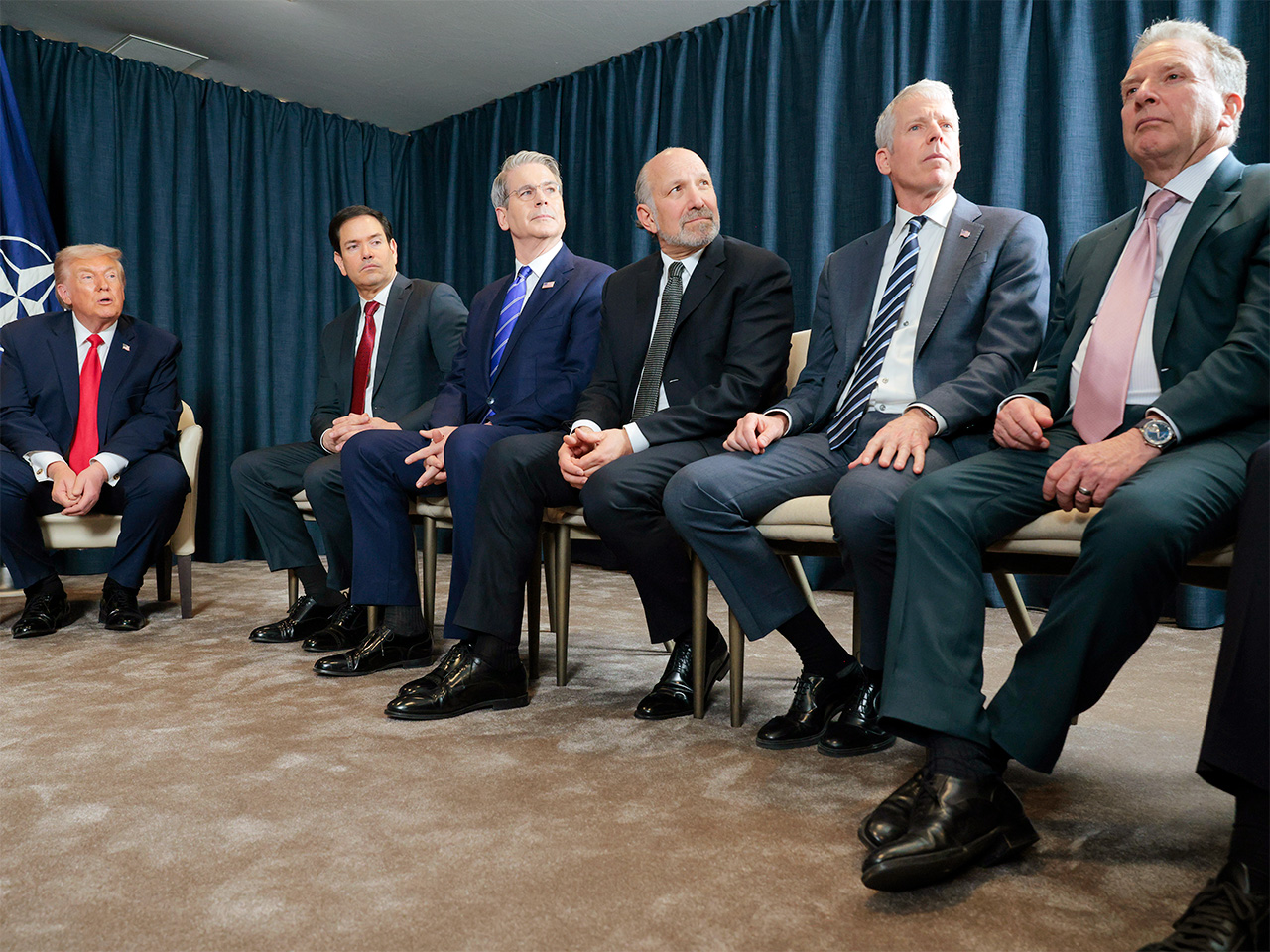
I wouldn’t want to be in Marco Rubio’s shoes right now (writes Jack Simpson). Iran is resisting US-Israeli pressure, sleepless nights await over a possible intervention in Cuba and the US secretary of state’s shoes, well, just don’t fit. Yes, his black Oxfords might have a healthy shine but there’s also a generous gap from sock to shoe. And he’s not the only cabinet member sliding on Oxfords as though they were slippers. The US vice-president, JD Vance, and transport secretary, Sean Duffy, have also been spotted in oversized kicks. The culprit? Donald Trump, who gifted his cadre ill-fitting Florsheim cap-toe dress shoes. “I don’t want my cabinet members wearing sneakers,” he said in a recent radio interview. The president evidently sized up his team by eye. The whole gang needs to get a proper fitting and, ideally, a better pair of shoes. So, here’s what we recommend.
|
John Lobb
John Lobb’s history stretches back more than 150 years, when its eponymous founder, an apprentice bootmaker from Cornwall, travelled to Australia during the gold rush. There, he developed shoes with hollow heels in which miners could stash contraband gold nuggets. Lobb was named as the Prince of Wales’s bootmaker in 1863 upon his return to the UK. Trump would no doubt approve of the brand’s royal seal. His staff could even schedule a fitting at one of the company’s two US flagships. Might we suggest the Philip II Oxford or, if he wants his senior staff to make an impression, the Smith?
johnlobb.com
Berluti
If there’s no need for fuss – no broguing, no toe caps, no tassels – then go for Berluti. Its Alessandro 1895 Oxford is made from Venezia plain calf leather and has a sleek, minimalist silhouette. Conveniently for Trump’s team, the brand has outposts in New York and Miami.
berluti.com
Alden
Or perhaps the president would care for something by a US cobbler? Alden, founded in 1884, is a family-owned shoemaker that still produces cordovan-leather derbies in New England. If any of Trump’s crew is bound for warmer climes this month – or planning to kick back at Mar-a-Lago – the brand makes a mean loafer too.
aldenshop.com
For more retail recommendations, pick up a copy of the March issue of the magazine, including The Monocle 100.
|
|
culture cut: ‘Kwame Akoto – Almighty God Art Works’
Ghanaian painter Kwame Akoto’s signs of the times
For more than 50 years, Kwame Akoto has run his sign-painting workshop from the same spot at the Suame roundabout in the bustling heart of Kumasi, the second-largest city in Ghana (writes Tobias Grey). The Suame Magazine is a sprawling hive of vehicle-repair garages, spare-parts dealerships and diesel fumes. Now, more than 30 of his paintings have been relocated from the dust of that roadside to the galleries of the Musée du quai Branly – Jacques Chirac in Paris for Akoto’s first major European solo exhibition.
|
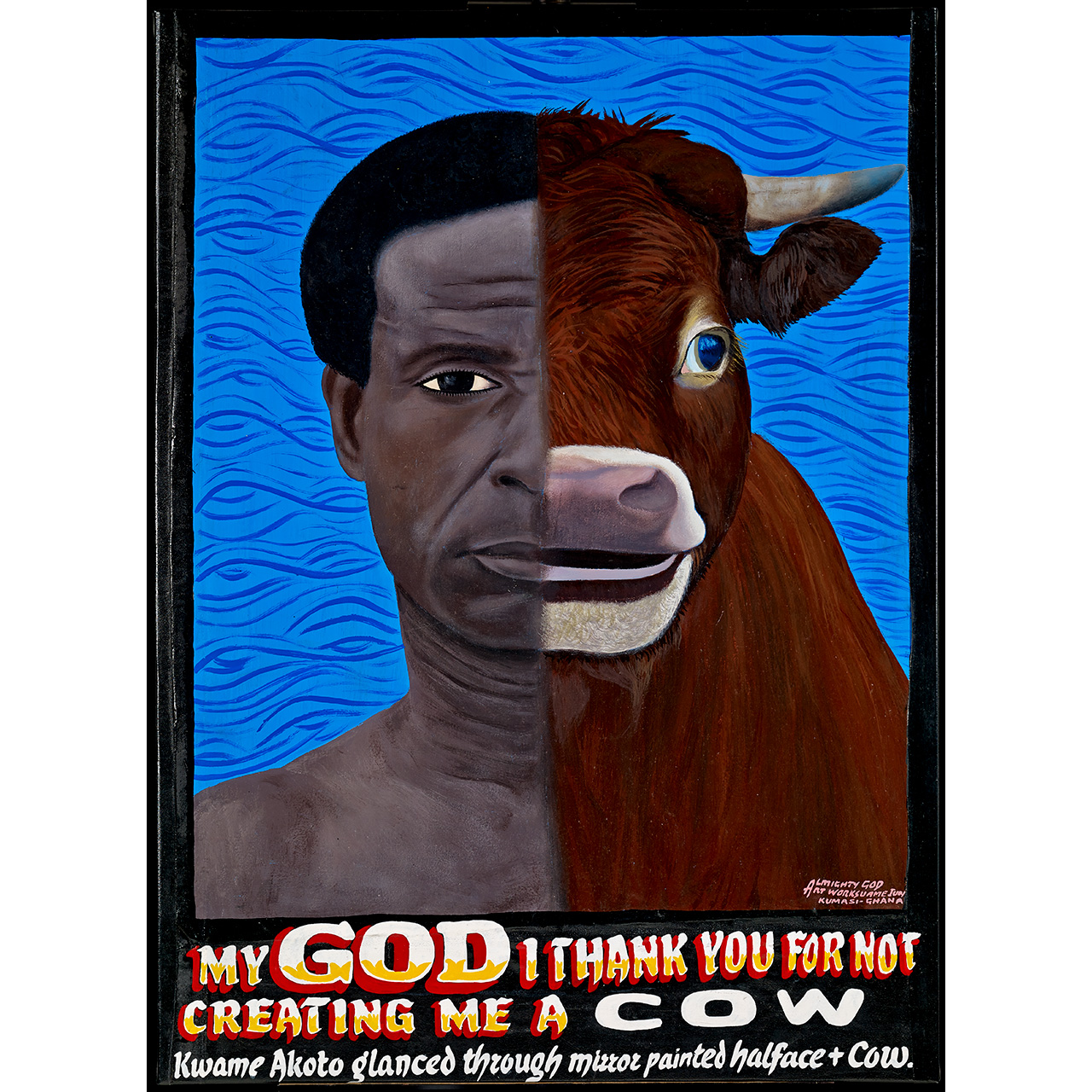
These works depict an astonishing array of subjects, ranging from celebrity portraits – Barack Obama, Michael Jackson and James Brown – to social satire and lurid visions of temptation and hell. The results are as idiosyncratic as they are arresting. In one painting, Akoto’s face is rendered as a half-man, half-cow hybrid, an image inspired by a Kumasi market butchers. “When you pass by the marketplace and you see all the sellers of cow hides, it is a lesson,” he says. “The fact that God created me as a human being is a thing to be thankful for.” The show in Paris highlights the artist’s role as a social commentator who draws on everyday life in his city and demands that viewers look as closely at their own habits as they do at his canvases. And as for him? “I have always been in Kumasi making my paintings at Suame roundabout,” he tells The Monocle Weekend Edition. “After that, only God knows.”
‘Kwame Akoto – Almighty God Art Works’ is at the Musée du quai Branly – Jacques Chirac from 31 March to 6 September.
|
|
how we live: Orchid diplomacy
How Singapore’s flower power strengthens ties with partner states
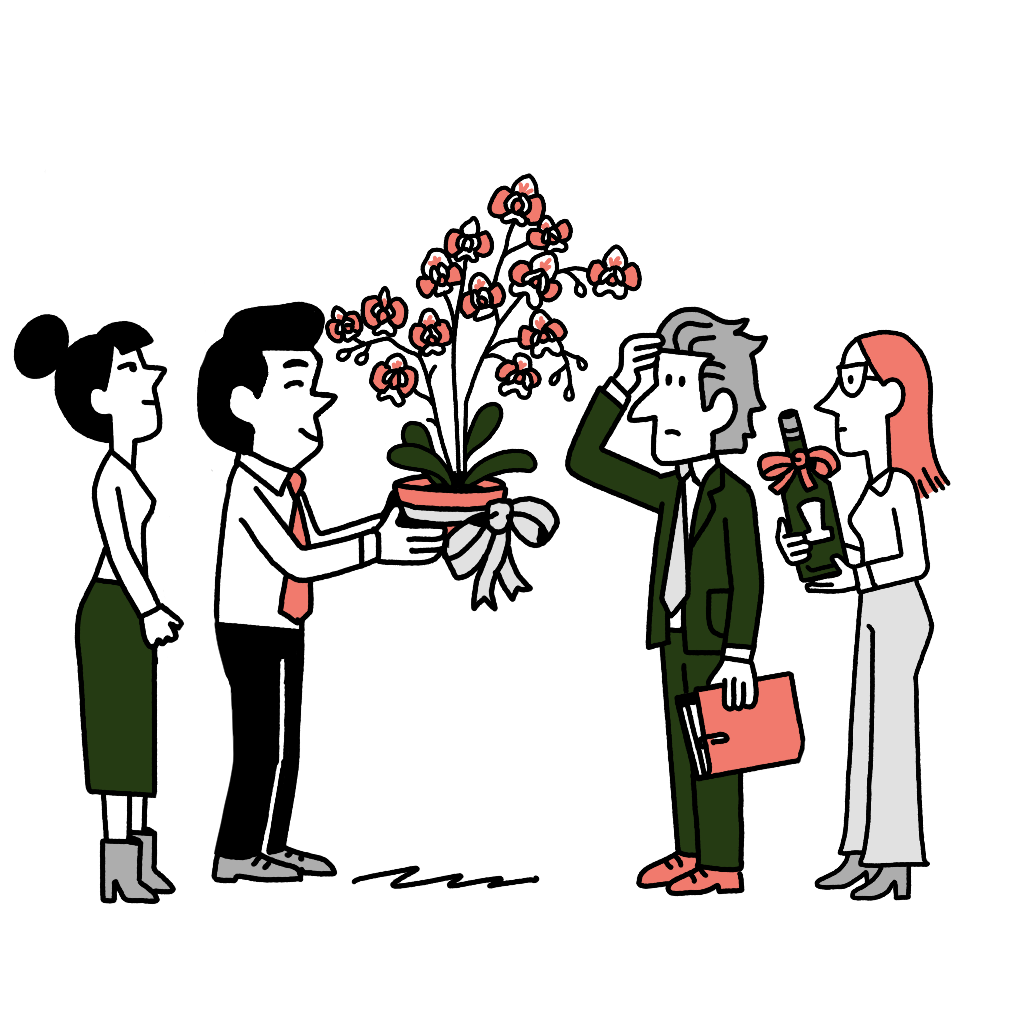
In diplomacy, gifts are rarely just gifts (writes Yvonne Xu). They are an instrument of statecraft. And few countries practise this more deftly than Singapore, which has turned orchid breeding into a distinctive source of soft power. To mark ties and occasions, the country’s Ministry of Foreign Affairs works with the Singapore Botanic Gardens to create orchid hybrids and name them after dignitaries.
|
Flora and fauna have long played a role in state gifting. China has its pandas, Thailand its elephants and the Netherlands its tulips. Singapore’s orchids belong to this tradition but go further. Each is a singular creation – not loaned, not replicated. This distinction matters. A one-of-a-kind creation named in your honour carries a different message: not simply goodwill but respect. And what could be a better symbol for bilateral ties than a living, blooming hybrid that invites care?
Colour, form and lineage all carry meaning. Paravanda Nelson Mandela picks up on the colours of the South African flag. Oxblood-red spots on white petals evoke the Indonesian flag – the same hues as Singapore’s own. A tall, upright cultivar for Xi Jinping and Peng Liyuan suggests stature and poise. A dendrobium, presented to mark 50 years of friendship with Australia, is a cross between a species from that country and a Singaporean hybrid. Its gold petals and green stems are a nod to the unofficial but beloved boxing-kangaroo flag.
Ensuring that each orchid reaches its recipient is another art. Ambassadorial entourages have carried horticultural cargo to palaces across the world. A particularly storied delivery to Washington required securing a plane seat for the orchid, a rehydrating soak in a hotel bathroom sink and fastidious primping before it made its appearance at a White House state dinner.
The programme is not without missteps. The colour of the bloom gifted to David Cameron when he was the UK’s Conservative prime minister once drew unwanted attention for its hue that evoked Ukip, a small rival party – a reminder that even flowers require a briefing. Today, preferences and sensitivities are considered well in advance. Such deliberate care and grace are increasingly rare in an era when nations are more likely to reach for tariffs and troops rather than a tulip. At least one country still thinks that it’s worthwhile to invest in flower power.
|
|
|
SPONSORED BY Edo Tokyo Kirari
|
|
|
|
|
|
| | |


