| | In this edition: Iran war drives demand for Dangote’s fuel, Absa’s African expansion plans, and why ͏ ͏ ͏ ͏ ͏ ͏ |
| |  | Africa |  |
| |
|
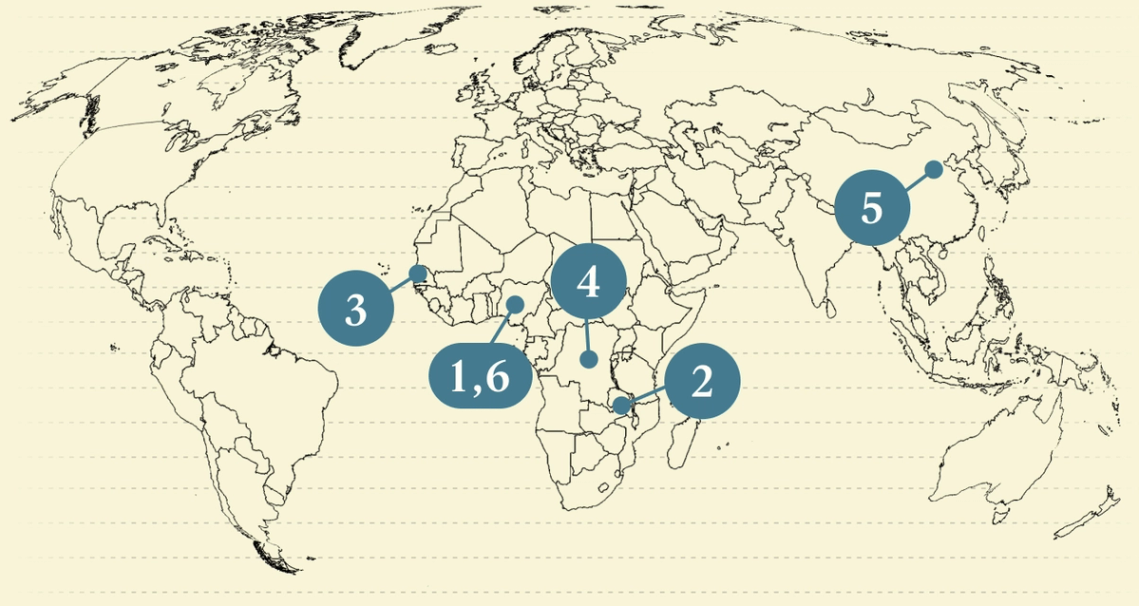 - Dangote fuel demand rises
- Absa eyes growth markets
- Senegalese loan revealed
- US pivot on DRC, Rwanda
- China’s caution on Zimbabwe
- Negotiating with jihadists
 The Week Ahead, and a young Congolese writer wins an award. |
|
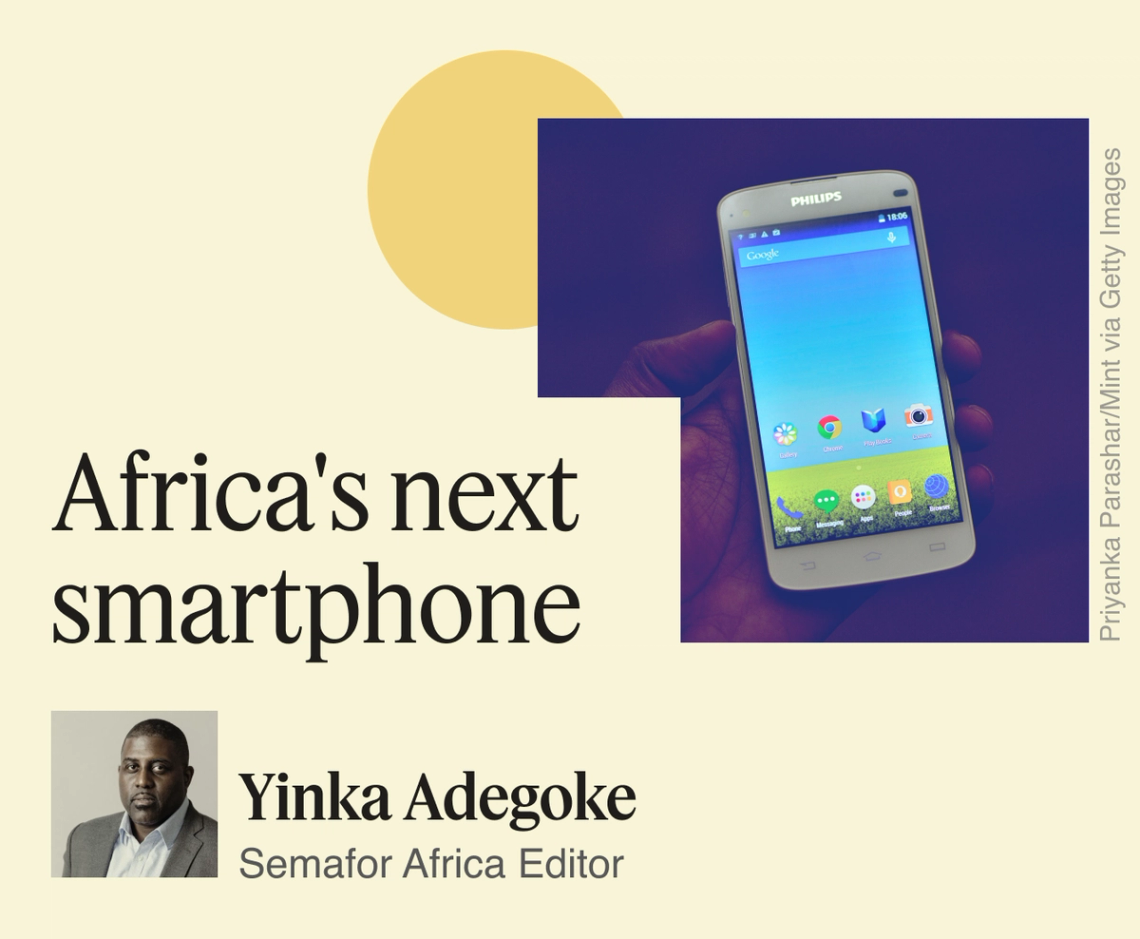 The campaign for a $40 4G smartphone, led by Africa’s biggest mobile networks, is one of the most consequential digital policy developments on the continent in years. The initiative, backed by nearly 20 telecoms companies, including MTN, Airtel Africa, and Vodacom, addresses a stark reality: While mobile broadband networks cover roughly 95% of Africa’s population, only about 40% use mobile internet services. Handset affordability is the top barrier. As MTN CEO Ralph Mupita told me recently, all networks are in a race to get more Africans onto digital services — that’s where their growth lies. For policymakers and investors, the device is the entry point to a cascade of gains: mobile money, agricultural price data, telemedicine, and e-government services that have long eluded the unconnected majority. It’s a topic we’ve been passionate about at Semafor and that has culminated in our Next 3 Billion convenings, the latest of which brings me to Nairobi this week with Alexis. But hardware alone won’t determine whether this initiative transforms lives. The more important question is who shapes the intelligence inside these devices — and who benefits when that intelligence collects data, drives commerce, and builds loyalty at scale. The Transsion story offers both a blueprint and a warning. The Shenzhen-based company behind Infinix, Itel, and Techno built something no Western or fellow Asian tech giant managed: A product genuinely designed for African users — dual SIM cards, extended battery life, cameras calibrated for darker skin tones — distributed deep into rural towns and villages. Crucially, as researcher Miao Lu documents in her book, The Transsion Approach, it did this alongside Africans. Local distributors were translators, market intelligence networks, and co-architects of the brand’s success. Yet Transsion now faces patent lawsuits from LG Electronics, Huawei, and Ericsson, along with hard questions about who controls the AI and data ecosystems on its devices. The same risk applies to any affordable phone initiative that treats African operators and consumers as distribution channels rather than co-owners of the value being created. Assembly location matters far less than where the intellectual property lives. The $40 smartphone is a floor, not a ceiling — and what gets built on top of it will determine whether this becomes a genuine inflection point for African digital inclusion, or simply the next iteration of technology consumption without technology ownership. |
|
War fuels interest in Dangote |
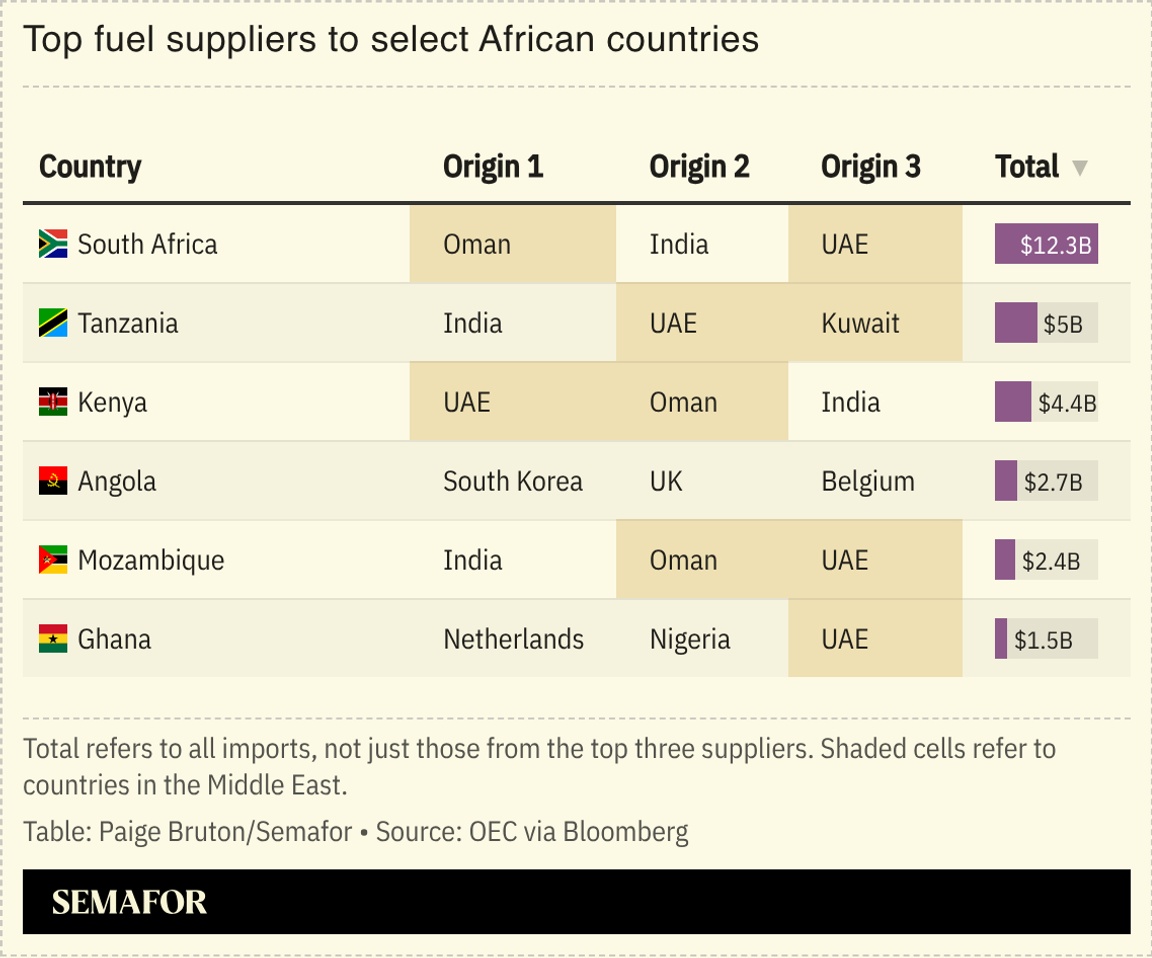 The Dangote oil refinery has received growing interest from African governments keen to sustain fuel availability as the Iran war constrains supplies. South Africa inquired about a 12-month supply contract with the Lagos-based refinery, according to Bloomberg, while Ghana and Kenya have also expressed interest. The plant, Africa’s largest refinery, said trading companies that buy its fuel products have shipped 456,000 tonnes to Cameroon, Côte d’Ivoire, Ghana, Tanzania, and Togo this month. Dangote’s products had previously gone to four of the five countries before now, but this month marks a first arrival in Tanzania, a company rep told Semafor. African governments are scrambling to secure fuel supplies amid Iran’s blockade of the Strait of Hormuz. South Africa is exploring “a diversified range of sources” for its needs. Nigeria was the top source of South Africa’s crude imports last year, alongside Angola, Brazil, Saudi Arabia, and the US. Dangote, which plans to double refining capacity by 2028, has raised its fuel supply price to Nigerian consumers multiple times this month to account for rapidly rising oil prices. — Alexander Onukwue |
|
Absa plans African growth |
 Joker/ Walter G. Allgöwer/ullstein bild via Getty Images Joker/ Walter G. Allgöwer/ullstein bild via Getty ImagesAbsa has added Ghana and Zambia to a growing list of African markets earmarked for increased investment, according to a senior executive at the South African lender, the country’s third largest. Charles Russon, who oversees Absa’s operations outside its home country, told Semafor that both countries were emerging from financial crises with clearer reform paths and stronger private sector appetite than many regional peers. Zambia has “come through a difficult period but now feels more aligned around growth,” said Russon, adding that Zambia’s President Hakainde Hichilema made it clear in a recent meeting with the bank’s top executives that growth should be private sector-led. “While West Africa has not traditionally been our strongest footprint, Ghana’s macro stabilization has created a more constructive environment,” Russon added. His comments reflect Absa’s strategy under new CEO Kenny Fihla to expand its African footprint when some global banks are retreating. Russon did not rule out mergers and acquisitions in the two markets. — Tiisetso Motsoeneng |
|
Senegal raises $750M in ‘secret loans’ |
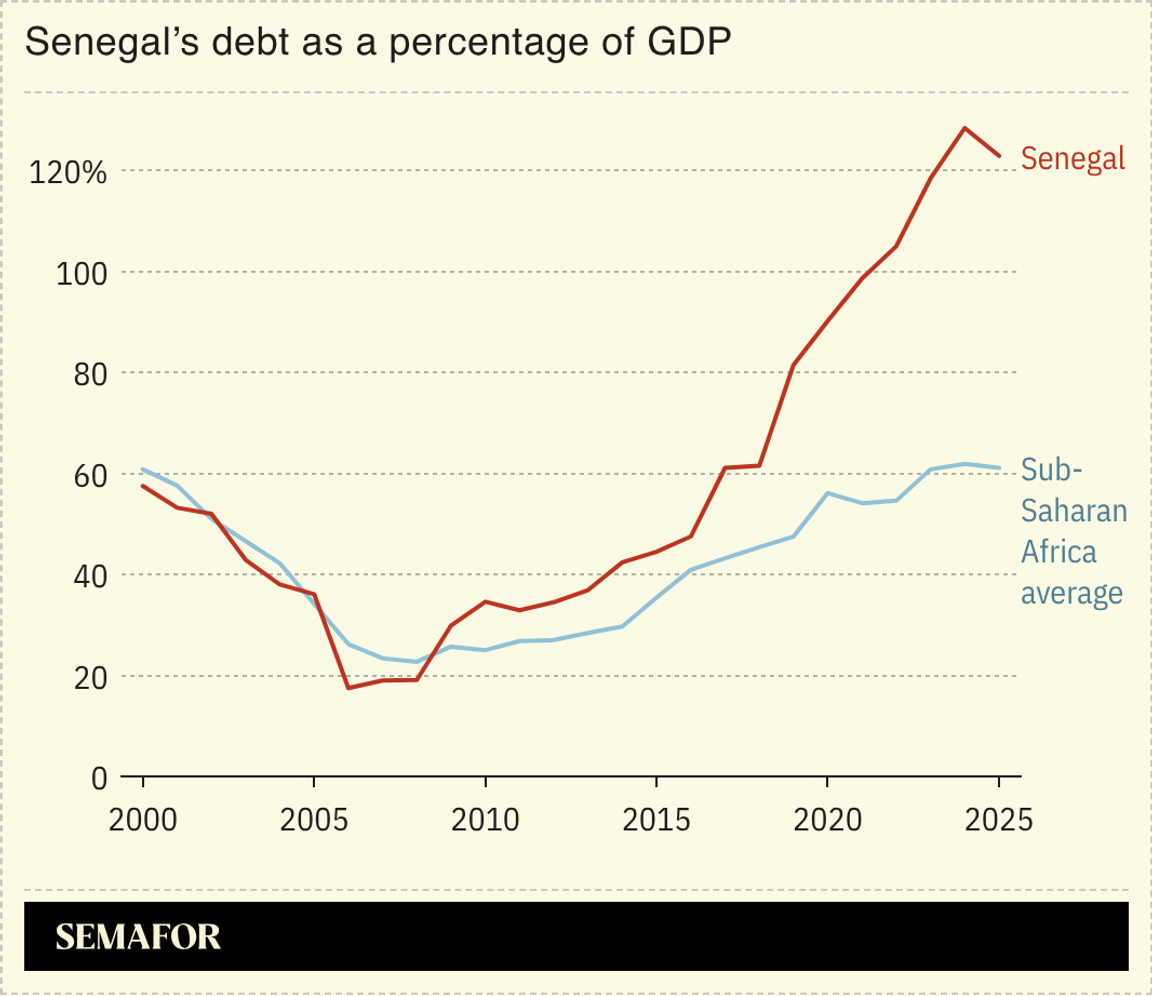 Senegal reportedly raised €650 million ($750 million) from international lenders last year in secret, potentially deepening sovereign debt stress and complicating an International Monetary Fund rescue. Dakar raised the money from the Africa Finance Corporation and First Abu Dhabi Bank in collateralized loans that give lenders priority over existing bondholders, the Financial Times said. Senegal’s finance ministry did not respond to the FT’s request for comment. The deals follow a 2025 state audit that uncovered at least $7 billion of undisclosed borrowing, pushing public debt above $40 billion, or roughly 130% of GDP. The new set of opaque loans has the potential to undermine Senegal’s effort to secure a funding deal from the IMF, which last month failed to reach a deal with Dakar over a $1.8 billion bailout. |
|
US alters ties with DRC, Rwanda |
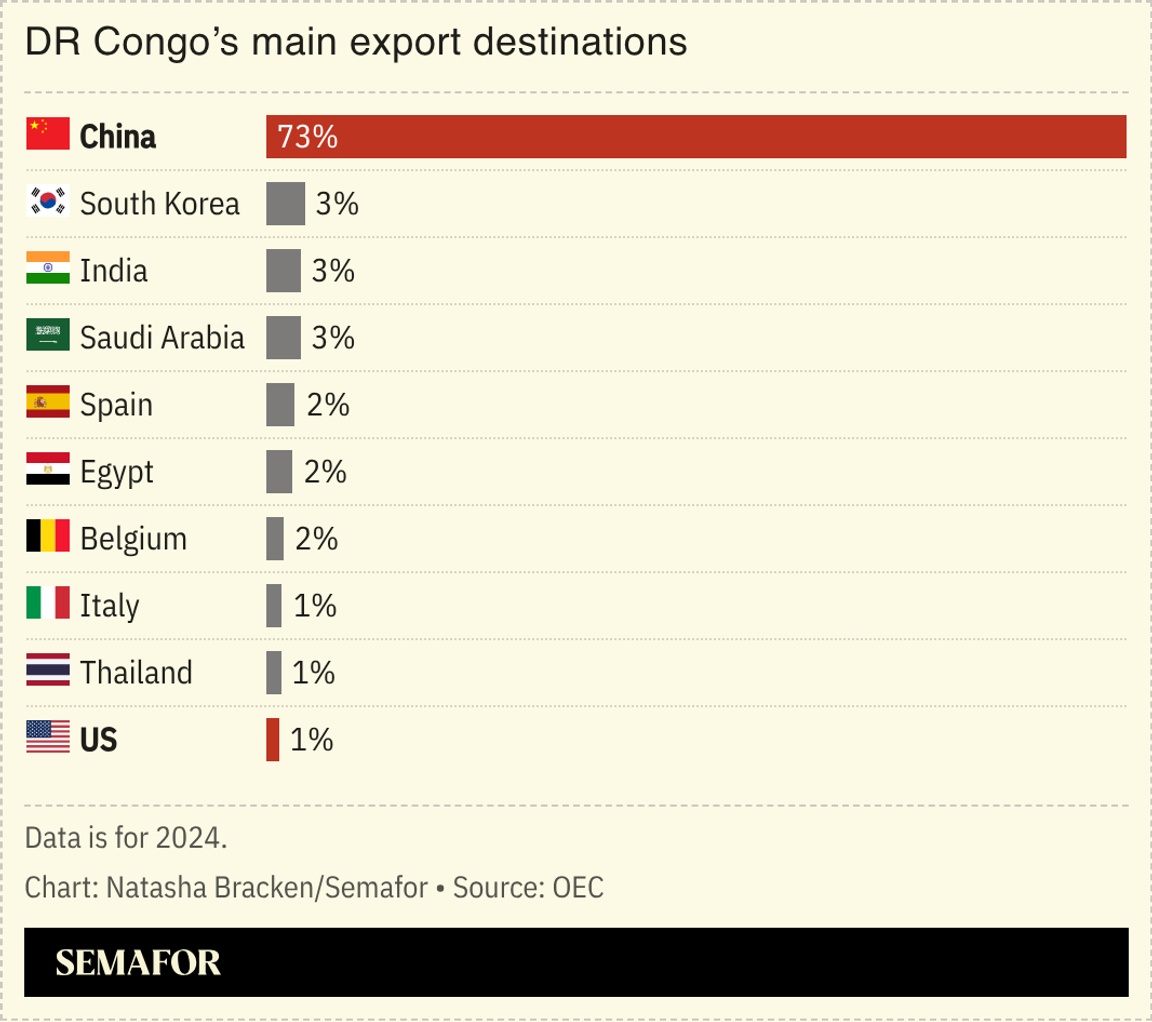 Washington is recalibrating its relationships with DR Congo and Rwanda as its push to resolve their conflict shifts from a largely diplomatic posture to a more overtly security-backed approach tied to strategic mineral interests. In recent days, the US sanctioned elements of Rwanda’s military while reopening limited security cooperation with Kinshasa, and then convened both sides for renewed talks. The sequencing underscores a departure from a long-standing dynamic in which Kigali was often viewed as the more reliable regional security partner. Observers see this as an inflexion point. The change reflects the fragility of the December accords, which US President Donald Trump framed as unlocking access to DR Congo’s critical mineral reserves, but which has failed to stabilize eastern Congo. But while training and limited support may strengthen Congolese forces over time, structural constraints persist. Security analyst Jean-Jacques Wondo told Semafor that the effectiveness of such efforts hinges less on initial training than on sustained provisioning, logistics, and battlefield support — areas where gaps remain pronounced. — Ruben Nyanguila |
|
China urges caution in Zimbabwe |
 Arcadia Lithium mine in Zimbabwe. Tafadzwa Ufumeli/Getty Images. Arcadia Lithium mine in Zimbabwe. Tafadzwa Ufumeli/Getty Images.Beijing has urged Chinese companies operating in Zimbabwe to strengthen risk controls and compliance after Harare abruptly suspended exports of raw minerals and lithium concentrates last month, citing malpractice and leakages. China’s move is an implicit acknowledgement that even its closest African partners can impose abrupt policy shifts that test its investment model as an increasing number of countries on the continent move to capture value from their natural resources. Zimbabwe supplies roughly 15% of China’s lithium concentrate, a key mineral used in making batteries for electric cars and electronics. Beijing’s warning lands as Ghana advances its own lithium ambitions, with the country’s parliament ratifying Atlantic Lithium’s Ewoyaa mining lease, a project geared toward supplying the US and deepening the continent’s role in competing battery-metal supply chains. — Tiisetso Motsoeneng |
|
 When the business world moves, these are the people turning the wheel. Introducing The CEO Signal, a new video & audio series hosted by Penny Pritzker, founder and chairman of PSP Partners and former U.S. Secretary of Commerce, and Andrew Edgecliffe-Johnson, CEO editor at Semafor. Episodes are released every two weeks. Building on The CEO Signal newsletter, the essential briefing read by the world’s top chief executives, the show brings that perspective to revealing conversations with the people steering the world’s biggest companies.
In the debut episode, Andrew and Penny sit down with Starbucks CEO Brian Niccol. Now 18 months into his tenure, Niccol has launched his “Back to Starbucks” campaign — an effort to revive the brand’s classic coffeehouse feel, including baristas writing names on cups again. In the conversation, Niccol explains how he’s rallying Starbucks’ global workforce behind one of corporate America’s most closely watched turnarounds — and working to restore momentum to one of the world’s most recognizable brands.
Niccol also reflects on why he tends to step into difficult situations — from Chipotle’s crisis to Starbucks’ reset — and what it takes to lead a company through moments of pressure. |
|
View: Nigeria should talk with the jihadists |
  A suspected Boko Haram attack. Kola Sulaimon/AFP via Getty Images. A suspected Boko Haram attack. Kola Sulaimon/AFP via Getty Images.Military campaigns alone are failing to defeat Africa’s entrenched jihadist insurgencies, and durable peace will likely depend on difficult, long-term political engagement — even with groups long considered beyond negotiation, a veteran African security journalist argued in a Semafor column. The US-Israel war on Iran has further diverted Washington’s focus at a critical moment, as seen in Nigeria where a pause in US support coincides with renewed militant attacks. Across the continent, from Somalia to the Sahel, years of military effort have failed to reverse insurgent gains. “Military solutions on their own rarely succeed,” wrote Obi Anyadike, senior Africa editor for The New Humanitarian, reflecting a growing policy rethink. He argued that jihadist groups are not monolithic and can behave as rational actors, but warned that opening talks would pose profound political and legal risks, especially in Nigeria, where compromise could inflame divisions or even threaten the state’s cohesion. |
|
|


