| | In today’s edition: US marines are heading to the region, Qatar’s gas exports will take years to ful͏ ͏ ͏ ͏ ͏ ͏ |
| |  Teruel Teruel |  Lesser Tunb Lesser Tunb | Ras Laffan |
 | Gulf |  |
| |
|
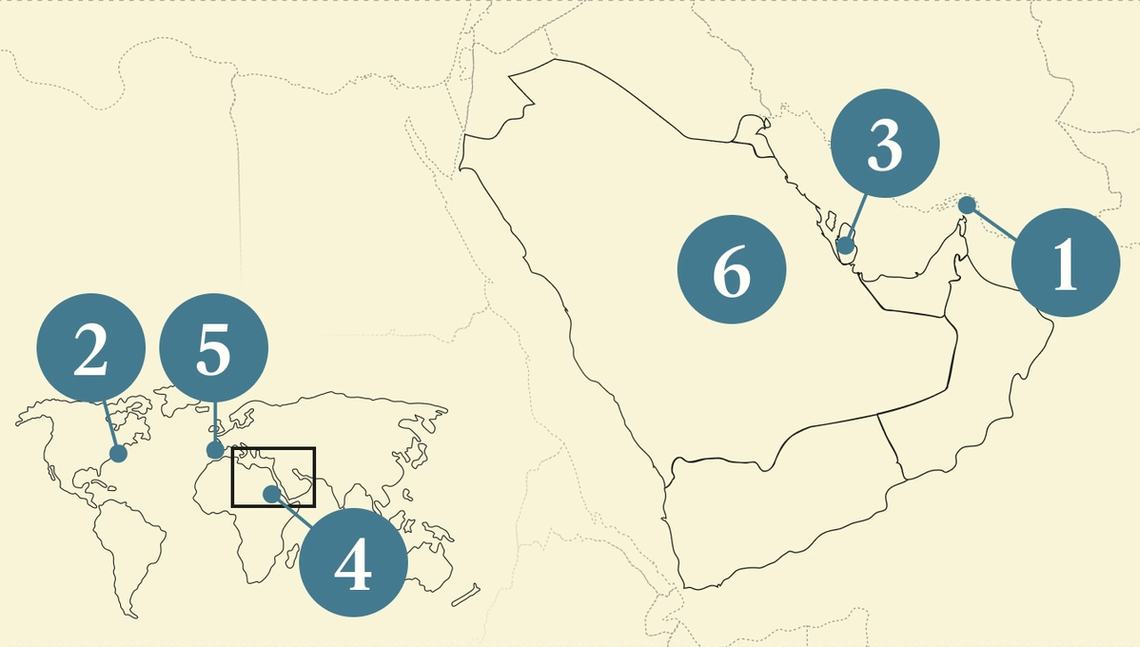 - Gulf islands’ battles loom
- Oil falls on US-Iran talks
- Lost Qatari LNG will hurt
- Fertilizer crunch in Africa
- Gulf airlines store planes
- Oil as a shock absorber
 UAE unity message extends beyond Emiratis. |
|
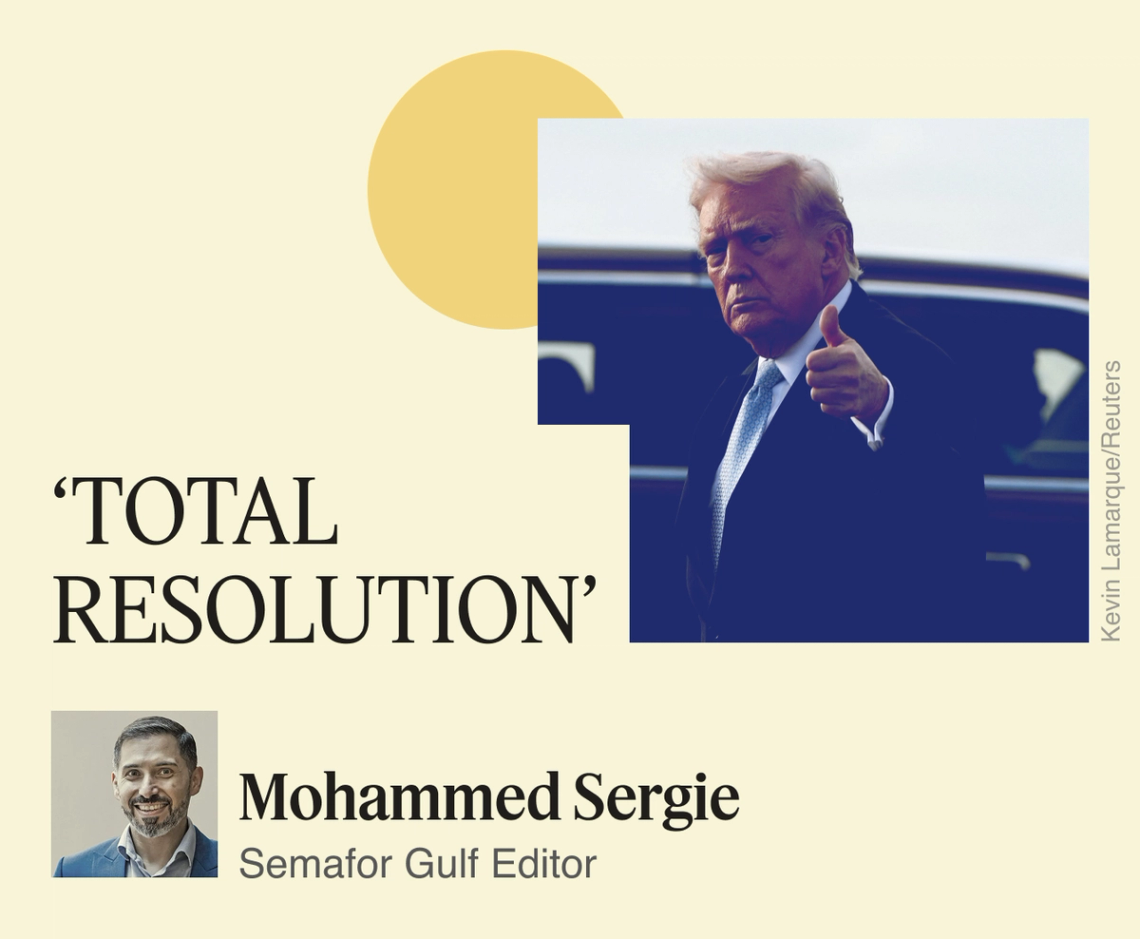 We were about 12 hours away from the expiration of US President Donald Trump’s ultimatum to Iran: Fully reopen the Strait of Hormuz or Washington will “hit and obliterate” Tehran’s power plants. Iran, for its part, had threatened to retaliate against Gulf power and water facilities, and mine the entire Gulf, an escalation that could bring widespread civilian suffering across the region. Then Trump posted that he’d ordered a five-day stay on power and energy strikes to pursue talks for a “TOTAL RESOLUTION OF OUR HOSTILITIES IN THE MIDDLE EAST.” Now in its fourth week, the US-Israeli war on Iran has disrupted life across the Middle East and hit aviation, energy, equities, logistics, and trade globally. With few signs of an off-ramp, and officials in Washington and Israel still expecting weeks more fighting, escalation was becoming the default strategy — though Trump’s allusion to constructive conversations with Iran (without saying who on the Iranian side had been talking, or where) suggests that might be changing. What has become clear is that the supposed rift between the Gulf and Washington, driven by Trump’s decision to go to war despite the risk to Gulf security and prosperity, hasn’t emerged. Instead, there is growing recognition in Gulf capitals — excluding Muscat? — that the Iranian threat is now central to their security calculus for the long term. However this conflict ends, Gulf states will need to confront and deter Iran’s missiles and drones, Anwar Gargash, diplomatic adviser to UAE President Sheikh Mohamed bin Zayed, said. To do so, the Gulf will need to “solidify our security partnerships with Washington.” Whatever the outcome of Trump’s ultimatum, he is unlikely to lose the support of Gulf leaders in a way that benefits Tehran (or China and Russia). |
|
Battle may shift to Gulf islands |
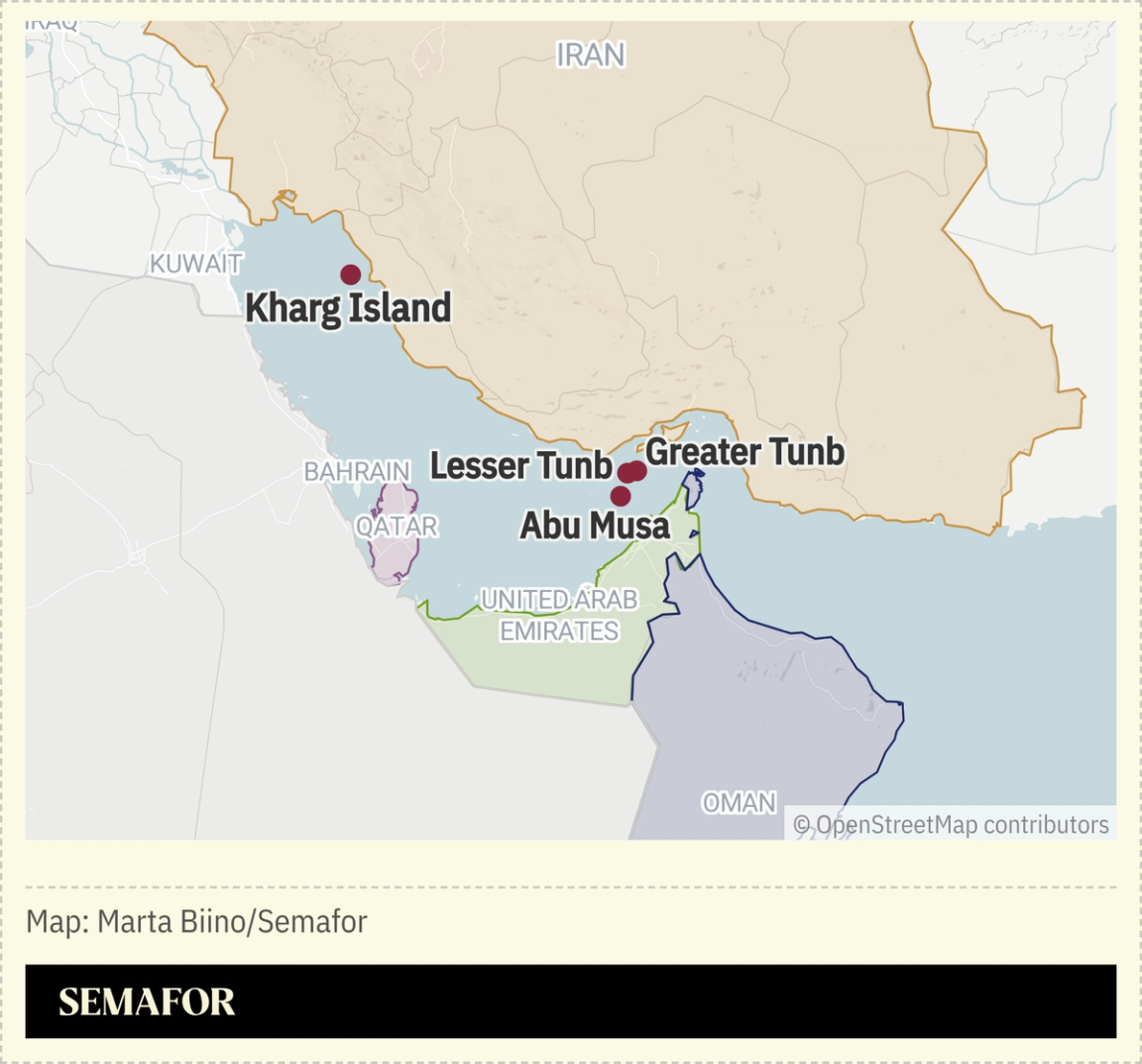 Thousands of US marines are being deployed to the Middle East. While their mission hasn’t been disclosed, their ability to launch quick, small-scale operations is raising the profile of Gulf islands that could become central to the war in the weeks ahead. Kharg, hundreds of kilometers north of the Strait of Hormuz, is Iran’s main crude export hub, typically handling about 90% of its crude shipments and benefiting from deep-water berths, large storage, and pipelines from onshore oilfields. As far back as 1988, Donald Trump, well before he was president, told The Guardian that the US should “take it” if American troops came under Iranian fire. Occupying the island may be technically feasible, though American troops would likely face artillery and drone attacks from Iran. And while Tehran would suffer a blow to crude flows, it has other export options. To seriously dent shipments, the US would have to hit multiple facilities at once, according to Bloomberg columnist Javier Blas. At the mouth of Hormuz, three islands held by Iran since 1971 but claimed by the UAE — Abu Musa, Greater Tunb, and Lesser Tunb — may be even more consequential and could be the key to ensuring the strait can be kept open in the future. “If external powers look for ways to reshape security in the Strait of Hormuz, these islands are an obvious focal point — with relatively limited diplomatic cost given the ambiguity around sovereignty,” writes H.A. Hellyer, a fellow at the London-based Royal United Services Institute. — Mohammed Sergie |
|
Oil falls after Iran ultimatum extension |
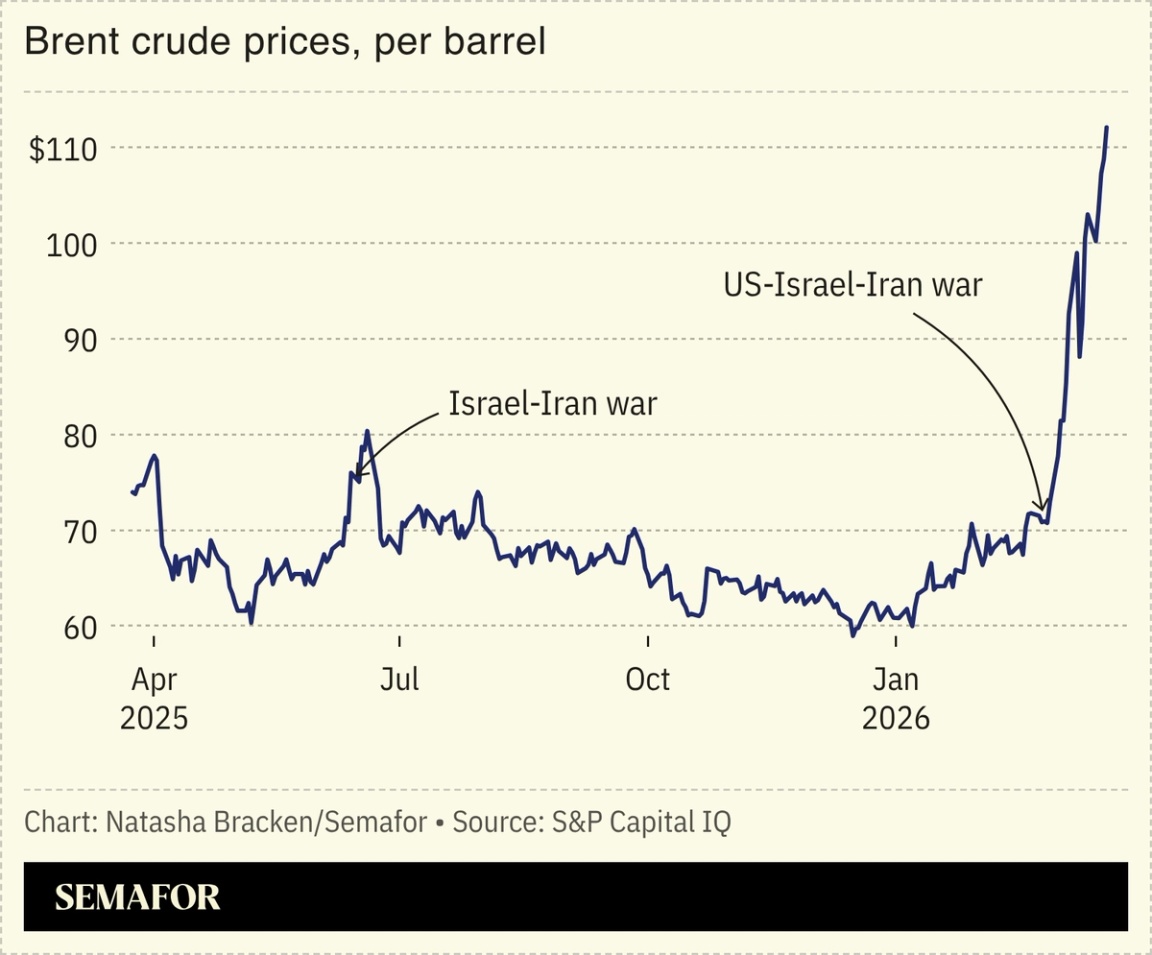 Oil prices plummeted after US President Donald Trump said he had ordered a five-day suspension to any potential strikes against Iranian power plants and energy infrastructure, underscoring how the weeks-long war has driven extreme price swings. Trump’s latest post came after he threatened to destroy Iran’s power plants if the country did not fully reopen the strait by 23:44 GMT today. The head of the International Energy Agency said the current crisis was akin to the 1970s oil shock and the fallout from Russia’s invasion of Ukraine combined, while Goldman Sachs said prior to Trump’s post that it projected that oil flows through the strait would remain at 5% of normal levels for six weeks before a slow recovery. Saudi Arabia, meanwhile, forecasted that oil prices will soar past $180 a barrel if disruptions persist until late April. |
|
Ras Laffan attack jolts gas markets |
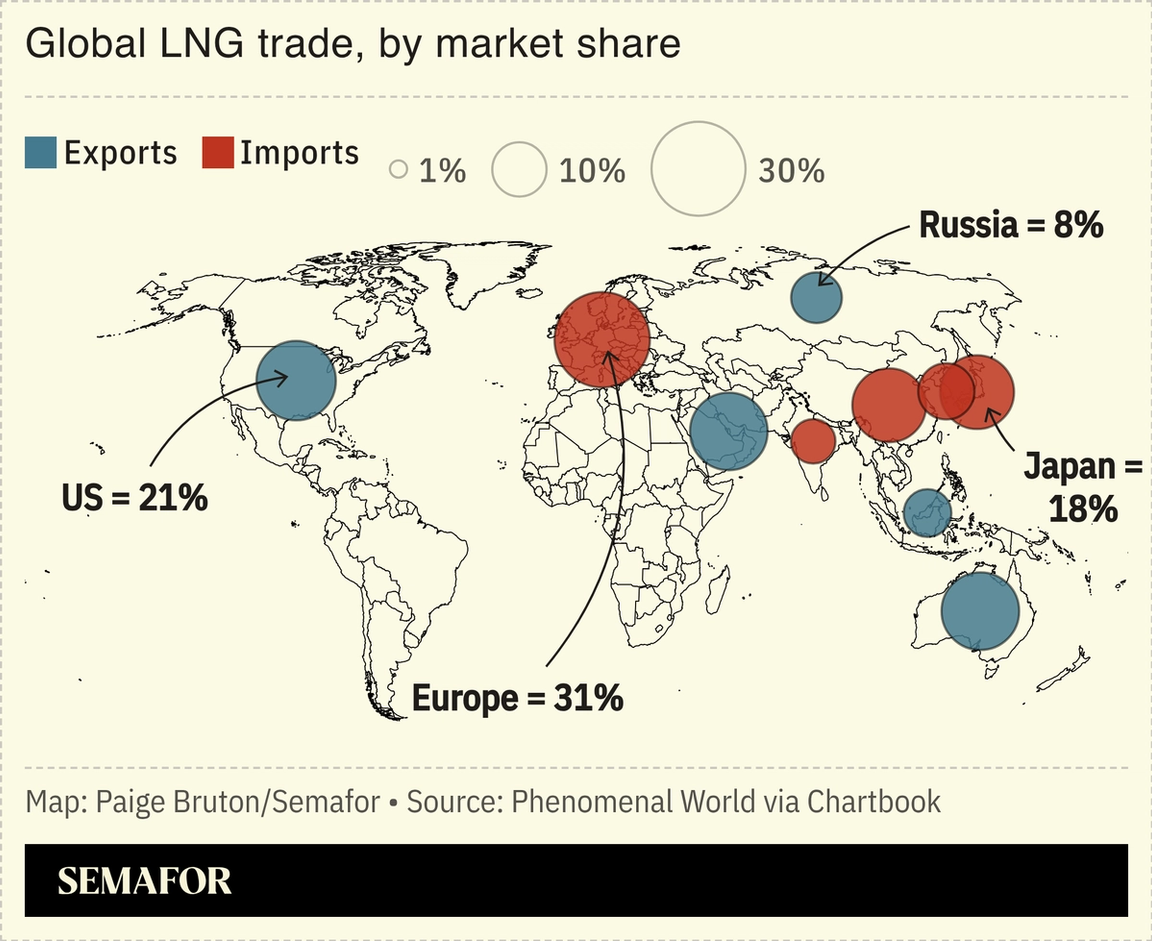 The Iranian strike that destroyed liquefied natural gas facilities in Ras Laffan, Qatar, last week has set off ripples that will affect the global economy until the end of the decade. The attack knocked out two LNG trains and a gas-to-liquids unit, cutting about 12.8 million tons a year of LNG output — roughly 17% of Qatar’s export capacity — for an estimated three to five years. Energy Minister Saad Sherida Al Kaabi told Reuters that Qatar could lose about $20 billion a year in energy revenue, while rebuilding is expected to cost $26 billion. The fallout extends beyond Qatar, one of the wealthiest countries in the world. Doha’s planned LNG expansion, aimed at boosting annual output from 77 million to 126 million tons by 2030, will be delayed. LNG prices have surged, and some Asian buyers, including Bangladesh and Pakistan, are weighing options, such as securing alternative supplies, switching to dirtier fuels, or cutting demand. — Mohammed Sergie |
|
Wartime food inflation hits the world’s poorest |
 Evelyn Hockstein/File Photo/Reuters Evelyn Hockstein/File Photo/ReutersMillions of the world’s poorest people will be among the hardest hit by the Iran war, as food and fuel costs soar due to the effective closure of the Strait of Hormuz. While the wartime disruption to energy supplies was immediately obvious, the conflict has also stopped Gulf exports of ammonia, sulphur, and urea — all byproducts of its oil and gas industry, and key inputs for fertilizers. Farmers are faced with the prospect of paying more or accepting lower yields. In both cases, the knock-on effect will be higher food prices that many consumers will find hard to cope with. The UN’s World Food Programme warns that up to 45 million people globally could be pushed into acute hunger if the conflict persists, on top of 318 million who are already food insecure. Import-dependent countries such as Sudan and Somalia face the sharpest risks from the rise in fertilizer, food, and fuel costs, said humanitarian aid organization Mercy Corps. — Dominic Dudley |
|
Airlines take evasive action |
 @GulfAir/X @GulfAir/XJourneys to the airport have become a complicated undertaking for many Gulf travelers, often involving crossing into a neighboring country where airspace remains open. In the interests of keeping planes running and revenues coming in, some airlines are moving over the border too. Kuwait’s Jazeera Airways has started operating from Saudi Arabia’s Qaisumah Hafar Al Batin International Airport — a three-hour drive from downtown Kuwait — from where passengers can fly to Egypt, Jordan, Sri Lanka, Türkiye, and the UAE. Kuwait Airways and Bahrain’s Gulf Air have opted for the larger King Fahd International Airport in Dammam, offering flights within the region and to Africa, Asia, and Europe. With airlines still running at reduced levels, some are also moving unwanted planes well out of harm’s way. More than a dozen Qatar Airways jets are parked up at a remote airfield in Spain. Others have been caught in the crossfire. Planes belonging to Emirates and Saudia were hit during a strike on Dubai International Airport early in the conflict, The Wall Street Journal reported. — Dominic Dudley |
|
View: The Gulf’s economic buffer is still oil |
  Fire and smoke rise in the Fujairah oil industry zone. Amr Alfiky/Reuters. Fire and smoke rise in the Fujairah oil industry zone. Amr Alfiky/Reuters.Gulf states have spent years trying to diversify away from oil and gas, but it is still hydrocarbons that will cushion them from the economic shock of the Iran war, Alaa Shahine Salha, a senior executive at Saudi Research & Media Group, writes in a column for Semafor. “Shock absorbers ranging from Saudi Aramco’s export pipeline bypassing the Strait of Hormuz to the vast sovereign wealth funds provide the buffers to prevent systemic stress on currency pegs or the banking system,” writes Shahine Salha. Once the war is over, Gulf countries could also offset their wartime production losses by ramping up oil exports. The broader question is whether the conflict will change national priorities and economic agendas. |
|
 When the business world moves, these are the people turning the wheel. Introducing The CEO Signal, a new video and audio series hosted by Penny Pritzker, founder and chairman of PSP Partners and former US Secretary of Commerce, and Andrew Edgecliffe-Johnson, CEO editor at Semafor. Episodes are released every two weeks. Building on The CEO Signal newsletter, the essential briefing read by the world’s top chief executives, the show brings that perspective to revealing conversations with the people steering the world’s biggest companies. In the debut episode, Andrew and Penny sit down with Starbucks CEO Brian Niccol. Now 18 months into his tenure, Niccol has launched his “Back to Starbucks” campaign — an effort to revive the brand’s classic coffeehouse feel, including baristas writing names on cups again. In the conversation, Niccol explains how he’s rallying Starbucks’ global workforce behind one of corporate America’s most closely watched turnarounds — and working to restore momentum to one of the world’s most recognizable brands. Niccol also reflects on why he tends to step into difficult situations — from Chipotle’s crisis to Starbucks’ reset — and what it takes to lead a company through moments of pressure. |
|
|


