76% of companies with CFO-led AI got "great value." But only 2% do it that way.
 ͏  ͏  ͏  ͏  ͏  ͏  ͏  ͏  ͏  ͏  ͏  ͏  ͏  ͏  ͏  ͏  ͏  ͏  ͏  ͏  ͏  ͏  ͏  ͏  ͏  ͏  ͏  ͏  ͏  ͏  ͏  ͏  ͏  ͏  ͏  ͏  ͏  ͏  ͏  ͏  ͏  ͏  ͏  ͏  ͏  ͏  ͏  ͏  ͏  ͏  ͏  ͏  ͏  ͏  ͏  ͏  ͏  ͏  ͏  ͏  ͏  ͏  ͏  ͏  ͏  ͏  ͏  ͏  ͏  ͏  ͏  ͏  ͏  ͏  ͏  ͏  ͏  ͏  ͏  ͏  ͏  ͏  ͏  ͏  ͏  ͏  ͏  ͏  ͏  ͏  ͏  ͏  ͏  ͏  ͏  ͏  ͏  ͏  ͏  ͏  ͏  ͏  ͏  ͏  ͏  ͏  ͏  ͏  ͏  ͏  ͏  ͏  ͏  ͏  ͏  ͏  ͏  ͏  ͏  ͏  ͏  ͏  ͏  ͏  ͏  ͏  ͏  ͏  ͏  ͏  ͏  ͏  ͏  ͏  ͏  ͏  ͏  ͏ ­ ­ ­ ­ ­ ­ ­ ­ ­ ­ ­ ­ ­ ­ ­ ­ ­ ­ ­ ­ ­ ­ ­ ­ ­ ­ ­ ­ ­ ­ ­ ­ ­ ­ ­ ­ ­ ­ ­ ­ ­ ­ ­ ­ ­ ­ ­ ­ ­ ­ ­ ­ ­ ­ ­ ­ ­ ­ ­ ­ ­ ­ ­ ­ ­ ­ ­ ­ ­ ­ ­ ­ ­ ­ ­ ­ ­ ­ ­ ­ ­ ­ ­ ­ ­ ­ ­ ­ ­ ­ ­ ­ ­ ­ ­ ­ ­ ­ ­ ­ ­ ­ ­ ­ ­ ­ ­ ­ ­ ­ ­ ­ ­ ­ ­ ­ ­ ­ ­ ­ ­ ­ ­ ­ ­ ­ ­ ­ ­ ­ ­ ­ ­ ­ ­ ­ ­ ­  
Friday, March 27, 2026
Why CFOs—not chief AI officers—are the secret to getting real value from AI


Good morning. Typically, value accountability for AI falls on the chief data and analytics officers or chief AI officers, Laks Srinivasan, co-founder and CEO of the Return on AI Institute, told me. But when CFOs oversee AI projects and are responsible for scoring outcomes, companies tend to extract more value, he said.

Srinivasan, an AI strategy expert, co-authored the study, “Economic Maturity for Artificial Intelligence,” with Thomas H. Davenport, a Babson College professor, MIT fellow, and co-founder of the Return on AI Institute. The findings are based on a survey of 1,006 C-suite executives across 11 countries and 32 industries, plus interviews with technology, data and AI leaders.

Only 2% of respondents said CFOs are charged with achieving value from AI. However, when CFOs are responsible, 76% achieved a great deal of value, substantially higher than for other roles. It’s not that CFOs necessarily know more about AI than a chief AI officer or other C-suite leaders, Srinivasan said. Finance chiefs can develop the methodology and scale it enterprise-wide. “When finance gets involved, it brings institutional credibility behind numbers,” he said.

In several companies surveyed, CFOs and finance teams partnered with technology executives to certify AI value. “For example, at DBS Bank in Singapore, the unit CFOs are responsible for vetting the AI value numbers before they are rolled up into the enterprise,” Srinivasan said. “And DBS Bank says it has generated about 1 billion Singapore dollars in economic value from its data analytics and AI initiatives; that’s because CFOs get involved,” he said.

The Return on AI Institute launched about five years ago and partners with Scaled Agile, Inc., on thought leadership and AI upskilling. Another key finding: generative AI is the most difficult type to establish value from, with 44% of respondents citing it, likely due to challenges measuring productivity for “broad and shallow” use cases.

Agentic AI ranks second at 24%, followed by analytical AI at 16%, while rule-based AI is the least difficult. Despite this, the 35% of companies that have adopted agentic AI report high value.

“From a personal, individual productivity perspective, I think we’re all seeing value,” Srinivasan said. Translating that to enterprise value is the challenge, he said.

His advice: involve finance. If teams track different metrics, aggregate them. “It may not be a science, maybe there’s a little bit of art involved, but you have to do it,” he said.

Another recommendation: AI upskilling for all. There’s a 23-point advantage in achieving high value when both employees and leaders are trained, yet 58% of organizations haven’t trained employees in basic AI use.

On workforce impact, only 2% of organizations surveyed have made large AI-driven headcount cuts, but nearly 90% have reduced or frozen hiring in anticipation. “Clearly, the headcount reductions and hiring freezes are running way ahead of evidence,” Srinivasan said. AI implementation also requires significant organizational change.

He recommends “narrow and deep AI”—reimagining specific processes for the AI era. Rather than layering AI onto existing workflows, the question becomes: what gets automated, and what still requires human judgment?

“You can actually make a solid, logical case to say, ‘This is really the headcount we need,’ after you do all the hard work,” Srinivasan said.

Have a good weekend.

Sheryl Estrada
sheryl.estrada@fortune.com

Leaderboard

Notable moves this week:

Kieran Kelliher was appointed CFO of The NBA's Dallas Mavericks. Kelliher joins the Mavericks after 12 years at the Chicago Bulls and Chicago Bulls Charities in similar roles. During his tenure, he led the Bulls’ efforts to host the NBA All-Star Game in 2020 and spearheaded the launch of its G League franchise (Windy City Bulls) in 2016. 

Brittany Cerwin was promoted to CFO of The Middleby Corporation (Nasdaq: MIDD), a foodservice equipment company, effective immediately. Cerwin succeeds Bryan Mittelman, who has served as CFO since 2019 and will transition to the role of special advisor to the CEO. Cerwin joined Middleby in 2011 and has held several leadership roles in finance. Most recently, she served as chief accounting officer; prior to that, she served as corporate controller.

Chelsea Lantz was appointed interim CFO of Nu Skin Enterprises, Inc. (NYSE: NUS) a global beauty and wellness company, effective immediately. The appointment of Lantz comes after James Thomas stepped down as CFO to pursue an outside opportunity. Lantz joined Nu Skin in 2011 and has worked as corporate controller since 2023. Nu Skin’s board of directors has initiated a formal process to appoint a permanent CFO.  

Rob Cooper, CFO of David's Bridal, has stepped down after 20 years of service at David's, after overseeing transitions to the interim CFO. David's has initiated a search for a new CFO to help scale the company's growth strategy and support continued expansion of the "Aisle to Algorithm" platform across both B2C and B2B initiatives.

James Suva was appointed CFO of Velo3D, Inc. (Nasdaq: VELO), a metal 3D printing technology company, effective April 6. Suva replaces Bernard Chung, who has been serving as acting CFO since Dec. 31. Chung will continue to serve as the company's controller. Suva brings more than 20 years of capital markets and technology sector experience, most recently serving as SVP and treasurer at Cricut.

Meir Peleg was appointed CFO of IceCure Medical Ltd. (Nasdaq: ICCM), developer of minimally invasive cryoablation technology, effective May 17. Peleg is a seasoned public company CFO with over 20 years of financial leadership. He has led a Nasdaq IPO and multiple large-scale capital raises, while scaling global industrial-tech organizations. 

Parmeet Ahuja was appointed CFO of MaxCyte, Inc. (Nasdaq: MXCT), a cell-engineering focused company, effective March 30. Ahuja succeeds Douglas Swirsky, who is transitioning from the role as previously announced in November. Ahuja brings over 20 years of financial leadership experience. Most recently, he served as VP of investor relations at Agilent Technologies. 

Big Deal

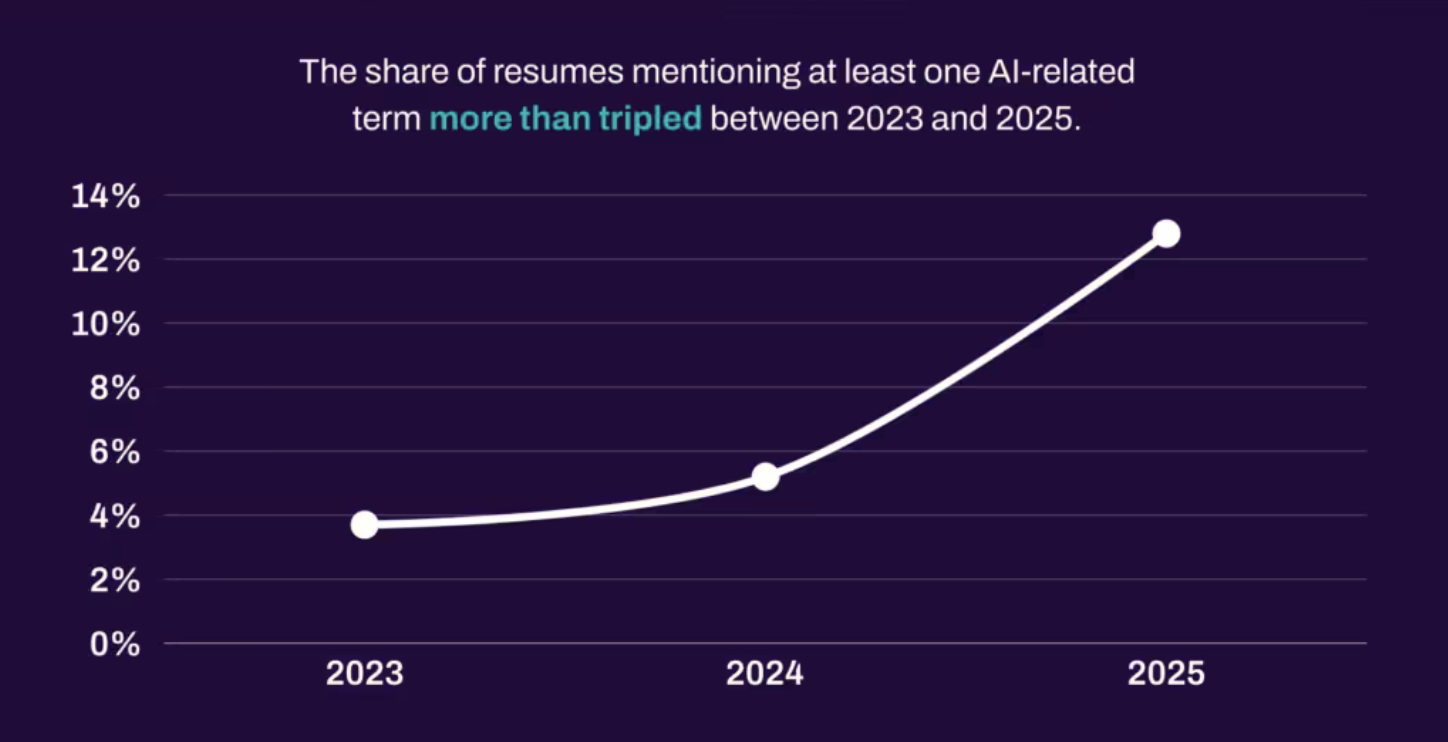
As AI transforms workplaces, it's increasingly showing up on résumés, according to "Monster's AI Resume Trends Report." The percentage of résumés including at least one AI-related term surged from just 3.7% in 2023 to 12.8% in 2025.

That means 1 in 8 résumés is now listing at least one AI term, Monster finds. This underscores how professionals are signaling AI fluency as a career advantage.

2025 marks a clear acceleration point. Growth from 2024 to 2025 (+7.6 points) outpaced gains from 2023 to 2024 (+1.5 points).

In addition, workers are increasingly highlighting fundamental AI expertise: Artificial intelligence appeared on 6.3% of résumés in 2025, up from just 0.5% in 2023, while machine learning appeared on 5.7%, up from 0.6%.


Courtesy of Monster