| | In this edition: South Africa’s response to the G7 snub, the power of Kenya’s khat lobby, and a surg͏ ͏ ͏ ͏ ͏ ͏ |
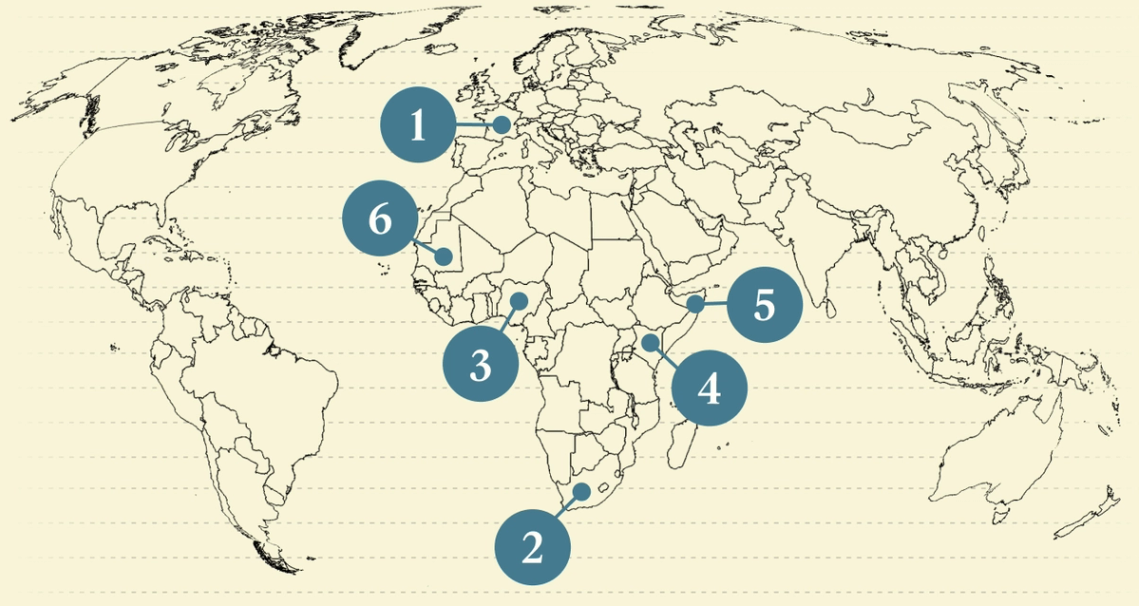
| |  Mogadishu Mogadishu |  Nouakchott Nouakchott | Luanda |
 | Africa |  |
| |
|
 - Pretoria’s G7 snub response
- South Africa holds rates
- Moniepoint’s new deal
- Mobile money surge
- The power of khat
- Weekend Reads
 Women’s football makes a comeback in Mogadishu. |
|
Pretoria’s response to G7 invite snub |
 South Africa’s President Cyril Ramaphosa. Adriano Machado/Reuters. South Africa’s President Cyril Ramaphosa. Adriano Machado/Reuters.South Africa walked back earlier complaints that Washington pressured France to rescind its invitation to attend June’s G7 summit, a U-turn that may defuse a diplomatic row. On Thursday, it emerged that Paris had rescinded its invitation to Pretoria, which a South African presidency spokesperson said was “due to sustained pressure” from Washington, adding that the US threatened to boycott if South Africa attended. But President Cyril Ramaphosa later said there was no pressure from “the United States or any other country.” Ramaphosa’s public reversal could de-escalate its dispute with both Washington and Paris. A French official earlier denied excluding South Africa from the upcoming meeting, saying that Paris had invited Kenya as the African representative for the talks alongside the leaders of Brazil, India, and South Korea. Relations between Pretoria and Washington have been deteriorating for years. The US continues to argue that South Africa discriminates against its white minority, a charge that Pretoria and experts have dismissed. Relations between the countries were already strained over a genocide case that South Africa filed against Israel in 2023. Earlier this month, South Africa summoned the new US ambassador for a formal dressing down after he publicly dismissed a court ruling about an anti-apartheid chant. — Tiisetso Motsoeneng |
|
South Africa holds rate over Iran war |
| |  | Tiisetso Motsoeneng |
| |
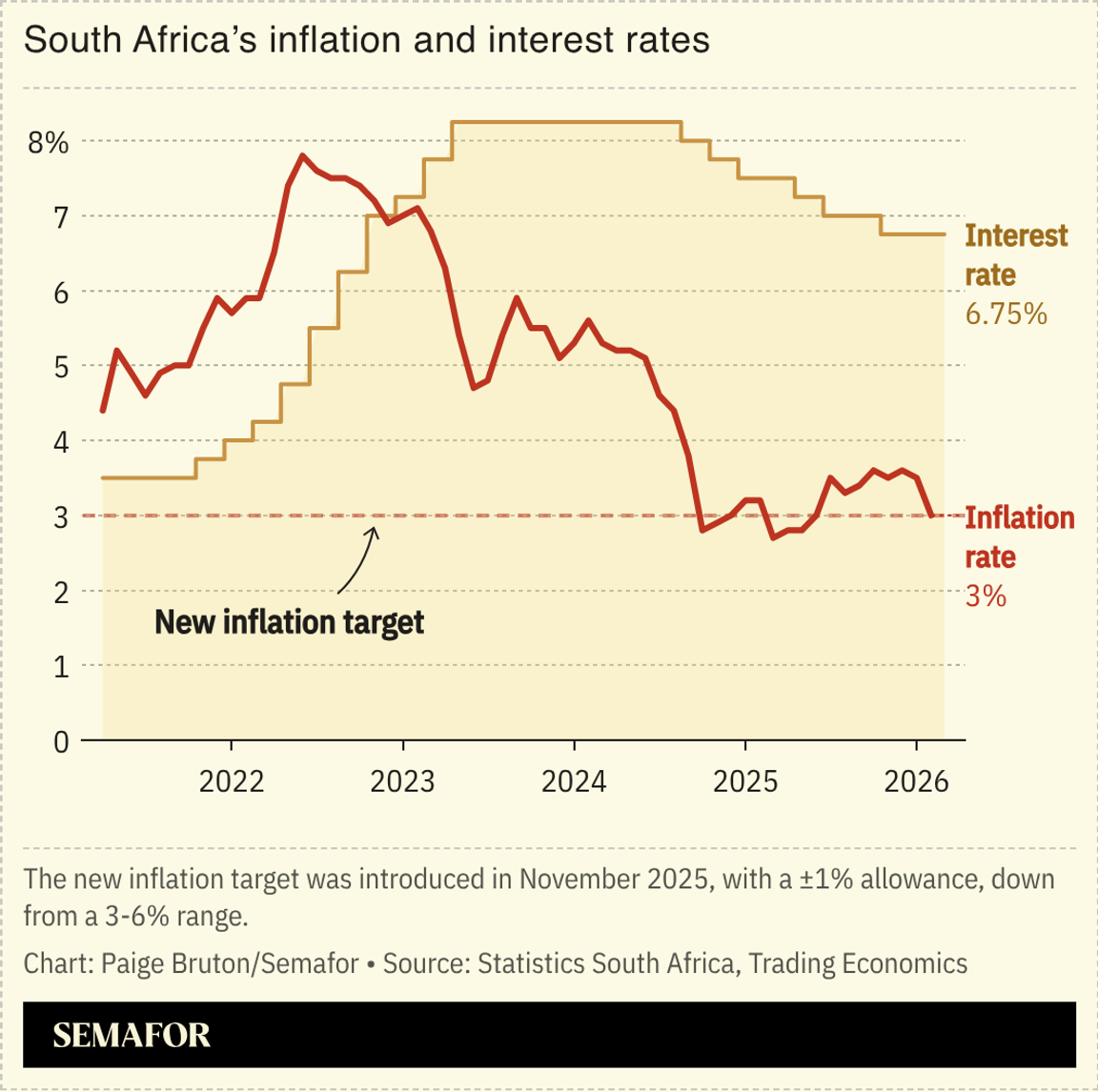 South Africa’s central bank held its main interest rate and pushed back the prospect of cuts as the Iran war threatens to derail the country’s fragile economic recovery. Investment has surged in Africa’s biggest economy in recent months after a decade blighted by low growth, but the Reserve Bank governor, announcing the rate would be held at 6.75%, said this was threatened by energy-driven inflation. The Monetary Policy Committee laid out two adverse scenarios. In the first, the conflict lasts another two months, oil prices average close to $100 a barrel, and the rand weakens by about 5%. A more severe scenario assumes the war drags on for more than a year, keeping oil prices above $100 a barrel and weakening the rand by around 10%. Under both conditions the bank would need to hike rates this year, the MPC said. Global uncertainty has sent oil, gas, and fertilizer prices soaring and rattled financial markets, forcing African policymakers in nations reliant on fuel imports to rethink expected rate cuts. South Africa’s treasury has already warned that its economic assumptions “need to be interrogated” due to the conflict. |
|
Moniepoint acquires bank stake |
 Wikimedia Commons/Creative Commons Photo/Salaha Mahmood/CC0 1.0 Wikimedia Commons/Creative Commons Photo/Salaha Mahmood/CC0 1.0Nigerian digital payments provider Moniepoint acquired a 78% stake in Sumac, a Kenyan microfinance bank, to build on an expansive trajectory that has made it one of Africa’s fastest-growing financial services companies. Moniepoint has evolved over the last five years from a provider of technology solutions for banks to itself becoming a digital bank, notable among merchants for speedy transactions. Last year it launched an international remittance service to target payments by Africans living overseas. Fintech acquisitions between African startups remain a developing aspect of the tech scene, with few multimillion-dollar exits on record. But Moniepoint belongs to a small club of African fintech unicorns behind a handful of deals that are driving consolidation between the hundreds of players in the financial services sector on the continent. — Alexander Onukwue |
|
Mobile money market grows |
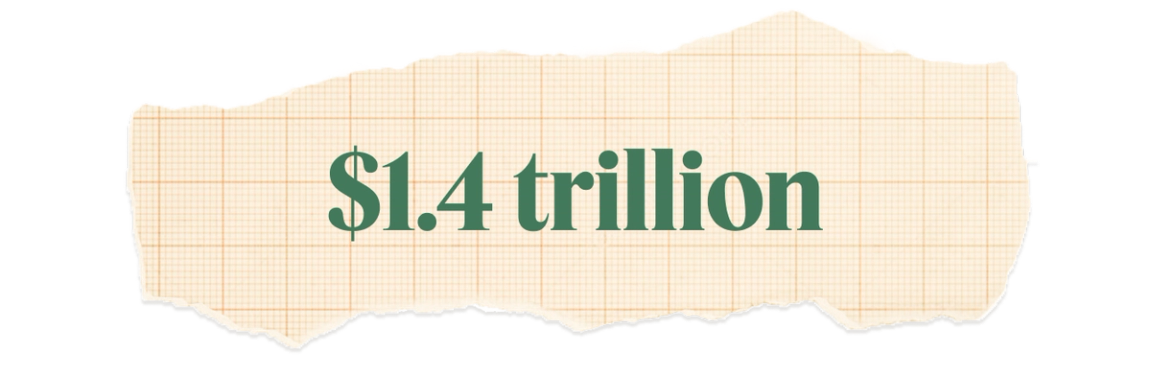 The size of Africa’s mobile money market, according to a new report, cementing the continent’s role in driving a global surge in phone-based payments. Sub-Saharan Africa accounted for about three-quarters of the $2.1 trillion global mobile money transactions in 2025, with 2.3 billion registered users worldwide, the mobile industry body GSMA found. That value of transactions is roughly double what it was four years ago. The commercial success of M-Pesa — the mobile money unit of Kenya’s biggest mobile network operator Safaricom — has convinced investors and executives that mobile money can be a profitable financial platform. Mobile money expansion is increasingly being driven by usage rather than new accounts, GSMA wrote, with 80% of providers reporting improving profitability. In Kenya, mobile money users have doubled the number of active retail investors on the East African nation’s stock exchange. — Tiisetso Motsoeneng |
|
The khat lobby’s influence |
| |  | Joseph Maina |
| |
 Simon Maina/AFP via Getty Images Simon Maina/AFP via Getty ImagesKenya is set to reopen its land border with Somalia in April, ending a 15-year closure that has divided families and choked trade. The breakthrough was influenced by an unlikely lobby group: The farmers of khat, a leafy plant that is a potent stimulant when chewed. The border between the countries was closed in Oct. 2011 after repeated attacks by the Islamist group al-Shabaab and Kenya’s military intervention in Somalia. The closure forced Kenyan khat traders to route exports to Somalia through costly air shipments, which drove up prices and left farmers at the mercy of cartels who levied unofficial commissions. Khat generates roughly $100 million per year in Kenya, according to the country’s Agriculture and Food Authority, and supports an estimated 1.4 million livelihoods. Nyambene Miraa Farmers and Traders Association (Nyamita) Chairman Kimathi Munjuri told Semafor that the sustained lobbying by khat associations was central to the decision to reopen the border. He said lobbying included direct engagement with senior government officials. The interior ministry’s own letter confirming the reopening, seen by Semafor, explicitly references Nyamita’s petition as the trigger. |
|
 - The UAE has long looked to Africa as a solution to a potentially devastating problem: food security. The largely arid nation imports around 90% of its food supplies, and the current blockade of the Strait of Hormuz has reiterated the importance of having a diverse supply chain. However, an investigation by New Lines Magazine into state-backed agribusiness endeavors across the continent — including a blueberry farm in Mauritania — suggests that the UAE’s Africa breadbasket strategy may be more talk than action.
- Côte d’Ivoire’s 421-meter (1,381-foot) Tour F will become the continent’s tallest building when it opens later this year — overtaking Egypt’s 394-meter Iconic Tower, which was unveiled in 2024. This skyscraper mini-boom has been divisive, with some architects suggesting that they fit into Western ideas of a status symbol, rather than actually fulfilling urban planning needs, Dezeen magazine writes. “The tall building requires certain infrastructure and amenities that we don’t have as standard,” one Nigerian architect points out: “What happens if you’re in the lift and the power goes out?”
- Thinking of democracy and autocracy as two opposite ends of a sliding scale, impedes a clear diagnosis of what happened during recent elections in Cameroon, Côte d’Ivoire, Tanzania, and Uganda, a writer argues. While maintaining the semblance of elections and due process, political structures have been hollowed out from within. This is both paradoxically durable but unsustainable, Christine Mungai writes for The Ideas Letter, and when the bandwidth of autocratic governments to maintain power snaps, the outcome will be both “sudden and seismic.”
- Russia’s involvement in Sahelian countries, such as Burkina Faso, Mali, and Niger, has been a growing cause for concern in the West. Moscow has launched significant disinformation campaigns, provided intelligence support, and deployed an on-the-ground troop presence in recent years. However, the cracks in its approach are beginning to show, two members of the Carnegie Endowment for International Peace argue in Foreign Affairs. Africa Corps’s outright brutality is uniting opposition forces, the region’s junta governments are failing to work together, and growing business or military operations from China, Türkiye, and the UAE is diluting Russia’s prominence.
|
|
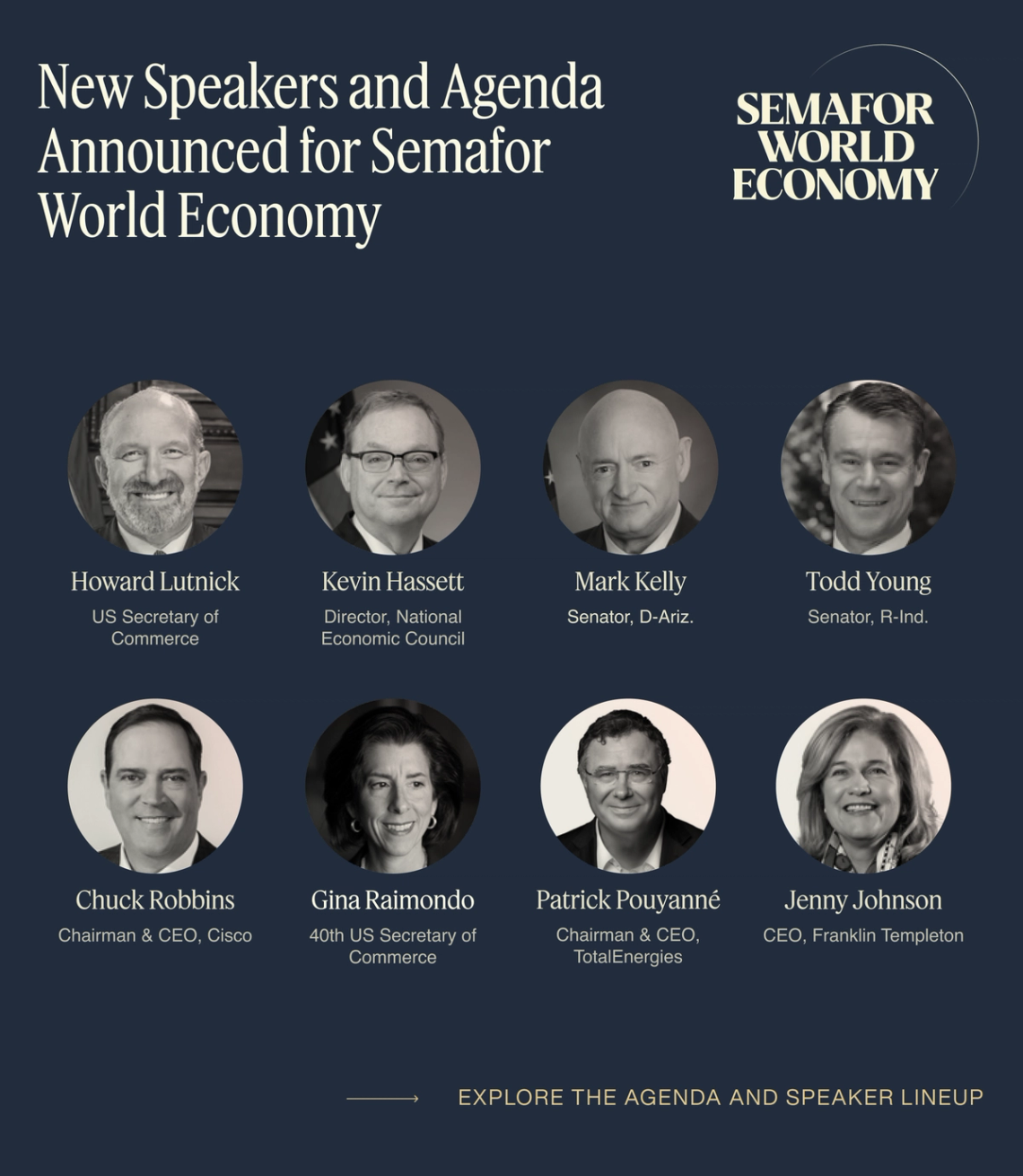 This April, global CEOs, officials, and industry leaders will join Semafor World Economy — the largest gathering of government and executives in the US — to sit down with Semafor editors for conversations on the forces shaping global markets, emerging technologies, and geopolitics. See the full lineup of speakers, including Global Advisory Board members, Fortune 500 CEOs, and elected officials from the US and across the G20. |
|
 Business & Macro |
|
|


