| | The war in Iran will force governments and companies to rethink the necessary conditions for energy ͏ ͏ ͏ ͏ ͏ ͏ |
| |  | | | CERAWeek Special Edition |
| |
|
 - Power plants under threat
- Asian countries scramble
- Rise of the petro-yuan
- Windfall profits
- Grid flexibility
 A global food crisis is looming, and the US buys into another private company. |
|
 The war in Iran will force governments and companies to rethink the necessary conditions for energy security. The prevailing sentiment at CERAWeek has been that financial markets have not yet come to terms with how long lasting the oil and gas market disruption from the war is likely to be; higher prices will very likely loom even if the US military quickly prevails. No matter what happens next, the war underscores the volatility inherent to the global fossil fuel trade at a time when alternative technologies are proliferating. Sure, renewables are exposed to upfront, capex-related risk. And yes, China effectively controls the market for wind, solar, and battery hardware, and for the minerals they require. But once they’re installed, these technologies are largely insulated from geopolitical events, as Pakistan has proved in recent weeks by leaning on solar while neighboring Bangladesh suffers from skyrocketing gas prices. “The fact that the wind and sun are free and domestic and inexhaustible doesn’t get nearly as much play as it deserves,” David Crane, a former senior US energy official who is now CEO of the investment firm Generate Capital, told me this week. Put another way, the sun — unlike, say, a strait — can’t be shut down by one’s adversaries. Fossil fuels, conversely, are permanently exposed to ongoing opex risk. Even the US, the world’s top producer, can’t completely insulate itself from price spikes. But the fact is that every country will need a mix of all technologies for the foreseeable future to maintain access to reliable, affordable energy. After the energy crisis of the 1970s, many countries leaned into diversified international trade and coordination as the solution, hoping that increasing the number of sources of supply would diminish any one actor’s ability to throttle the market. That mostly worked for 50 years. The legacy of this war will be a shift by countries to lean out of trade as much as they can, Meghan O’Sullivan, a former National Security Council official and energy geopolitics expert at Harvard, told me: “The lesson many will take away from this is that being exposed to global shocks is something they need to avoid.” That’s a wrap on CERAWeek, folks. As I write, I’m on a bus to Louisiana with TotalEnergies to check out their LNG terminal there, which is running full steam to make up the gap of lost supplies from Qatar. Then I’m off to brave the TSA line at the Houston airport; the rumor mill in the closing hours of the conference was fixated on which energy CEOs were giving each other a lift out on their private jets. If anyone reading this has a PJ seat open, you know where to find me. |
|
Power plants under threat again |
 Majid Asgaripour/WANA/Reuters Majid Asgaripour/WANA/ReutersOil prices hit $110 a barrel after US President Donald Trump’s decision to postpone strikes on Iran’s energy plants failed to alleviate fears of a protracted conflict. US Secretary of State Marco Rubio will discuss conflict de-escalation at a G7 meeting in France today. At the same time, The Wall Street Journal reports that the Pentagon is weighing sending up to 10,000 troops to the region. The Macquarie Group warned that oil may hit a record $200 barrel if the war drags on until June — a scenario that officials in Saudi Arabia and the White House are reportedly looking into. Meanwhile, a JPMorgan analysis found the world is now moving from a problem centered on a shock to energy flows to one of stock depletion, which is likely to turn into supply scarcity for much of the world. March saw one of the largest drawdowns on global oil inventories on record. The last cargo ships that left the Gulf before the war started have nearly all reached their destination in Asia, which is likely to face the first visible demand losses in April, according to JPMorgan. Africa will be next, and then Europe. The US, with longer voyage times and substantial domestic production, will initially experience a price shock, but in California, the most exposed region, this could evolve into a supply challenge by late April and May. |
|
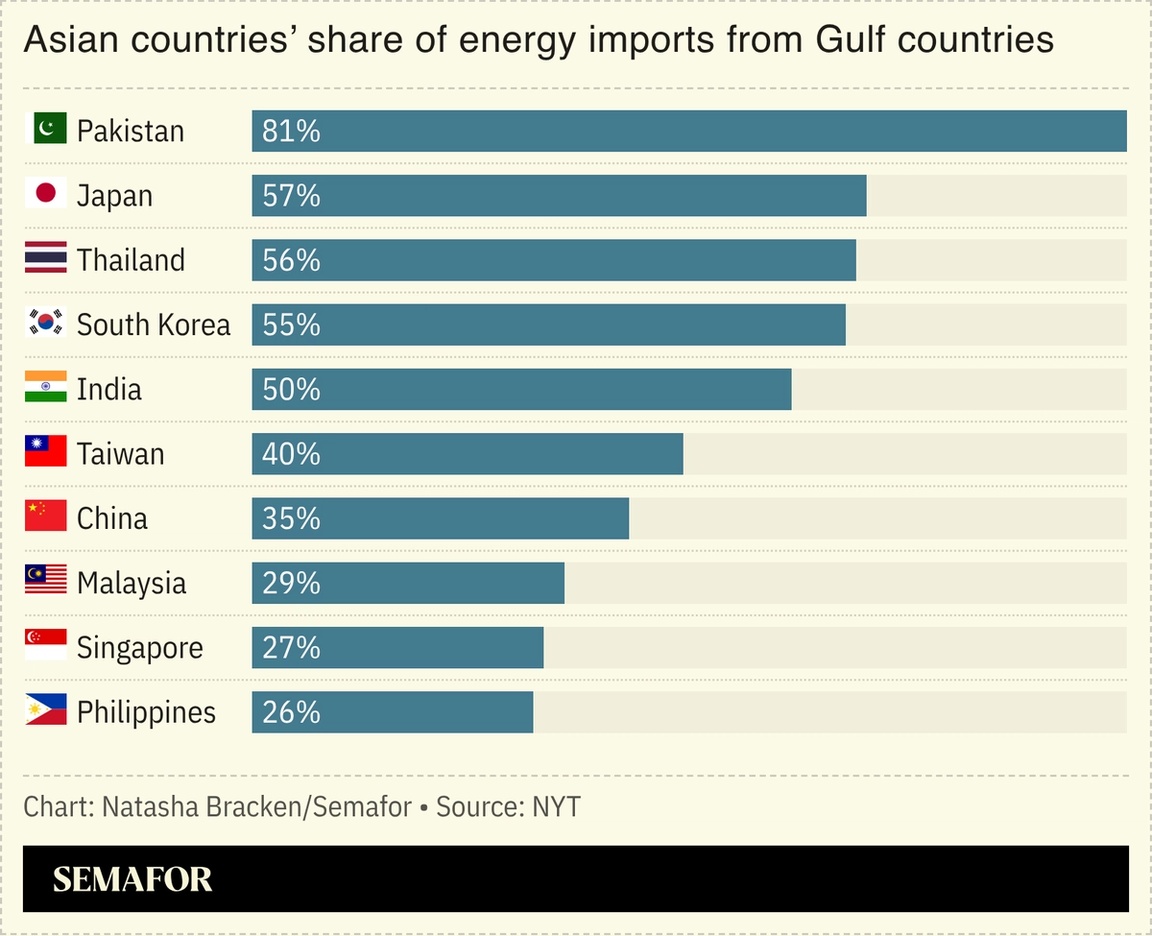 Asian countries are rolling out different energy strategies in response to the month-long war in the Middle East that has pushed oil prices higher and crimped the energy imports they depend on. Japan, one of the largest importers of Middle Eastern fossil fuels, is reserving its oil stockpiles for domestic refiners while planning to ease restrictions on coal-fired power generation by April to bolster its energy supply. India, similarly, imposed a levy on fuel exports to “ensure adequate availability of these products for domestic consumption,” the country’s finance minister said. Asian governments are also moving to ease the burden on households: Japan is reverting to subsidies to cap fuel costs, Vietnam waived a green tax to lower petrol prices, and India cut excise duties on fossil fuels. At the same time, governments are calling on their citizens to do their part: South Korea urged residents to take shorter showers, Thai public servants have been asked to use the stairs rather than elevators, and Sri Lanka declared Wednesdays a public holiday to compel factories, shops, and schools to close. |
|
View: Rise of the petro-yuan |
 Benoit Tessier/File Photo/Reuters. Benoit Tessier/File Photo/Reuters.The US is fighting Iran with one hand while funding it with the other — and accelerating the growth of a yuan-based financial corridor that is becoming too big to ignore. In the space of a single week, the US struck Iran’s Kharg Island oil terminal, temporarily lifted sanctions on Iranian oil exports, allowed Iranian tankers carrying crude to pass freely through the Strait of Hormuz en route to China, and faced off with Chinese officials in Paris for trade talks. Beneath the chaos, something new is taking shape: A secretive global architecture for trading oil that operates outside US dollar-denominated markets, Semafor’s Clay Chandler writes. Iran began building that network in 2018, when US President Donald Trump, in his first term, unilaterally withdrew from the nuclear deal that gave Iran relief from certain US sanctions in exchange for a pledge to dismantle its nuclear program. The US pressured allies to diversify away from Iranian oil; Tehran retaliated by turning to China as its main export market, evading US sanctions by launching a clandestine “shadow fleet” of tankers to ship oil supported by hundreds of maritime vessels operating under false identities, manipulated tracking systems, and fraudulent documentation. |
|
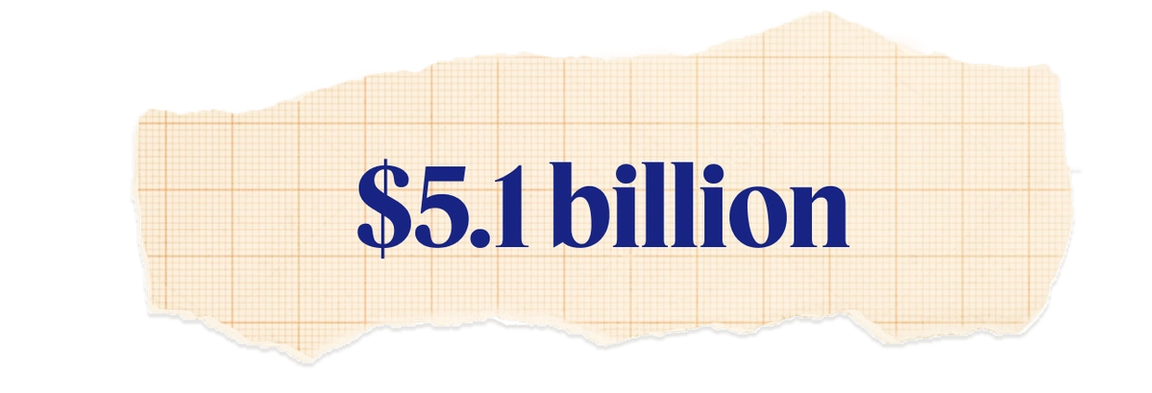 The additional revenues Exxon is expected to generate in March assuming a price rise of $33 per barrel from the average Brent spot price of $64 per barrel in the fourth quarter of last year, according to Reuters. The Iran war is creating a multi-billion- dollar windfall for major oil and gas companies as prices soar. The situation is reminiscent of 2022, when Russia’s invasion of Ukraine led to record profits for Big Oil and widespread calls for governments to tax the windfall. Reuters estimates Chevron could see additional revenues for the first three months of the year add up to roughly $4 billion. US shale producers without major operations in the Middle East are expected to gain the most from higher prices. Meanwhile, the price surge is likely to have benefited Iran to the tune of hundreds of millions of dollars of extra revenue with oil exports expected to have remained close to pre-war levels. |
|
 Jim Vondruska/File Photo/Reuters Jim Vondruska/File Photo/ReutersElectric utilities and tech companies are embracing a different solution to the data center power crunch: Ramping down their consumption at times of high demand. When tech CEOs visited the White House to commit to steps to limit the impact of their data centers on retail power prices, they were mainly focused on generation, that is building their own new power plants so as not to take too much from the grid. But for myriad bureaucratic, supply chain, and technical reasons, that approach will always be insufficient, Arshad Mansoor, CEO of the industry-funded research group EPRI, told Semafor. Instead, large-load demand flexibility, in which data centers agree to periodically curb their consumption in exchange for cash or for express access to the grid, “will be the biggest thing to happen on the grid in the next five years,” Mansoor said. This week, EPRI released a methodology utilities and hyperscalers can follow to make this happen, which drew support from the likes of Nvidia, Meta, Duke Energy, and Southern Company. “We’re not fully utilizing the existing system,” David Dardis, chief external affairs and growth officer for the power company Constellation, told the CERAWeek conference. “In the AI race with China, if we wait around for new baseload [generation] to come on the system, that’s going to take 10 years and it’ll be too late.” |
|
 Fossil Fuels- Russia is likely to scrap a sharp downgrade of its 2026 growth forecast after the Iran war boosted its oil revenue.
- Gasoline prices fell 19% in Vietnam after the government removed taxes to help tame soaring energy prices, although the price of a liter remains 21% above prewar levels.
- Japan’s energy giant Inpex is planning to import crude oil from Kazakhstan and Azerbaijan to shore up energy supplies.
- Three of the world’s largest LNG plants were forced to shut on Friday after a cyclone hit western Australia.
- TotalEnergies’ head of sustainability said the world will not be able to reach carbon neutrality by 2050 and that the company will have to adapt its own ambition to achieve the goal by mid-century.
Finance- Lagos has secured a pioneering $7.5 million flood insurance policy, which will provide relief to up to 4 million of its poorest residents when future flood levels meet pre-agreed triggers.
Politics & PolicyMinerals & MiningFood & Agriculture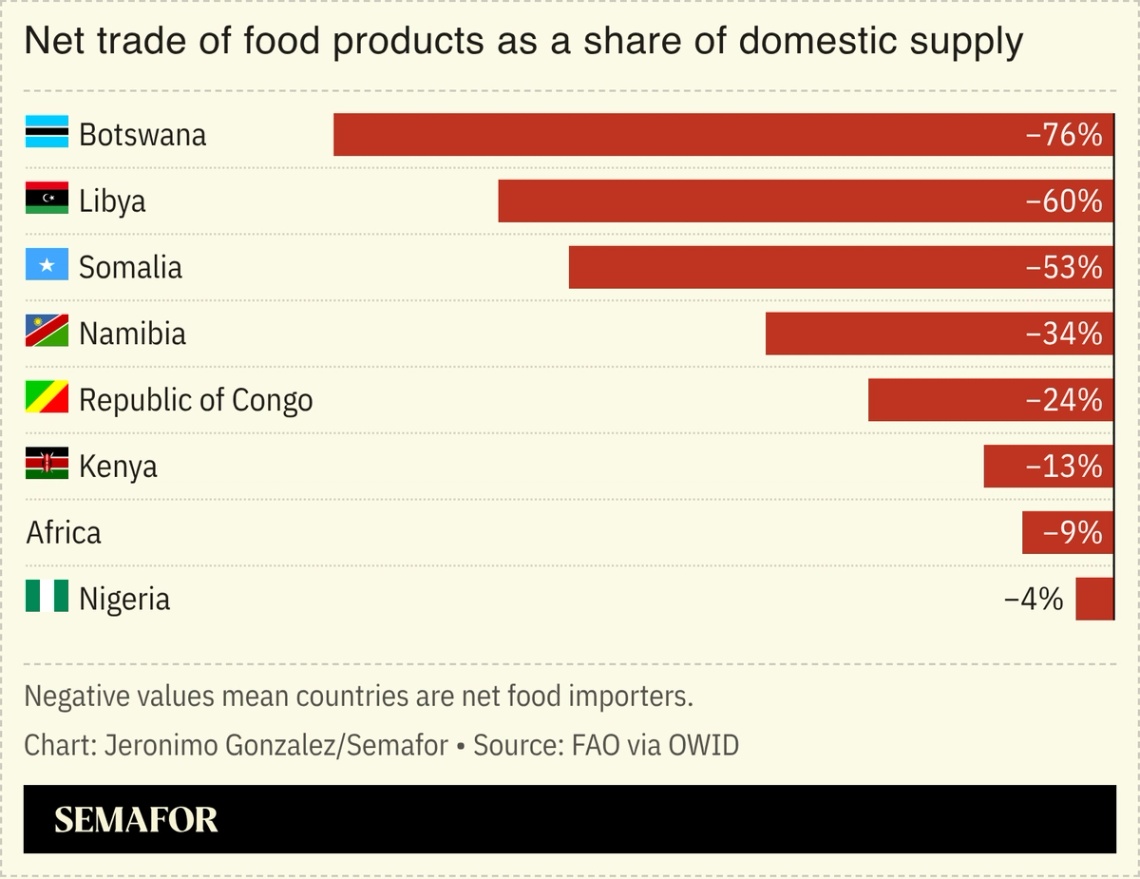 - EU member states imported agricultural commodities linked to the deforestation of 112,000 hectares a year between 2021 and 2023 — an area the size of Hong Kong — driven by imports of cocoa from Côte d’Ivoire and soy and cattle products from Brazil, according to analysis by not-for-profit initiative Trase.
|
|
|


