The top tools needed to track the conflict

Get full access to Reuters.com for just $1/week. Subscribe now.


Power Up

Power Up


A Reuters Open Interest newsletter

By Gavin Maguire, ROI Energy Transition Columnist


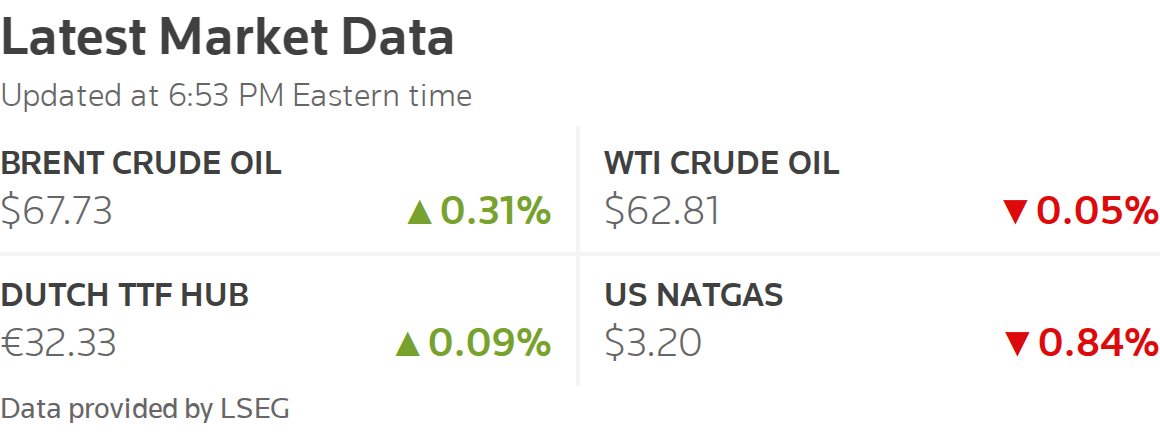
Data refreshes every time you open this email. For more energy news, click here. Please send any feedback to powerup@thomsonreuters.com.

Hello Power Up readers,

Brent crude oil is on track for its largest ever monthly rise after Yemeni Houthis widened the Iran war by launching their first attacks on Israel. As ROI's Clyde Russell explains below, this expanded conflict area puts oil and LNG supplies at risk of the  worst-possible scenario, which makes for grim - but vital - reading.

The riskier status of the Middle East - and its vast oil and gas deposits - will likely drive Big Oil towards other regions in their quest for more fossil fuel output. ROI's Ron Bousso, who gathered fresh insights on what the majors are up to at last week's CERAWeek conference in Houston, delves into that below.

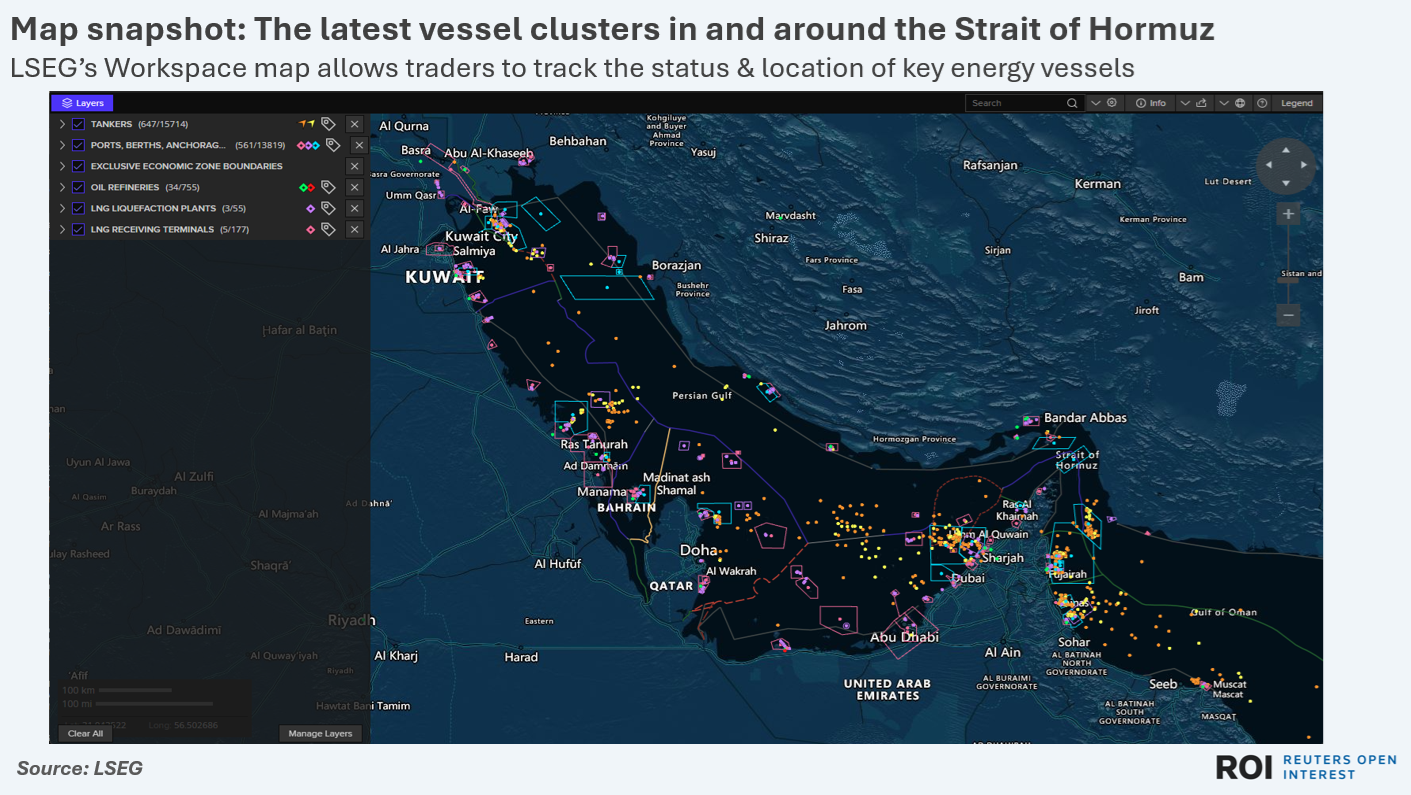
Finally, as the conflict enters its second month, energy professionals will need top-tier tools to assess how and where market risks are accumulating. Yours truly lists out the key mapping, tracking, data and news services needed to stay on top of this evolving situation. 

First up, here are some other key analyses and columns:

  • As energy stress spreads across Southeast Asia, governments across the region are asking China to deliver on its pledges of closer energy security cooperation by freeing up now-banned exports of fertiliser and fuel. But so far they're only getting the cold shoulder from Beijing.
  • Private energy companies and their backers are emerging as leaders in the next phase of global shale development, taking early positions in overseas basins while publicly listed U.S. producers focus on capital discipline and their core ‌domestic acreage.
  • The U.S. technology industry is being pushed to shrink its power use in times of high demand, amid growing public concern that Big Tech's massive electricity needs for its expansion of data centers are maxing out the country's grid.
  • Japan's industry ministry has asked domestic wholesalers to switch to Brent crude oil pricing from the Dubai benchmark when setting gasoline prices, in an attempt ‌to contain price increases, according to a document seen by Reuters.

As always, don’t hesitate to contact me at gavin.maguire@reuters.com or follow me on LinkedIn with any questions or thoughts.


Top energy headlines

  • Brent heads for record monthly leap as Houthi attacks widen Gulf conflict
  • Exxon and QatarEnergy's joint venture Golden Pass produces first LNG at new Texas facility
  • From Belt and Road to belt tightening: China's neighbours get cold shoulder on energy
  • EU energy ministers seek to coordinate Iran war response
  • PetroChina says operations 'overall normal', Strait of Hormuz accounts for about 10% of its supplies


Widening risks

A month after U.S. and Israeli strikes on Iran, global markets for the supply of crude oil, refined products and liquefied natural gas are already in the second-worst possible scenario, says ROI's Clyde Russell.

Everything hinges on the Strait of Hormuz. This chokepoint, which normally carries around 20% of global crude, products and LNG, is still effectively closed to most shipping, leaving energy markets dangerously exposed.

Under those conditions, claims by Washington or Israel that they are somehow winning the war against Iran are largely meaningless.

It may well be true that the U.S. and Israeli air campaign has decapitated Iran's leadership and degraded key military capabilities.

But the reality is that most tankers still cannot transit the Strait of Hormuz safely, while Iran has demonstrated a clear ability to strike energy and other critical infrastructure across the Gulf. That leaves Tehran shaping the narrative - and, more importantly, holding the global economy to ransom at the same time.

What would the worst-case scenario look like?

It would be a sharp escalation in which Iran inflicts widespread damage on Gulf energy infrastructure, using missiles and drones to hit pipelines, refineries, processing plants and export terminals across the region. Read on for more.

In response to the growing turmoil across the Middle East, oil companies will have to look further afield for new fossil fuel resources now that the Iran war has dented the investment allure of the energy-rich Middle East. Higher oil prices will give them that chance, argues ROI's Ron Bousso.

Uncertainty over the safety of transit through Hormuz and the higher risk of conflagration is apt to sharply boost the cost of deploying staff, equipment, insurance and capital in the Middle East, making the region a lot less attractive for exploration.

Still, higher long-term oil prices would expand the pool of economically viable reserves worldwide. And, importantly, the spiking risk premium in the Middle East is likely to push more capital toward regions previously deemed more risky or marginal. Read the full column for more.

Finally, now that the Iran conflict is dragging on well past early expectations, energy professionals must now brace for further potential disruptions to energy flows and more market gyrations.

To accurately assess where the impacts are being felt most acutely, energy market trackers must move beyond glancing at the latest social media missives to tracking professional-grade analytical tools that provide real-time clarity on key energy and shipping sectors throughout the world.

Today's column breaks down of some of the key tools and resources being used by energy traders and analysts to manage risk and capture opportunities stemming from the fallout of the conflict.

Read the full column
 

Sponsors are not involved in the creation of newsletters or other Reuters news content. Advertise in this newsletter or on Reuters' website

LiveIntent Logo
AdChoices Logo
 

Power Up is sent twice weekly. Think your friend or colleague should know about us? Forward this newsletter to them. They can also sign up here.

Want to stop receiving this email? Unsubscribe here. To manage which newsletters you're signed up for, click here.

This email includes limited tracking for Reuters to understand whether you’ve engaged with its contents. For more information on how we process your personal information and your rights, please see our Privacy Statement.

Terms & Conditions


© 2026 Thomson Reuters. All rights reserved.
3 Times Square, New York, NY 10036

fb