| | | | |  | By Megan R. Wilson | Did someone forward this newsletter to you? Sign up here to get it in your inbox. In today’s issue: - What the SCOTUS ruling on conversion therapy could mean for states regulating talk-based care
- Wearable company Whoop raises $575 million, highlighting investor bets on biometric monitoring
- White House reups support for Casey Means’s surgeon general nomination shortly after Trump appeared noncommittal
Hello all, and welcome to the Health Brief newsletter. Do you have any health policy intel or tips? I want to hear from you. You can find me at megan.wilson@washpost.com. If you prefer to message me securely, I’m also on Signal at megan.434. This newsletter is published by WP Intelligence, The Washington Post’s subscription service for professionals that provides business, policy and thought leaders with actionable insights. WP Intelligence operates independently from The Washington Post newsroom. Learn more about WP Intelligence. | 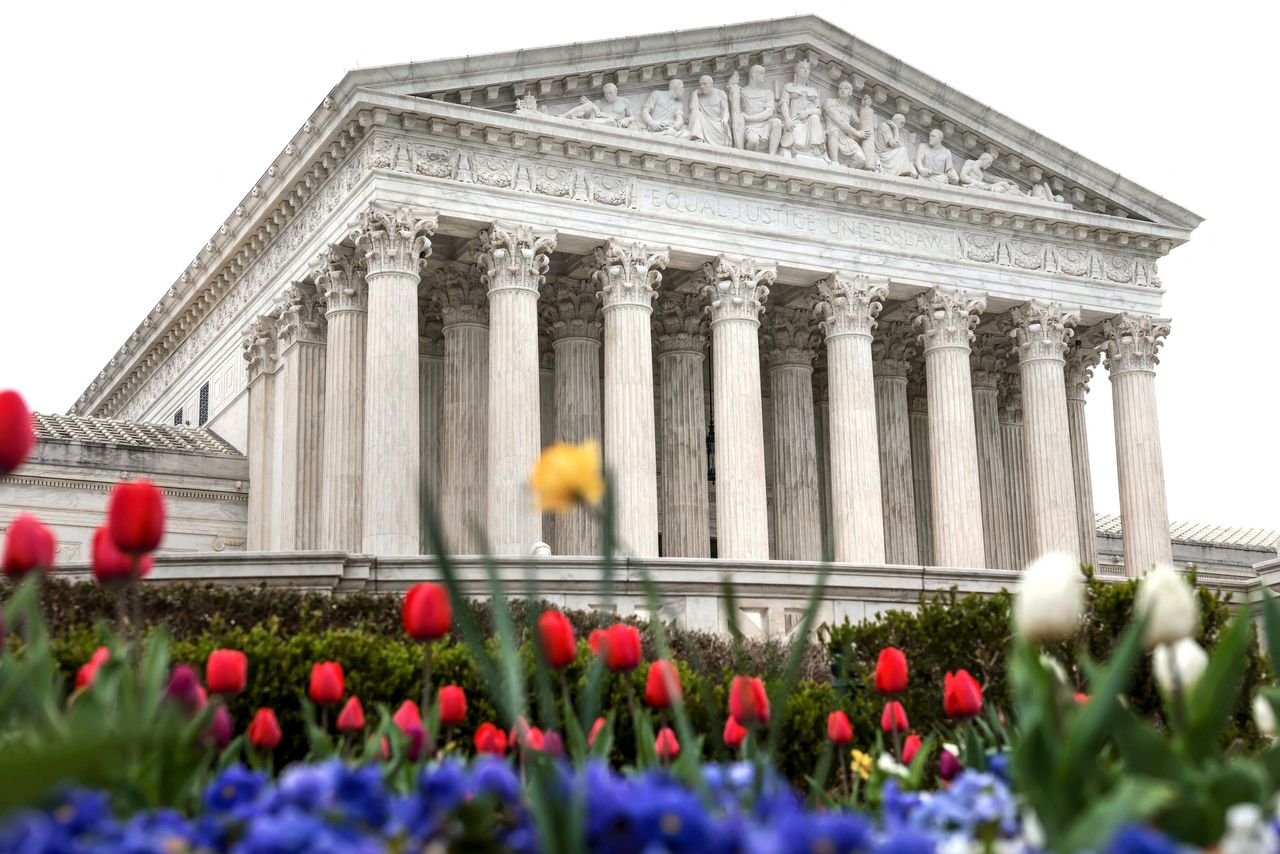 | | Spring flowers bloom outside the U.S. Supreme Court building on March 30, 2026. (Evelyn Hockstein/Reuters) | | | |  | The Lead Brief | The Supreme Court on Tuesday ruled that Colorado’s ban on conversion therapy for minors likely runs afoul of the First Amendment, a move that could ripple across nearly 30 states with similar laws restricting the practice, as WaPo’s Justin Jouvenal reports. In an 8-1 decision, the justices sided with Kaley Chiles, an evangelical therapist who argued that Colorado’s restrictions blocked her from providing faith-based guidance to teens navigating sexual orientation or gender-identity questions. The majority framed the state’s prohibition as a content-based speech restriction that requires a high constitutional bar. Some lower courts have found that conversion therapy laws violate free-speech rights, while others have ruled they are allowable regulations of professional conduct. → In a 2018 case involving “crisis pregnancy” centers, the Supreme Court set a high bar for regulating what medical professionals can say. Content-based limits on professional speech, the justices held, require a compelling state interest and must be narrowly tailored. At the same time, the high court said states can regulate professional conduct that only “incidentally” affects free-speech rights. Conversion therapy, which has long been discredited by major medical organizations as ineffective and potentially harmful, aims to steer gay and lesbian youth toward heterosexuality and encourage transgender minors to align with their sex assigned at birth. As Justin points out: The Chiles v. Salazar case sits at the intersection of key lines of jurisprudence by the court in recent years. The justices have pushed to increase religious liberties, while rolling back protections for gay and transgender people. Read the full story: “Supreme Court finds law banning conversion therapy for minors likely violates free speech.” | | | | | | Industry Rx | The Supreme Court’s decision affirmed the argument being made by Chiles that Colorado’s law banning conversion therapy regulates speech and not conduct. Lawyers for Chiles argued that patient-client conversations should not be considered “medical treatment,” arguing that “speech is the only tool” she uses. But Michael R. Ulrich, an associate professor at Boston University, said in a New England Journal of Medicine op-ed that the case is ultimately “about whether the state can enforce standards of care.” Ulrich said that Colorado’s law banning licensed therapists from engaging in conversion therapy with patients only codified “the mental health profession’s own standard of care” based on the evidence. “Because licensure has historically protected both the public and the profession, the state’s authority to enforce standards of care is essential,” he wrote. → States enacted most of the bans on conversion therapy over the past decade, citing evidence that conversion therapy is harmful to minors. Now the Supreme Court’s stance on the issue injects new doubt into their viability. Why it matters: Experts worry that the ruling could have broader implications for health care. Jennifer S. Bard, a professor at the University of Cincinnati College of Law and the University of Cincinnati College of Medicine, recently wrote in Health Affairs that constitutional protections for faith-based health advice could “extend beyond LGBTQ+ issues to every domain where ideology conflicts with medical consensus.” “While Chiles directly addresses bans on conversion therapy, its broader implication is the potential erosion of state authority to regulate clinical interactions,” Bard continued. “If speech-based care is insulated from oversight, entire categories of treatment may become vulnerable to belief-driven practice, regardless of evidence or patient safety.” What to watch: Bard said that states should start identifying — and potentially revising — patient-protection laws on the books that could be undermined by a ruling that treats talk therapy as “protected speech.” This could include “a wide range of activities that involve no physical intervention but only diagnosis or advice,” Bard writes. On the federal level, the Office for Civil Rights within the Department of Health and Human Services has launched at least five investigations into the licensing policies and enforcement practices at state health departments. The probes, which some argue could be expanded as a result of Tuesday’s Supreme Court ruling, are focused on whether departments are discriminating against providers, facilities or faith-based organizations in violation of federal conscience and equal-treatment laws. | | | | | | Market Moves | Whoop, which makes wristbands that track health metrics including sleep and heart rate, has raised $575 million in a recent late-stage funding round. This brings the company’s valuation to $10.1 billion, and represents another step forward before going public. The list of investors includes medical device company Abbott and the Mayo Clinic, in addition to professional athletes such as LeBron James, Cristiano Ronaldo and Rory McIlroy. “Chronic disease is rising globally, while many health care systems remain built for reactive care,” the company said. “With this investment, the company will accelerate global expansion and scale its platform as a new standard for personalized, preventive health.” Why it matters: The funding appears to emphasize how central wearables are becoming to the health-tech ecosystem amid technological advances colliding with the Make America Healthy Again movement. It also signals how aggressively investors are betting that continuous biometric monitoring will shape preventive care and the overall consumer market. “Health monitoring has never been more popular or more important; there’s a huge push around longevity,” Whoop’s founder and CEO, Will Ahmed, said in an interview Tuesday with Yahoo Finance. - As part of its expansion efforts, the company said it will be hiring 600 people around the world, an 80 percent increase in staff, according to the New York Times.
- Ahmed told the Times that he’s aiming for an IPO within the next two years. The company, which charges users an annual subscription starting at $199 for its most basic plan, says it has more than 2.5 million users worldwide.
- The Times reported that some of the proceeds from Whoop’s most recent round of funding will go into expanding into medical-grade products such as glucose monitors.
There’s big money lining up behind the idea that wearables will drive the next wave of preventive care, blurring the lines between lifestyle tech and medical-grade tools. - Smart-ring maker Oura, one of Whoop’s main competitors, is also private but valued at roughly $11 billion. Both companies have contracted with the Defense Department to improve analytics within the military.
- Whoop spent $600,000 to lobby the federal government last year, according to disclosures. It has three firms on retainer, including prominent health care lobbying firm Tarplin, Downs & Young.
- Whoop and other wearable health tech companies have at times clashed with regulators, which have cautioned that some features could veer into triggering federal oversight as a medical device.
Last July, the Food and Drug Administration sent Whoop a warning letter about marketing its wristband’s ability to provide insights about a user’s blood pressure. The company pushed back, arguing it is a “wellness feature, not a medical device.” Then, earlier this year, the agency issued new regulatory guidance for “low risk” products that “promote a healthy lifestyle,” reversing course and allowing Whoop to offer the feature. The guidance broadly gives wearable companies more latitude to provide readings around blood pressure and glucose levels as long as they’re used solely for wellness, rather than medical, purposes. In a video about the change posted to social media, FDA Commissioner Marty Makary said the changes would “promote more innovation with AI in medical devices.” “The government doesn’t need to be regulating everything,” Makary’s post read. | | | | | | Executive Health Brief | President Donald Trump is standing by surgeon general pick Casey Means — even though he had appeared noncommittal about her nomination just a day before, report WaPo’s Lauren Weber and Rachel Roubein. In a statement Monday night, White House press secretary Karoline Leavitt praised Means’s credentials and said Trump “stands by her.” “Dr. Casey Means has spent her entire career as an entrepreneur, best-selling author, and researcher bringing attention to America’s chronic disease epidemic and how our health care system is failing the American people,” the statement said. “The Senate should move to quickly [confirm] Dr. Means as our next surgeon general without further delay.” Why it matters: The statements come as a few Republican lawmakers on the Senate’s health committee remain undecided about whether to approve Means, a key figure in the Make America Healthy Again movement, to take the post as the nation’s top doctor. Should they decide against it, Means won’t have the votes to advance. When reporters asked Trump on Sunday whether he would consider a new nominee amid the uncertainty, he expressed that he wasn’t sure how she was doing in the overall process. But, Trump said, “We have a lot of great candidates” for surgeon general. Read the full story: “White House reaffirms support for surgeon general pick after Trump remarks.” | | | | | | Jobs Report | — Elisabeth Armstrong is the new chief of staff in the National Institutes of Health’s Office of the Director. In the role, Armstrong will advise Director Jay Bhattacharya and other agency leadership and manage the agency’s operations. Armstrong comes from the Food and Drug Administration, where she advised the agency’s leadership and helped coordinate communications within the FDA and between the agency and other entities — including the White House, the Department of Health and Human Services and Congress. She previously worked at Raymond James. — Kurt C. Small has been named president and CEO of CareFirst BlueCross BlueShield, effective May 4. Small is president of Medicaid for Elevance Health and has decades of experience in the insurance industry, including spending 16 years at Aetna. — Lobbying and public relations firm BGR Group has brought on Charlie Chapman as a vice president in its health and life sciences practice, with a particular focus on helping clients with changes to Medicare and Medicaid coverage and payment policies. Chapman most recently worked at the Department of Health and Human Services, advising Health Secretary Robert F. Kennedy Jr. about issues relating to the Affordable Care Act, Medicare and Medicaid, and other policy issues. Prior to that, he worked on the House Budget Committee under Chair Jodey Arrington (R-Texas) and helped craft parts of Republicans’ signature policy law, the One Big Beautiful Bill. | | | | |


_tstmp_1756933376-1920-1080.png)