| | In this edition: AfDB warns on Iran war impact, South Africa’s $200B drive, and Nigerian-Americans w͏ ͏ ͏ ͏ ͏ ͏ |
| |  | Africa |  |
| |
|
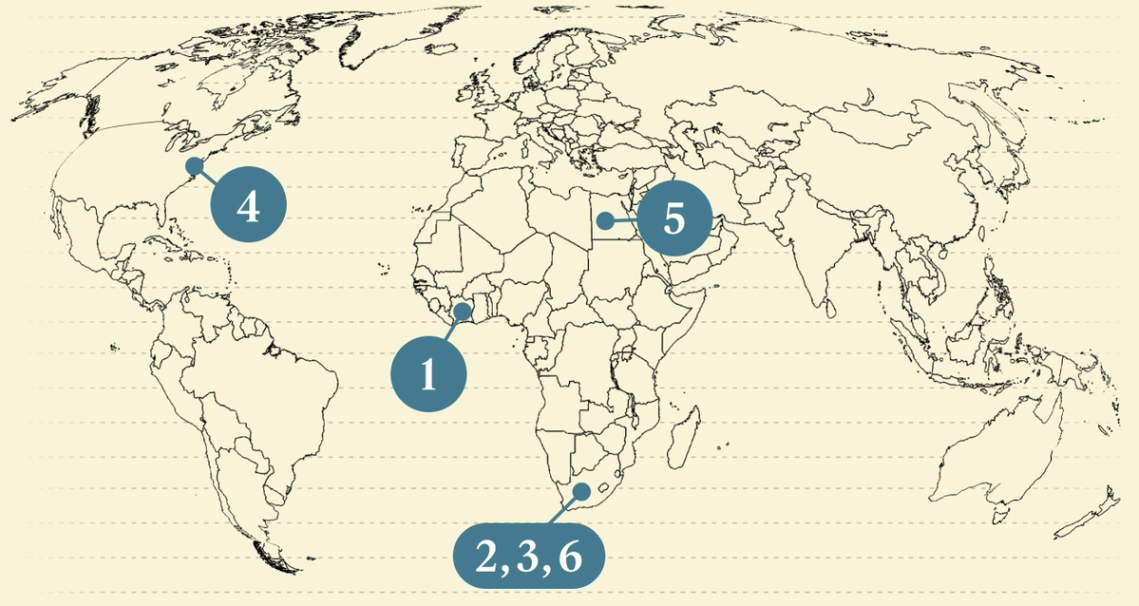 - AfDB warns on Iran war
- S. Africa’s $200B drive
- S. Africa cuts fuel taxes
- Push for Nigerian caucus
- $100B+ in banking revenues
- The Ramaphosa succession race
 A new AI-powered restitution tool launches. |
|
Africa’s top bank warnings on Iran war |
 Raheb Homavandi/File Photo/Reuters Raheb Homavandi/File Photo/ReutersWar in the Middle East could cost Africa as much as 1.5 percentage points of growth this year, the African Development Bank said. A scenario in which the conflict stretched for six months would hurt the continent’s already fragile prospects and expose fiscal constraints on economies struggling to fund basic services, it warned. Now in its second month, the Israel-US war against Iran is deepening pressures on African economies, from mounting debt-service burdens to fading capital flows and rekindled energy-driven inflation. The AfDB had projected 2026 growth of 4.3% before the strikes on Iran by the US and Israel. Chief Economist Kevin Urama now expects the war could shave 0.2 percentage points if the conflict ends within three months, and 1.5 percentage points if it lasts twice as long. The multilateral lender joins the International Monetary Fund and several African central banks in warning that a prolonged conflict could weaken Africa’s growth outlook. — Tiisetso Motsoeneng |
|
South Africa pushes for $200B investment |
 South African President Cyril Ramaphosa. Chen Wei/Xinhua via Getty Images. South African President Cyril Ramaphosa. Chen Wei/Xinhua via Getty Images.South African President Cyril Ramaphosa launched a nearly $200 billion investment drive aimed at accelerating economic recovery and industrialization in the face of growing worry over the impact of the Iran war on the continent’s biggest economy. For more than a decade, South Africa’s economy has barely grown, leaving it with crumbling infrastructure and the need to create jobs in a country where one in three people are unemployed. Ramaphosa’s pitch to investors in Johannesburg this week was that South Africa has fixed the worst bottlenecks: He said the country is opening key sectors to private capital and is ready for large scale investments. Ramaphosa said the effort will run through 2030 with delegates at the South African Investment Conference pledging $53 billion across 31 projects spanning energy, logistics, manufacturing, and digital infrastructure. They include Coca-Cola’s $1 billion expansion plan, and a $3.6 billion commitment from Sasol — the world’s biggest maker of fuel from coal — to upgrade operations. — Tiisetso Motsoeneng |
|
South Africa cuts fuel levy |
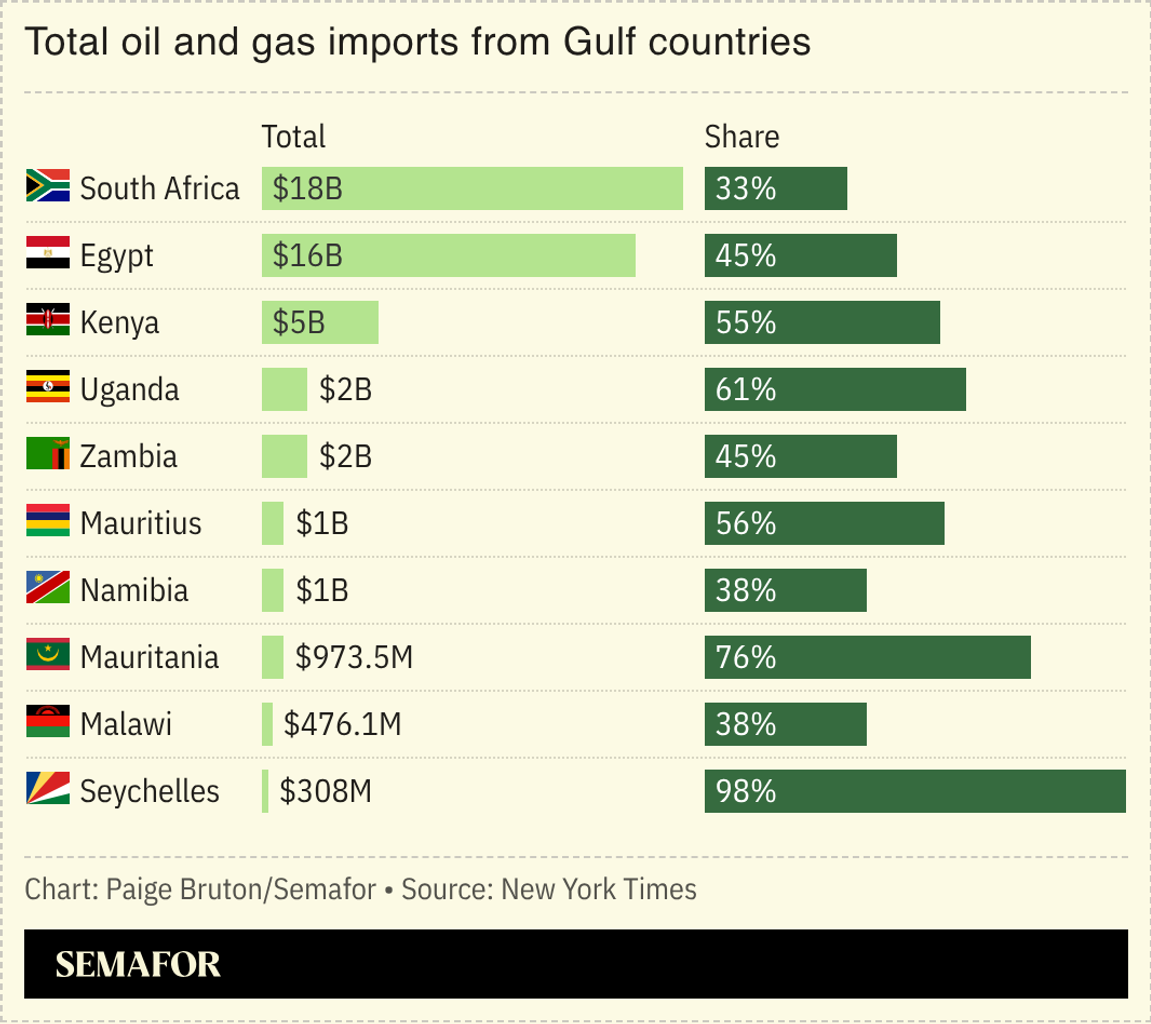 South Africa will slash fuel taxes for a month to cushion consumers from a surge in oil prices triggered by the Middle East conflict, sacrificing millions of dollars in revenue for a fiscal framework only recently brought under control. The emergency intervention — which will cost about $350 million in foregone revenue — adds to policy challenges facing Africa’s biggest economy, where officials are juggling inflation control, fragile growth, and the need to maintain fiscal discipline. The relief will be reviewed monthly, raising questions about how long Pretoria can absorb external pressures without reopening budget assumptions. The central bank has also pushed back the prospect of interest rate cuts as the conflict threatens to complicate efforts to lock in price stability gains. — Tiisetso Motsoeneng |
|
Call for Nigeria Caucus revival |
 Kent Nishimura/Reuters Kent Nishimura/ReutersNigerian-American groups are struggling to resurrect a caucus in the US Congress as the Trump administration’s visa restrictions and designation of Nigeria as a “Country of Particular Concern” test ties between Washington and Abuja. Several organizations said during a Capitol Hill briefing last week that reviving the Congressional Nigeria Caucus — which went dormant several years ago — was their primary legislative goal. “A congressional caucus creates a consistent space for dialogue and policy coordination,” said Nkechi Ilechie of The Nigerian Center, a Washington-based nonprofit. But finding Congress members to co-chair the revived caucus has proven difficult, Ilechie told Semafor. While some have expressed willingness to join as rank-and-file members, none have committed to a co-chair role. The US-Nigeria relationship has grown increasingly complicated after Washington boosted claims that attacks on Nigerian Christians by militants constitute genocide — a characterization that Abuja strongly refutes. Nigeria has also refused to accept third-party country deportations from the US, while the Trump administration’s visa restrictions have hit Nigerian-American communities hard. — Adrian Elimian |
|
African banks’ revenues surge |
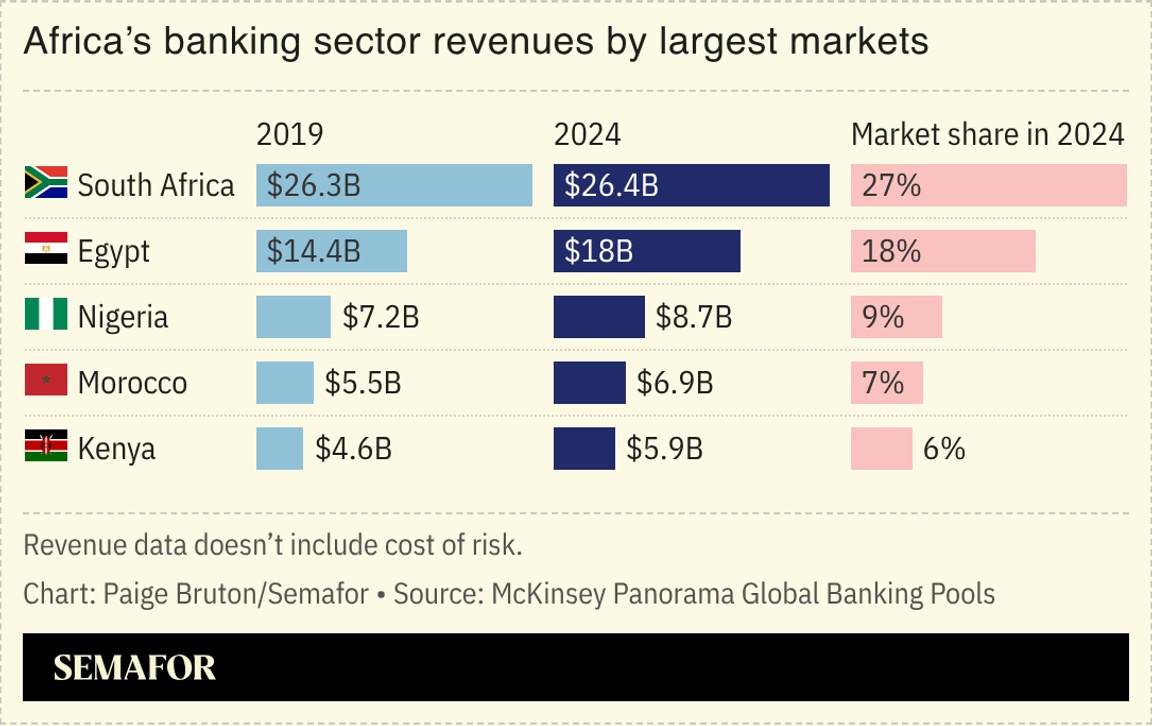 African banks’ revenues rose to $107 billion in 2025, the first time it had crossed the 12-digit threshold, according to a report by McKinsey. In the five years to 2024, Africa’s banking sector outperformed every other region. South Africa, Egypt, Nigeria, Morocco, and Kenya accounted for nearly 70% of African banking revenues in 2024, with South Africa alone raking in $26.4 billion that year. High interest rates and growth in trading fees have been key drivers for the continent’s banks. Many banks in sub-Saharan Africa are constrained by “persistent inflation and currency pressure, affecting credit demand and provisioning needs,” the report noted, but vast opportunities exist to leverage data to unlock underserved large youth and small business populations, meaning room for more growth for African banks. — Alexander Onukwue |
|
View: The ANC’s billionaire option |
  President of the Confederation of African Football Patrice Motsepe. Sayed Hassan/Getty Images. President of the Confederation of African Football Patrice Motsepe. Sayed Hassan/Getty Images.The idea that billionaire Patrice Motsepe could stabilize — or even save — the African National Congress reflects both the party’s deepening crisis and its reliance on financial muscle, veteran South African journalist Sam Mkokeli argues in a Semafor column. Motsepe’s wealth, business network, and continental influence make him structurally hard to compete against in the ANC’s internal politics, where leadership contests demand resources, coordination, and endurance. His growing popularity only sharpens that advantage. Yet the ANC’s long decline — from dominant majority to fragile coalition — suggests money alone cannot reverse its fortunes or resolve its internal fractures. Motsepe’s rise captures a deeper shift in the ANC’s political economy, where capital is increasingly central to power, writes Mkokeli. But the party’s challenges are structural, not just financial. Like other former liberation movements, it faces fragmentation, ideological contestation, and eroding legitimacy. A billionaire may steady the system, but he cannot redefine its purpose. |
|
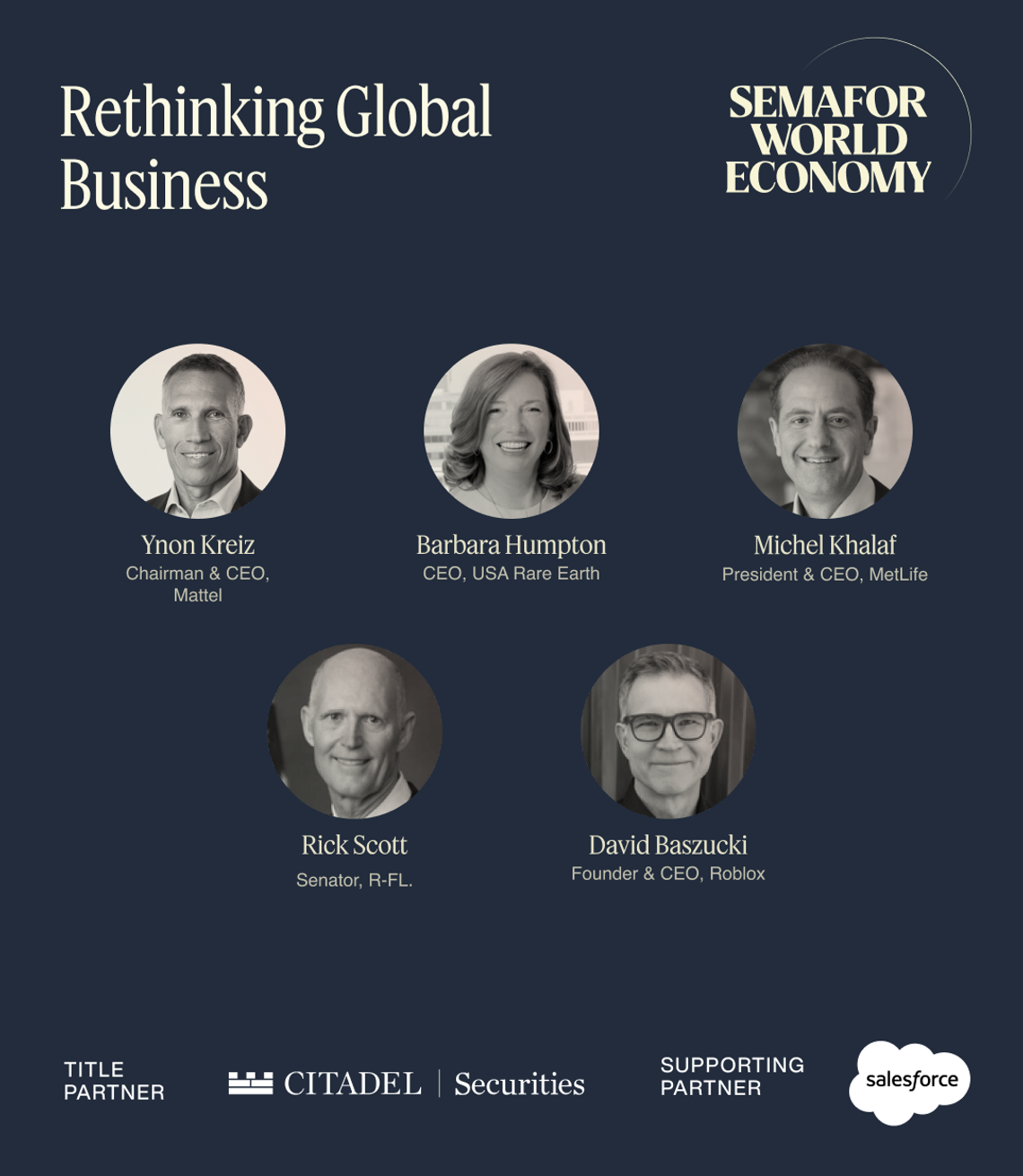 Ynon Kreiz, Chairman & CEO of Mattel; Barbara Humpton, CEO of USA Rare Earth; Michel Khalaf, President & CEO of MetLife; Sen. Rick Scott, R-FL.; David Baszucki, Founder & CEO of Roblox; and more will join the Rethinking Global Business session at Semafor World Economy. This session will examine how technological disruption, geopolitical shifts, and changing consumer behavior are reshaping the business landscape, and what sets apart the companies that are adapting from those falling behind.
April 13-17, 2026 | Washington, DC | Apply to attend |
|
 Business & Macro |
|
|


