| Forwarded this email? Subscribe for more |



 |
| By The Free Press |
It’s Tuesday, April 7. This is The Front Page, your daily window into the world of The Free Press—and our take on the world at large. Today: Coleman Hughes on Ibram X. Kendi’s latest provocations. New York City claims 5 million of its residents can’t afford to live there. And much more.
But first: Frannie Block reports from Mission Control.
Yesterday, three Americans and a Canadian traveled farther from Earth than any human has gone before—and then carried on. The crew of NASA’s Artemis II mission circled the dark side of the moon, a part of the solar system few people have ever laid eyes on, where they lost touch with Mission Control for 40 minutes. It’s a triumph for the world’s greatest space agency.
It’s strange to think that less than a week ago, all four astronauts were in Florida. They launched into space from Cape Canaveral last Wednesday evening. I was watching from the beach, with hundreds of other Americans who had traveled across the country; it was the first time I’d ever seen a rocket launch, and it blew my mind. As the Orion spacecraft disappeared into the universe, I wanted to know: What’s next for NASA?
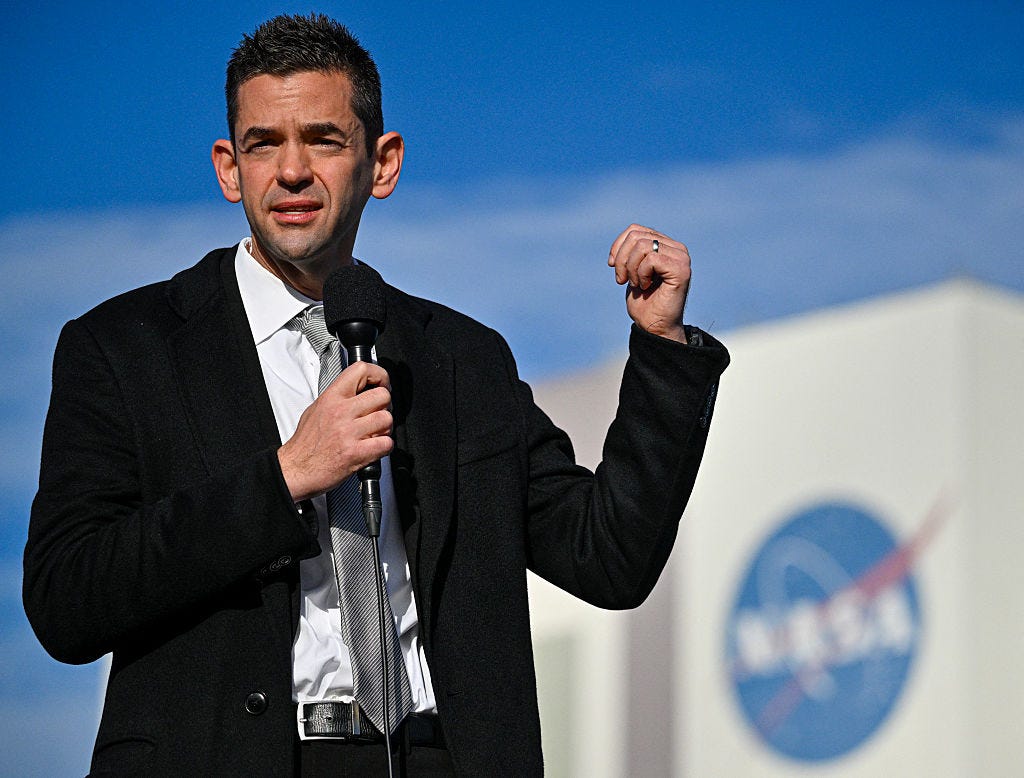
So two days later, I flew to Mission Control—which is, of course, in Houston, Texas—to talk to the man best placed to answer this question: the guy who leads NASA, Jared Isaacman.
A high school dropout who became a billionaire businessman, he’s wanted to be an astronaut since he was a toddler—so he used his riches to finance and command two SpaceX ventures, before his controversial nomination to be NASA administrator in December 2024. The right was suspicious of his donations to Democratic candidates; the left was suspicious of his relationship with Elon Musk. But Isaacman’s eyes are on the prize: He wants NASA to achieve “the near impossible.”
“Ten years from now, we’ll have, like, our Uber and Lyft fleets on the moon doing wild things,” he told me.
But for all Isaacman’s futuristic talk, the Mission Control that I saw seemed stuck in the past. There’s a very ’80s mural on the wall that looks distinctly like the title cards of Back to the Future—the female astronauts have perfectly permed hair, and the spacesuits look decidedly retro—and at one point the elevators broke down.
How’s Isaacman planning to bring this calcified, crumbling agency into the 21st century—and beyond? Read my report to find out:
—Frannie Block
 |
Zohran Mamdani’s Racial Equity Obsession | ||||
 | ||||
|
Will Colleges Ever Give Up Racial Preferences? | ||||
 | ||||
|
America’s Incredible Rescue of Its Downed Airmen in Iran and Trump’s Strategic Options Ahead | |||||||||||
 | |||||||||||
|


Why the Vatican and the White House Are on the Outs | ||||
 | ||||
|
Can Peptides Really Reverse Aging? | ||||
 | ||||
|