Thanks for reading The Briefing, our nightly column where we break down the day’s news. If you like what you see, I encourage you to subscribe to our reporting here.
Greetings!
The sooner Anthropic and OpenAI go public, the better—at least then we’d have proper financial disclosure. Both companies’ habit of updating the public on their revenue growth by references to either monthly revenue or annualized revenue, which is (loosely speaking) the last month’s revenue multiplied by 12, is getting old. And it’s not exactly what investors need to know.
Take Anthropic, which revealed Monday afternoon that it was now generating annualized revenue at a $30 billion rate, more than double where it was in mid-February. More significantly, that number implies Anthropic has now passed OpenAI, which a week ago said it was bringing in $2 billion a month in revenue (implicitly $24 billion in annualized revenue). And yet Anthropic raised money in February at a $380 billion valuation, while OpenAI last month finalized a fundraising at an $852 billion value. (For another angle on Anthropic, see our Dealmaker column tonight).
OpenAI looks way overvalued, which is bad news for investors in its last round, such as Amazon and SoftBank. They appear to have overpaid!
To be sure, the OpenAI-Anthropic comparison is more complicated. The two companies don’t calculate revenue in exactly the same way, as my colleague Sri Muppidi explained in this piece a couple of weeks ago. Anthropic counts all the revenue it gets from its cloud partners’ resale of its models, deducting their share as a sales and marketing expense.
OpenAI only counts the share of revenue it keeps from sales of its models by Microsoft’s Azure, its original cloud partner, Sri said. That implies OpenAI’s revenue is lower than it would be if it reported on the same basis as Anthropic. (There’s also the possibility that OpenAI increased its annualized revenue in the past week, although that seems a little unlikely.)
And let’s not forget that the annualized revenue metric is problematic to begin with. How certain is it that one month’s revenue can be extrapolated out over the next year? As my colleague Stephanie Palazzolo wrote last week, there have been signs that Anthropic’s server capacity may be under strain from all the increased usage. If customers encounter difficulties, they might switch to a different model.
Still, the question of which company is bigger right now is a little beside the point. It’s undeniable that Anthropic’s focus on business customers has turbocharged its growth, while OpenAI’s chaotic management seems to be holding the company back. Investors in OpenAI’s last round may indeed have overpaid, but there’s still time for the company to turn things around. Right now, though, Anthropic has the wind at its back.
Tesla’s Sorry Tale
Elon Musk might have to contend with an intense sibling rivalry fairly soon—between his companies. Everyone is abuzz about the coming IPO for his SpaceX rocket company. News reports are suggesting (somewhat fantastically) it could be worth $2 trillion when it goes public, expected in the summer.
Shares of Tesla, meanwhile, have fallen 23% so far this year, dragging down its market capitalization to $1.28 trillion. That’s roughly in line with SpaceX’s last valuation, even though Tesla’s 2025 revenues of around $95 billion were six times SpaceX’s reported revenues of around $16 billion.
While that might make people think Tesla stock is cheap, that couldn’t be further from the truth. Tesla is still trading at a huge premium to traditional automakers on multiples of sales or profits. And as a bearish report from JPMorgan Chase on Monday pointed out, the stock is 50% higher than it was in June 2022, when its delivery volumes peaked. Since then, expectations for Tesla’s performance have “collapsed for all financial and performance metrics across all time periods through the end of the decade.”
What has kept Tesla trading at such a premium to the sector is Musk’s promise to expand the electric vehicle maker into the robotaxi and robotics market. Similarly, SpaceX’s valuation is propped up by his (literally) blue-sky vision of traveling to Mars, although investors seem to be even more positive about SpaceX than about Tesla.
In Other News
• Intel says it’s now involved in a chipmaking project led by Elon Musk’s SpaceX and Tesla.
• Longtime Microsoft executive Eric Boyd is joining Anthropic as the AI lab’s head of infrastructure, Boyd said on Tuesday.
• Amazon has reduced the volume of packages it will ship through the U.S. Postal Service to 80% of the current volume, under a new agreement the two sides struck.
• Anthropic announced on Tuesday that it will be providing access to its unreleased Claude Mythos model to more than 40 organizations, including Apple, JPMorgan Chase and the Linux Foundation, so they can test their software for security vulnerabilities.
• Amazon Web Services CEO Matt Garman on Tuesday played down the idea that Anthropic’s highly praised Claude Code tool could undercut existing enterprise software companies. But Garman warned that if incumbent software firms try to “protect what they have and not lean in” to AI, “they’re in trouble.”
Today on The Information’s TITV
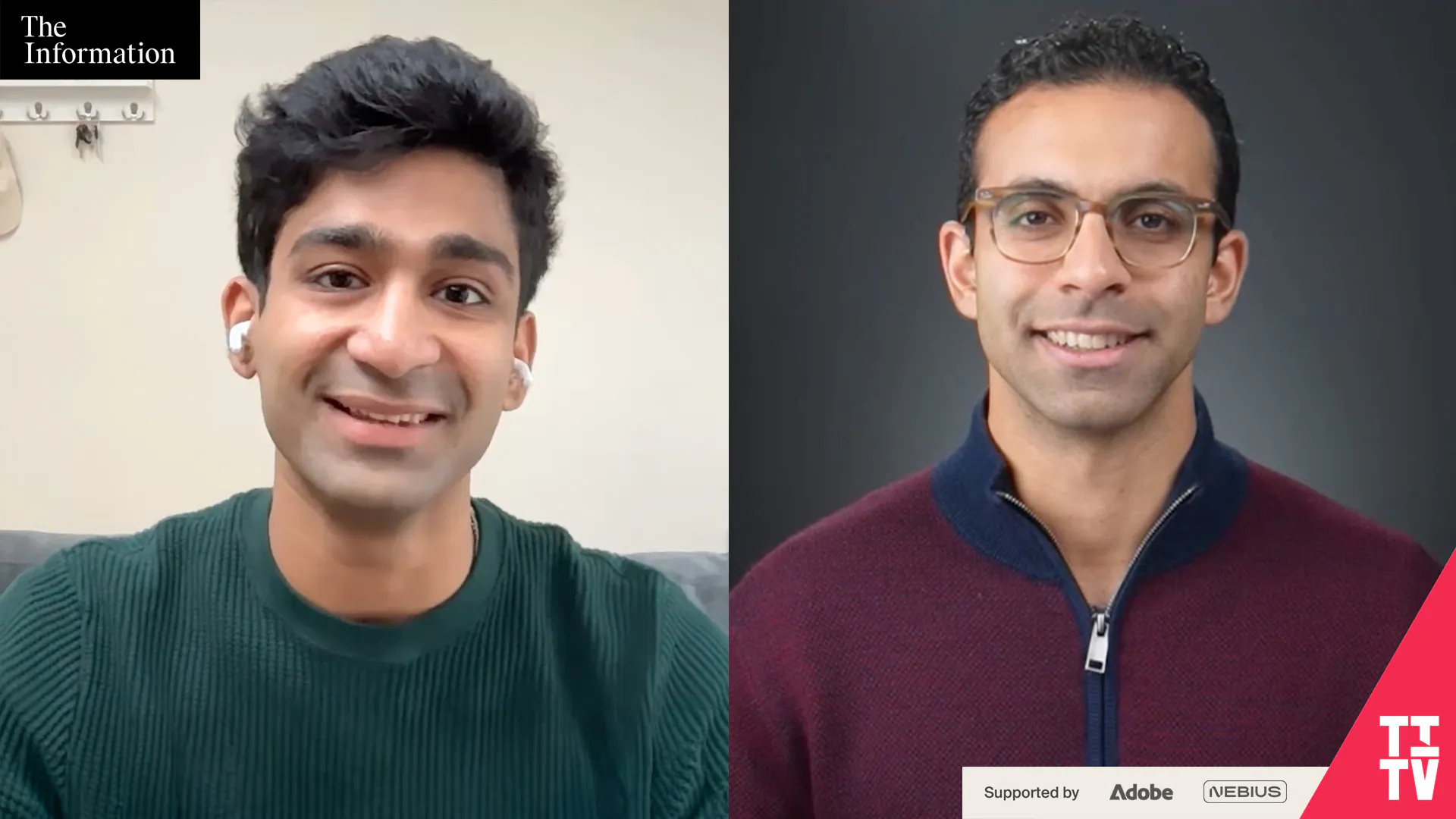
Check out today’s episode of TITV in which we unpack Anthropic’s latest revenue figures and deal with Google and Broadcom.
Recommended Newsletter
Start your day with Applied AI, the newsletter from The Information that uncovers how leading businesses are leveraging AI to automate tasks across the board. Subscribe now for free to get it delivered straight to your inbox twice a week.
Join The Information’s Kevin McLaughlin and Laura Bratton as they discuss the future of software businesses with Evan Skorpen, an investor at Lead Edge Capital, and Nimesh Mehta, CISO of National Life Group.
Join The Information at the New York Stock Exchange on Monday, April 27, to hear from top executives and investors on how the rapid buildout of AI is reshaping tech, finance, and capital markets
Save the date for The Information’s annual AI Agenda Live in San Francisco, where top AI researchers, founders, investors and executives come together for a day of conversations about the breakthroughs and applications shaping the future of AI.