Ferguson, Haass, and Zelikow: How to Stop Iran From Winning the War As talks begin this Saturday, the top priority is clear: The Strait of Hormuz must reopen, but not on Iran’s terms.
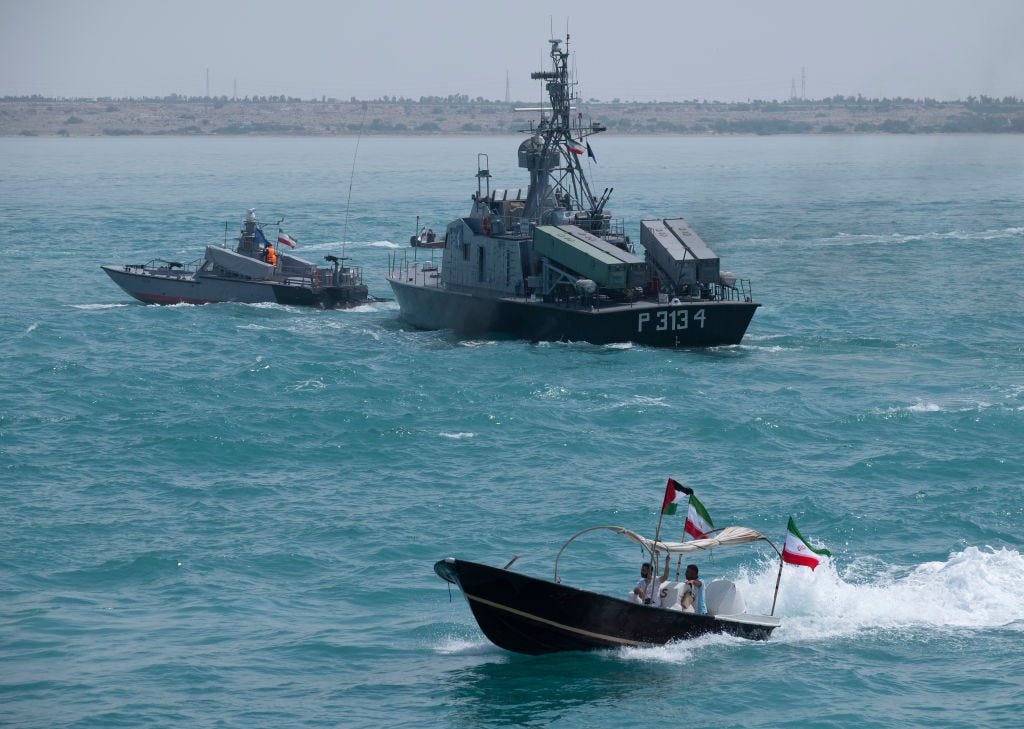
An Islamic Revolutionary Guard Corps warship in the Persian Gulf near Bushehr, Iran, on April 29, 2024. (Morteza Nikoubazl via Getty Images)
This Saturday, delegations from the United States and Iran are slated to head to Pakistan to try to negotiate a lasting end to the war between them. Among the bones of contention will be the Strait of Hormuz: the crucial waterway through which one-fifth of the world’s oil and liquefied gas normally passes. Iran’s closure of the strait since the conflict began has sent a massive shockwave through the global economy, driving up key commodity prices and risking global stagflation. This article is featured in International. Sign up here to get an update every time a new piece is published. Conflicts over strategic and commercial waterways—especially straits and canals—are nothing new. Back in 1507, the Portuguese decided to set up a fortress to control the Strait of Hormuz. It taxed commerce for a century before Persia and Britain joined forces to evict them. Today, Iran is attempting to claim the toll-keeper role that Portugal once played, demanding that any permanent peace deal recognize its right to impose fees on ships passing through the strait. The theocratic tyranny that has ruled in Tehran for 47 years wants to determine who can trade through one of the world’s great choke points—and what they must pay for the privilege...
Become a paid subscriber Get access to our comments section, special columns like TGIF and Things Worth Remembering, tickets in advance to our live events, and more. UPGRADE TODAY |