Image

Daily News Brief

April 14, 2026

Welcome to CFR’s Daily News Brief. Today we’re covering Israel-Lebanon negotiations set to unfold in Washington, as well as...

  • The new majority for Canada’s ruling Liberal Party
  • Indonesia’s ties with Washington and Moscow
  • The new Hungarian leader’s policy pledges


Top of the Agenda

Israel and Lebanon are due to hold their first direct diplomatic talks in decades today amid fighting between Israel and Hezbollah. Israel’s ongoing bombardment and ground operations have threatened to derail the current Iran war ceasefire, as parties disagreed on whether the truce extended to Lebanon. Israel says its invasion of Lebanon is a response not only to Hezbollah attacks but also to the Lebanese government’s failure to execute its own plan to disarm Hezbollah. Lebanon’s government called for a ceasefire ahead of talks and for the country’s territorial integrity to be respected—while Hezbollah’s leader rejected the talks wholesale.


More on today’s talks. The Israeli and Lebanese ambassadors will meet with U.S. Secretary of State Marco Rubio this morning, the U.S. State Department said. Despite Beirut’s call for a truce, a spokesperson for Israeli Prime Minister Benjamin Netanyahu said yesterday that Israel “will not discuss a ceasefire with Hezbollah.” However, Netanyahu said late last week Israel is open to discussing Hezbollah’s disarmament and the restoration of peaceful bilateral relations with Lebanon. Israel continued to launch attacks on southern Lebanon yesterday. Its strikes in Lebanon since early March have killed at least 2,089 people, Lebanon’s health ministry said. 


The broader truce. A U.S. naval blockade on ships entering and leaving Iranian ports in the Strait of Hormuz is now in effect. With one week remaining in the ceasefire announced by U.S. President Donald Trump last week, Washington says the blockade aims to pressure Iran toward a peace deal. European allies declined to participate, China called it “dangerous and irresponsible,” and unnamed Arab officials told the Wall Street Journal that Riyadh is urging Washington to drop the measure out of concern that the Iran-backed Houthis might threaten a separate shipping lane. White House officials are reportedly considering a second round of peace talks to address outstanding issues, including Iranian nuclear enrichment. Washington sought a twenty-year ban at this weekend’s talks, while Tehran proposed five years, multiple news outlets reported yesterday. 


“[The Israel-Lebanon meeting] presents really a once-in-a-lifetime opportunity with a Lebanese government that is the first to be willing to talk directly to Israel, a government that’s made an armed Hezbollah illegal, and the people of Lebanon seeing for the first time—and saying quite verbally—that it’s Hezbollah that is the reason that their country is at war…I think [this] is one of those opportunities that should not be missed, because it is unlikely to come back around, at least for a generation or so.”

—CFR expert Elisa Ewers tells Bloomberg Television


The Easy Win That Could Help Unlock the Strait of Hormuz

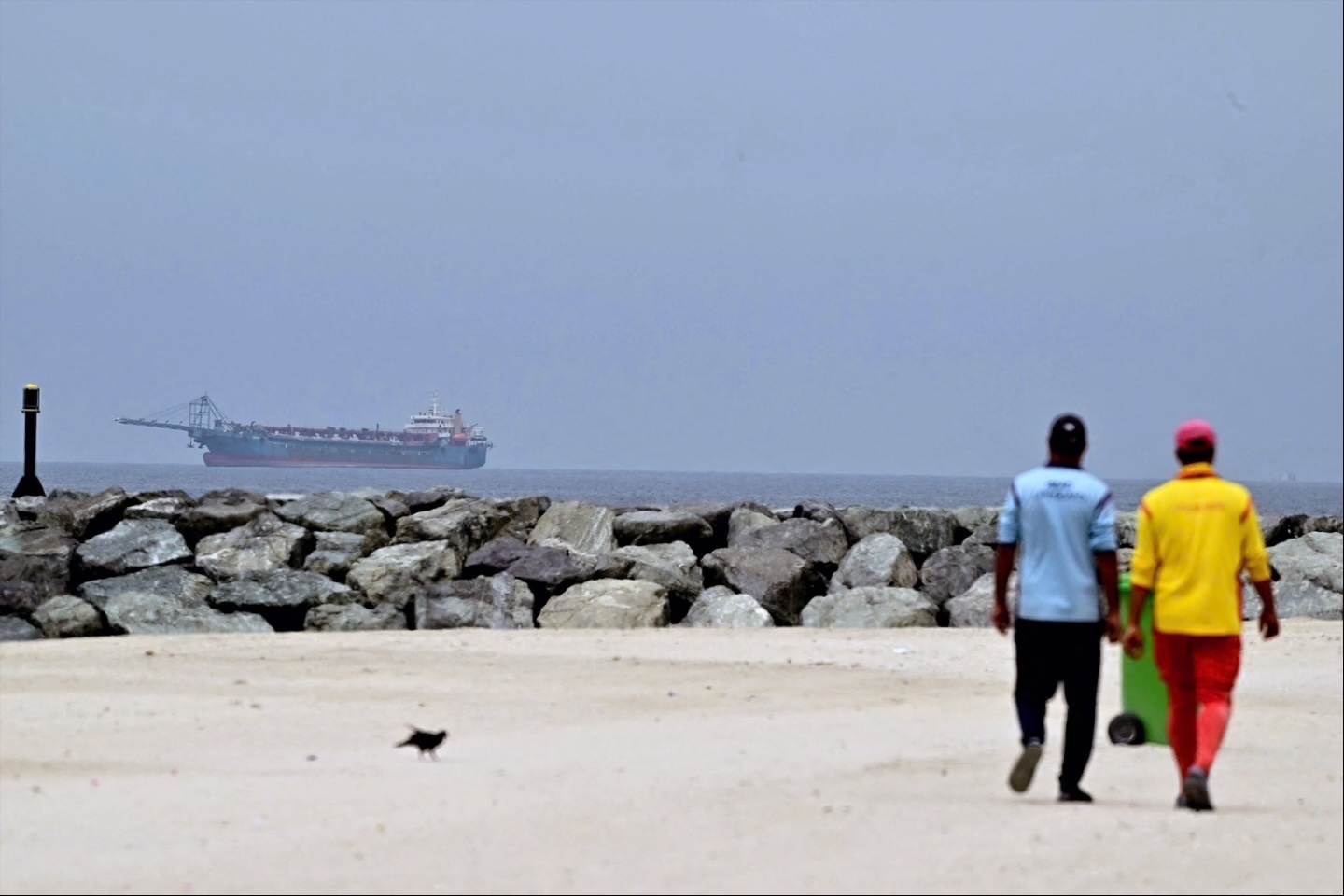
A ship is seen in the Persian Gulf off the coast of Sharjah the day after the failure of US-Iran peace talks on April 13, 2026.

AFP/Getty Images

A UN humanitarian corridor through the strait would release much-needed aid, address growing food and medical needs, and provide U.S. and Iranian negotiators an easy win to build an on-ramp for a larger breakthrough, International Affairs Fellow Sam Vigersky writes in this Expert Take.


Across the Globe

Magyar’s pledges in Hungary. Prime Minister-elect Péter Magyar pledged yesterday to rebuild ties between Hungary and the European Union (EU) and lift the country’s veto on EU aid to Ukraine. However, he stopped short of endorsing fast-track EU membership for Ukraine, saying he would put it to a referendum. He also pledged to join a European prosecutor’s office in a bid to combat corruption.


Indonesia’s great power diplomacy. Jakarta announced increased military cooperation with Washington during a visit by its defense minister yesterday, even as Indonesian President Prabowo Subianto met with Russian President Vladimir Putin in Moscow. Indonesia and the United States announced they will intensify joint military training and exercises. In Moscow, Prabowo said he consulted with Putin on “the current geopolitical situation” and thanked him for supporting Indonesia’s entry into BRICS.  


Canada’s Liberal majority. Prime Minister Mark Carney’s Liberal Party secured a majority in Canada’s lower house after a handful of special election victories yesterday, aided by a number of defections by opposition lawmakers over the past few months. The Liberals can now advance legislation without the support of opposition parties. The results mark the first time Canada has had a majority government since 2019.    


Spain’s leader in China. Spanish Prime Minister Pedro Sánchez called on China to do more to promote peace in Gaza, Iran, Lebanon, Ukraine, and the West Bank during a speech at a university in Beijing yesterday. It is his fourth trip to China in just over three years. Sánchez said his outreach to Beijing was part of Spain’s efforts to diversify geopolitical relations.


Benin’s new president. Finance Minister Romuald Wadagni won Benin’s presidential election Sunday, electoral authorities said. Even before the vote count was complete, his opponent conceded defeat. Wadagni was endorsed by the outgoing president, who is stepping down after fulfilling the two-term limit. Election turnout was low, but the Economic Community of West African States said the vote was conducted smoothly. 


The cost of Zambia’s fuel subsidies. The Zambian government will lose around $100 million in revenue due to a three-month freeze on fuel taxes intended to protect households from rising fuel prices sparked by the Iran war, the country’s finance minister told Bloomberg yesterday. The hit to the country’s budget comes as it emerges from a long process of debt restructuring.  


Projected fall in oil demand. The International Energy Agency (IEA) projected today that the Iran war would lead to a drop in both global oil supply and demand in 2026, as high prices tamper consumer demand. It now expects oil demand to fall by 80,000 barrels per day this year—the sharpest drop since the COVID-19 pandemic. In practice, that means households are using less fuel, petrochemical plants are cutting production, and airlines are reducing flights, the IEA said.


French terrorism-fiancing case. A French court issued a more than $1 billion fine to cement company Lafarge and sentenced its former director to six years in prison for terrorism financing. Lafarge was convicted for conspiring to provide material support to the self-declared Islamic State and other terrorist groups in order to maintain the firm’s operations in Syria between 2013 and 2014. The former director has denied wrongdoing and vowed to appeal. 


Orbán’s Fall in Hungary Opens a Door for Europe—and Closes One for Russia

Peter Magyar waves the Hungarian flag after his speech during his party’s election night event in Budapest on Sunday, April 12, 2026.

Attila Husejnow/Getty Images

Magyar has the chance to unwind sixteen years of illiberalism and play an important role in the future of NATO and European integration, Senior Fellow Liana Fix and CFR’s Benjamin Harris write in this Expert Take.


What’s Next

  • Today, European Council President António Costa begins a trip to the United Arab Emirates, Saudi Arabia, and Qatar.

  • Today, Russian Foreign Minister Sergey Lavrov begins a visit to China.

  • Today, Vietnamese leader To Lam begins a visit to China.

  • Tomorrow, Ukrainian President Volodymyr Zelenskyy visits Italy.


What Comes Next After the Impasse in U.S.-Iran Talks?

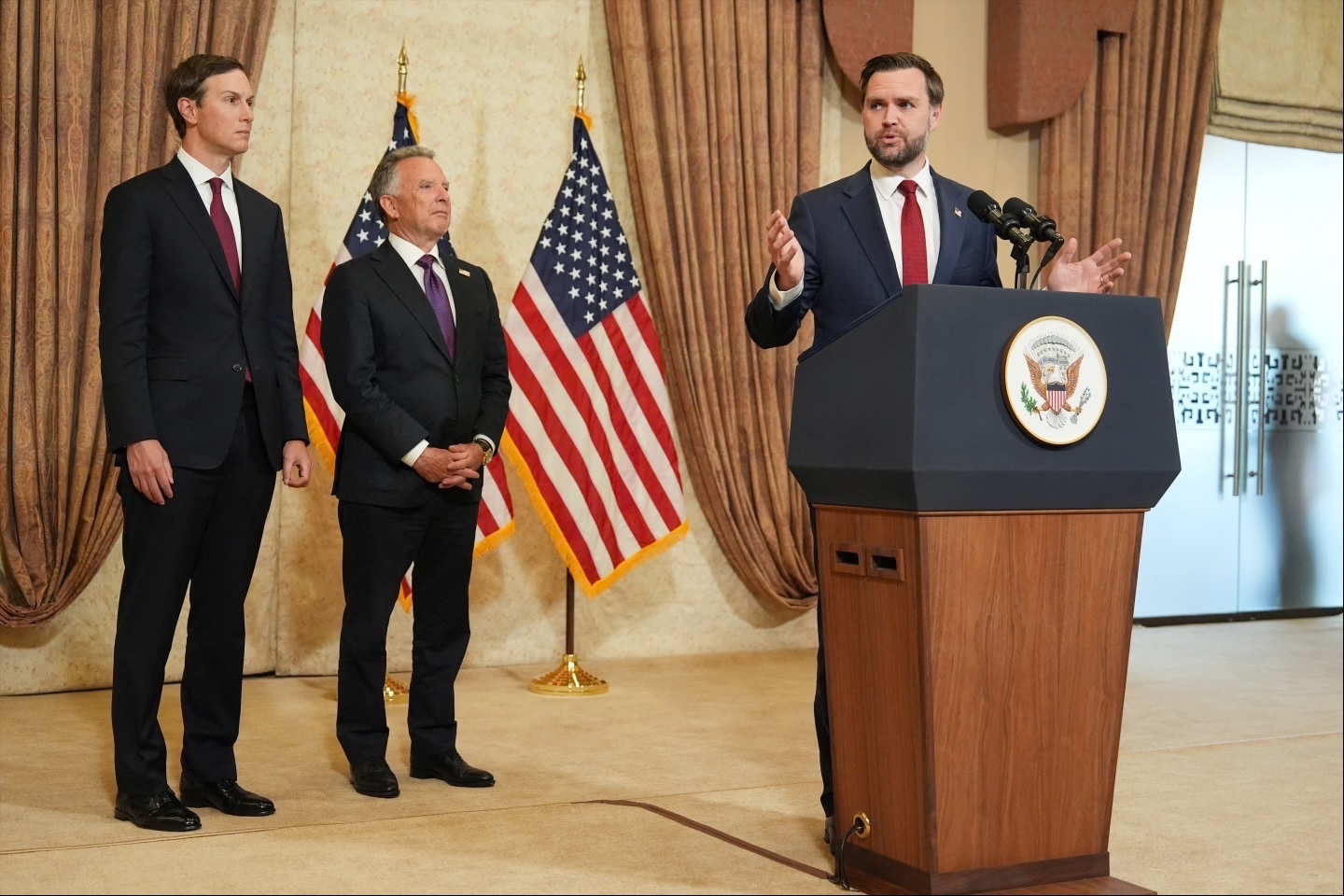
Jared Kushner and Steve Witkoff, Special Envoy for Peace Missions, watch as Vice President JD Vance briefs the press after meeting with representatives from Pakistan and Iran, April 12, 2026.

Jacquelyn Martin/Pool via Reuters

The failure of weekend peace talks leaves the United States with difficult decisions to make, Senior Fellow James M. Lindsay writes in this Expert Take.


Council on Foreign Relations

58 East 68th Street, New York, NY 10065

1777 F Street, NW, Washington, DC 20006

Was this forwarded to you? Subscribe to the Daily News Brief