| | The outlooks look bleak for ceasefires in the Middle East, central banks are set to hold fire on rat͏ ͏ ͏ ͏ ͏ ͏ |
| |  | Flagship |  |
| |
|
The World Today | 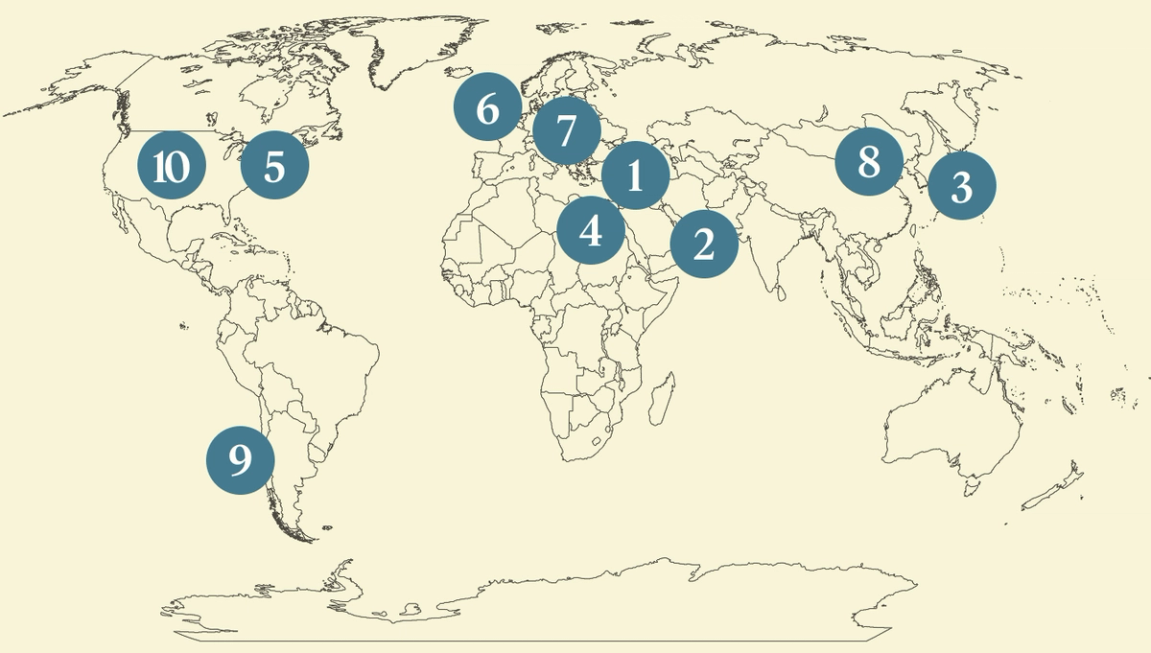 - Israel kills 14 in Lebanon
- US-Iran talks hope fades
- Central banks to hold course
- Late-night Cairo returns
- US shooting’s aftermath
- UK’s hopes for King visit
- Magyar’s huge challenge
- China blocks Meta purchase
- LatAm’s aging problem
- The US: Rich, but unhappy
 The London Review of Substacks, and an English translation of the latest work by ‘the most exciting Japanese novelist at work today.’ |
|
Israel-Lebanon truce frays |
|
Hopes fade for US-Iran talks |
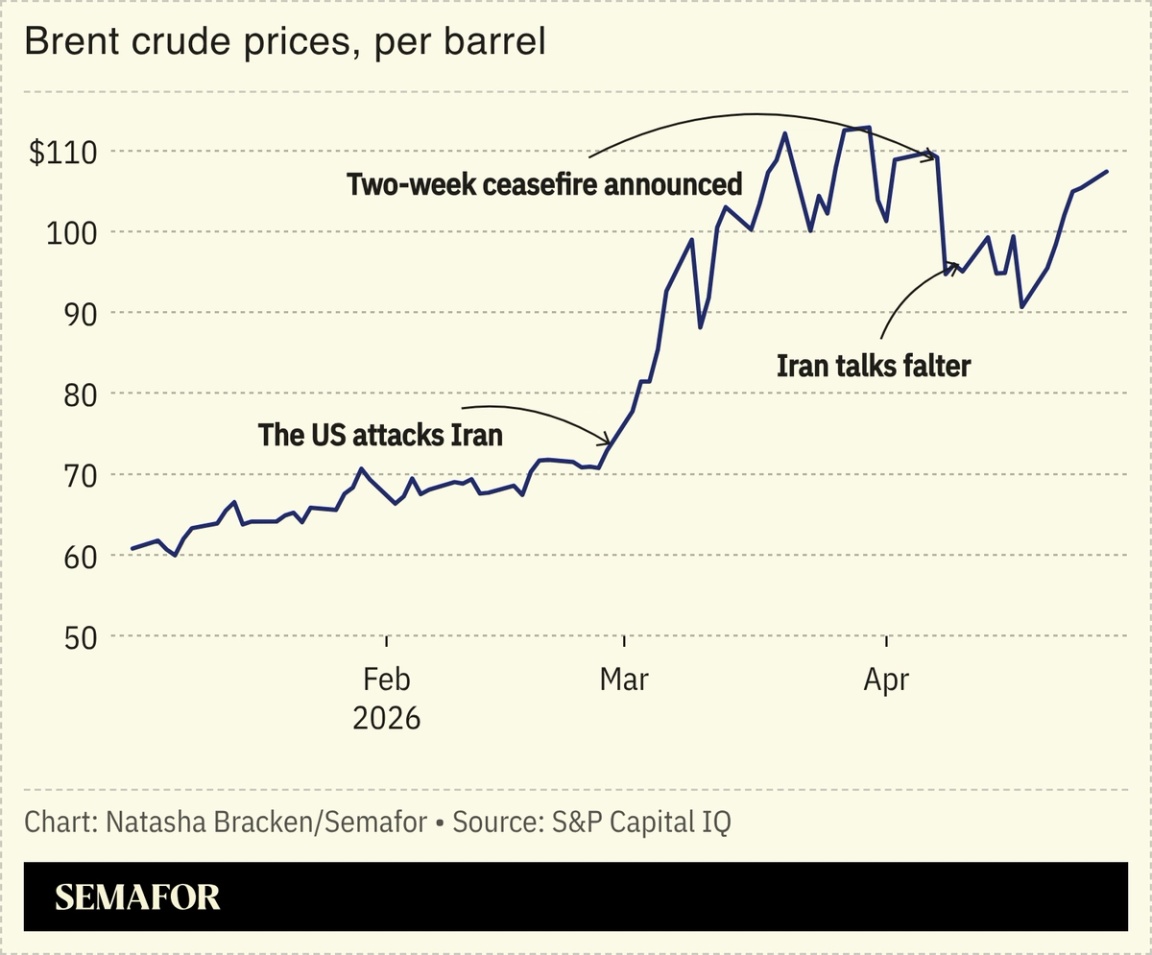 Iran reportedly offered to reopen the Strait of Hormuz, but insisted US nuclear talks be postponed, a condition Washington is unlikely to accept. The stalled negotiations are leading to fears for the global economy: Oil rose and S&P futures fell on signs that Washington and Tehran were no closer to a lasting truce after US President Donald Trump canceled American participation in talks with Iran. Though Trump has insisted Washington has the upper hand against Tehran, former US officials warned that he would have to be patient, diplomatic, and willing to make concessions in order to reach a durable deal. “Trump wants them to really just capitulate,” an Obama- and Biden-era negotiator told Bloomberg. “That’s never going to happen.” |
|
Central banks set to hold fire |
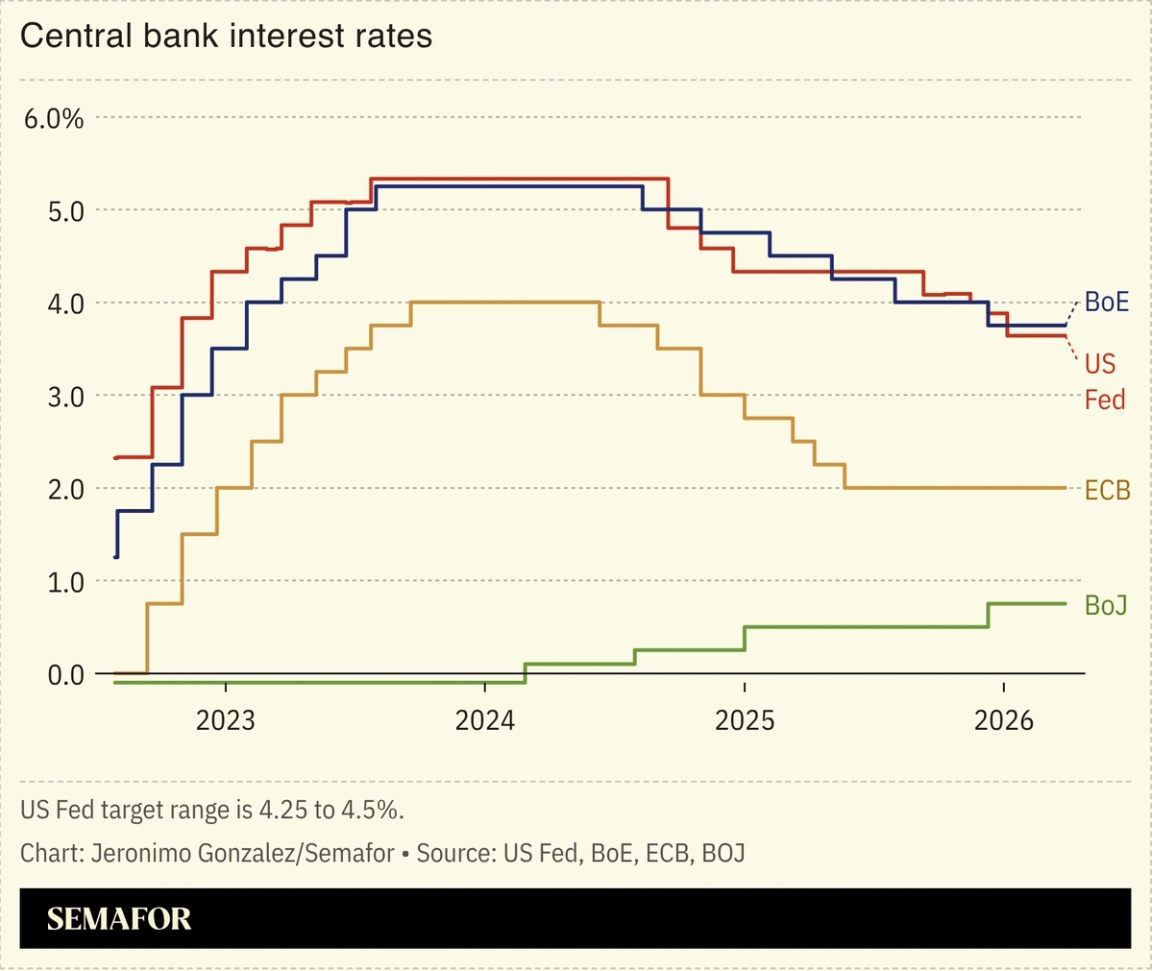 Major global central banks are set to hold interest rates steady this week, but are expected to diverge on monetary policy once the fallout from the Middle East conflict becomes clearer. Traders are betting that the Federal Reserve, European Central Bank, Bank of Japan, and Bank of England will all maintain rates at current levels. The ECB and BOJ are seen as more hawkish, however, with hikes due later in the year or in 2027, whereas markets are pricing in a 35% chance of a Fed rate cut by year-end. This week’s patience offers some respite for developing nations, which often borrow in dollars or euros to court foreign investors, leaving them vulnerable to richer countries tightening monetary policy. |
|
Cairo’s nightlife returns |
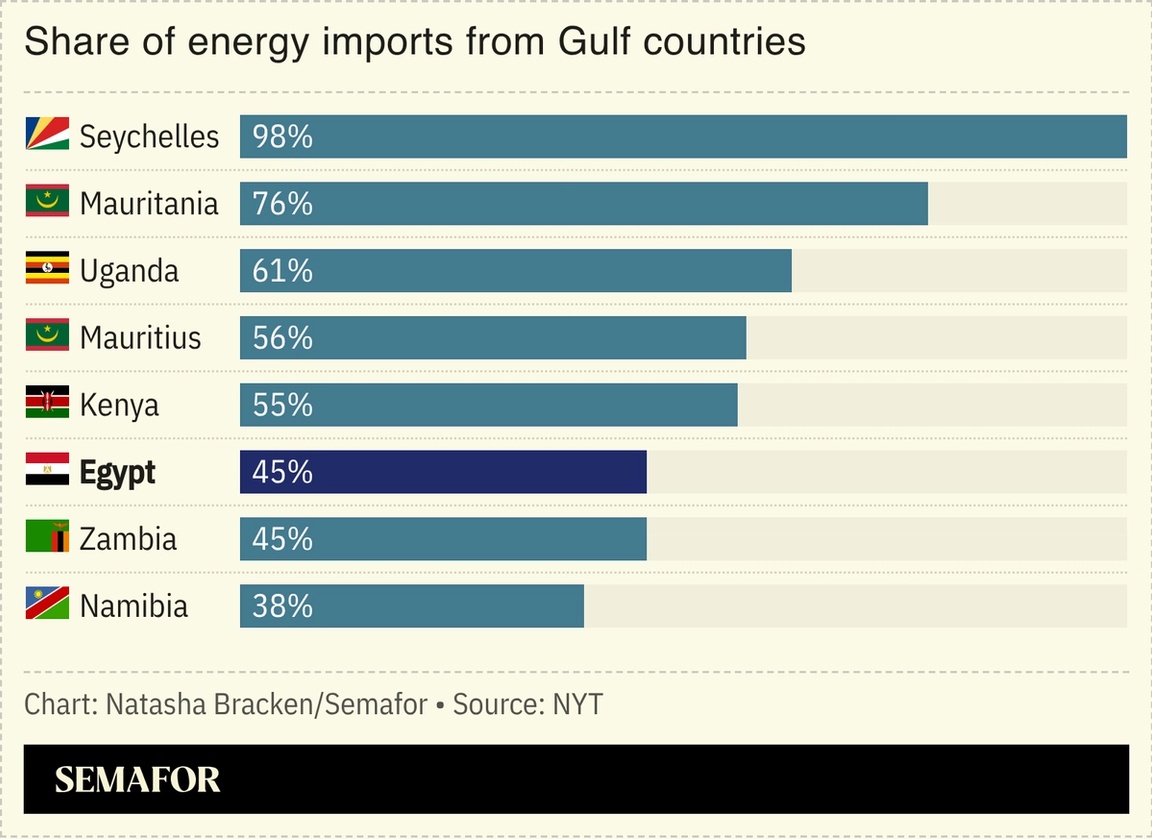 Egypt lifted early-closure measures on Cairo after a month of the famously late-night city being forced to shut down by 11pm. Cairenes are used to sitting at cafes until the small hours, but energy price spikes from the Iran war pushed authorities to impose a curfew, and dim or shut off streetlights, one of several such efforts to preserve fuel worldwide. It hit the capital’s economy badly — “All of [Cairo residents’] work is done at the coffee shop,” one owner told Reuters — and led to a revival of COVID-era speakeasy tactics, with ’ahwas closing shutters and keeping an eye out for police. Residents are welcoming the return: “The streets were really depressing for the past month,” one told Bloomberg. |
|
US shooting’s political fallout |
 Jonathan Ernst/Reuters Jonathan Ernst/ReutersThe White House Correspondents’ Dinner shooting may break the ongoing, partial US government shutdown. The gunman who sprinted through security checkpoints and opened fire before being tackled is due in court today. It is the third apparent assassination attempt on US President Donald Trump in the past two years, raising questions about Secret Service competence, The Economist noted. The Service is overseen by the Department of Homeland Security, funding for which has been blocked for two months in a fight over immigration enforcement. The incident places pressure on Congressional Democrats to pass measures to restart payments, but “it’s an open question whether the shooting will be enough to resolve the impasse,” Semafor’s US politics team reported. |
|
UK hopes king’s US visit builds ties |
 Ian Vogler/Pool via Reuters Ian Vogler/Pool via ReutersKing Charles III arrives in Washington today with Britain hoping the royal touch can help ease increasingly strained relations with the US. UK Prime Minister Keir Starmer has infuriated US President Donald Trump by refusing to take part in the Iran war; in theory the state visit is unrelated, but Downing Street hopes it might lower the temperature. Trump likes Charles and royal pomp, but there are potential flashpoints, not least the administration’s recent comments about UK sovereignty over the Falkland Islands. Starmer — who is facing relentless domestic criticism over a flailing economy and his appointment of the disgraced Peter Mandelson as ambassador to Washington, while grappling with a surging far-right opposition — will be praying for a smooth visit. |
|
 Péter Magyar. Bernadett Szabo/File Photo/Reuters Péter Magyar. Bernadett Szabo/File Photo/ReutersIncoming Hungarian Prime Minister Péter Magyar alleged that his predecessor’s associates are fleeing the country with billions of dollars in assets. Viktor Orbán was defeated in a landslide this month. During his tenure, Hungary slid down rankings on democracy and corruption indices; reports suggest that vast amounts in state funds ended up in Orbán allies’ hands. Orbán — who by leaving office peacefully drew favorable comparisons with US President Donald Trump’s intransigence at the end of his first term — has dismissed such charges. But the dispute points to the scale of Magyar’s challenge in fulfilling a promise to reverse an illiberal and anti-EU drive under Orbán: “This is far easier said than done,” a European Council on Foreign Relations expert warned. |
|
 Get the world in your inbox with the Daily News Brief. Each weekday, our free newsletter curates global news with expert-informed analysis from the Council on Foreign Relations. For more than a century, CFR has guided leaders and citizens alike through moments of profound change. Subscribe today to understand the choices and challenges shaping our world. |
|
China blocks Meta-Manus deal |
 Gonzalo Fuentes/File Photo/Reuters Gonzalo Fuentes/File Photo/ReutersChinese authorities blocked Meta’s purchase of AI startup Manus, deepening a global fissure between Washington and Beijing on leading-edge technologies. Meta’s Dec. 2025 deal to buy the firm, which specializes in developing AI agents, had been seen as a step towards a global ecosystem for tech startups in which Chinese and American companies might integrate. But Beijing has been tightening its oversight of the sector, and even though Manus is headquartered in Singapore, its founders are Chinese and it has significant operations on the mainland. China’s tech industry is increasingly competing with Silicon Valley for global dominance, and Meta’s potential purchase sparked fears of a “conspiratorial” effort by the US to keep its rival down. |
|
Latam’s worsening demographics |
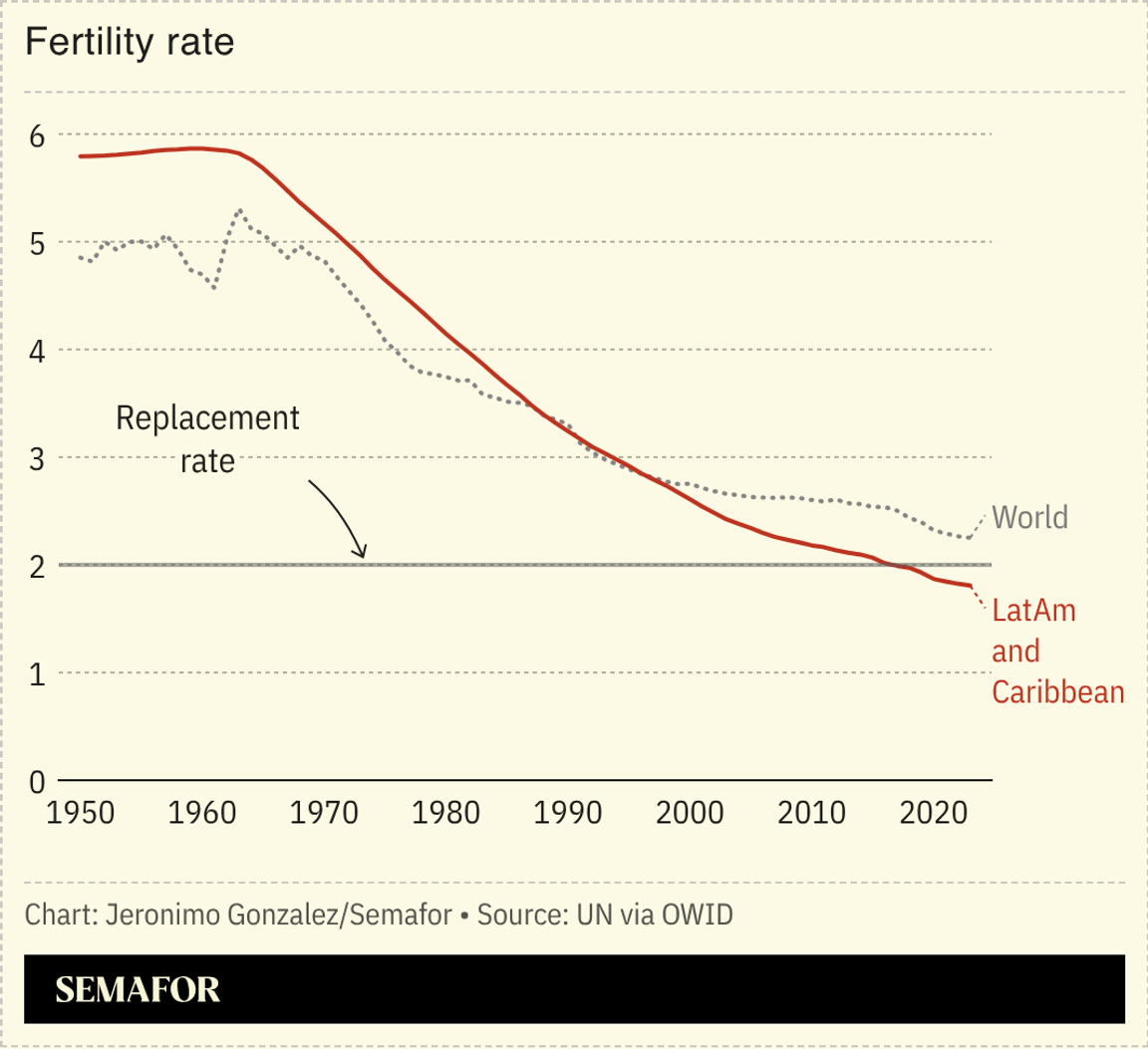 Latin America has become the fastest-aging part of the world, raising fears that it will grow old before it can become rich. For decades, the region had one of the world’s largest demographic bonuses, with births per woman peaking at almost six in the 1960s. However population growth has since plummeted to well below replacement levels: Chile, one of Latin America’s wealthiest countries, now has a fertility rate below that of Japan, the global archetype of a demographic crisis. The crisis will shape “politics, businesses, communities, and how people live for decades to come,” Americas Quarterly said. |
|
|


