| | In today’s edition: A shocking act of violence puts pressure on Congress to end the DHS shutdown, an͏ ͏ ͏ ͏ ͏ ͏ |
| |  | Washington, DC |  |
| |
|
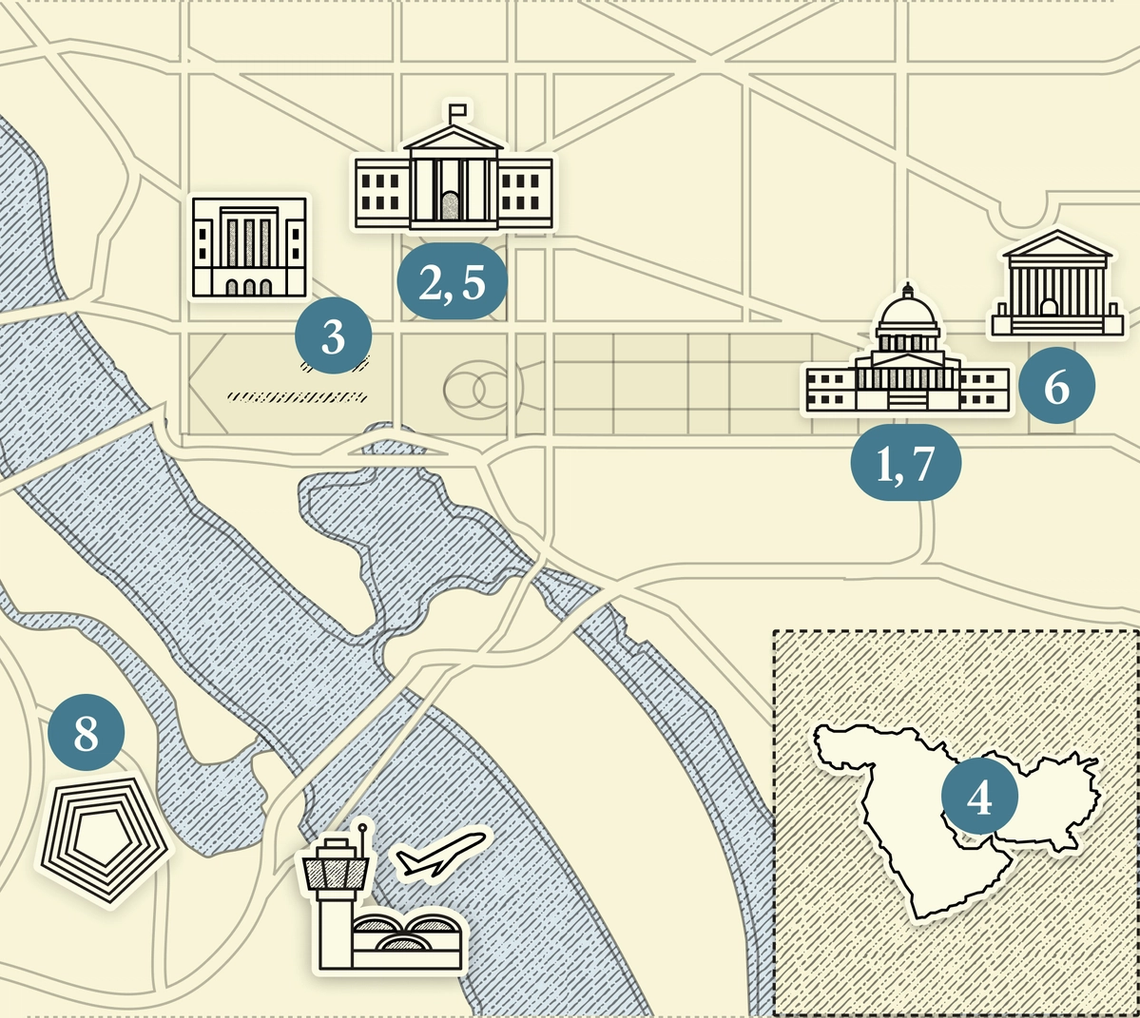 - Untenable shutdown
- Media trust crisis
- Warsh back on track
- Fading Iran hopes
- King Charles in DC
- MAHA vs. Trump
- FISA deadline for House
- ‘Virtual SCIFs’
PDB: Americans cut back spending on gas  Musk vs. Altman in court … WHCD shooting suspect to be arraigned … Patel on Fox & Friends |
|
WHCD shooting adds to shutdown pressure |
 Elizabeth Frantz/Reuters Elizabeth Frantz/ReutersThe shooting at the White House Correspondents’ Dinner is putting more pressure on Congress to swiftly end the 73-day Department of Homeland Security shutdown. The Secret Service falls under DHS, and the Trump administration estimates its ability to pay employees under executive order will run dry at the end of the week, according to multiple people in both parties. Still, it’s an open question whether the shooting will be enough to resolve the impasse. Initially, Senate Democrats blocked the DHS funding bill over President Donald Trump’s immigration enforcement, but currently the House is sitting on a Senate-passed funding bill that excludes immigration enforcement. The Senate advanced a budget for a separate enforcement funding bill, but House conservatives argue it should include more of their priorities — including the White House ballroom. House GOP leaders are floating a third party-line bill this fall, but many Republicans are skeptical. — Burgess Everett and Nicholas Wu |
|
Shooting lays bare media’s trust crisis |
| |  | Max Tani |
| |
 Jessica Koscielniak/Reuters Jessica Koscielniak/ReutersOn Sunday morning, I got a call from a family member checking in to see how I was doing after attending the eventful White House Correspondents’ Dinner. They asked what happened, and was I feeling shaken? They also had another question: Having been there, did I think it was staged? That uncertainty about what really happened — fueled by viral posts on X — was clearly shared and stoked by many people following Saturday’s shooting. Distrust in legacy media and the rise of unregulated social media have helped make conspiracy theories a routine feature of the discussion about major public incidents. The early chaos of any crisis doesn’t help either. And it’s hard to argue with media critics who predict that journalists will find a way to make the shooting about themselves. But that cynicism felt divorced from what I actually saw Saturday night. |
|
Tillis greenlights Warsh nomination |
 Kevin Lamarque/Reuters Kevin Lamarque/ReutersTrump’s nominee to lead the Federal Reserve, Kevin Warsh, is on track to be confirmed after Sen. Thom Tillis, R-N.C., said he will greenlight the nomination. The news came after the Department of Justice on Friday dropped a criminal probe into current Chair Jerome Powell. Tillis called the administration’s decision to shift the investigation to the inspector general a “necessary and appropriate measure” and said he will now advance Warsh’s nomination. Tillis had planned to bottle up the nomination, which he otherwise supports, in the Senate Banking Committee due to opposition to the Powell probe — something the retiring GOP senator has the power to do on the narrowly divided committee. He told Semafor recently that, if the Trump administration continued the investigation, “the only benefit they get from that is delaying what would otherwise be an on-time confirmation of their pick.” — Burgess Everett |
|
Hopes fade for US-Iran talks |
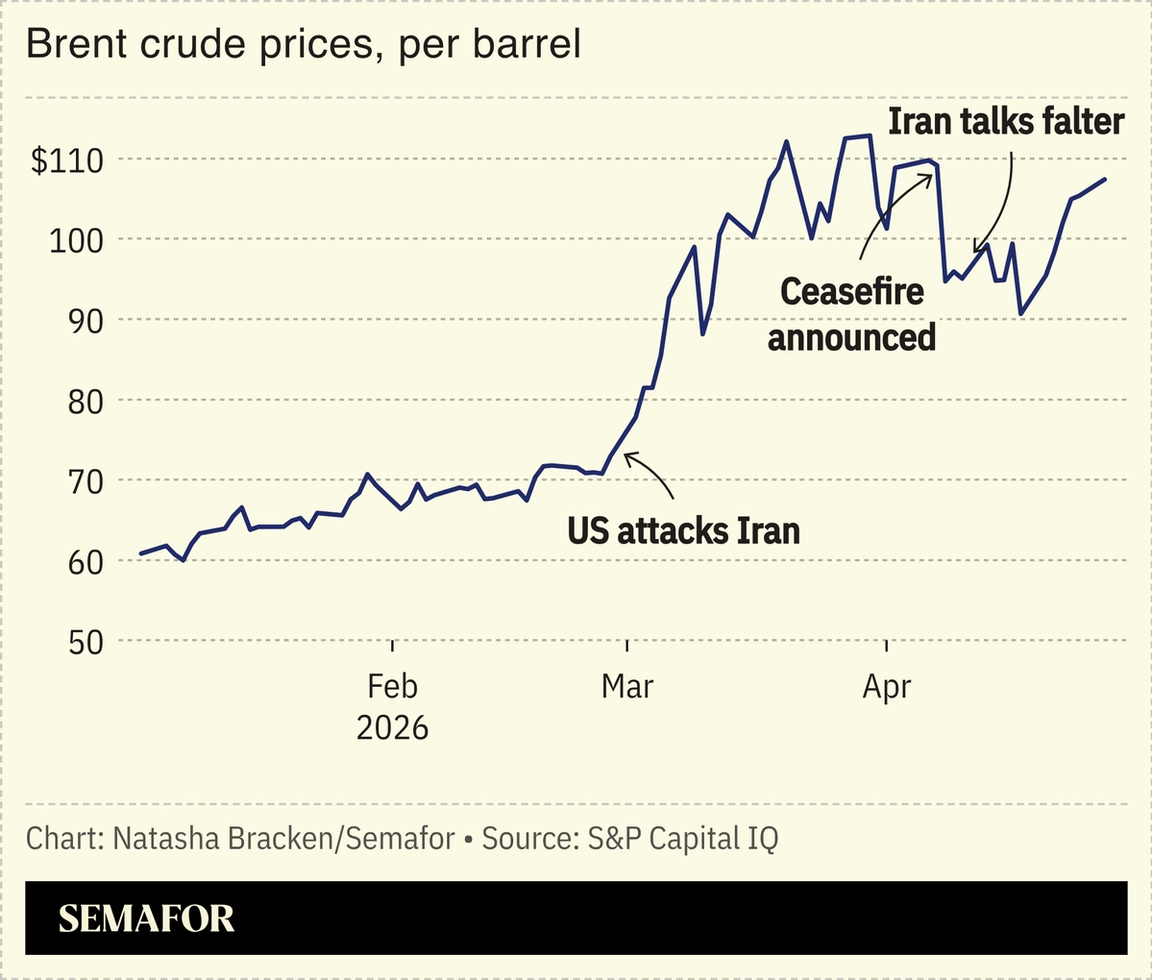 Iran reportedly offered to reopen the Strait of Hormuz, but insisted US nuclear talks be postponed, a condition Washington is unlikely to accept. The stalled negotiations are leading to fears for the global economy: Oil rose and S&P futures fell on signs that Washington and Tehran were no closer to a lasting truce after Trump canceled American participation in talks with Iran. Though Trump has insisted Washington has the upper hand against Tehran, former US officials warned that he would have to be patient, diplomatic, and willing to make concessions in order to reach a durable deal. “Trump wants them to really just capitulate,” an Obama- and Biden-era negotiator told Bloomberg. “That’s never going to happen.” |
|
King Charles on high-stakes US visit |
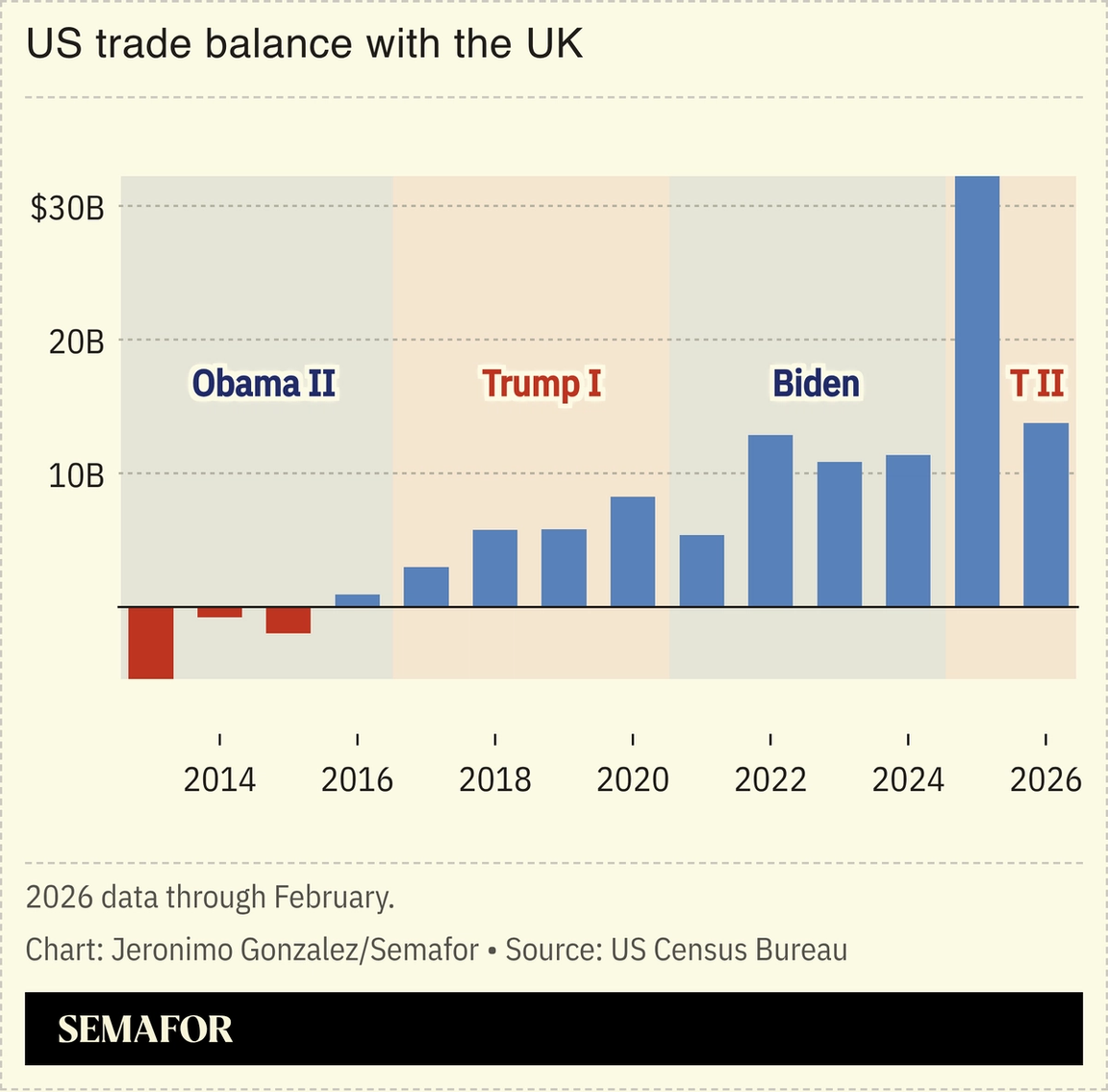 Britain’s King Charles faces a tall task during his four-day state visit to Washington, which begins today. Relations between the White House and 10 Downing Street are fraught with tension over the Iran war and what Trump has described as a lack of support from the UK and other European allies. Charles, who gets along with Trump, has a chance to repair the so-called special relationship, the US president told the BBC. “He’s a fantastic man,” Trump said. Charles will attend a state dinner, deliver an address to Congress, appear at the 9/11 memorial in New York City alongside Mayor Zohran Mamdani, and attend a celebration for America’s 250th birthday in Virginia. One thing to watch is how Charles handles calls from US lawmakers to acknowledge Jeffrey Epstein’s victims in light of the relationship between the convicted sex offender and Andrew Mountbatten-Windsor. |
|
Supreme Court takes up Roundup case |
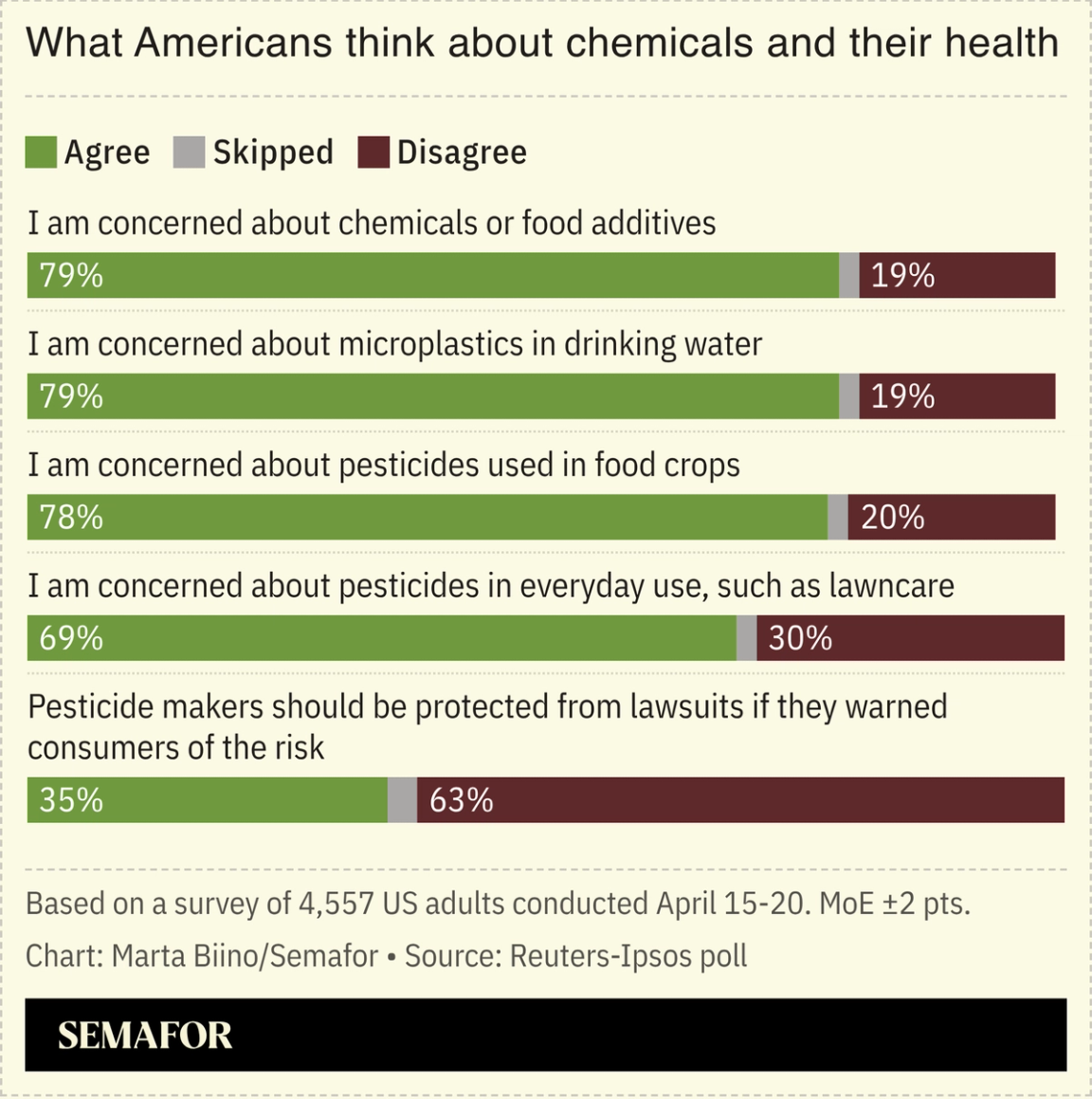 The Supreme Court will weigh a case today that pits “Make America Healthy Again” activists against the Trump administration. Oral arguments are scheduled in a dispute between Bayer and a St. Louis man who alleges the company’s Roundup weedkiller led him to develop non-Hodgkin lymphoma. The Trump administration is siding with Bayer; if successful, it could lead to tens of thousands of similar lawsuits being dismissed, much to the dismay of MAHA supporters who are pushing to limit the use of pesticides and herbicides such as the weedkiller glyphosate. The federal government deems glyphosate safe, despite studies linking it to cancer. MAHA advocates are expected to rally alongside environmental activists outside the Supreme Court today, drawing attention to the rift with the administration. EPA Administrator Lee Zeldin recently told Semafor that the agency’s review of glyphosate remains “on track” to finish this fall and would follow “gold-standard science.” |
|
FISA deadline looms over the House |
 Leah Millis/Reuters Leah Millis/ReutersThe House is facing a looming deadline this week to renew warrantless surveillance powers under Section 702 of the Foreign Intelligence Surveillance Act. Congress was able to punt their expiration to April 30 after House conservatives balked at reauthorizing the powers without changes. GOP leadership unveiled a compromise aimed at winning over the hardliners last Thursday, but it’s not clear if they’ll all support it. And some Republicans like Rep. Anna Paulina Luna, R-Fla., want to attach the voting and citizenship legislation known as the SAVE Act to the surveillance bill, further complicating its passage. With the House’s razor-thin margin giving almost any lawmaker effective veto power, near unanimity among Republicans is required to pass the legislation before the powers expire. The first hurdle this week will be the House Rules Committee, where conservatives may prevent the bill from heading to the House floor. — Nicholas Wu |
|
AI boosts demand for ID verification |
 Evgenia Novozhenina/Reuters Evgenia Novozhenina/ReutersFrom Washington to Wall Street, the demand for human verification tools is rising, as AI evolves and the geopolitical landscape grows more precarious. One company trying to bridge the digital trust gap is Kibu, a startup that raised $10.5 million in its seed round, according to an announcement shared first with Semafor, and is now relaunching its app to move beyond offering what founder and CEO Ari Andersen described as encrypted “virtual SCIFs” or “virtual Sit Rooms.” The revamped app allows individuals to confirm the identity of people they interact with, so they can build “trusted connections” without being tricked by AI or scammers. “Think of it as human [multifactor authentication],” Andersen said. The company gained traction after “Signalgate” last year, but Andersen said there’s been more interest amid the Iran war and AI advances. — Morgan Chalfant |
|
Debatable: Universal basic income |
 The fear that artificial intelligence will eliminate white-collar jobs en masse has policymakers hunting for preemptive solutions, Semafor’s Morgan Chalfant writes. One progressive idea that predates AI is gaining traction in unusual corners: a government-backed universal basic income for workers displaced by the AI boom. Tesla’s Elon Musk voiced support for such a plan, calling for a “universal high income” through regular checks from the federal government. Alex Bores, a Democrat running for New York’s 12th Congressional District, has endorsed similar direct payments to Americans, calling them a necessary “insurance policy” against the economic disruption threatened by AI. But critics like Cato’s Ryan Bourne argue that enacting such a policy would be premature and too costly. |
|
 Beltway NewslettersPunchbowl News: “Saturday’s terrifying episode at the White House Correspondents’ Association Dinner is the latest sign that US political violence is growing worse, with no event or appearance entirely safe, no matter how high-profile the attendees.” Axios: President Trump is set to gather his top national security and foreign policy teams for a Situation Room meeting to discuss the stalemate in Iran talks and possible next steps, according to officials. White House Jonathan Ernst/Reuters Jonathan Ernst/Reuters- President Trump pointed to Satur
|
|
|


