| | In today’s edition: Saudi Arabia refocuses entertainment ambitions, and the UAE looks to boost its e͏ ͏ ͏ ͏ ͏ ͏ |
| |  Islamabad Islamabad | Washington, DC | Dubai |
 | Gulf |  |
| |
|
 - Diplomatic stalemate
- Saudi lines up Live Nation
- UAE launches industrial fund
- Dubai’s resilience strategy
- Burjeel bond on hold
- Slow recovery for fertilizers
 Riyadh is the new Madison Avenue? |
|
No talks for now, but no strikes either |
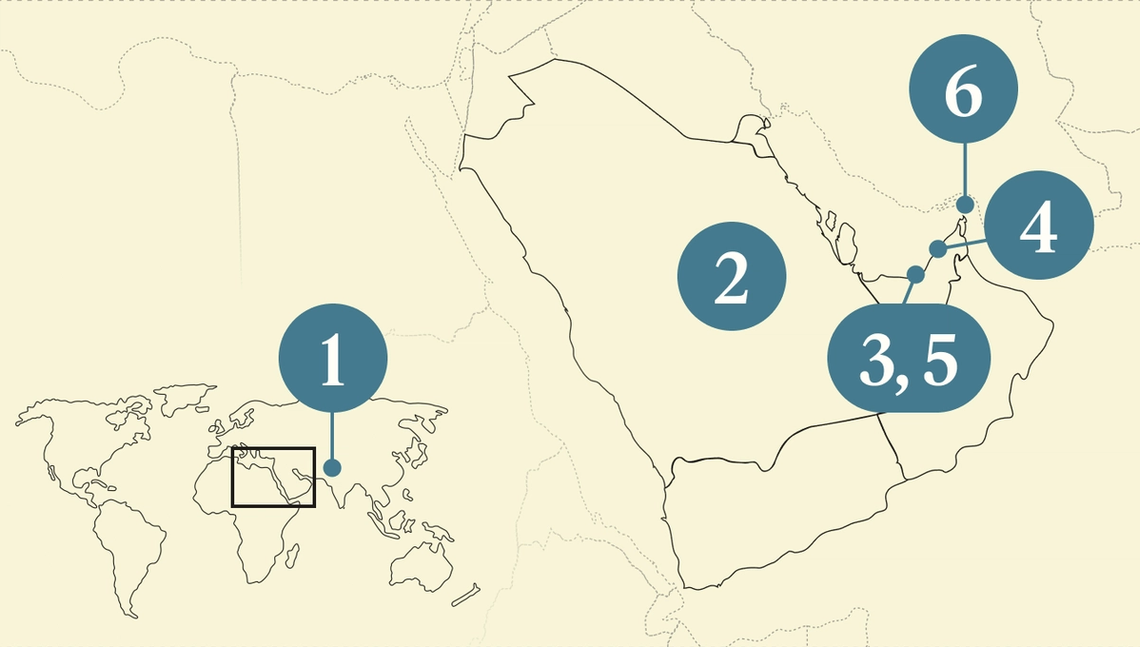
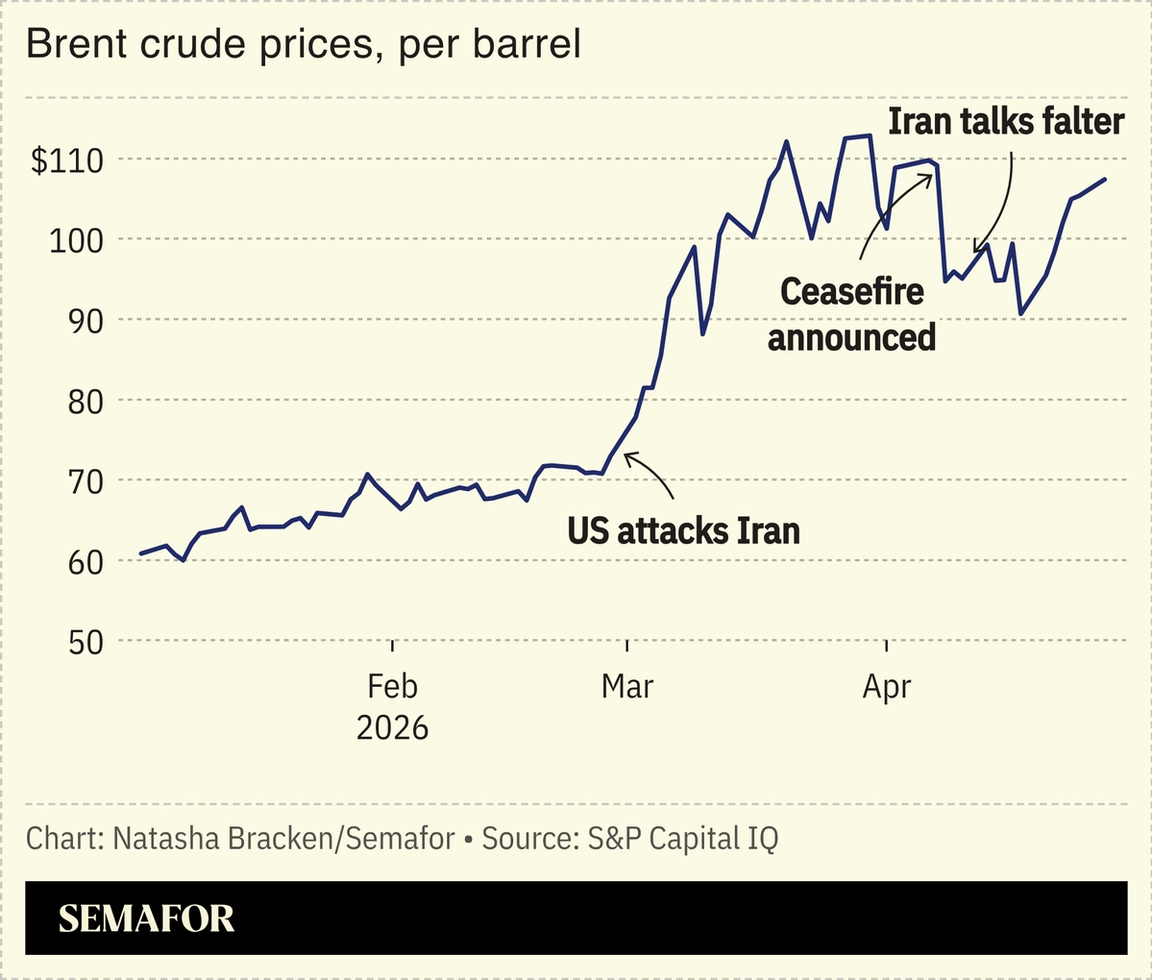 Iran and the US remained locked in a diplomatic stalemate, with neither making the concessions needed to get the other side back to the negotiating table. On Saturday, US President Donald Trump cancelled plans to send envoys to Islamabad for talks, blaming “tremendous infighting and confusion” within the Iranian leadership, but added “if they want to talk, all they have to do is call.” There is plenty of background diplomatic activity though. Iran’s Foreign Minister Abbas Araghchi has been to Oman, Pakistan, and Russia over the past few days, and called his counterparts in Qatar and Saudi Arabia — showing that communication channels remain open with Iran’s neighbors despite its drone and missile strikes on them. Gulf leaders also conferred with Washington. The US has demanded Iran abandon its nuclear ambitions; Tehran has proposed reopening the Strait of Hormuz and leaving nuclear talks to a later date, according to Axios. In the absence of a breakthrough, the economic pressures are increasing. Goldman Sachs warned “sharper demand losses could be required” if Gulf oil remains stranded. |
|
Saudi to sign US partners to promote arena events |
 A rendering of the planned King Salman International Stadium. Courtesy of Saudi Press Agency. A rendering of the planned King Salman International Stadium. Courtesy of Saudi Press Agency.Saudi Arabia is tapping US operators to help run its arenas and stadiums, and promote their music and sports events to a global audience. SURJ, part of the kingdom’s Public Investment Fund, is in talks to create a joint venture with entertainment firm Live Nation and Oak View Group, which manages sports venues, people familiar with the plan said. The new vehicle is expected to be called Radia and could be announced in the next month. It’s a sign that, even as Saudi Arabia cuts back spending on things like LIV Golf and NEOM, it will continue investing in other areas, including boosting the kingdom’s reputation as a place to live and visit. It is building a $1.4 billion Royal Opera House and a 20,000-seat arena in Diriyah, a UNESCO World Heritage site undergoing a $63 billion redevelopment, but has also pulled a $200 million lifeline from New York’s Metropolitan Opera. It will also host the men’s soccer World Cup in 2034. — Matthew Martin and Rohan Goswami |
|
UAE aims for greater self-sufficiency |
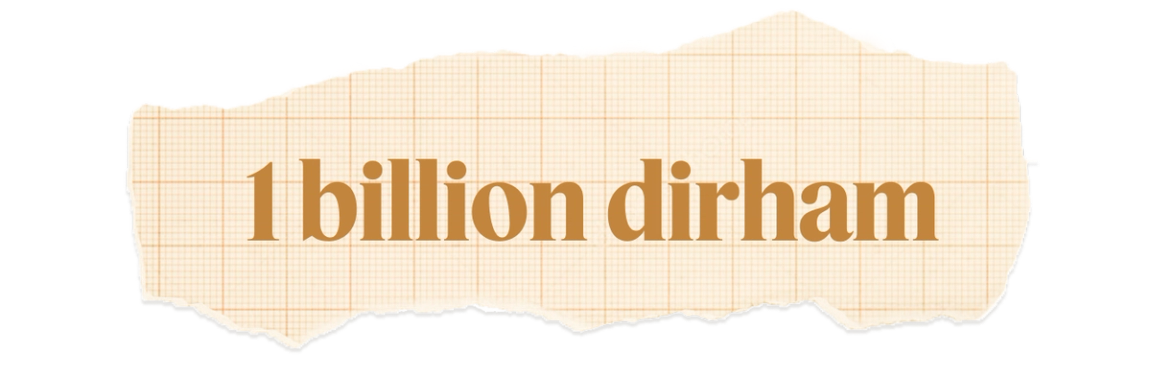 The size of a National Industrial Resilience Fund approved by the UAE cabinet over the weekend, in one of the most expansive responses to the disruptions created by the Iran war to date. The 1 billion dirham ($272 million) vehicle aims to promote the local production of critical goods and make the country more self-sufficient. War wasn’t mentioned in the official statements, but federal Prime Minister (and Dubai’s Ruler) Sheikh Mohammed bin Rashid said the aim was to “fully localize” more than 5,000 products — in areas such as food, metals, pharmaceuticals, advanced technology, and the construction industry. The first phase will focus on easily scalable production for items like bottled water, dairy products, and flour. Wider state spending will back up the initiative, with government bodies now obliged to buy more locally produced products. In a sign some money is still available for less commercial projects, the government also announced a new national museum, the House of Industry, to document the development of local activity. |
|
How Dubai builds confidence in a crisis |
 Courtesy of Government of Dubai/Joey Pfeifer/Semafor Courtesy of Government of Dubai/Joey Pfeifer/SemaforWhen Iran launched missile and drone strikes against the Gulf on Feb. 28, Dubai faced an immediate test of its defenses and a longer-term threat to confidence. The city’s brand — a safe, business-friendly hub for capital, tourism, logistics, and talent — was suddenly under scrutiny from investors, multinational executives, and residents. Hadi Badri is tasked with enhancing the city’s global appeal as CEO of the Dubai Economic Development Corp. In a video interview with Semafor’s Mohammed Sergie and Andrew Edgecliffe-Johnson, which you can read and watch here, he laid out his case that the conflict would come to be seen as a mere “speed bump” on the path to the city’s long-term goals. His group’s crisis response started with resisting the instinct to turn inward or stand still, he said. Instead, it engaged quickly with investors and businesses, and listened to concerns in order to project confidence that Dubai would emerge stronger. The response is also rooted in data: Badri’s team tracks 200 economic indicators each day to get early alerts of stresses, he said. |
|
Burjeel puts ‘North Star’ project on hold |
 A clinic in Dubai. Ahmed Jadallah/Reuters. A clinic in Dubai. Ahmed Jadallah/Reuters.Burjeel Holdings postponed a planned $1.5 billion Islamic bond issue over the Iran war, pivoting from preparing to close the deal in London to ensuring its Gulf emergency rooms were well stocked in the early days of the conflict, the CEO of the Abu Dhabi-listed hospital group told Semafor. Proceeds from the issuance were, in part, earmarked to fund an expansion of medical education and research that Shamsheer Vayalil described as a “North Star” project — designed to attract top talent and global pharmaceutical partners to the UAE. Burjeel is now waiting for better market conditions to proceed, but expects revised pricing and is eyeing potential government support to try again, he said. The Gulf’s healthcare sector has attracted massive investment during the region’s diversification drive, with hundreds of millions of dollars spent on a shift to a privatized, personalized model over the past decade. But Burjeel’s financing delay is an example of stalled economic momentum in the Gulf amid the conflict. At Burjeel, priorities have shifted quickly in the past two months: “No more office,” Vayalil said, describing a move by the company’s C-suite into its hospitals to be closer to frontline workers. — Kelsey Warner |
|
Fertiglobe CEO warns of long recovery |
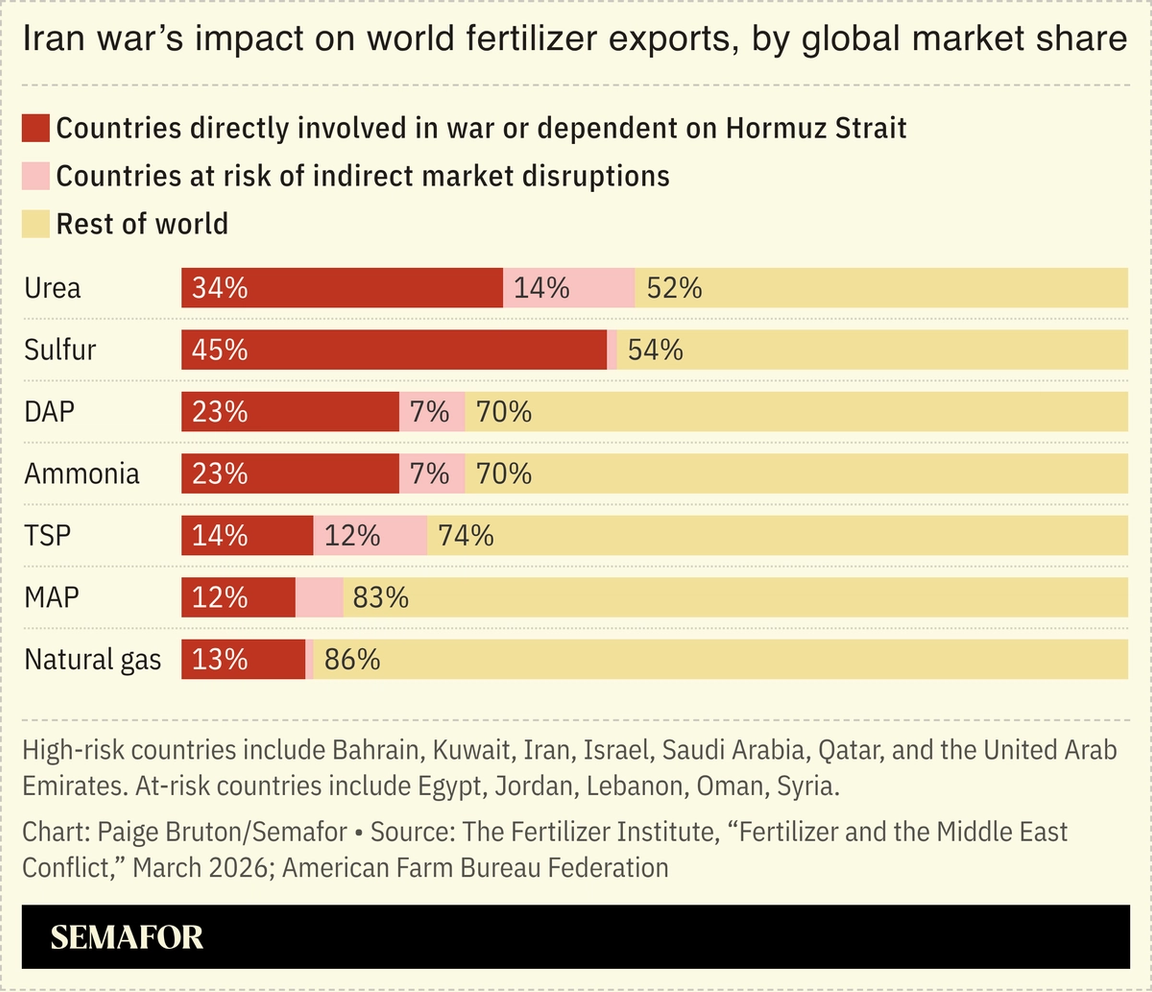 Fertilizer prices are poised to surge even higher, and could take “months and months” to normalize after the Strait of Hormuz reopens, the CEO of a top global producer told Semafor. Many will likely choose not to use fertilizer this year, said Ahmed El-Hoshy, chief executive of Fertiglobe, which is owned by Abu Dhabi oil company ADNOC. That will mean food shortages and inflation in the months ahead. When a durable peace is reached, and ships can once again traverse the strait, producers will still have to wait for natural gas output in the Gulf to ramp up to regain their feedstock supply so they can make the fertilizers essential to modern food production. That could take months or even years, he said, adding that there’s still no alternative “that is economically viable at scale.” — Tim McDonnell |
|
 Transport- Kuwait reopened its airspace on Sunday, becoming the final Gulf country to do so. Kuwait Airways and local rival Jazeera Airways, which had both shifted operations to Saudi airports, will run a limited number of flights from Kuwait International Airport this week. — Arab Times
Energy- Texas-headquartered Baker Hughes secured a contract to provide power generation equipment and centrifugal compressors for QatarEnergy’s North Field West LNG project, in a sign that Qatar’s gas expansion ambitions remain in play despite the war. — Upstream
- Oilfield services company SLB is looking to recover more costs from its customers, after posting a drop in first-quarter profits amid the wartime disruption to the oil and gas industry in the Middle East, its largest market. — Reuters
Deals- Abu Dhabi-based BlueFive was the largest backer of a more than $1 billion deal to acquire a stake in supercar maker Bugatti from Porsche, along with HOF Capital, a fund co-founded by a member of Egypt’s billionaire Sawiris family.
Defense- Ukraine’s President Volodymyr Zelenskyy met Saudi Arabia’s Crown Prince Mohammed bin Salman for the second time in recent weeks as part of talks to boost security cooperation. The two countries are working on an agreement that would include Ukrainian drone interception skills and Saudi energy exports.
|
|
 Pepsi Arabia/YouTube Pepsi Arabia/YouTubeOne of the most talked-about ads of the 2026 men’s World Cup cycle was made in Saudi Arabia. Pepsi’s Football Nation campaign, featuring David Beckham, Mohamed Salah, Vinícius Jr, Florian Wirtz, and a cameo from Gordon Ramsay, was created by BigTime Creative Shop, a Riyadh-born agency founded in 2023 as the creative arm of Saudi Arabia’s General Entertainment Authority. BigTime won a Sports Emmy last year and was named Independent Entertainment Agency of the Year at Cannes 2025, signs that the kingdom’s multibillion-dollar push into sports and entertainment is starting to pay off in ways that go beyond spectacle. |
|
|


