+ A high-stakes fight over federal power.

Follow the biggest developments in courts, law firms and legal practice with Reuters. Subscribe for $1/week. Subscribe now.


The Daily Docket

The Daily Docket

A newsletter by Reuters and Westlaw

By Caitlin Tremblay

Good morning. The U.S. Supreme Court will hear Bayer's fight against Roundup lawsuits. Plus, after waiting years for justice, many Purdue opioid victims are defeated — by paperwork; and the legal battle between Elon Musk and OpenAI heads to trial and will open with jury selection today. Welcome back. Here are some unusual photos to kick off your week.

U.S. Supreme Court hears Bayer's fight against Roundup lawsuits


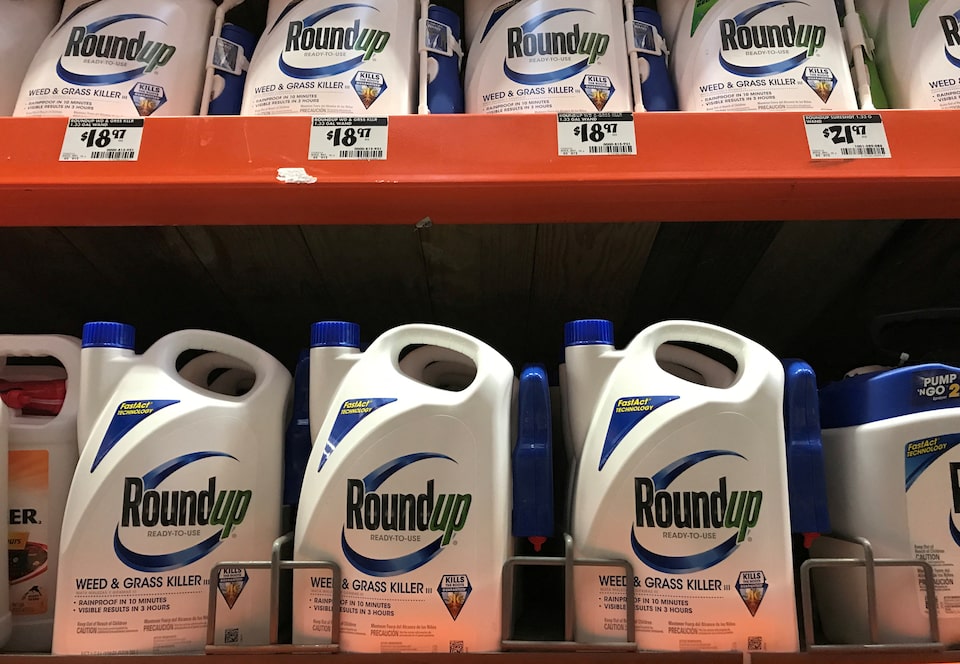
Monsanto Co's Roundup is shown for sale in Encinitas, California, U.S., June 26, 2017. REUTERS/Mike Blake/File Photo

Today the U.S. Supreme Court will consider Bayer’s effort to shut down thousands of lawsuits accusing the company of failing to warn users that the active ingredient in its Roundup weedkiller causes cancer.

Why it matters: The case could determine whether federal pesticide law shields Bayer from tens of thousands of state-law failure-to-warn lawsuits over Roundup, potentially ending or reshaping one of the largest mass torts in U.S. history. Here’s a look at what the SCOTUS case could mean for those lawsuits. 

Context: At issue is a Missouri jury verdict awarding $1.25 million to John Durnell, who said long-term exposure to Roundup caused his non-Hodgkin lymphoma. Bayer argues that the Federal Insecticide, Fungicide and Rodenticide Act preempts state-law claims because the EPA has approved Roundup’s label without a cancer warning, while Durnell counters that state law mirrors federal misbranding requirements and allows such claims to proceed. The dispute comes amid more than 100,000 similar lawsuits and follows Bayer’s multibillion-dollar efforts to settle much of the litigation after acquiring Monsanto in 2018. Read more here.

Who: Paul Clement of Clement & Murphy for the petitioner; Principal Deputy Solicitor General Sarah Harris for the U.S. as amicus curiae supporting the petitioner; Ashley Keller of Keller Postman for the respondent.


Coming up today

  • SCOTUS: The U.S. Supreme Court is expected to issue orders in pending appeals. In addition to the Bayer arguments the court will also hear arguments in a challenge to the constitutionality of a common tool used by law enforcement to obtain broad warrants for information on cellphone users whose location data placed them near crime scenes.
  • Litigation: The legal battle between Elon Musk and OpenAI is heading to trial, with internal documents, including a co‑founder’s diary, offering a rare look at the power struggles that shaped one of the world’s most influential AI companies. Jury selection will begin today. 
  • Immigration: U.S. District Judge William Young in Boston will hold a bond hearing for a Cuban man who was arrested by ICE in February after more than three decades of living in the United States. Earlier in the case Young ordered the Trump administration to provide him more details about what it said was an "unwritten" agreement by Mexico that has allowed the U.S. government to deport about 6,000 Cubans to its southern neighbor. 

Court calendars are subject to last-minute docket changes.


More top news

  • Suspect in Washington dinner shooting set to appear in court
  • U.S. judge bars Trump from forcing additional colleges to provide race data
  • CFTC sues New York to block oversight of prediction markets
  • U.S. judge sanctions Leon Black rape accuser, lawyer 
  • Trump administration to re-terminate legal status of migrants who used Biden-era app


Industry insight

  • Four law firms targeted by President Trump are turning to leading U.S. Supreme Court lawyer Paul Clement to urge a federal appeals court not to revive executive orders punishing them over their past legal work, diversity policies and political ties. Read more here.
  • DLA Piper said its partners voted "overwhelmingly" to dissolve the international law firm's Swiss verein structure and instead operate under a single global leadership team.
  • Yale Law School sent the highest percentage of 2025 graduates into federal clerkships, with 23.33% landing those prestigious positions with federal judges. Find out how other schools fared here. 
  • About 300 lawyers and investors gathered in Midtown Manhattan last week amid growing interest in management services organization deals that allow outside capital to flow into U.S. law firms without violating rules barring non-lawyer ownership. Read more in this week’s Billable Hours. 
 

40%

That’s the percentage of claims already filed by Purdue opioid victims that have been rejected by U.S. District Judge Sean Lane in White Plains. Reuters examined how Purdue’s bankruptcy left families fighting paperwork instead of finding closure. Dietrich Knauth has more here.


In the courts

  • Immigration: The 5th Circuit cleared the way for Texas authorities to enforce a Republican-backed state law that would let them arrest and prosecute people suspected of illegally crossing the U.S.-Mexico border. Read the opinion.
  • IP: A group claiming to represent the estate of pop artist Robert Indiana won a $102 million verdict in Manhattan federal court against another entity it accused of exploiting Indiana during his final days, forging thousands of his works and selling them for millions of dollars.
  • Tech: The DOJ ⁠intervened in a lawsuit by xAI challenging ‌Colorado's 'algorithmic ⁠discrimination' law. Read more here.
  • Government: New York sued the Trump administration for withholding more than $73.5 ‌million in highway funding over the state's decision not to revoke some commercial driver licenses.
  • IP: German biotech company CureVac sued Moderna in Delaware federal court, alleging that Moderna's COVID-19 vaccine Spikevax infringed CureVac patents related to mRNA technology. Read the complaint.