|
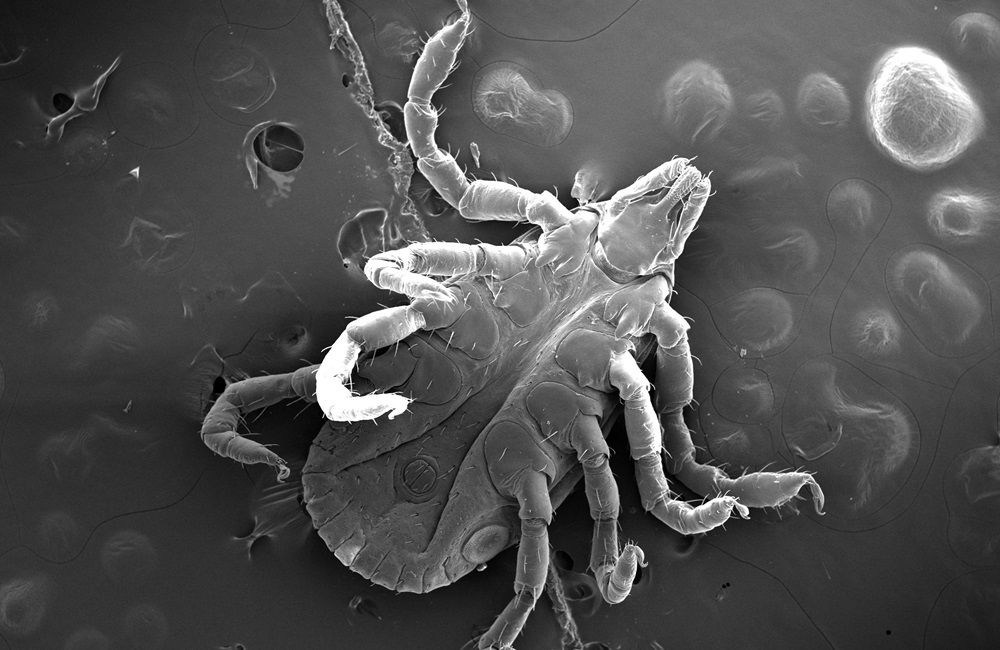
Scanning electron micrograph image of an American dog tick nymph (Dermacentor variabilis). This is one of the tick species tested with the defatted seed meals mustard plants through fumigation bioassays. (Photo by Nathan Kemp)
Leveraging Nature’s Secret Weapon Against Ticks
Tick populations are increasing, especially in warm, humid areas of the United States. This puts both livestock and people at greater risk for serious tick-borne diseases. Traditional tick control methods are often costly and rely heavily on chemical treatments, which are facing growing resistance in different tick species. Scientists at the USDA’s Agricultural Research Service (ARS) are developing new, safer, and practical solutions for controlling tick populations and protecting humans and animals from tick bites.
At the ARS’s National Center for Agricultural Utilization Research (NCAUR) in Peoria, IL, Entomologist Lina Flor-Weiler, Plant Physiologist Will Hay, and their colleagues are testing the acaricidal effects—substances that are effective at killing ticks and mites—of different defatted seed meals from the mustard plant family against different tick species. Learn more...
|