| | China moves to boost its energy self-reliance, Israel warns of another year of war, and Taylor Swift͏ ͏ ͏ ͏ ͏ ͏ |
| |  | Flagship |  |
| |
|
The World Today |  - China’s self-reliance plan
- CATL’s $5B stock boon
- Asia resilient to Iran war
- Embraer’s E-Jet record
- Israel faces ongoing war
- Africa hunger crisis looms
- Google DoD deal protest
- OpenAI misses targets
- AI’s impact on math
- Swift’s AI protection
 An HBO drama about ‘Machiavellian finance types.’ |
|
China looks to bolster autonomy |
 Maxim Shemetov/Reuters Maxim Shemetov/ReutersTop Chinese leaders pledged to accelerate the country’s self-reliance and energy independence in the wake of the Iran war. The announcement, following this month’s meeting of the Politburo of the Communist Party, prioritized the “construction of water, power, and computing infrastructure,” the South China Morning Post said. Beijing has been somewhat insulated from the conflict’s fallout thanks to its oil stockpile and aggressive push for renewables, but experts say it could be squeezed as a result of slowdowns in its key export markets. A protracted shutdown of the Strait of Hormuz in particular could force Chinese authorities to roll out fiscal or monetary support, a leading economist told Reuters. |
|
CATL’s $5B stock listing boon |
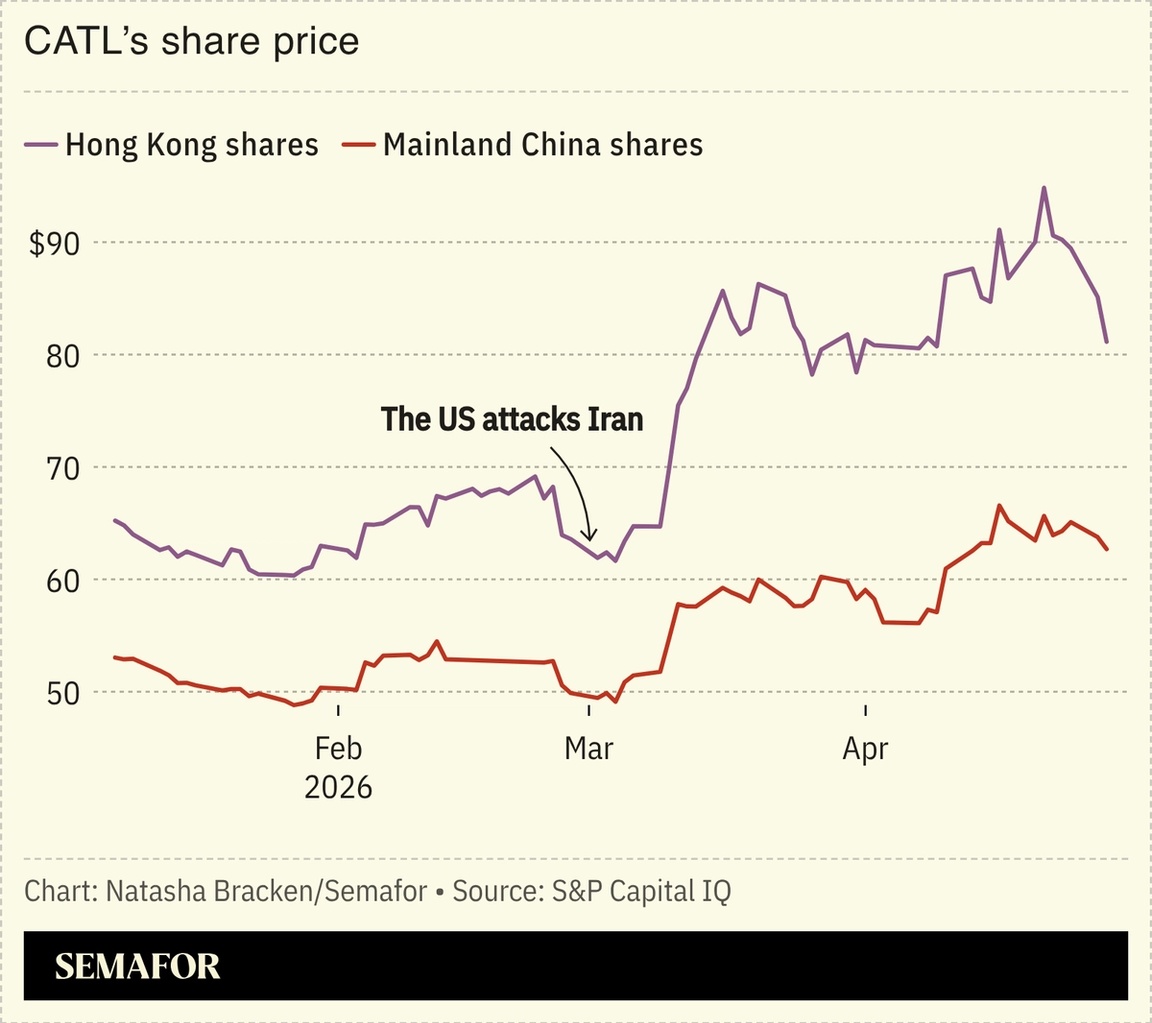 China’s CATL, the world’s biggest battery maker, raised $5 billion in a Hong Kong listing, welcome news for the firm as it looks to leverage booming demand amid soaring fossil fuel prices. The company — which last week unveiled a landmark car battery with a 1,500-kilometer (930-mile) range that takes just six minutes to charge — has been boosted by the conflict in the Middle East; its stock price has jumped almost 25% since late February. Ever-growing demand for data center energy storage has further boosted its prospects. The listing is also a boon for the Hong Kong stock market, which has seen raises totalling $31 billion so far this year, up 73% compared to 2025, Bloomberg reported. |
|
Asia weathers war with ‘resilience’ |
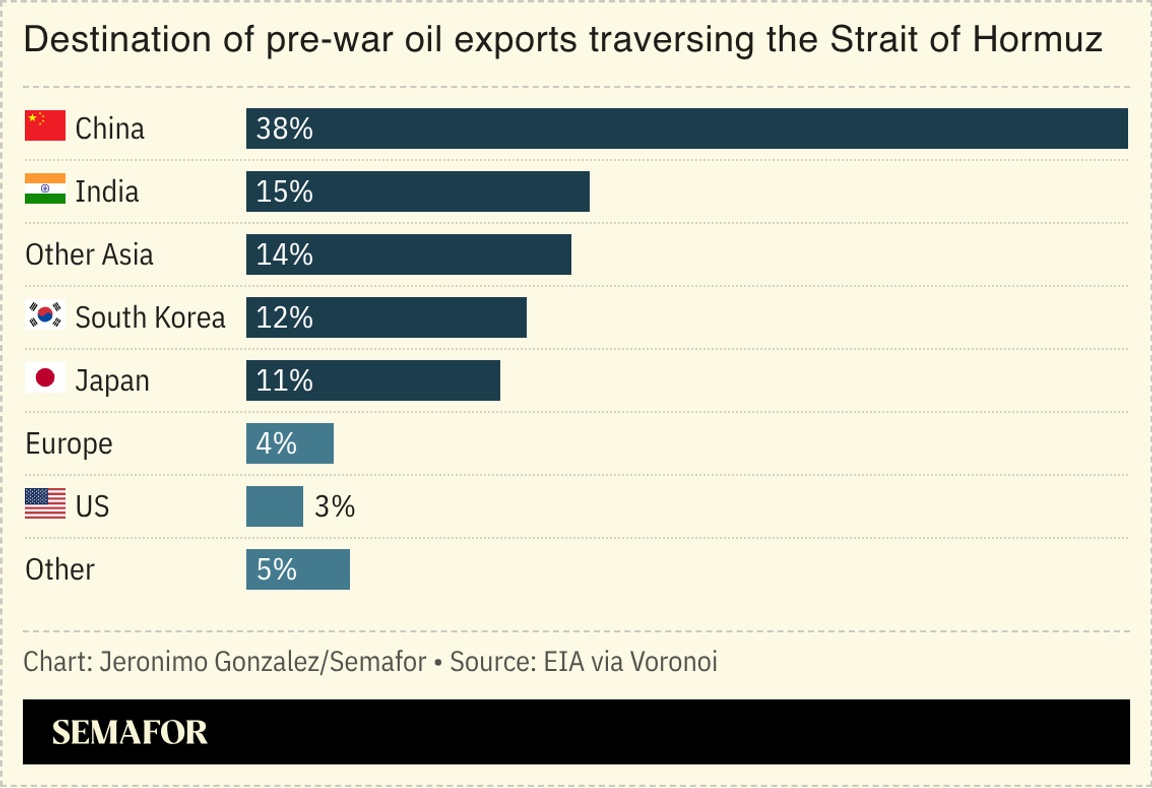 Asian economies are proving resilient in the face of the energy shock sparked by the Iran war, though analysts warn of higher and persistent inflation. Experts feared that Asian economies — which imported 90% of the oil traversing through the Strait of Hormuz before the war — could be devastated by a prolonged disruption to Gulf crude production. Yet they have been more buoyant than predicted, in part a result of more efficient energy use, and the accelerating electrification of their transport fleets, a Goldman Sachs report said. Still, sustained high energy prices could stoke inflation in the long run: On Tuesday the Bank of Japan kept its policy rate steady while forecasting an inflation spike. |
|
Fuel-efficient E-Jet draws buyers |
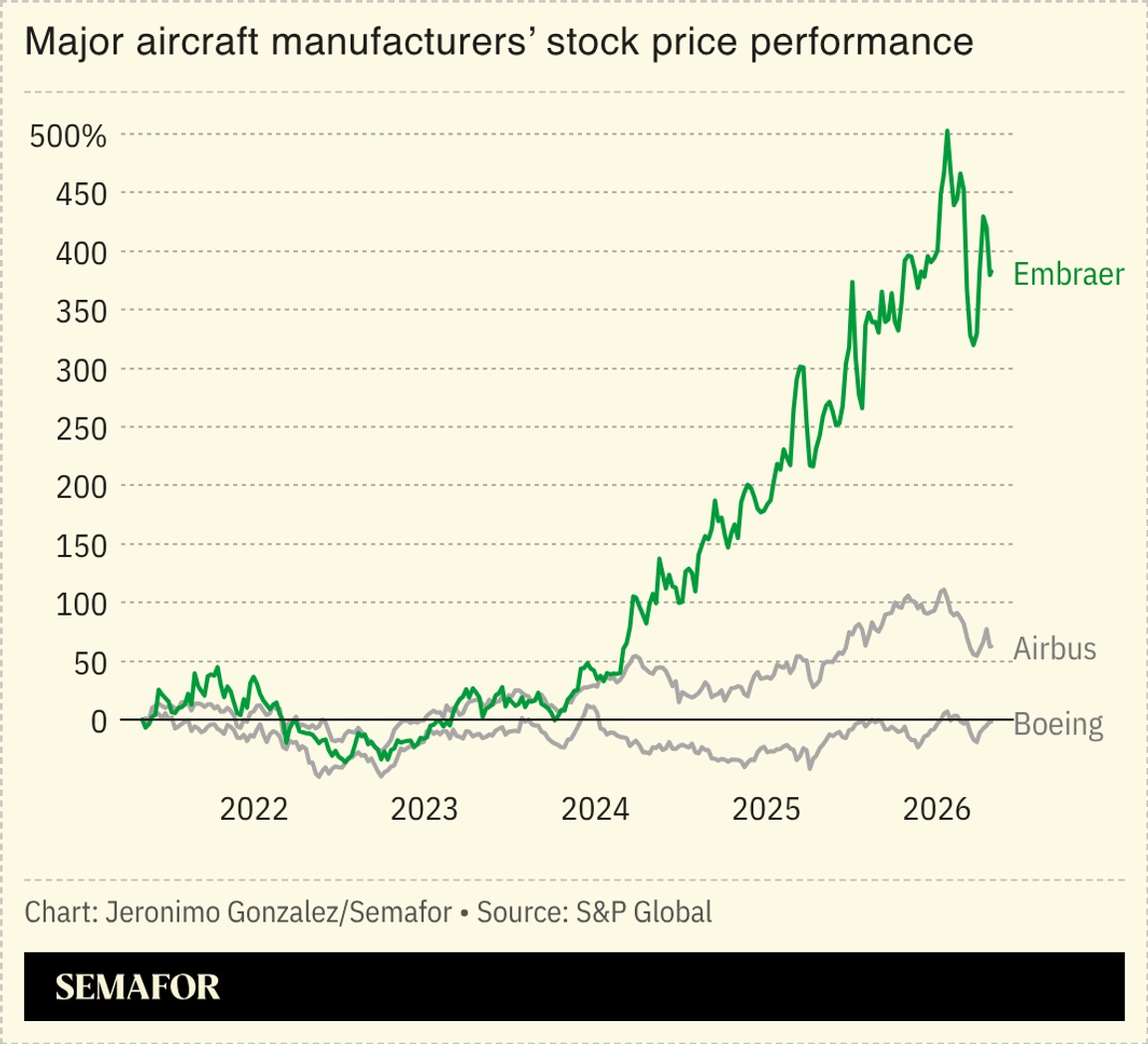 Brazilian plane maker Embraer reported a record $32 billion backlog at the end of the first quarter as carriers flocked to its highly fuel-efficient E-Jet amid a global jet fuel crunch. The record demand comes even as the São Paulo-based firm delivered 44 planes in the first quarter of 2025, up 47% from the previous year. The company — a standout in the world of aviation as the only major manufacturer not based in a rich country — has been lifted by its new plane, nicknamed “The Profit Hunter.” The narrow-body, medium-range plane’s low fuel demands are a major draw for carriers amid warnings of impending shortages. |
|
Israel braces for ongoing conflict |
 Nir Elias/Reuters Nir Elias/ReutersIsrael will see “another year of fighting on all … fronts,” the country’s army chief of staff said. Since 2023, Israel has been embroiled in conflicts in Gaza, Lebanon, Iran, and Yemen. Eyal Zamir said the strains on Israel’s armed forces have created an urgent need to increase military recruitment. Fighting is ongoing in Lebanon despite a shaky ceasefire — Israel ordered inhabitants of seven towns to evacuate ahead of military operations. But there are signs that constant conflict is undermining Prime Minister Benjamin Netanyahu’s support; he has lost ground in polls, and two high-profile opposition figures have agreed to combine forces in this year’s elections. The pair’s last electoral collaboration temporarily unseated Netanyahu in 2021. |
|
‘Acute’ hunger crisis looms in Africa |
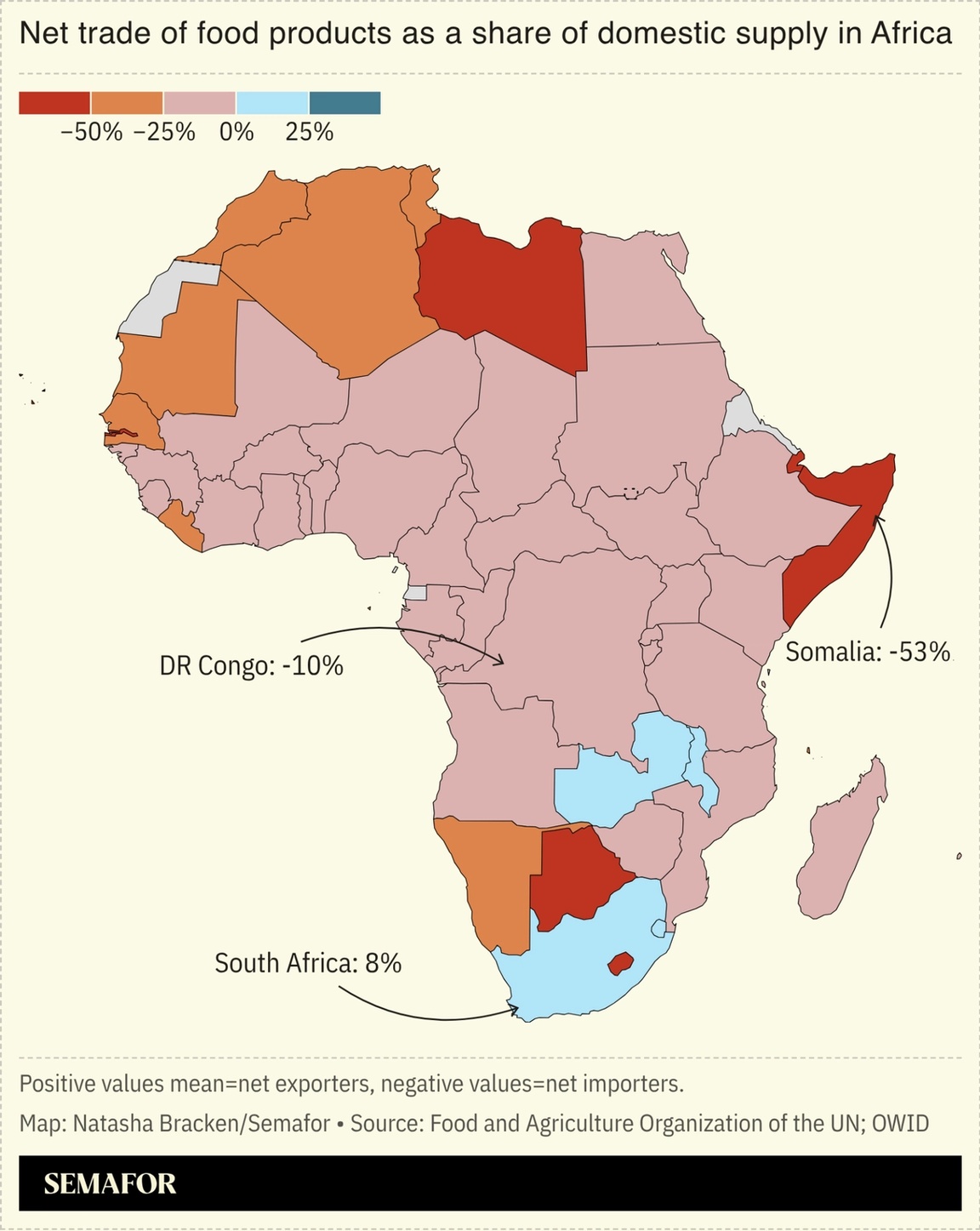 Africa is facing a hunger crisis as soaring food costs sparked by the Iran war compound the toll of foreign aid cuts and erratic weather that has already devastated crops. Clinics treating malnourished children in Somalia have had to cut rations, with almost 500,000 children under five in the country facing severe acute malnutrition, Reuters reported. A pattern of droughts and floods has worsened the toll. Elsewhere, the World Food Programme has estimated that as many as 45 million more people worldwide could face “acute” levels of hunger due to a global fertilizer crunch and higher transportation and refrigeration costs for food prompted by the Iran war. “We are on borrowed time,” an energy expert told the Financial Times. |
|
Google staff fear AI-Pentagon deal |
 More than 600 Google staff members signed a letter demanding that the firm’s CEO prevent the Pentagon from using its AI models for classified work, the Washington Post reported. The letter comes after Anthropic fell out with the US Department of Defense for refusing to allow it to use its AI for domestic mass surveillance or autonomous weapons, a growing concern as AI becomes increasingly important for modern warfare. Google included similar conditions in its proposed deal, The Information reported, but the letter said allowing classified use would prevent the company from monitoring how its AI models were deployed. The Pentagon asserted that it should have the freedom to use AI for “all lawful uses.” |
|
 In a world of hot takes, Marketplace does it differently. Award-winning journalists provide the context you need to understand how the economy shapes your world in this podcast, from grocery prices to global trade. Listen to Marketplace each weekday for sharp analysis and independent reporting you can trust. |
|
 Ken Cedeno/File Photo/Reuters Ken Cedeno/File Photo/ReutersOpenAI reportedly missed key internal revenue and adoption targets, raising concern over whether it can support its huge spending ahead of a widely expected IPO. The company has raced to buy as much computing power as possible, making $600 billion in spending commitments last year. But OpenAI has lost ground to Anthropic in coding and enterprise markets, while Google has eaten into its consumer market share, The Wall Street Journal reported. In a possible sign that OpenAI is looking to shore up its revenues, it has rewritten its longstanding partnership with Microsoft, its biggest investor: Revenue-sharing between the two will be capped, and Microsoft’s license to use OpenAI’s IP will no longer be exclusive. |
|
AI solves unproved problem |
 Kim Kyung-Hoon/Reuters Kim Kyung-Hoon/ReutersAn amateur mathematician used AI to solve a 60-year-old math problem that has stumped some of the field’s top thinkers. The great mathematician Paul Erdős left behind more than 1,000 conjectures, potential but unproven mathematical proofs. AI has proved some, but they are mainly relatively easy or rarely studied, the Fields Medal-winning mathematician Terence Tao told Nature. Erdős problem #1196 was different, he said: It had been studied intensively, but had “a fairly short proof that all the humans missed,” which a 23-year-old using ChatGPT discovered; it apparently spotted a new way to look at the problem. AI is “[changing] the job description” of mathematicians, Tao said, and students who don’t use it will miss out on opportunities. |
|
|


