
|
 |
👋 Hi, this is Gergely with a subscriber-only issue of the Pragmatic Engineer Newsletter. In every issue, I cover challenges at Big Tech and startups through the lens of engineering managers and senior engineers. If you’ve been forwarded this email, you can subscribe here.
How will AI change operating systems? Part 1: Ubuntu and Linux
A deepdive with the Canonical team into how AI is changing Ubuntu, why they’re betting on local-first LLMs, and a look into other Linux distributions
|

| |||||||||||||||


AI is affecting how many of us software engineers build; we’re prompting more code and producing much more of it. The tools are also adapting, with command-line interfaces gradually becoming more popular than IDEs. But what about operating systems? To find out, I reached out to the leading Linux distribution – the team at Ubuntu – and the Windows team, about how AI is changing their operating systems.
Today’s article focuses on Linux and Ubuntu, and we’ll cover Windows in a follow-up issue. Obviously, I reached out to Apple but heard nothing back, unsurprisingly. If you’re reading this and happen to work at Apple, it’d be great to learn more!
Jon Seager is VP of Engineering at Canonical – the company behind Ubuntu – and has provided new details about what the team there has built for AI support, and some new ideas that they’re brewing up. Today, we cover:
Hardware enablement: support for GPUs, NPUs and DPUs. When you turn on a machine with AI accelerators, Ubuntu aims for the hardware to perform at its full potential. This means having proper driver support for PCs and cloud data centers’ computing units.
Hardware partnerships. Working closely with NVIDIA, AMD, and Intel means Ubuntu can support those vendors’ new hardware from release day.
CPU architecture variants. New versions in a CPU family add to, or change, features. An operating system needs to support a new version of the CPU architecture variant in order to fully utilize it. Ubuntu does this for the x86‑64 family, making it a lot more performant on newer CPUs – while still supporting older CPUs.
Local-first bet & plans for agentic workflows. There’s a big focus on running local models and using “inference snaps” which help choose the right model with the right quantization. There is the intention to support agentic workflows at the OS level, one day, which is currently at the early exploration stage.
Developer ecosystem. There’s a plan to add more support for AI dev tools, a focus on sandboxing at the OS level, a push to support ARM64 laptops more, and we touch on the popularity of Windows Subsystem for Linux (WSL).
Engineering culture. A skeptical attitude to AI at Canonical has given way to one where experimentation is encouraged and devs lean into AI tools, but there are no targets for token usage or amounts of AI-generated code.
What other Linux distributions are doing. Arch Linux takes the “DIY your AI setup” approach, Omarchy makes it easy to install AI tools, while Red Hat Enterprise Linux ships with AI integrated into the command-line and support for AI accelerators & popular AI tools.
The bottom of this article could be cut off in some email clients. Read the full article uninterrupted, online.
1. Hardware enablement: support for GPUs, NPUs & DPUs
Jon mentioned he detects a “Dotcom Boom”-era vibe in the industry, like around when “web 1.0” was created, and indeed, lots of startups today aim to be the Google-style success story of this “AI era”. At Canonical, the team asked: what does that mean for Ubuntu as an operating system?
For instance, should Ubuntu join the competition and try to position itself closer to AI, or keep focusing on what they’ve done for decades: build an operating system? Jon said:
“We need to make sure to remain a relatable and accessible system. I don’t think we should blur the line between application features and the OS itself. So, the most powerful thing we can do is hardware enablement.”
Hardware enablement means that if a computer (typically, a laptop) has AI-related hardware, Ubuntu should allow it to make full use of it. This involves adding support for GPUs, NPUs, DPUs and other types of accelerator cards. Let’s briefly go through each.
GPUs
As is likely widely known by readers, ‘GPU’ stands for Graphics Processing Unit. Originally built for graphics rendering, its #1 use case is no longer in video games but for AI training and inference. GPUs come in two forms:
Integrated GPUs: located on the same die (integrated circuit) as the CPU, like GPUs on Apple’s M-series processors
Discrete GPUs: separate chips on their own board; often for gaming, or in standalone GPU rigs for AI and ML workloads
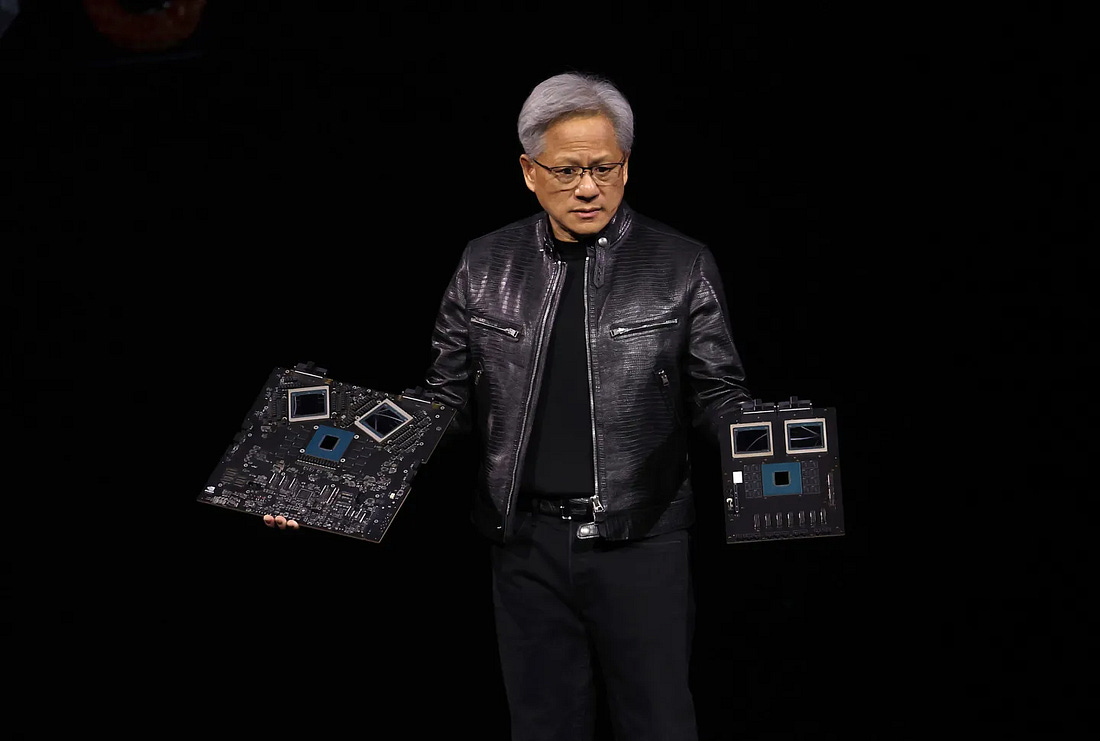
NVIDIA leads the market in discrete GPUs for rigs with its Blackwell family, and in standalone GPU cards with the NVIDIA RTX series. Other vendors like AMD offer GPUs for data centers (like the Instinct MI300 Series) and for PCs with the AMD Radeon series.
 |