| | In this edition, we’re now in the “call me, maybe” era of dealmaking, and Mark Cuban discusses his n͏ ͏ ͏ ͏ ͏ ͏ |
| |  | Business |  |
| |
|
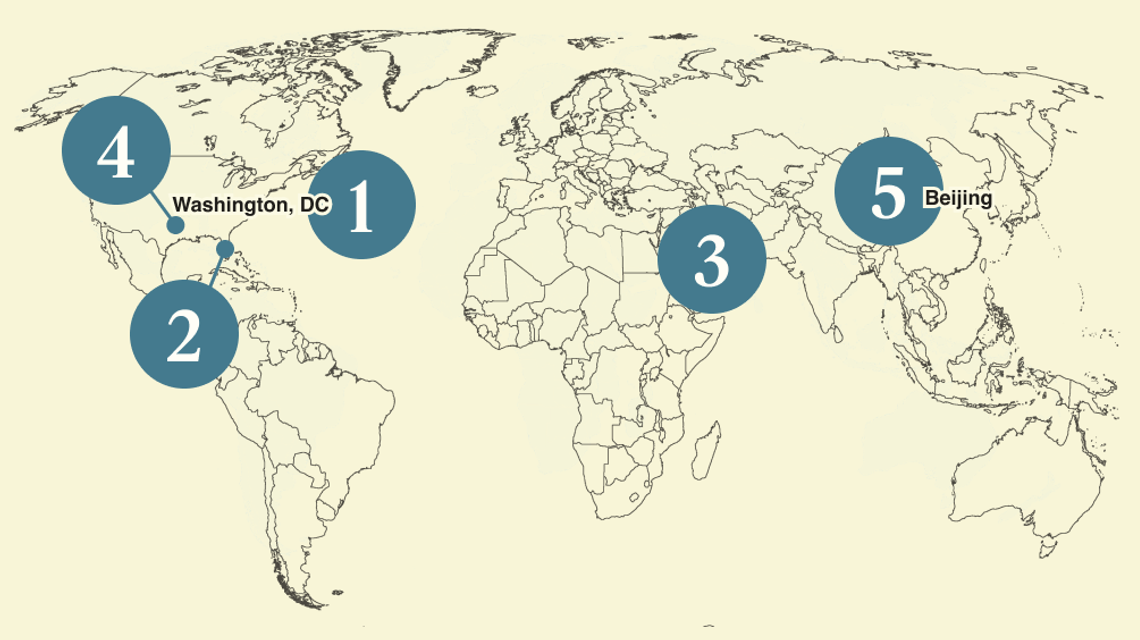 - Disney’s TV licenses at risk
- Spirit lenders resist Trump rescue
- Emirates quit OPEC
- Mark Cuban on Compound Interest
- Meta’s Manus mess
|
|
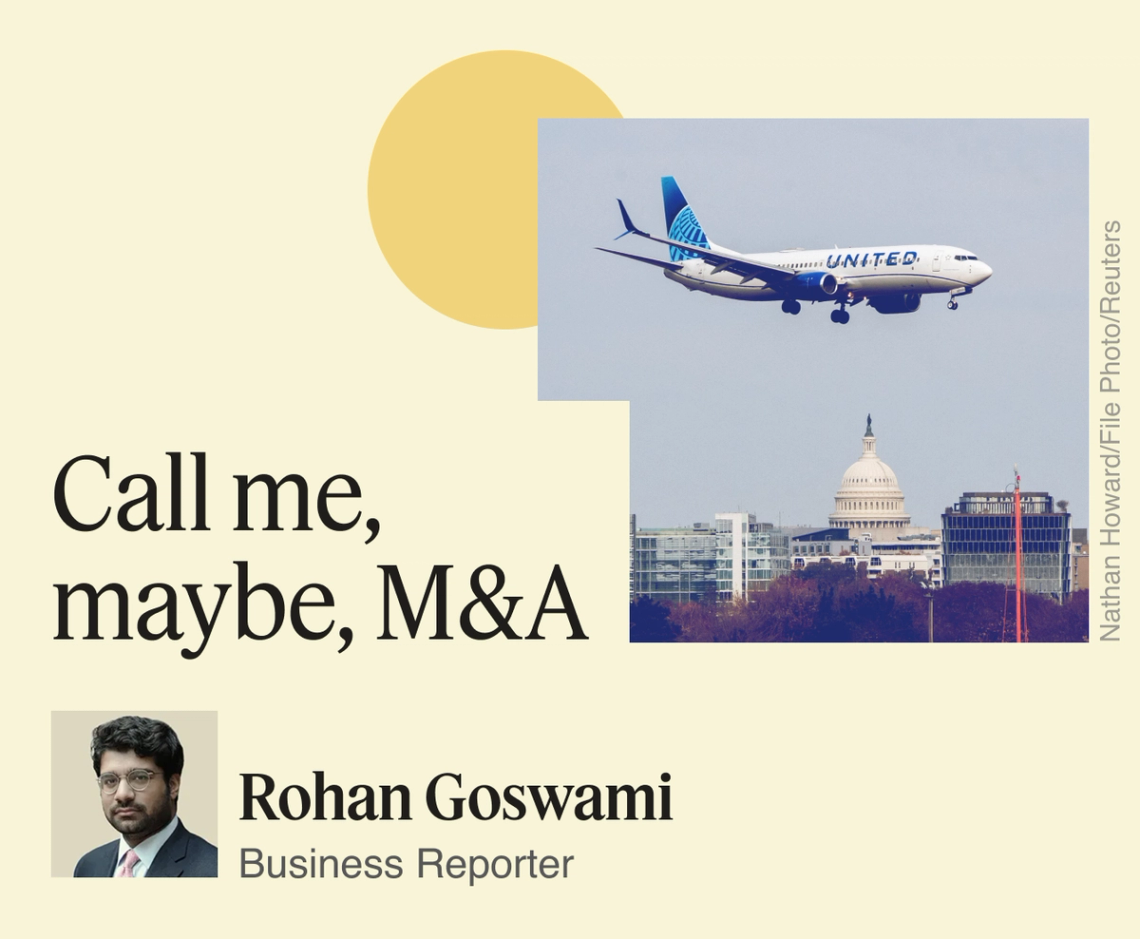 Deal talks used to be tightly held secrets. No longer. We’re now in the “call me, maybe” era of dealmaking. See United Airlines CEO Scott Kirby’s 1,100-word case Monday for buying American Airlines. Or Charter’s cry for bigger deals on its earnings call last week (tell me you want Comcast to buy you without telling me you want Comcast to buy you). And, of course, the largest deal of 2025 — the $72 billion Union Pacific and Norfolk Southern tie-up — started out as a rhetorical question floated out loud at a Wells Fargo investor conference: “Do I, Jim Vena, think that a merger would be beneficial for the country? Absolutely,” the Union Pacific CEO said to a roomful of media and investors in a monologue that kicked off a game of M&A musical chairs. CEOs are following the nation’s dealmaker-in-chief in saying the quiet part out loud. President Donald Trump negotiates in public, floating trial balloons on everything from tariffs to privatizing the post office to launching a sovereign wealth fund, turning what in other White Houses was a tightly orchestrated policy process into a national ideas dinner. Plus, the sheer volume of all those half-baked proclamations has meant the half-life of a whiff — like the public rejection American Airlines CEO Robert Isom handed Kirby — is shorter than ever before. The lesson for corporate bosses: Why not try? It might work, and if it doesn’t, nobody will remember. |
|
FCC to challenge ABC licenses |
 Paul Morigi/Getty Images for Semafor Paul Morigi/Getty Images for SemaforThe Federal Communications Commission is preparing a review of Disney’s broadcast licenses, Semafor’s Liz Hoffman and Rohan Goswami scooped, a maneuver that would up the pressure on the ABC owner as it faces fierce scrutiny from the administration — again — over a late night monologue. The FCC could still choose not to trigger that process, known as an early license review. But Chairman Brendan Carr has threatened Disney’s licenses before, criticizing the company’s diversity programs this month. The FCC licenses ABC’s TV stations across the country to broadcast programming over publicly owned airwaves. President Donald Trump and First Lady Melania Trump have both demanded that the broadcaster fire Jimmy Kimmel, the host of ABC’s eponymous late-night show, over a monologue he made two days before a gunman allegedly attempted to assassinate the president at the annual White House Correspondents’ Dinner, in which he said the first lady looked like “an expectant widow.” |
|
At Spirit, immovable force meets unstoppable object |
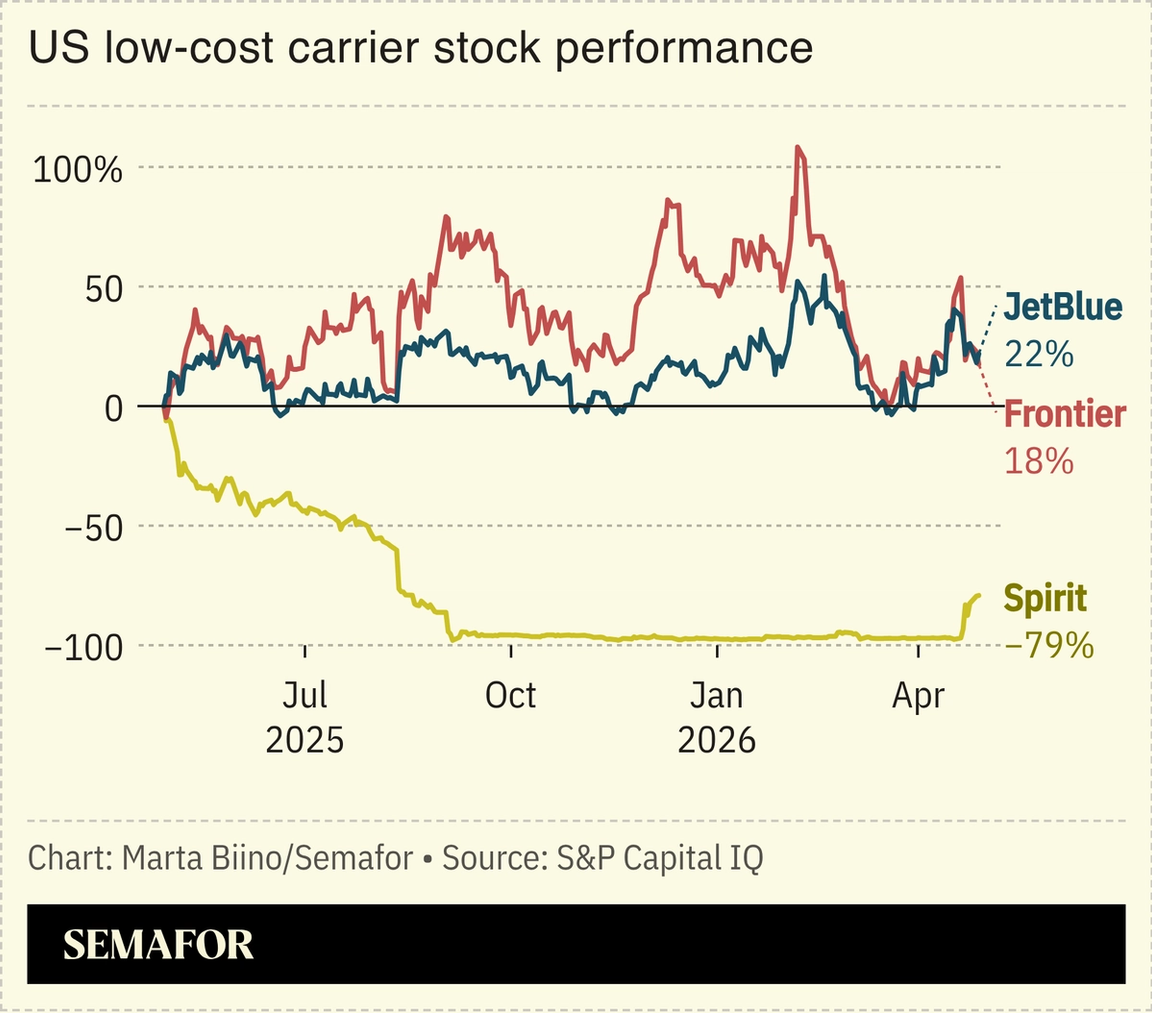 For the second time in a year, Trump finds himself in a standoff with bondholders. In 2025 was over tariffs and tax cuts, when “bond vigilantes” forced a post-Liberation Day climbdown. Now, his bailout of Spirit Airlines is being held up by the company’s lenders, who are pushing back on what their lawyer has called a government “cram-down.” Negotiations between Spirit and its creditors continued over the weekend about the rescue, which would subordinate their claims to the government and jeopardize their repayment, according to people familiar with the matter. Those senior creditors, which include Citadel and PIMCO, can reject a government deal because Spirit is in Chapter 11 bankruptcy proceedings. Spirit, which needs government cash to avoid liquidation, hasn’t budged. Junior lenders don’t plan to fight the rescue, another person familiar said. Trump’s divide-and-conquer dealmaking approach worked with law firms and universities, many of which caved to his demands. The bond vigilantes have been harder to beat. — Rohan Goswami |
|
Emirates’ OPEC defection is Saudi snub |
 UAE President Sheikh Mohamed bin Zayed and Saudi Crown Prince Mohammed bin Salman. Abdulla Al Bedwawi/UAE Presidential Court/Handout via Reuters. UAE President Sheikh Mohamed bin Zayed and Saudi Crown Prince Mohammed bin Salman. Abdulla Al Bedwawi/UAE Presidential Court/Handout via Reuters.The UAE is leaving OPEC, a blow to a cartel that has struggled in recent years to maintain unity. The move matters little in the short term — Gulf oil producers can’t hit their production targets with the Strait of Hormuz closed — but signals a deeper economic rift between the Emirates and Saudi Arabia, which the UAE’s energy minister said wasn’t consulted or informed about the decision. (UAE President Mohamed bin Zayed also skipped a meeting of Gulf leaders this week in Jeddah.) The UAE’s move is the latest sign that it is no longer willing to go along with historic alliances it views as unnecessary just to keep the diplomatic peace, Semafor’s Matthew Martin writes. Economically, the two countries have been increasingly competing over the same travelers, businesses, and investors. “Apparent regional unity as a result of the Iran war now looks to be gone,” Matthew writes. |
|
Mark Cuban is coming for insurance |
 Semafor/YouTube Semafor/YouTubeMark Cuban has left Shark Tank, sold the Dallas Mavericks, and poured more than $100 million into his prescription-drug startup, which is taking on pharmacy middlemen. Now he’s coming for health insurers. The billionaire is working on an alternative to employer-run insurance plans, he said on Semafor’s latest Compound Interest episode. His project — its skunkworks name, “The 10 Plan,” taken from the percentage of customers’ income it would be capped at — would replace insurance premiums with personal contributions into bank accounts that can only be spent on medical bills. The idea grew out of Cost Plus Drugs, his pharmacy startup that sells prescription drugs (mostly generics, though it’s working with TrumpRx to add name-brands straight from big drugmakers) at a flat 15% markup. Cuban says the company is “about breakeven right now,” hasn’t taken outside investment, and that an IPO is not part of his plan. “I’m rich as f*ck. I don’t need the money,” he says. |
|
Meta is new flashpoint in US-China AI race |
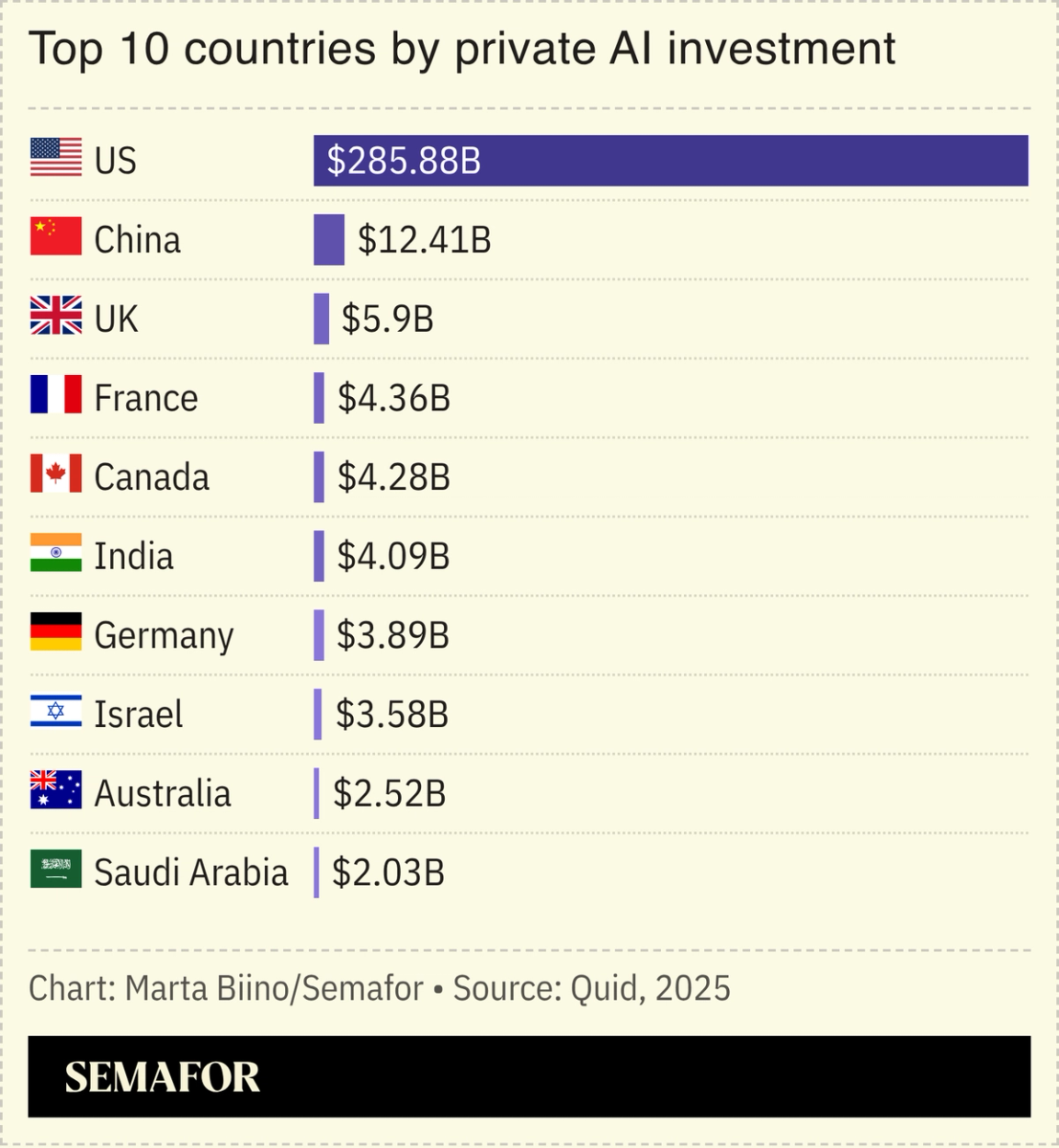 China’s move to block Meta’s acquisition of AI startup Manus is the latest tussle for leverage ahead of next month’s planned summit between Trump and Xi Jinping. Meta is preparing to unwind the deal, WSJ reports, a messy process since it had already integrated Manus’ technology and paid the startup’s venture investors. The global race for AI dominance has overtaken trade as a key friction point between the two countries. Last week, the White House accused Beijing of running “industrial-scale” theft of American AI, while Treasury Secretary Scott Bessent told a Wall Street Journal conference that “if we don’t win in AI, then it’s game over.” The US is winning the money race — private investment in AI reached $286 billion last year, compared with just $12.4 billion in China — but open-source Chinese models are gaining global followers and their models have closed the gap on performance, according to a report earlier this month from Stanford’s AI research institute. |
|
 In a world of hot takes, Marketplace does it differently. The Marketplace’s award-winning journalists provide the context you need to understand how the economy shapes your world, from grocery prices to global trade. Listen to the Marketplace podcast each weekday for sharp analysis and independent reporting you can trust. |
|
➚ BUY: Rockets. Retail investors are racing to get a piece of pre-IPO SpaceX, driving one fund with exposure to the company to a 3,000% premium last month. ➘ SELL: Mavericks. “My expectation was that I would run basketball” operations after selling a majority stake in the NBA team, Cuban told Semafor’s Compound Interest. “That’s just not the way it turned out.” |
|
 Companies & Deals- Compute error: OpenAI fell short of its goals for new users and revenue in 2025, WSJ reports, raising questions about its plans to go public this year and hinting at continued friction between CEO Sam Altman and CFO Sarah Friar.
- Tender, unloving: Beaten-down Blue Owl notched a win when Boaz Weinstein’s efforts to buy out its investors at steep discounts got nearly no takers. Fewer than 1% of holders sold their shares. Weinstein did better with a similarly discounted bid for shares in one of Barry Sternlicht’s funds, which began bleeding assets two years ago.
Watchdogs- Pentagon pushback: More than 600 Google staff members signed a letter urging CEO Sundar Pichai not to let its AI models be used for classified military operations.
- Strange bedfellows: Opposing data centers is “a massive strategic blunder for the Left,” writes the same left’s champion, Jacobin. Its concerns are predictably progressive — the “global justice” implications of pushing the AI buildout to China and developing nations — but are a notable addition to a growing political debate.
Markets- Bond buffer: Wall Street banks hold more US Treasury bonds than at any point since 2007, the FT calculates, encouraged by the Trump administration easing rules. It’s a boon for the government debt market, which needs dependable buyers these days.
|
|
|


