News without an agenda. AP is a not-for-profit organization with no corporate parent, no shareholders and no government influence. Our mission is journalism, not profit margins. Your donation supports independent reporting that serves the public interest, not corporate shareholders. Donate today.
|
|
|
In the news today: Why experts are questioning the CDC’s reaction to the deadly hantavirus outbreak on a cruise ship; Trump rejects Iran’s response to a U.S. ceasefire proposal; and understanding the threats facing Amazon forests, including El Nino. Also, what happens when an AI agent takes over a cafe. |
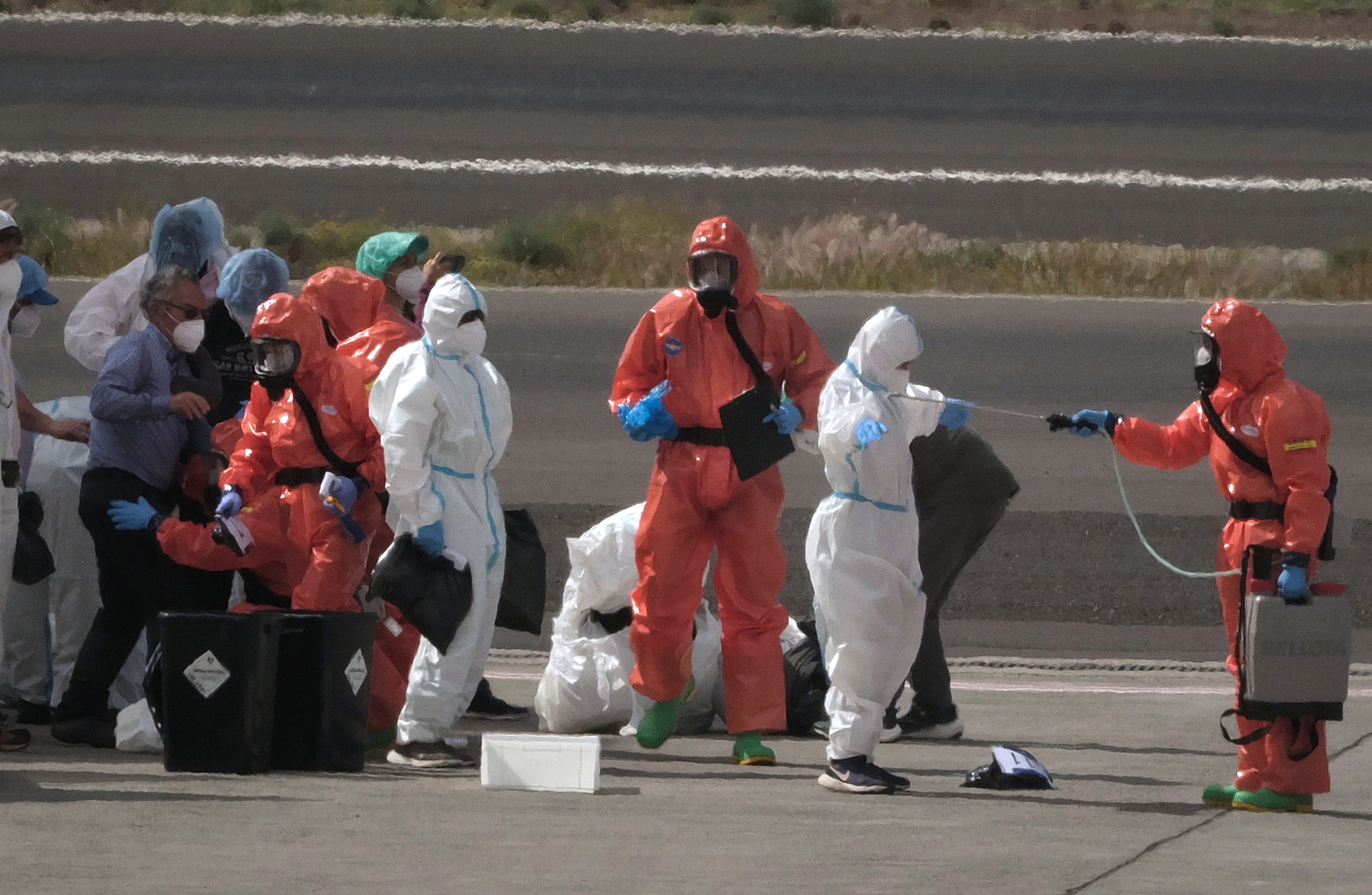
Passengers are sprayed with disinfectant by Spanish government officials before boarding a plane after disembarking from the hantavirus-stricken cruise ship MV Hondius at Tenerife airport in the Canary Islands, Spain on Sunday. (AP Photo/Arturo Rodriguez) |
Experts question CDC’s response to cruise ship hantavirus outbreak |
In the midst of a hantavirus outbreak that involves Americans and is making headlines around the world, the U.S. government’s top public health agency, the Centers for Disease Control and Prevention, has been uncharacteristically missing in action, according to a number of experts. Read more. |
|
|
|
-
To President Donald Trump, “We seem to have things under very good control,” as he told reporters Friday evening. To experts, the situation aboard a cruise ship has not spiraled because, unlike COVID-19 or measles or the flu, hantavirus does not spread easily. It has been health experts in other countries, not the United States, who have been dealing primarily with the outbreak in the past week. The CDC’s diminished role in this outbreak is an indicator the agency is no longer the force in international health or the protector of domestic health that it once was, some experts said.
Not until late Friday did CDC actions accelerate. Health officials confirmed the deployment of a team to Spain’s Canary Islands, where the ship was expected to arrive early Sunday local time, to meet the Americans onboard. They said a second team will go to Offutt Air Force Base in Nebraska as part of a plan to evacuate American passengers from the ship to a University of Nebraska quarantine center for evaluation and monitoring. Also, the CDC issued its first health alert to U.S. doctors, advising them of the possibility of imported cases.
|
|
|
Iran and the US are at an impasse ahead of Trump’s China trip |
The current ceasefire grew increasingly shaky, with the two sides exchanging fire in recent days, ships and Gulf states being targeted, and fighting flaring between Israel and the Lebanese militant group Hezbollah. Read more. |
|
|
The volatility could tip the Middle East back into open warfare and prolong the worldwide energy crisis sparked by the conflict, with Iran’s chokehold on the Strait of Hormuz and America’s blockade of Iranian ports still in place. President Donald Trump is expected to use a trip this week to China to urge President Xi Jinping to pressure Iran into making concessions and end the current limbo. Beijing is the biggest buyer of the Islamic Republic’s sanctioned crude oil, giving it leverage.
Iran insists it wants to see the American blockade end and sanctions lifted before beginning negotiations over its stockpile of highly enriched uranium. The U.S. — and Israel — want that material removed since it could be used to eventually build a bomb, should Iran choose to do so. Tehran insists its program is peaceful, but it has enriched uranium beyond the levels needed for civilian power generation. President Donald Trump said Sunday that Iran’s response to his latest proposal was “TOTALLY UNACCEPTABLE!” Ending the blockade before discussing Iran’s nuclear program would eliminate a major point of leverage for Trump in the talks.
|
|
|
Brazil’s Amazon deforestation rates drop, but El Nino could threaten recovery |
Despite gains in reducing deforestation, many other threats, ranging from climate change to potential legislation on the horizon, are putting the forest at risk. Read more. |
|
|
Threats to the forest could be exacerbated in 2026 with a strong El Nino, a cyclic warming of the equatorial Pacific, which causes higher temperatures and drier weather in the rainforest, conditions that worsen wildfires. While the Amazon is still a carbon sink — that is, it absorbs a vast amount of planet-warming carbon dioxide — it could reach a tipping point beyond which it cannot recover. At that stage, the forest could emit more CO2 than it absorbs. Scientists say repeated stress could trigger a regional or biome-wide collapse.
|
|
|
|