
|
 |


Half of the population in Dallas County, Alabama, where Selma is located, was African American in 1965. But less than 2% of the county’s registered voters were Black. That wasn’t for lack of trying. They were excluded by systematic racism. Leaders like John Lewis and Martin Luther King Jr. understood that being denied rights was intolerable, and that nothing would change until Black Americans had the same ability to exercise the right to vote that white citizens did.
Alabama newspapers largely ignored events leading up to Bloody Sunday in Montgomery. As marchers approached the state capitol, the local press spilled more ink over what Governor Wallace was eating for lunch as the marchers approached the city (“Roast beef, green beans, corn muffins, sliced peaches, plastic-wrapped chocolate cakes, buttermilk and iced tea,”) than they did on the march itself.
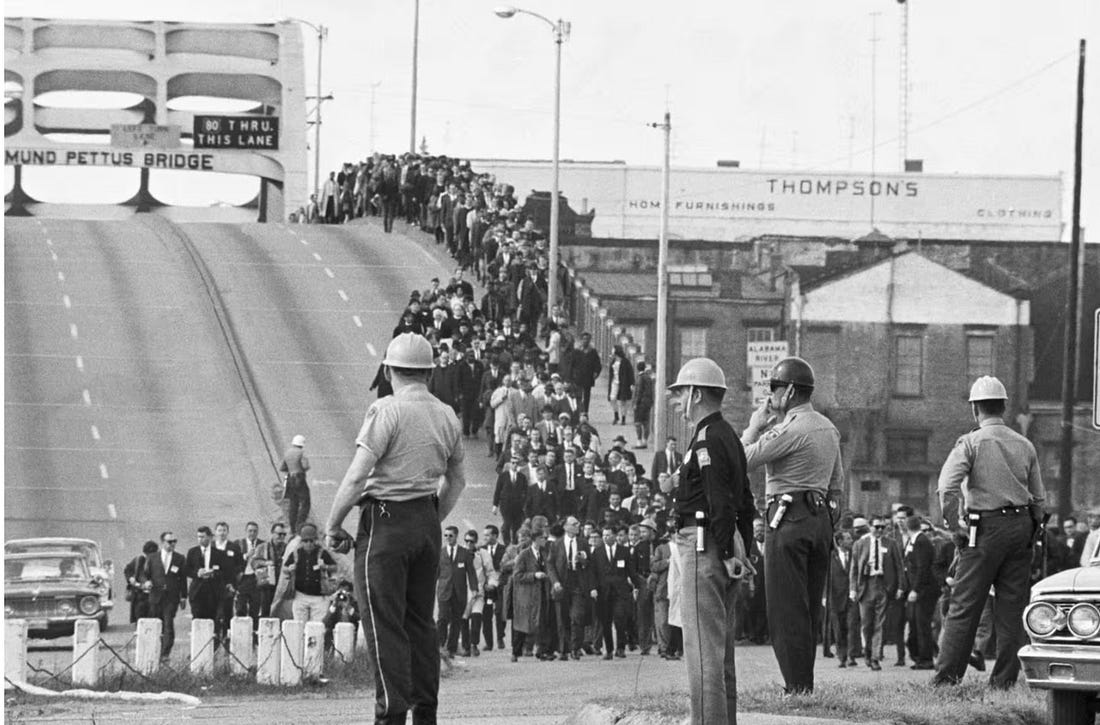
It was national media coverage that drew the public’s attention to what was happening. On March 7, 1965, when a then-25-year-old John Lewis led over 600 peaceful marchers across the Edmund Pettus Bridge in Selma and was met with brutality from state troopers, it was the footage shown on network news that night that shocked the nation’s conscience into finally doing something. By Sunday, March 21, 1965, with the country’s attention focused on them and joined by Dr. King, the original 600 protesters swelled to close to 8,000 people and the march from Selma to Montgomery began. A federal judge, Frank Johnson, ordered the troopers who had attacked them previously to protect them. By the end of the year, the Voting Rights Act was passed and signed into law.
 |
Protest is brewing again in Selma. In the wake of Callais, and the overt gerrymandering and dilution of the Black vote that the Supreme Court now says is legal, protestors marched today.
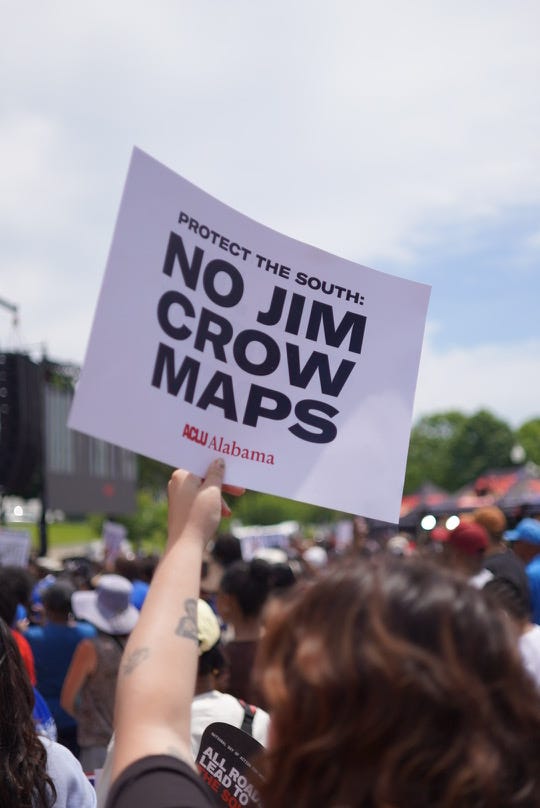 |
People came from across Alabama and the South, and others, including members of Congress, flew in from across the country. There has been some coverage, but it’s not the front-burner major national story it should be yet.
There was no speech from our president Sunday night like there was from Lyndon Johnson after Bloody Sunday. It’s up to us to make sure what’s happening sears the consciences of our friends and neighbors. So tonight, I’m sharing pictures with you, because they tell the story better than anything else could. The message is clear, Americans stood strong together today in Alabama. We are not going back. There will be no Jim Crow 2.0.
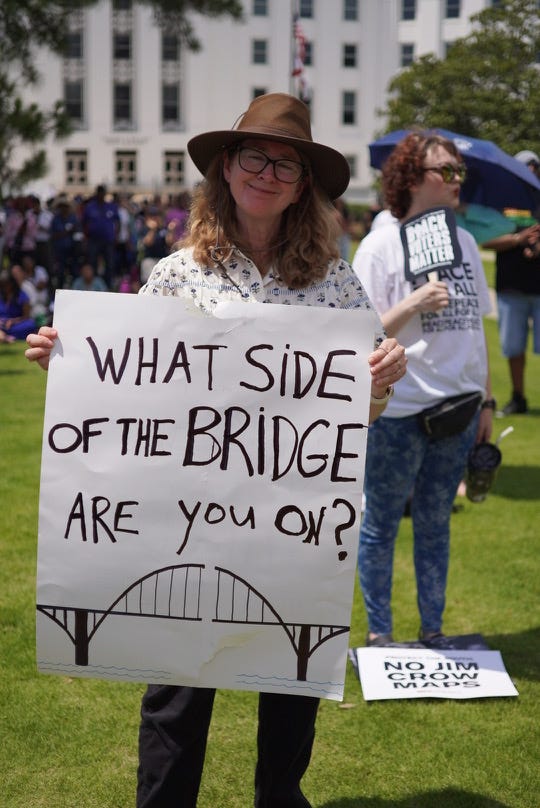 |
The question of the day was “Which side of the bridge are you on?” It’s a question that all of the Republican politicians who rushed to dismantle voting rights over the last two weeks are going to have to answer for their children and their grandchildren. Because this last desperate gasp of racism will not last, and when the country returns to itself, there will be a demand for accountability. In some cases it may come in court, in others in elections, and for many of today’s wrongdoers, what they did will be reflected in the eyes of future generations of their family who will question their role in the ugliness that has taken hold in our country under Trump.
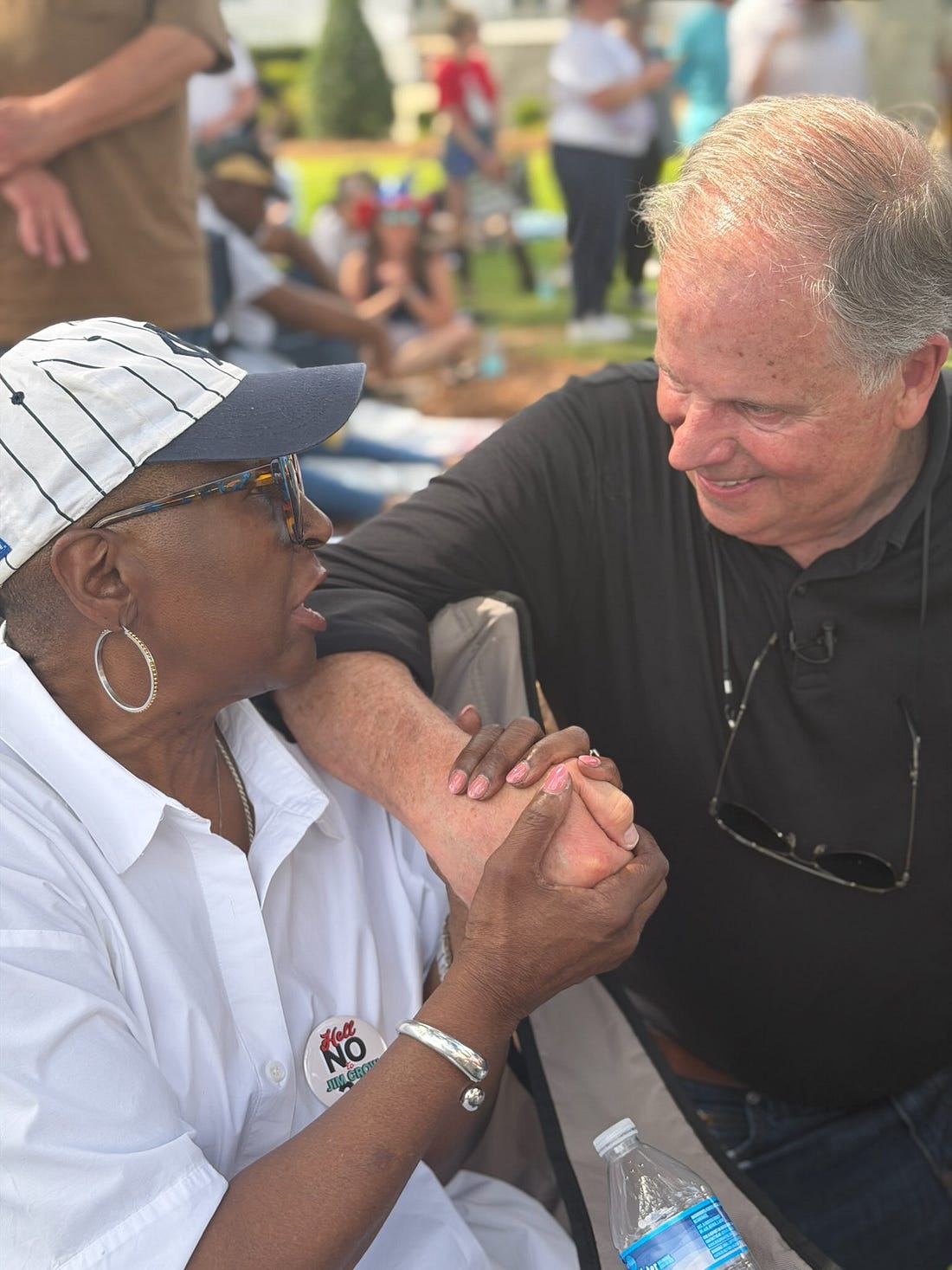 |
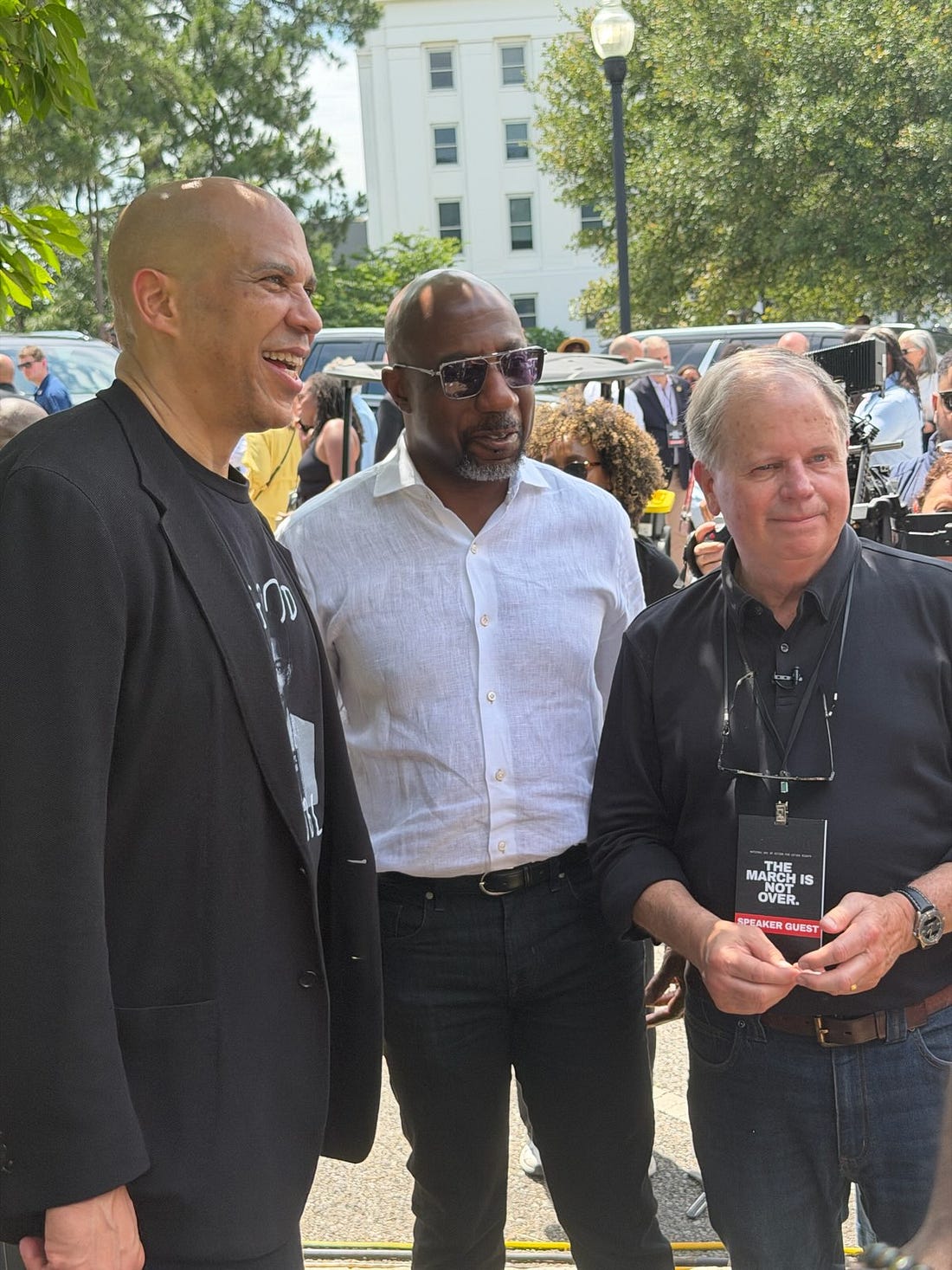
It was a day of solidarity, and perhaps a hint of local politics. That’s one of the Democratic primary candidates to be Alabama’s next Governor, Doug Jones, in the crowd of protestors in Montgomery today. He and Alabama Representative Terri Sewell, who we spoke with Thursday night, were joined by members of Congress including Senators Cory Booker and Raphael Warnock.
 |
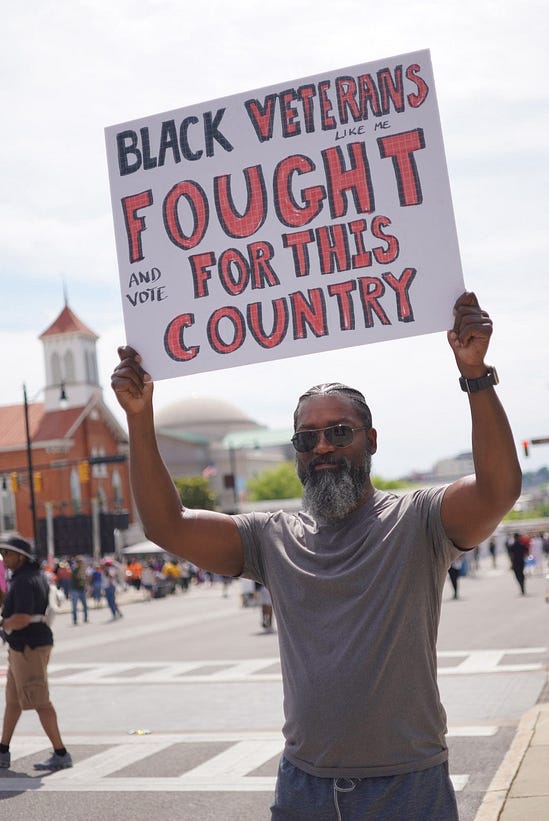
The protest was personal.
 |