Banca March’s private garden in Madrid, why investing in staff wellbeing pays dividends and the stories you missed.
|
Tuesday 26/5/26
|

|
|
London
Paris
Zürich
Milan
Bangkok
Tokyo
Toronto
|
|
|
|

Good morning from Midori House. For more news and views, tune in to Monocle Radio. Here’s what’s coming up in today’s Monocle Minute:
THE OPINION: Curators are ignoring Trump’s semiquincentennial censorship
HOSPITALITY: Investing in staff wellbeing pays dividends
DAILY TREAT: Visit Banca March’s private garden in Madrid
THE LIST: Stories that you might have missed
|
|
Trump wants to censor the semiquincentennial – but museums have other ideas
By Charlotte McDonald-Gibson
|

|
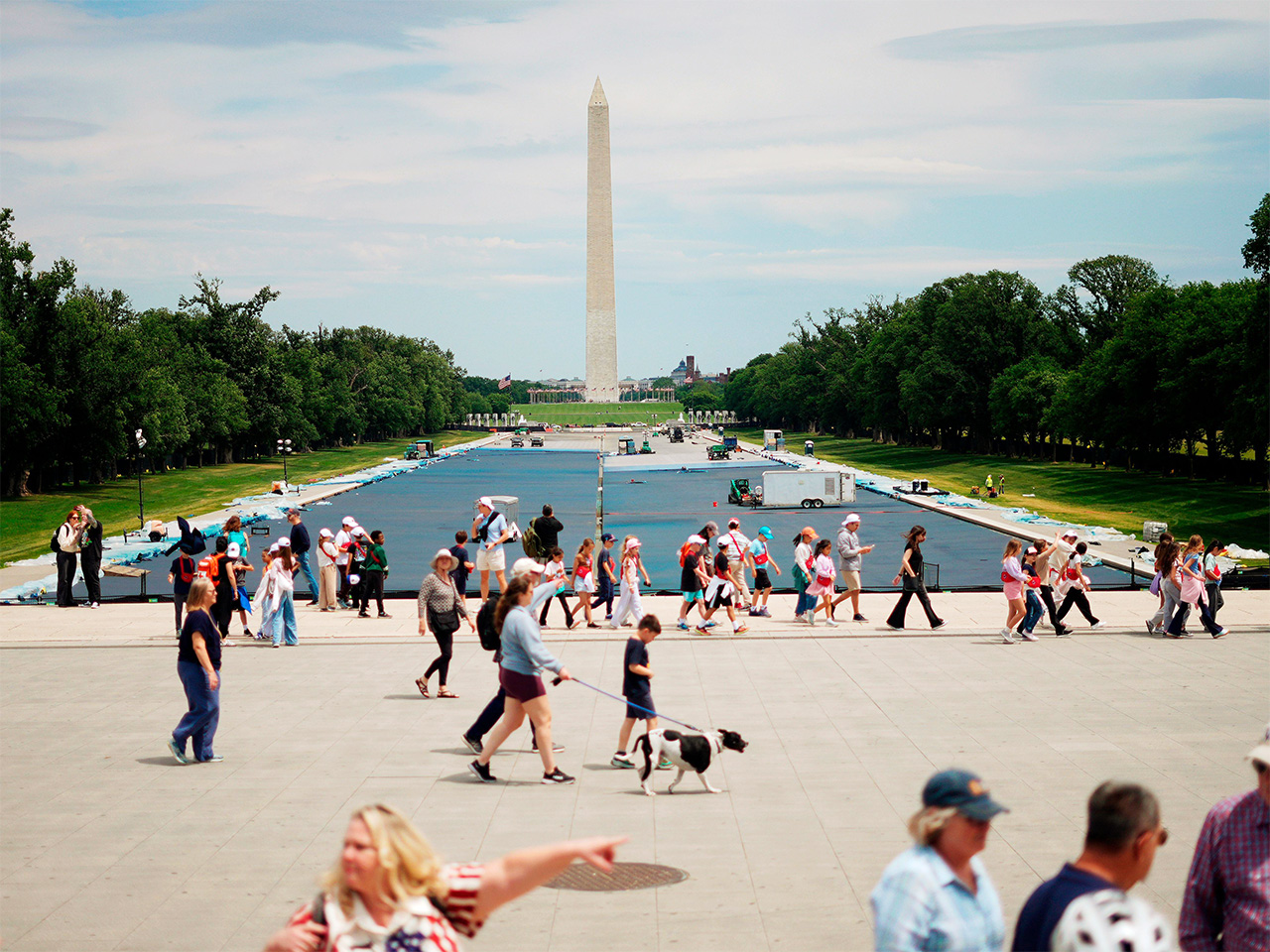
On the walk from the Metro to Washington’s National Mall, preparations for the US’s 250th independence anniversary are everywhere. Fences plastered with posters promising that the government is “making DC safe & beautiful” obscure historical sights. The Washington Monument peers through the buildings, beneath which its serene reflecting pool is currently being coated in a garish shade of beach-resort blue. Indeed, US president Donald Trump is painting the town red, white and blue.
At Freedom Plaza, workers are busy putting the finishing touches on a statue of founding father (and slave owner) Caesar Rodney, resurrected by the White House after being taken down in Delaware during the racial justice protests of 2020. Trump has a very specific vision of US history that he wants to celebrate this 4 July – one in which founders will be portrayed as saints and any moral complexity will be airbrushed from proceedings.
| |
|
Mirror of history: Trump is turning the Lincoln Memorial Reflecting Pool ‘American flag blue’
|
|
It makes for a challenging time to be a historian or curator in Washington. Grappling with the ambiguity of historical memory runs up against a president who insists that history’s role is to “remind Americans of our extraordinary heritage… not to be subjected to ideological indoctrination or divisive narratives that distort our shared history”. But how does one interpret that, when the US’s shared history is like that of all young nations: messy, chaotic and fraught with conflict, division and prejudice? “Our job is to create a space for reflection and to tell the truth about history, to tell the truth about where we’ve been as a country,” says Theodore Gonzalves, a curator at the Smithsonian’s National Museum of American History. “Within truth telling, there will be some uncomfortable aspects but it’s in the reckoning of it that people find the lessons,” he adds.
About four years ago, Gonzalves and a large team started sifting through the more than 1.7 million objects in the museum’s collection, searching for 250 items that represent key moments in US history. The result is In Pursuit of Life, Liberty and Happiness, an exhibition that opened on 14 May as part of the US’s semiquincentennial celebrations. But about halfway through preparations for the exhibition, Trump came into office and history suddenly became a lot more controversial. In March last year, Trump issued an executive order titled “Restoring Truth and Sanity to American History”, which laid out his complaints against museums – the Smithsonian in particular – for being too woke and promoting a “distorted narrative” of US history.
In Trump’s view, history should be a celebration of the past rather than an examination of it, contradicting the commonly held belief that we should learn from past mistakes to lessen the risk of repeating them. In December the White House wrote a letter demanding that the Smithsonian, which runs 21 museums, send it the details of every exhibition planned for the 250th anniversary, insisting that they all convey “a positive view of American history”.
However, the curators behind the new exhibition insist that their work has been unaffected. “We have a review process for exhibitions at the Smithsonian. This went through that review process as always and there were no changes,” says the chair of the museum’s 250th co-ordinating committee, Megan Howell Smith.
Gonzalves also insists that his vision was unaltered. “I didn’t feel affected and I don’t believe that our committee was in choosing the objects,” he says. Indeed, browsing the 250 items that Gonzalves and his team selected, there is little sign of Trump’s shadow. They run from the predictable (the portable desk upon which Thomas Jefferson drafted the Declaration of Independence; George Washington’s military uniform) to the whimsical (an electric Coney Island hotdog cooker from 1904; the first frozen-margarita machine).
Political objects appear carefully selected to reflect both sides of the divide – we have a red Maga hat and Nancy Pelosi’s gavel – although Gonzalves denies intentional bipartisanship. But there are plenty of objects that reflect collective struggles against the US’s historical prejudices: a dress worn by pioneering transgender actress Alexandra Billings, a wedding cake topper from a gay marriage and artefacts from the long battle for civil rights and racial justice.
For all Trump’s bluster, so far there have only been a few concrete examples of changes to exhibitions at the behest of the White House. Perhaps the president hoped that his threats would provoke collective self-censorship from the custodians of the nation’s history. But instead, he has unleashed a wave of creative thinking around the nature of reflection – exactly the birthday gift that the US needs.
Charlotte McDonald-Gibson is a Washington-based journalist and regular Monocle contributor. For more opinion, analysis and insight, subscribe to Monocle today.
|
|
hospitality: singapore
How looking after staff is paying off for the Maldives’ Patina Hotels & Resorts
Where do hotel staff go after their shift (asks Joseph Koh)? Too often, it’s a cramped, forgotten corner at the back of a resort, where fluorescent-lit quarters suggest how little thought has gone into workers’ wellbeing. But some high-end hospitality players are looking to change that. “We ask our teams to create transformative experiences but they’re living in conditions that we would never show our guests,” says Evan Kwee, vice-chairman of Singapore-headquartered Capella Hotel Group. “That contradiction troubled us.”
Hospitality businesses have a notoriously high turnover, with the annual rate in the US estimated at 70 per cent. As the mastermind of Capella’s Patina Hotels in the Maldives, which focus on wellness and renewal, Kwee embraced the opportunity to practise what he preached with the creation of Fari Campus in collaboration with design studio URBNarc. Based on a separate island, Fari Campus caters to Patina employees and to those working at The Ritz-Carlton’s neighbouring outposts. “Hoteliers are realising that investing in staff wellbeing is about more than just goodwill,” says Dave Moore, global CEO of WATG, the Hawaii-founded hospitality-design firm behind the Fari masterplan.
| |
|
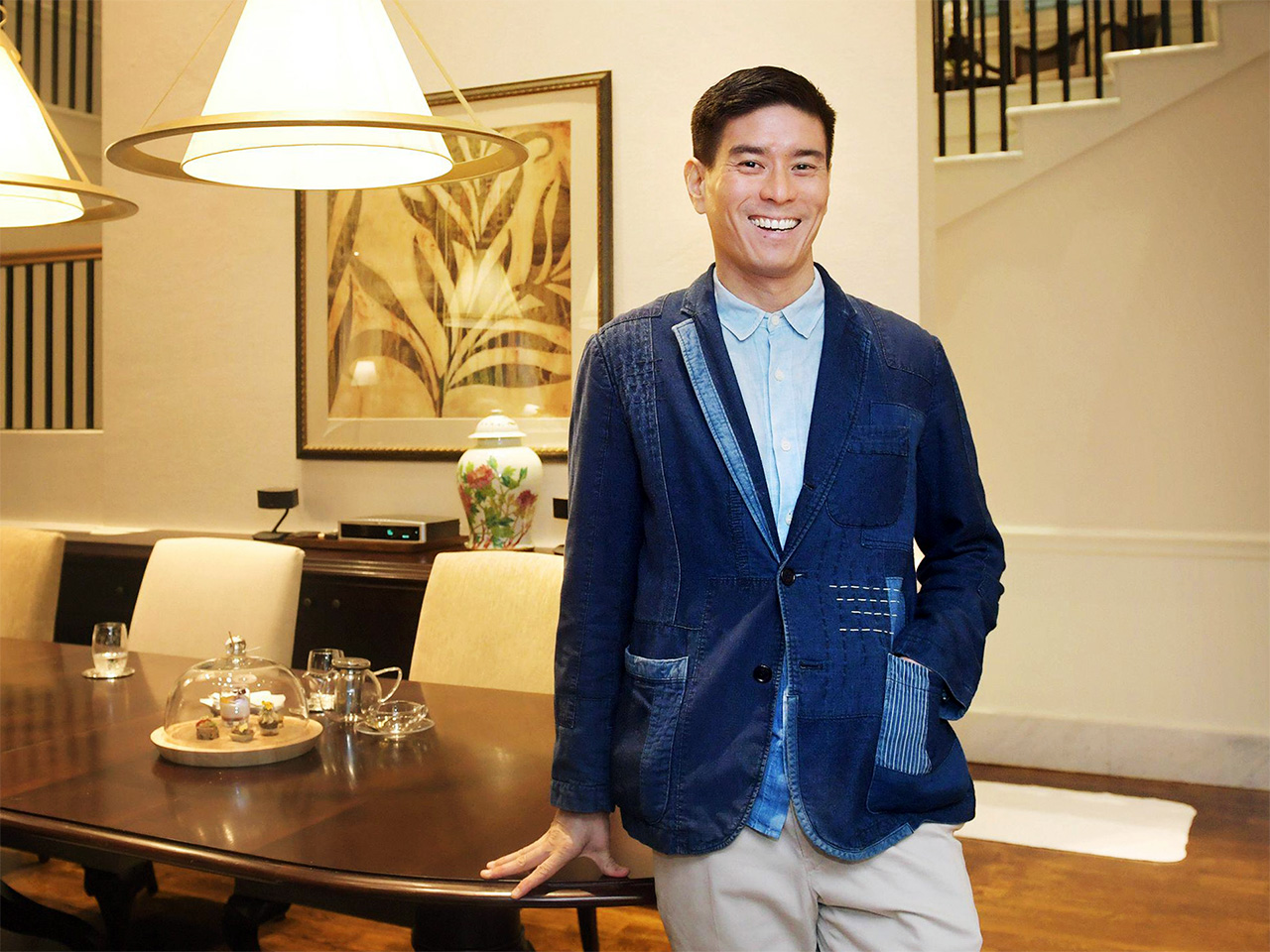
In good company: Evan Kwee
|
|
The benefits of Fari Campus are clear: a 15-minute boat ride away from their workplaces, staff have a clear distinction between work and leisure with a full-sized football field, volleyball courts, two restaurants, a private staff beach and even more at their disposal. “The staff feel like they’re really at home after they leave the [hotel] island,” says general manager Anthony Gill. “They know that they are not going to be called back; no guest or senior manager will be disturbing them.” Importantly, family members are granted access during certain seasons – a factor that is often overlooked in a demanding and anti-social industry. The outcome? At 13.3 per cent, Patina Maldives’ annual staff turnover is lower than all its competitors.
The new standard set by brands such as Capella means that businesses will have to think more carefully about design beyond the guest quarters. “Engaged staff deliver better service,” says Moore. “This drives repeat guest visits, loyalty and, ultimately, higher revenue.”
|
|
• • • • • DAILY TREAT • • • • •
Visit Banca March’s private garden in Madrid
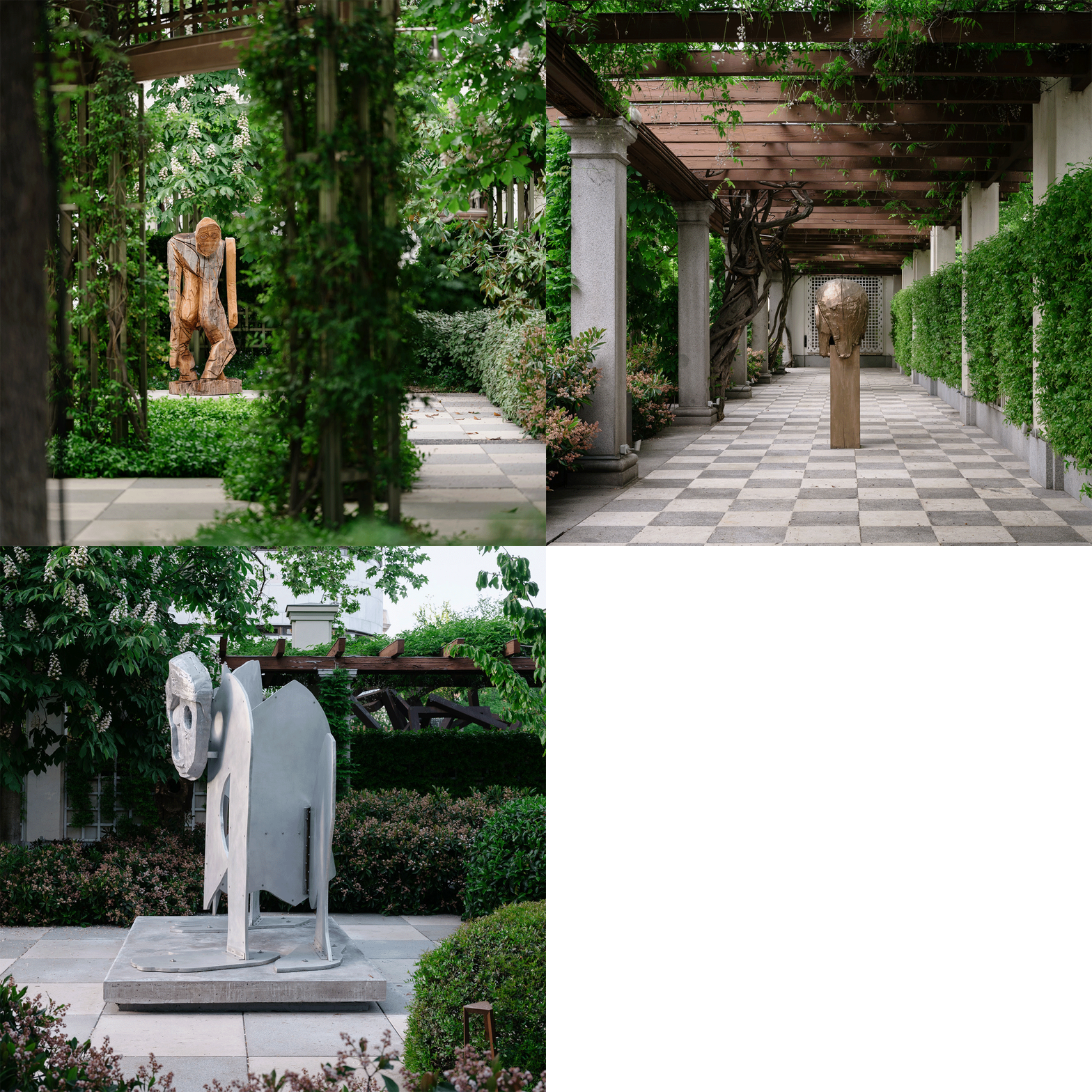
Every city has spaces that are only accessible to those in the know. In Madrid, family-owned investment bank Banca March has a private garden in the city centre that, as well as being widely unknown, is rarely open to the public. To celebrate its centenary, however, the gardens will open all summer and feature a sculpture exhibition by British artist Thomas Houseago.
The exhibition is Houseago’s first in Spain and features his giant figures hewn in aluminium, wood and plaster, hidden among the greenery. The exhibition is the perfect excuse to get some fresh air, pause and, possibly, even make some new friends.
Open until 31 October.
|
|
the LIST: FROM monocle.com
Stories that you might have missed
Not been on monocle.com recently? Here are three updates worth your while.
|
|
| | |