Lumina Foundation is working to increase the share of adults in the U.S. labor force with college degrees or other credentials of value leading to economic prosperity.
Last May, Lucy Mkandawire-Valhmu thought she’d overcome the greatest obstacle to getting a grant from the National Institutes of Health. Her study was ranked in the top third percentile of peer-reviewed proposals. But to date, the University of Minnesota-Twin Cities nursing professor says she still hasn’t heard when or whether she will receive funding. And she doesn’t know why.
Her yearlong delay is an acute consequence of a shift in American science: The NIH has been bankrolling significantly less new research compared to previous years. Thousands of projects are being held up, pushing lab budgets to the brink and disrupting the careers of even scientists who are leading their fields’ most cutting-edge work.
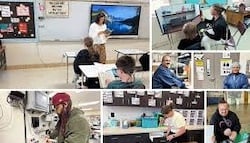
Student advocates say they’ve seen firsthand the benefits of apprenticeship programs on rural and otherwise underserved learners, as well as on the communities in which the apprentices are working and training. These programs can provide career paths in critical, often understaffed local sectors, such as education and health care, and encourage retention in these fields.
They also help combat rural brain drain by allowing apprentices to stay put, taking coursework and advancing their careers close to home. The model particularly suits older learners with families who must work full-time and may have limited or no experience in college. And these pathways can boost upward mobility in regions that tend to have limited economic opportunities and higher unemployment and poverty rates.
American colleges and universities have spent more than a decade investing heavily in data infrastructure, yet more technology leaders and higher education analysts warn that the industry’s obsession with accumulating information has paradoxically left institutions less equipped to help the students they serve.
The disconnect, experts say, is not a matter of resources or intention; it is structural. And it is playing out against a backdrop of accelerating workforce disruption that is raising the stakes for every student who walks through a campus door.
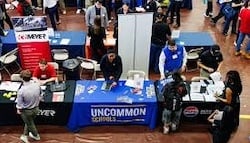
Today’s college graduates are entering one of the tightest job markets in years. The market is even tougher for young adults with autism, who have long had one of the highest rates of joblessness among individuals with disabilities.
To help autistic students land jobs, some colleges are offering career-readiness classes and one-on-one career coaching; some are also working with employers to make their hiring and employment practices more inclusive. Some major corporations have also stepped up, forming partnerships with colleges to recruit neurodivergent students for internships and jobs.
The college application process is an arduous, months-long journey, and the most valuable resource a student can have during this process is time. The students who submit the strongest applications are not necessarily the most academically proficient or credentialed, but those who start early, approach the process strategically, and devote ample time to brainstorming and editing.
For students anticipating college applications in the fall, that process begins now with three things every rising senior should have in place before the Common Application opens.
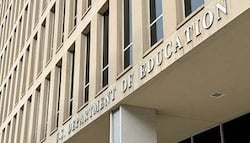
President Donald Trump's plans to close the U.S. Department of Education have run headlong into an awkward reality: The agency does important work that still needs doing. After losing roughly half its staff in last year's big reduction-in-force, the department's student loan office is in a hiring boom. The Office of Federal Student Aid is adding around 380 new workers.
The FSA is the central nervous system of the nation's $1.7 trillion student loan portfolio. It manages everything from communications with the nation's 43 million borrowers to repayment plans to the Free Application for Federal Student Aid.



.jpg?width=500&upscale=true&name=istockphoto-1479824277-612x612%20(1).jpg)