An illuminating Tokyo lights festival, amusing stories from monocle.com and the best in Bangkok retail.
|
Wednesday 27/5/26
|

|
|
London
Paris
Zürich
Milan
Bangkok
Tokyo
Toronto
|
|
|
|

Good morning. Andrew Mueller, host of ‘The Foreign Desk’, will be in Odesa this week for the Black Sea Security Forum. Tune in to his coverage from the security conference from Thursday through to the weekend. For now, here’s today’s Monocle Minute:
THE OPINION: What happened to the news grand finale?
URBANISM: The lights festival illuminating Tokyo’s urban fabric
DAILY TREAT: Suit up at The Decorum in Bangkok
THE LIST: And finally… amusing stories from monocle.com
|
|
The way that we consume the news has changed but we still need feel-good stories
By Hannah Lucinda Smith
|

|
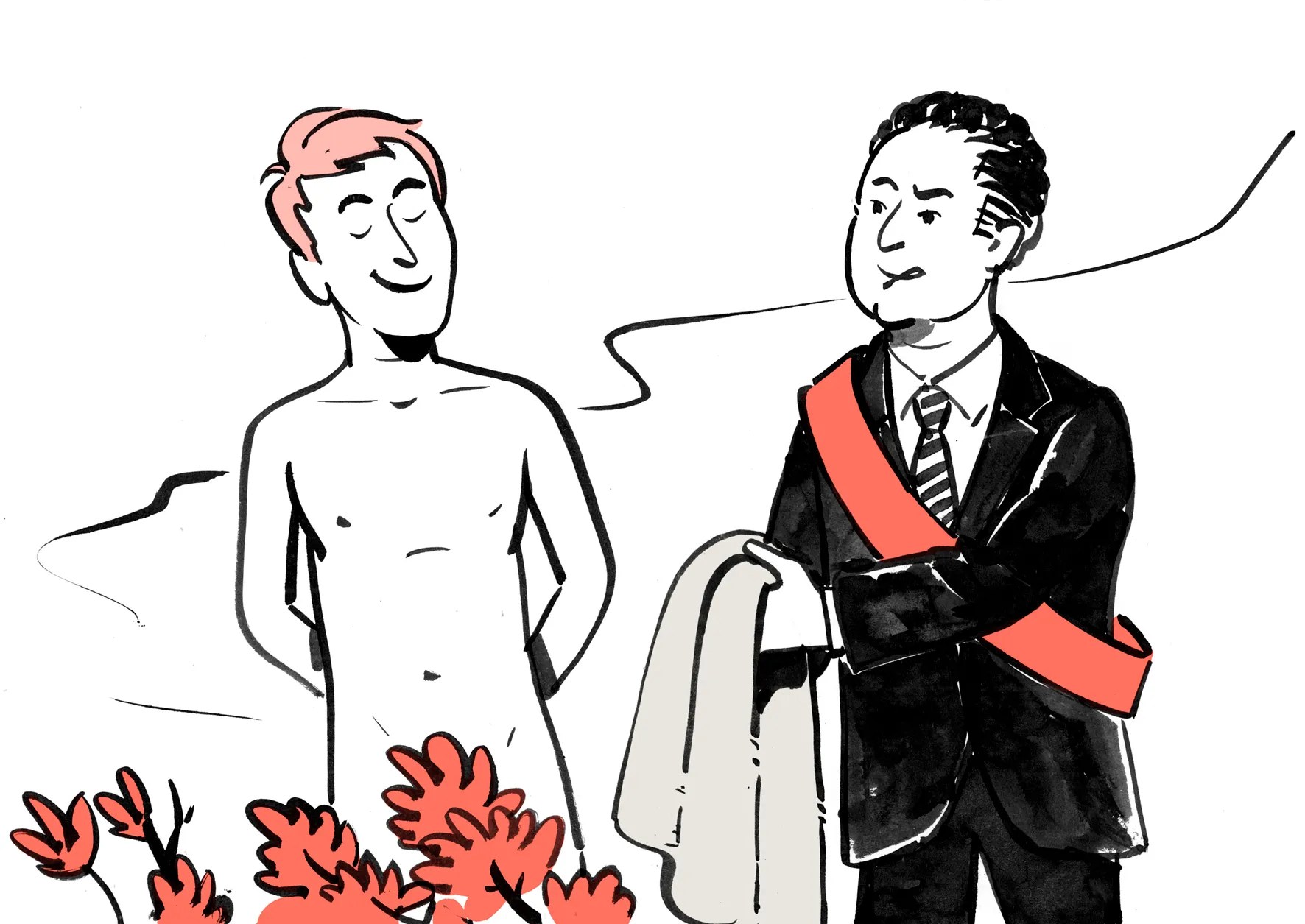
When was the last time you saw a news report about drunk mice living in a sherry distillery? Or about a grandmother taking up paragliding in her eighties? The first is one of the stories gathered by journalist Ryan Herman in his excellent book, And Finally…, a collection of tales from the light-hearted segment that traditionally comes at the end of the news. The second was a piece I saw on a Turkish news channel a decade ago that still makes me chuckle. Funny and heartwarming reports such as these were once a staple of bulletins around the world. They recognise that even on the darkest days people can still laugh. What’s more, they’re the stories that viewers and journalists remember most vividly: when I worked in the newsroom of BBC Midlands Today in the late 2000s, a package about a skateboarding duck called Herbie was still talked about in the office. It was broadcast in 1978.
But recently, the “And finally” seems to have gone missing from our news diet, a sad by-product of continuous news cycles and the atomisation of viewing habits. But the consequences for our national psyches are no laughing matter. In serious and divisive times, these funny segments are among the few things that we can all agree on. They transcend politics and perform a vital public service, even while appearing completely frivolous. Editors should think of ways to bring them back.
| |
|
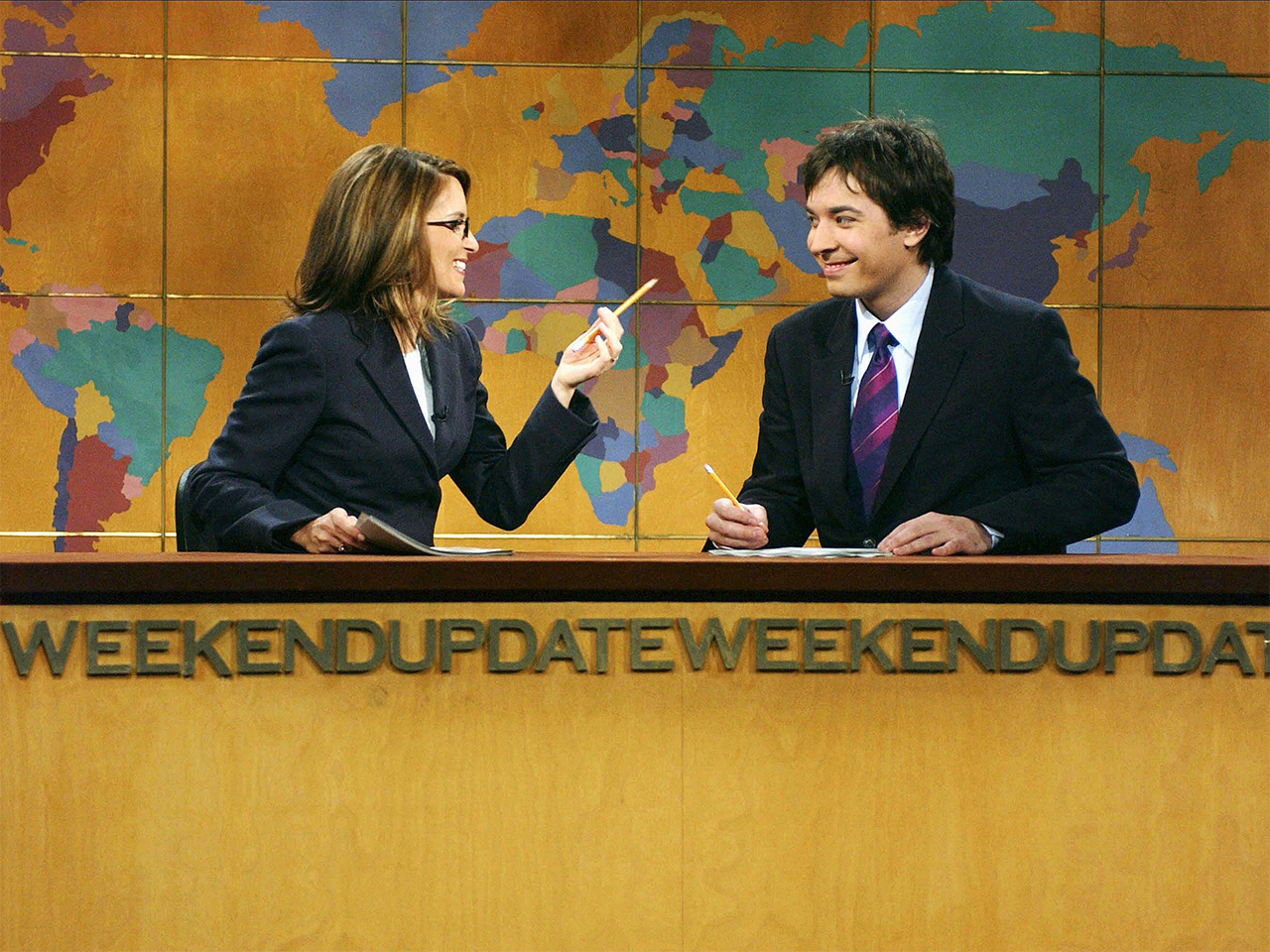
All over the map: TV needs light-hearted segments such as SNL’s Weekend Update
|
|
Their decline can be traced to the rise of 24-hour news channels. CNN and Sky pioneered the format, while the BBC launched its rolling news service in 1997. That turned news into an open buffet, where previously it had been a tasting menu – the “And finally” was a swift end-of-meal espresso, something to sweeten the palate and aid the digestion of the heavier stuff that had gone before. Viewers tuned in to the bulletins once or twice a day but with 24-hour news we can dip in and out at will or even get sucked into an eternal and rootless doom loop.
But it’s the addictive, algorithmic stream of social media that has really rolled the end credits on the “And finally…” moment. We pick and choose the stories that we watch rather than taking in a properly curated selection – and the finale never comes. What’s more, our brains seem to have been rewired to seek out catastrophe and outrage, rather than the gentle titillation of a lighter story.
However, if they have been rewired once, they can be rewired again. News organisations are agonising over how to pull in younger viewers but perhaps they should focus instead on the tone of the content that they are serving up. Rather than repackaging single news items for the web, how about producing slick, short news packs, which place snippets from serious stories alongside something to make us smile? As Herman’s book shows, the fun stories are still there, even if technology, news cycles and a more pessimistic outlook have pushed them out. When you pick up a good magazine or newspaper you can be confident of finding this balance but our screens tend to tilt us toward the serious or the silly. Signing off on a high note is the perfect antidote to today’s relentless news cycle.
Further reading:
- Why we need to nurture children’s media literacy
- Australia wants tech giants to fund journalism – but is it too little, too late?
- An ode to silly season: regrettably, journalism has lost its high-summer lull
- ProPublica’s new pitch: Finding whistleblowers on the Washington Metro
- How can we defend journalism in an age of declining press freedoms? One Berlin-based firm has the answer
Hannah Lucinda Smith is Monocle’s Istanbul correspondent. For more opinion, analysis and insight, subscribe to Monocle today.
|
|
urbanism: japan
Tokyo Lights 2026 is giving a glow-up to an overlooked district
Nishi-Shinjuku, home to Tokyo’s monumental city hall, was the capital’s first high-rise neighbourhood (writes Luke Tamada). Its inaugural skyscraper, the Keio Plaza Hotel, opened in 1971. In the following decades, the district doubled down and built towering office blocks that loomed over windswept plazas. Today, once office workers drift home, its pavements empty and much of the skyline goes strangely dark. But Tokyo’s long-underinvested night-time economy has become a key policy priority of the city’s governor, Yuriko Koike, who is seeking to spark more activity after working hours.
Every evening, the Tokyo Metropolitan Government Building’s façade transforms into the world’s largest projection-mapping canvas. Nearby, Shinjuku Central Park – once a sullen, underlit patch of greenery – has been revived as an open-air oasis with a children’s pool, futsal pitch and sprawling lawn. It’s a welcome corrective to the district’s longstanding gigantism and car-centric planning.
| |
|
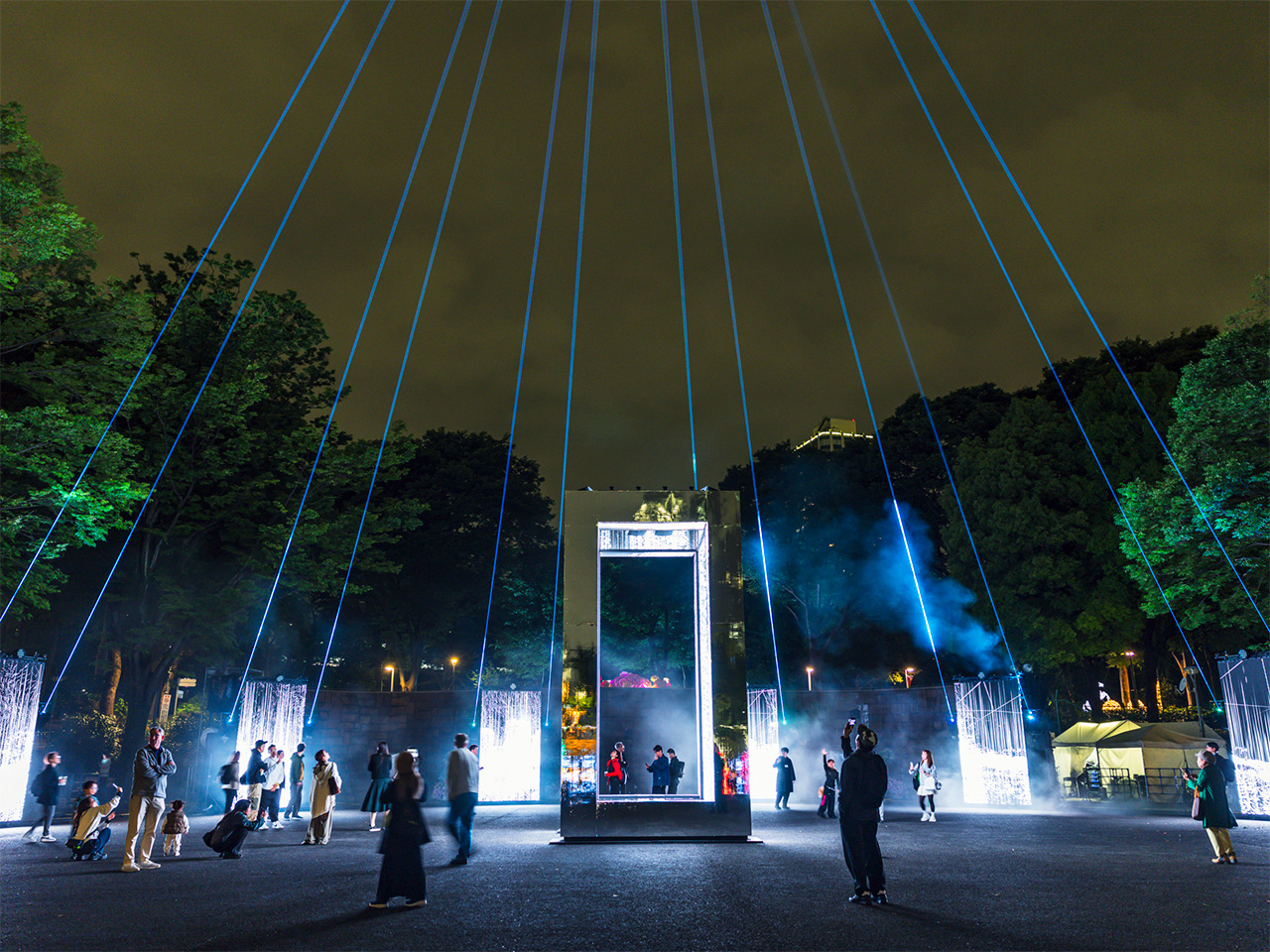
Laser focus: The festival sheds a light on ‘invisible Tokyo’
|
|
This week, the two spaces converge for Tokyo Lights 2026, an open-air festival of light art that is occupying both the TMG Building’s Citizens’ Plaza and the park. It is led by Kenji Kohashi – one of Japan’s foremost creative directors, whose credits span the 2020 Summer Paralympics closing ceremony and Expo 2025 Osaka – and features artists from Japan and abroad, including Yoichi Ochiai. They have been invited to illuminate what Kohashi describes as the “invisible Tokyo”.
“In today’s age of fragmentation, I want visitors to recognise the possibility for collaboration between artists and public space, generations and sectors,” says Kohashi. “If projects such as this became month-long or even permanent, Tokyo could better realise its potential, connecting regions, cultures and people.”
|
|
• • • • • DAILY TREAT • • • • •
Head to The Decorum for retail essentials in Bangkok
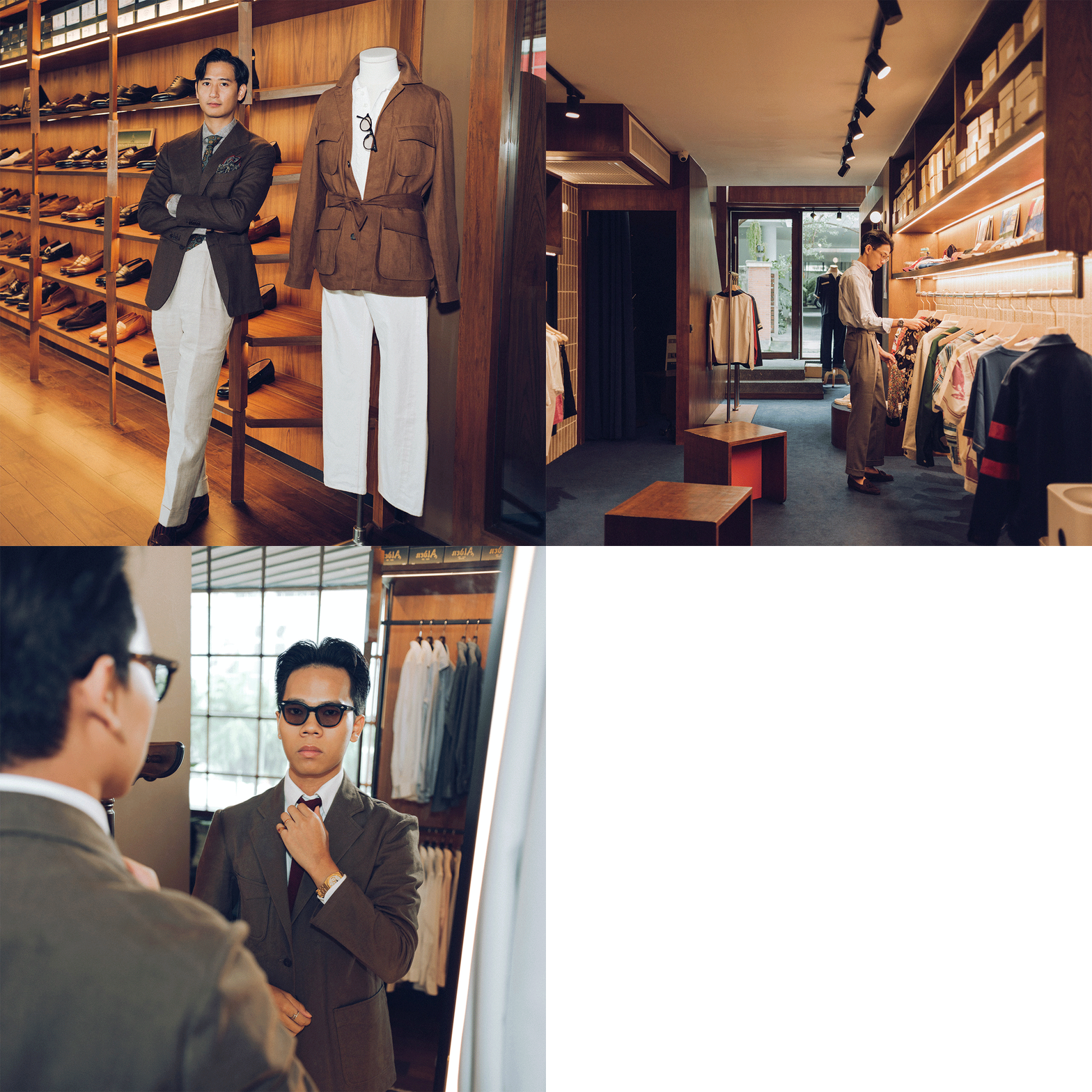
At the centre of Bangkok’s growing community of style-savvy residents sits The Decorum. The retailer, founded by Sirapol “Guy” Ridhiprasart and Warong “Ball” Phattharachaikul, caters to all aspects of a modern wardrobe.
Stock includes made-to-measure formalwear hand-sewn by tailors in South Korea, shoes from UK labels Baudoin & Lange and Crockett & Jones, Echizenya trousers and socks by Bresciani. The considered mix has rightly won over businessmen and high-fashion obsessives alike.
thedecorumbkk.com
|
|
the LIST: FROM monocle.com
Stories you might have missed
And finally... three amusing stories from monocle.com to take you away from the news cycle.
|
|
|
|
That’s right! I’m getting a facelift. Parisians will be sorry
|
| | |