|
Hello from Brussels. I’m Mared Gwyn, penning the newsletter again this morning. My colleague Angela Skujins will be with you tomorrow.
Later today, EU foreign ministers will gather in Cyprus for a dinner ahead of Thursday’s informal meeting – a six-monthly, intimate format which allows ministers to have frank dialogue.
High on their agenda is the question of whether the bloc should break the diplomatic isolation imposed on Russia in early 2022 and engage in direct peace talks. The idea, which has received public backing from Ukrainian President Volodymyr Zelenskyy, continues to divide member states, with some worrying the cons would outweigh the pros, my colleague Jorge Liboreiro writes in to report.
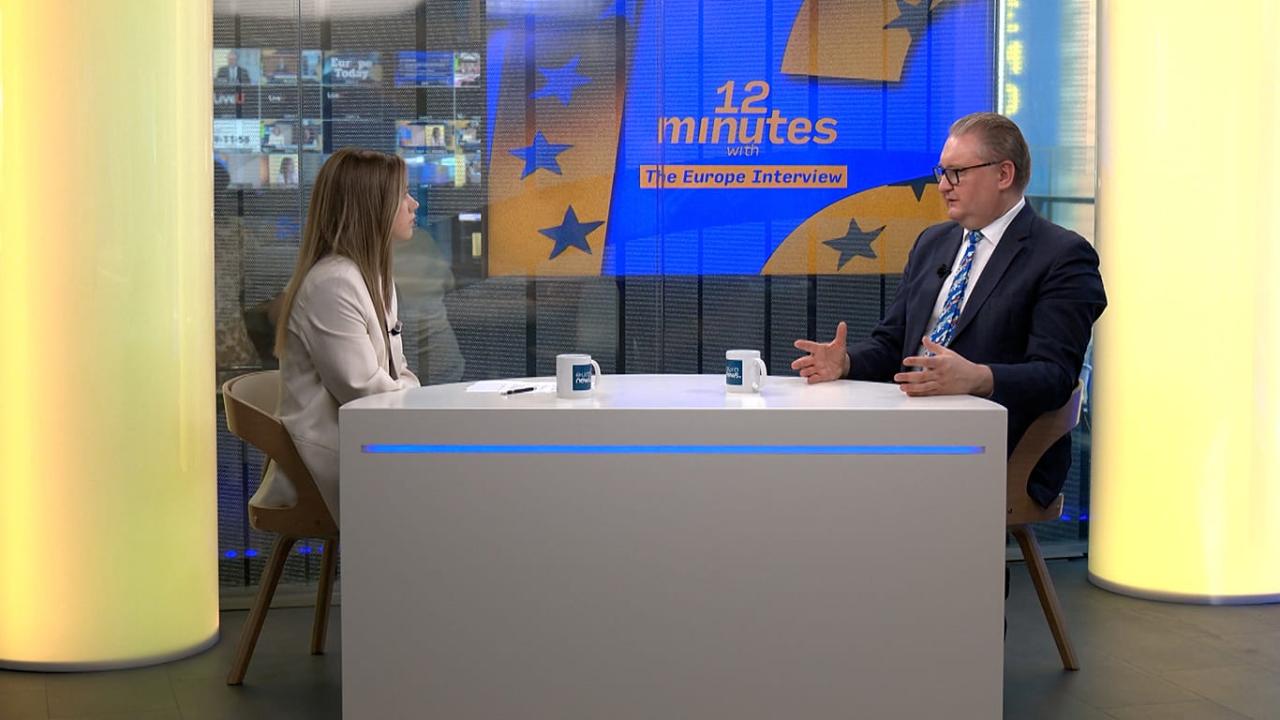
In an interview with Euronews on Tuesday, France’s Minister for EU Affairs, Benjamin Haddad, said Europe needs to “be ready” to have its “own diplomatic track” with Russia, but that “the priority now clearly is to continue to support Ukraine and to increase the pressure on Russia”.
Haddad’s cautious comments represent a walk-back of France’s earlier position. The French President Emmanuel Macron was one of the first promoters of opening diplomatic channels with Russia, and sent his diplomatic advisor Emmanuel Bonne for talks with the Kremlin in February, only to be rebuffed in comments by the Russian Foreign Minister.
Meanwhile, countries on Europe’s eastern flank have consistently been more cautious in their approach. Romania’s Foreign Minister Oana Țoiu, also speaking exclusively to Euronews on Tuesday, said that before “talking about any names or envoys” the EU needs to make sure it is consistently “increasing the pressure in terms of sanctions” on Russia.
Speaking from Lithuania on Tuesday, Estonian Foreign Minister Margus Tsahkna pointedly warned that direct talks would turn the EU into a “neutral mediator” expected to provide sanctions relief to Moscow. Meanwhile, Latvian President Edgars Rinkēvičs said that Russia would try to turn any outreach into a “PR game” and the EU would “end up more or less with nothing”.
“Russia really hates the EU and NATO as a collective force because then we're much stronger. They try to divide us. If we’re able to reach a common position, I think that Russia will lose the interest to negotiate,” Rinkēvičs said.
The debate among foreign ministers will take place against the backdrop of Russia’s open threat to attack European diplomats based in Kyiv, which Brussels has strongly rebuffed. “Kind of hard to talk to people who want to kill you,” a senior official told Jorge. A diplomat said that discussing names for a potential envoy was “simply stupid” at this stage.
Also worth your attention this morning: Giorgia Meloni’s biting criticism of the European Union.
At a gathering of industry leaders led by the powerful Cofindustria business lobby in Rome on Tuesday, Meloni told the audience the EU should do less better, describing the Union as a bureaucratic giant that sacrifices growth on an “altar of ideological, technocratic approaches”.
Meloni’s comments come amid brewing tension between Rome and Brussels. The Italian government expressed frustration at the Commission last week, arguing Brussels has done next to nothing to tackle the energy crisis as a result of the war in Iran. In a leaked letter, Rome argued Brussels must treat the situation as a real emergency and pitched a carve-out for energy measures in the bloc’s fiscal rules, as has been done for defence spending.
So far, the EU executive has dismissed the idea on the basis that extraordinary budget measures can only be applied in a case of serious economic downturn. This year, Brussels sees a slowdown in growth, but no recession.
But Meloni is also looking ahead to 2027 elections and to the prospect of securing a second term – and is determined to avoid a campaign marred by the cost of living and high energy prices. The opposition argues she has done little to cushion the impact of the crisis for Italian households and the industry. |