Hello!
It’s only a few days until the ultimate football tournament kicks off on June 11, and before anyone starts, I will be referring to the sport as football and not soccer. As a huge football fan, (who got to enjoy the Arsenal Premier League win parade on May 30 only days after my wedding) I am aware that most of the world does not call it soccer.
Most of us football fans look forward to this tournament with bated breath – taking in the vibes, seeing the kits of the different national teams and putting together fantasy football squads or cheeky bets. I still remember the buzz in the air and the sound of the occasional vuvuzela during the World Cup tournament in South Africa in 2010 as people walked around chanting parts of Shakira’s Waka Waka song.
But this World Cup feels different. From sky-rocketing ticket prices and hotels to the U.S. President Donald Trump’s immigration policy affecting team players, fans and even FIFA officials, this World Cup doesn’t have the same jubilant preamble as others did.
I’ll be taking a look at the World Cup from an environment, social and governance (ESG) lens. Before I get into it, here are a few weather and farming-related stories on my radar: |
|
|
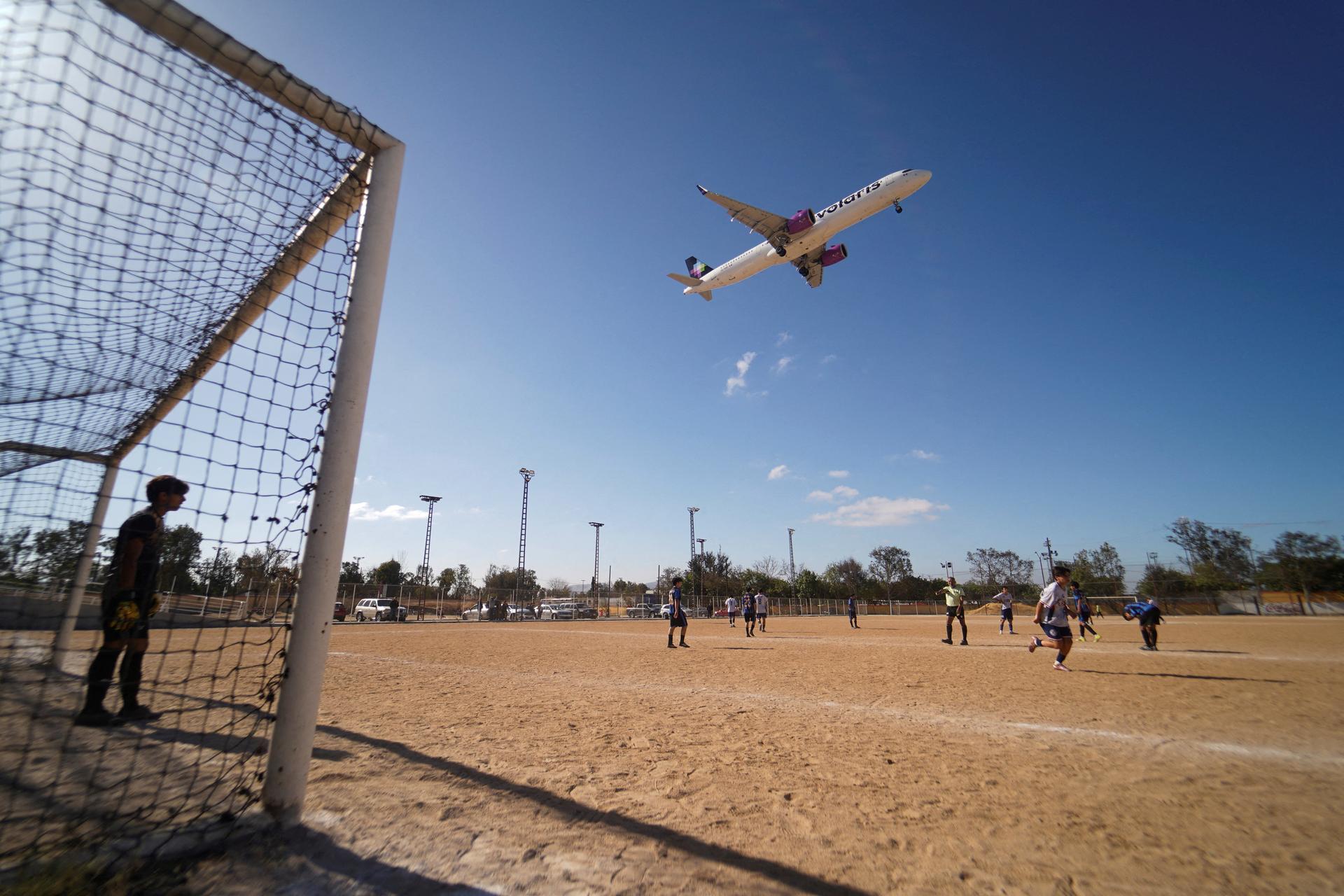
An airplane flies over a small football pitch, as the Iranian national team is set to establish its base camp for the FIFA World Cup 2026. Tijuana, Mexico. REUTERS/Victor Medina |
Most polluting World Cup ever |
First up, is the tournaments’ environmental footprint. Keep an eye on Thursday’s newsletter which will unpack how the heatwaves are expected to affect the games. The World Cup is expected to carry a climate cost more than double that of Qatar 2022, throwing a harsh spotlight on the environmental price of football's expanding showpiece.
The tournament's enlarged footprint will see 48 teams and venues scattered across North America and an assessment published last week by global carbon accounting platform Greenly estimates it could generate 7.8 million metric tons of carbon dioxide.
That is roughly equivalent to the annual emissions of 1.7 million cars, or the yearly emissions of Sierra Leone, making it the most polluting World Cup ever staged, according to academics and campaigners, driven mostly by the vast distances that teams, fans and media will travel across the three-country, 16-city format.
"I think the World Cup, in theory, is really fun for the sport and for visibility – but bad from a climate standpoint," author and sports ecologist Madeleine Orr told Reuters. Click here for the full Reuters deep-dive on the World Cup’s environmental impact and what FIFA had to say about it. |
|
|
|
Next are the social and governance issues relating to the World Cup.
FIFA’s last World Cup hosted in Qatar faced heavy scrutiny. I remember writing about the activists who scrutinized the host country over its human rights record and treatment of people in the LGBT community.
This time, rights groups have raised concerns over the safety of journalists and fans attending the World Cup in the U.S., accusing FIFA of allowing a "distinctively dangerous climate of fear" amid Trump's immigration crackdown.
Last year, Washington imposed a sweeping travel ban on citizens of 12 countries, including Somalia. This week, the U.S. denied entry to referee Omar Abdulkadir Artan, who had been expected to be the first Somali to officiate at a match in the World Cup. And after weeks of uncertainty, the U.S. awarded visas to all Iran’s World Cup players on Friday, just 10 days before Iran’s first match.
Iran's participation in the tournament has been clouded by uncertainty since the U.S. and Israel launched air strikes on the Islamic Republic in late February, triggering a regional conflict. |
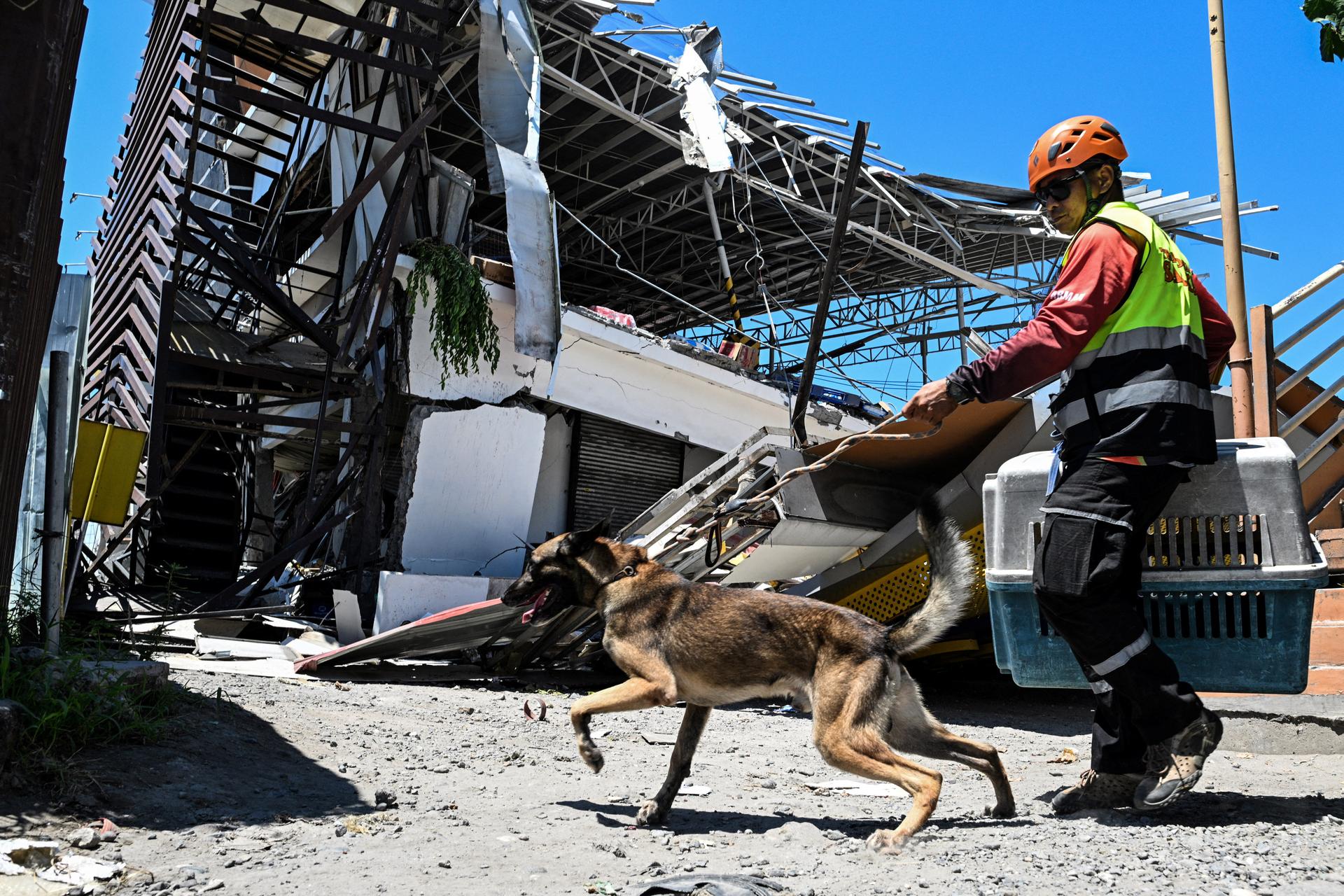
A rescue worker uses search-and-rescue dog to look for trapped people at a collapsed store a day after a quake in Calumpang, General Santos, southern Philippines. REUTERS/Noel Celis |
-
Philippines island earthquake: The death toll in a powerful 7.8‑magnitude earthquake off the southern Philippine island of Mindanao on Monday has risen to at least 37, with hundreds of people injured, disaster officials said, as Manila stepped up search and rescue operations. Rescuers searched the rubble on Tuesday of a collapsed building in the southern Philippine city of General Santos to reach two people still believed to be trapped inside.
-
New Zealand storm: Gale-force winds and rough seas battered New Zealand's capital of Wellington on Tuesday. A state of emergency has been declared for parts of Wellington as the weather bureau warned of waves up to 9 metres (29.5 ft) along the city's south coast, as authorities urged hundreds of residents along the city's south coast to evacuate.
-
Albania resort protests: Albania’s Prime Minister Edi Rama told Reuters on Monday that it will plough on with a luxury resort planned by U.S. President Donald Trump's son-in-law Jared Kushner on a remote stretch of Balkan coast despite persistent protests over its environmental impact on a protected wetland home to flamingoes, seals and sea turtle nesting sites.
-
Kenya park protests: Demonstrators took to the streets of Kenya’s capital Nairobi to protest plans to start building works in the nation’s national park, including a parking area for more than 1,000 vehicles, on one of its most famous protected areas. The Kenya Wildlife Service has defended the project, saying it will expand an animal orphanage on the site, Africa's only wildlife reserve within a capital city.
-
Libya protests: Hundreds of Libyan demonstrators blocked off the office of the U.N. refugee agency (UNHCR) in Tripoli last week during a protest against migrants who travel to Libya in search of work or passage to Europe. It was the largest of several recent demonstrations against migrants, whom some Libyans blame for social and economic problems that have become more visible during 15 years of conflict and political division in the North African country.
|
|
|
|
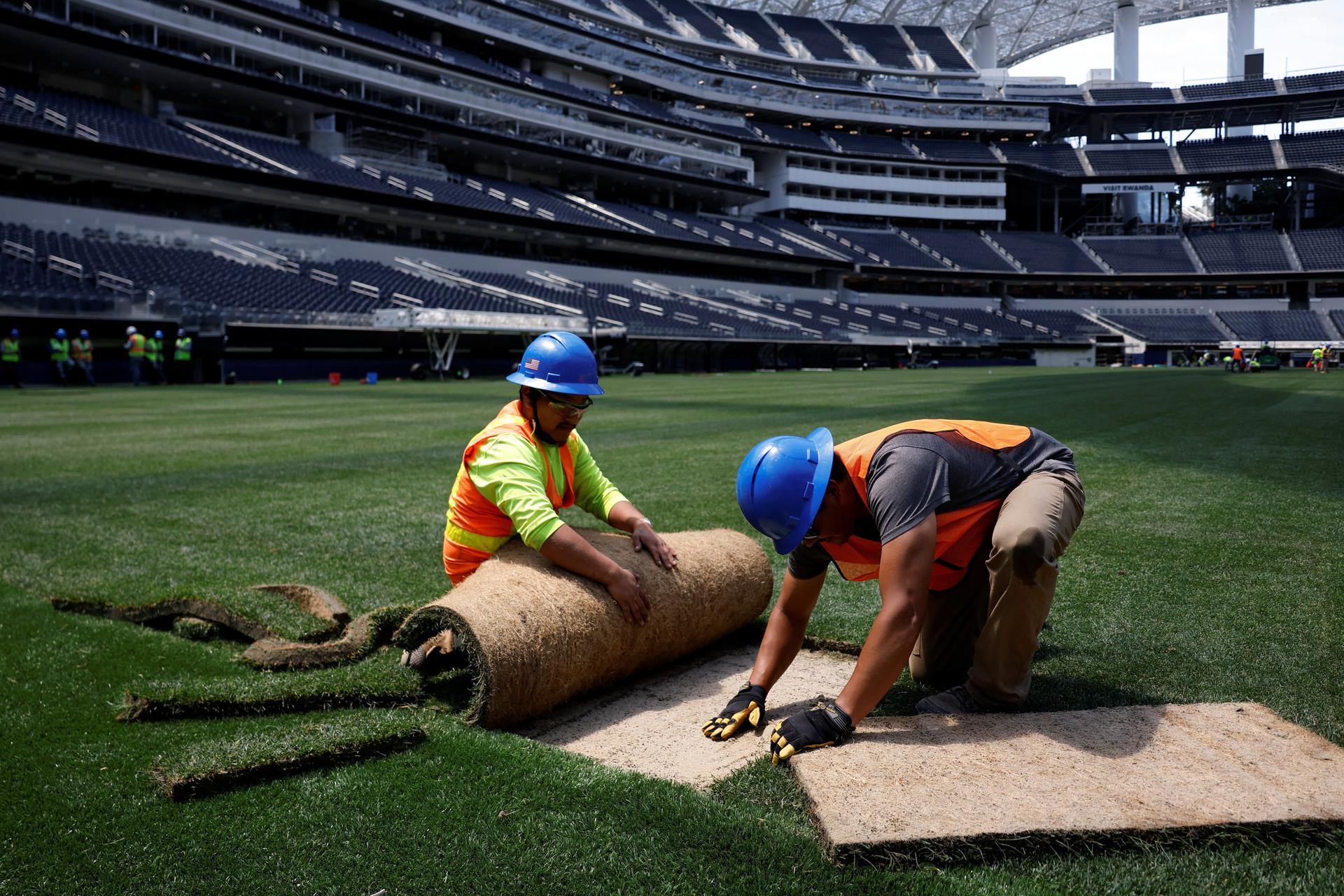
Workers install a patch of grass to be used as part of the pitch at SoFi Stadium, ahead of the FIFA World Cup tournament, in Inglewood, California, U.S. REUTERS/Caroline Brehman |
In keeping with the focus on the World Cup, our spotlight today covers the science behind the perfect pitch.
Click here for an insightful graphics-led piece on what it takes to withstand the demands of a modern football game as natural grass alone doesn’t do the trick. Instead, the green surface that millions will watch through June and July is the result of a process that began months earlier — a living floor built to perform under the world’s gaze. |
|
|
|
|