
|
 |
Fighting for journalism and profitable news media
UK publishers to invoice AI companies over stolen content
Plus: top 50 English-language news sites ranking shows traffic collapse for Indian sites and SPUR coalition announces framework for tracking publisher content on AI platforms
|

| |||||||||||||||


Good morning from the team at Press Gazette on Monday, 15 June.
Press Gazette’s awards for the best digital journalism products (newsletters, podcasts, websites, etc.) are now open for entries. Find out more here ahead of the deadline in one week’s time.
 |
👏 I don’t often punch the air whilst listening to Keir Starmer speeches but I did this morning when he announced a social media ban for under-16s.
With my ‘dad of teenagers’ hat on I think the policy makes a lot of sense. But with my ‘Press Gazette’ trilby on it sounds like the UK government is finally going to stand up to US tech platforms in the national interest (something that will be good news for indigenous news media).
It suggests to me that the CMA may follow through on promises to level the playing field a little with tech platforms, as publishers start fighting a rear-guard action against the takeover of their world. Today we report on two big developments in this area.
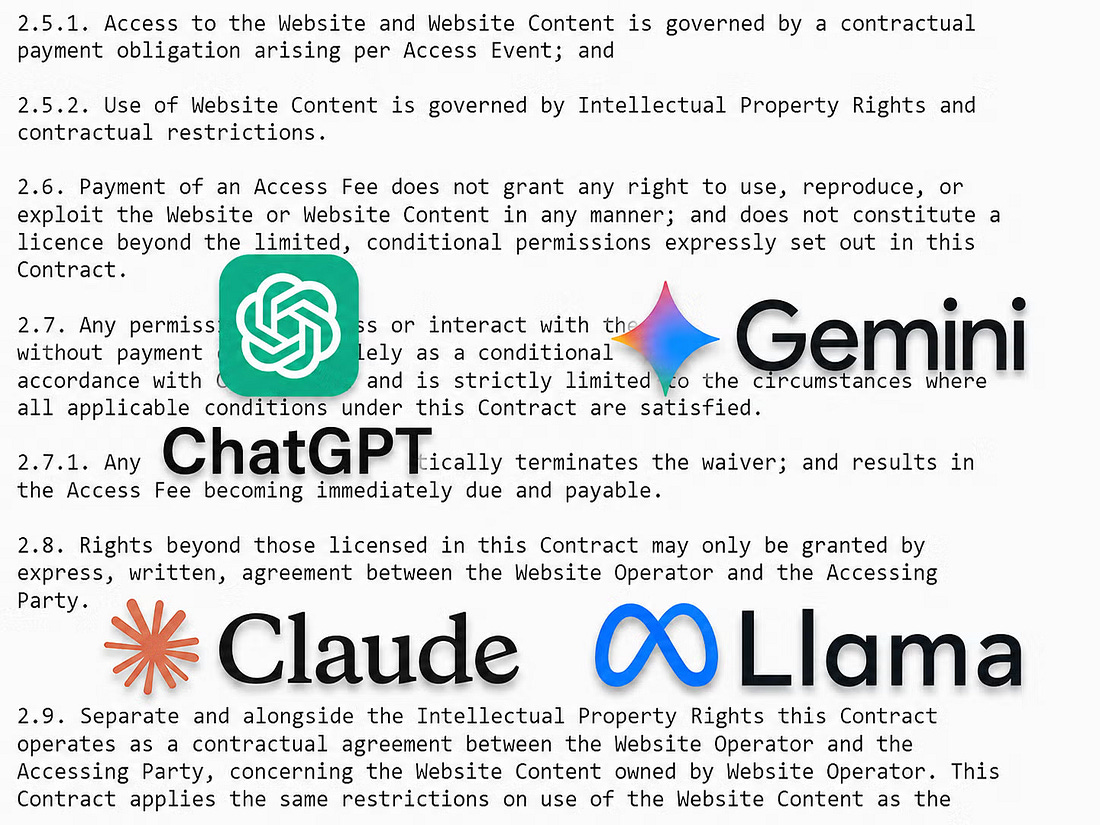
These contracts are legally-binding terms that have already been added to robots.txt notices on more than 30 websites and set out the conditions under which AI bots can access website content.
Copying and repurposing articles incurs a fee under these contracts, typically £500 per article instance, which publishers such as Candr Media Group could invoice the likes of OpenAI and Google for.
These contract-backed website terms mean if OpenAI and others don’t pay for the stuff they have stolen, enforcing payment should be a simple matter of debt enforcement via a county court.
Claiming for millions in damages takes years. The process around small claims under £10,000 is much simpler and quicker.
This could be the point at which a news industry under attack from tech platforms decides to ‘rush the bullies’.
 |
🤖 2) Meanwhile, the SPUR coalition of news publishers has set out the technical framework under which AI use of content can be tracked and (hopefully) paid for.
These two initiatives could work in tandem. As legal actions add friction to the sourcing of publisher content, the SPUR initiative should make it easier for tech companies to negotiate legal and seamless access.
It has been reported that the LLMs spend $1bn a year with third-party organisations that copy and traffick copyrighted website material. At some stage it could become cheaper and more effective to simply pay publishers themselves for material.
 |
📉 Finally, the latest Press Gazette top 50 news websites global traffic ranking shows why this has all become so urgent.
The rise of zero-click searches (mainly on Google) has seen 42 out of 50 of the world’s most popular news websites lose traffic year on year.
Traffic to softer evergreen stories, which often subsidise breaking news, has been massacred by Google AI Overviews which sum