Lumina Foundation is working to increase the share of adults in the U.S. labor force with college degrees or other credentials of value leading to economic prosperity.
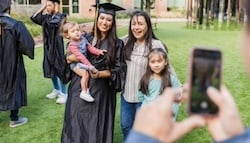
When Marissia Simmons left college in 2016 to care for her ailing father, she thought she was pausing her education. Instead, life unraveled. In less than a year, Simmons lost her sister, her aunt and then her father. At 24, she found herself grappling with overwhelming grief and uncertainty. Then she learned she was pregnant.
Simmons spent years in survival mode, working jobs in fast food restaurants and warehouses while raising her daughter largely on her own. That's when Simmons, now 32, came across a Facebook post about Generations College’s Single Parent Scholarship program.
Elite private universities’ legal and lobbying bills have soared as schools try to counter the Trump administration’s attack on top institutions, university tax returns reveal. Some universities’ tax returns show that their legal bills have more than doubled. Others report that their spending on lobbying has risen at least fivefold.
Major universities have long worked with outside law firms and lobbyists. But the Trump administration’s campaign is prompting many top schools to shell out even more as they try to preserve research funding, navigate investigations, and dodge the wrath of a White House bent on remaking academia to its liking.
As California seeks to ensure that more financial aid dollars reach high school graduates, schools in San Diego County are using persistence and persuasion to encourage more students to apply for aid.
The results, so far, have been promising. The percentage of students in San Diego County who completed the Free Application for Federal Student Aid form rose from 49 percent in 2019 to 65 percent in 2026, mirroring a statewide trend. California's effort has taken different forms. Some educators have enticed students and families with food; others are using data to track those who have not completed FAFSA forms.
Transferring academic credits is a perennial challenge in higher education. Coursework at one school may not align with the requirements at another. Students may have to retake classes, spending more money and time on their education. And the frustration of it all can derail students from earning bachelor’s degrees.
As students finish the school year and prepare for the next, many colleges and universities are working to simplify the transfer process so that more students can complete their degrees.
Over the past month, graduates across the country have booed and jeered college commencement speakers at the very mention of artificial intelligence. That’s no surprise. Recent polling suggests the technology is a major concern for those already in the job market and those who seek to join it.
In this interview, college graduates discuss how they’re navigating the unpredictable economy and how AI factors into their job search.
It’s been six months since "Claudia" first applied to renew her U.S. immigration status—an undertaking that, for the last 14 years, would only take a few weeks. But now, the prolonged delay under the Trump administration has put her life on hold. Claudia, who moved to the United States when she was four, has maintained legal status as a “Dreamer” with the Deferred Action for Childhood Arrivals program.
For Claudia, the DACA renewal delay means that the years of work she put into her education and starting a career are now at risk.


.jpg?width=500&upscale=true&name=istockphoto-2218448836-612x612%20(3).jpg)