| | In today’s edition: Republicans find themselves divided over the Iran deal, and Bernie Sanders prepa͏ ͏ ͏ ͏ ͏ ͏ |
| |  | Washington, DC |  |
| |
|
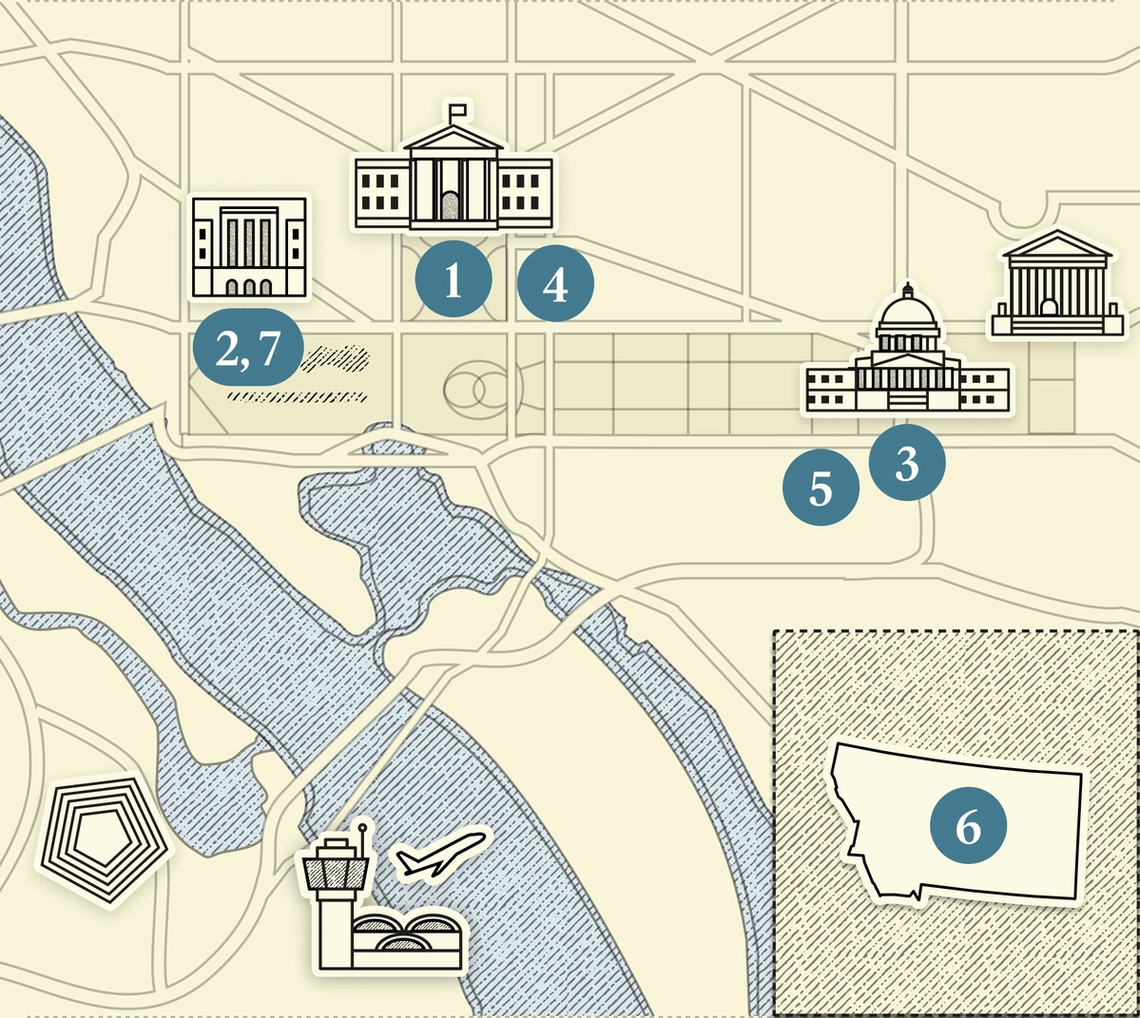 - Iran deal criticism
- US-Israel ties hit
- AI proposal drops
- Capital rules debate
- Health cost struggle
- Montana Senate race
- Dems’ new foreign policy
PDB: Bipartisan duo pushes wildfire hazard pay bill  Gas prices below $4 for first time in months … A-listers expected at Obama’s presidential library opening … EU leaders meet in Brussels |
|
Republicans’ concerns over Iran deal |
 Republicans are sharply divided over the memorandum of understanding with Iran that President Donald Trump’s administration shared yesterday. Sen. Bill Cassidy, R-La., called it a “lousy deal,” and Sen. John Cornyn, R-Texas, said he’s “concerned about” the agreement: “I’ve heard it described as an intermission, unfortunately leaving Iran with the capability to rebuild its arsenal and continue enriching uranium.” His Texas colleague, GOP Sen. Ted Cruz, is warning against the agreement too, telling Semafor “it’s fair to say” he’s not a fan. Not everyone agrees: Some framed the agreement as better than ground troops. That “would be terrible, so this is better,” said Sen. Josh Hawley, R-Mo. Sen. Ron Johnson, R-Wis., said the deal recognizes “reality and oftentimes that’s not fun to do.” Meanwhile, Trump on Thursday lashed out at “fools” who criticized his deal as soft on Iran, saying they were “jealous, bad people, or stupid.” — Burgess Everett |
|
Israel seethes over US-Iran truce |
|
Sanders preps AI bill for primetime |
 Kylie Cooper/Reuters Kylie Cooper/ReutersLawmakers will have a new artificial intelligence proposal to chew over later today when Sen. Bernie Sanders, I-Vt., introduces his bill to hand the public a direct ownership stake in AI. The plan would charge large AI companies a one-time 50% tax paid in stock and put it in a sovereign wealth fund — which Sanders says will be worth some $7 trillion, per the AP. The proposal isn’t far from Trump’s own idea of seeking a government stake in leading AI companies, though his advisers are still debating what that might look like. Sanders faces a tough crowd on Capitol Hill, where lawmakers in both parties have voiced skepticism of the proposal, even as they grapple with how to address AI’s economic risks. “I don’t think that’s the place of the US government to be involved in private companies,” Sen. Angus King, I-Maine, recently said. — Morgan Chalfant |
|
Banks opine on new capital rules |
 Evelyn Hockstein/Reuters Evelyn Hockstein/ReutersToday is the last day for banks to weigh in on US regulators’ latest proposal to overhaul capital requirements, which is poised to deliver one of banks’ top priorities by allowing them to keep less cash on hand, following more than a decade of debate. Previous attempts to implement the international banking reforms known as Basel III, crafted in response to the Great Recession, have stalled amid industry opposition. While progressives warn the most recent language could leave the financial system vulnerable, banks are largely satisfied. Still, trade associations will ask regulators to further eliminate overlap between the new rules and two separate sets of capital requirements that are imposed on systemically important banks and as part of the Federal Reserve’s annual stress test. They’ve also flagged provisions they say would make it more difficult for banks to issue credit cards and mortgage loans. — Eleanor Mueller |
|
Americans struggling to pay for healthcare |
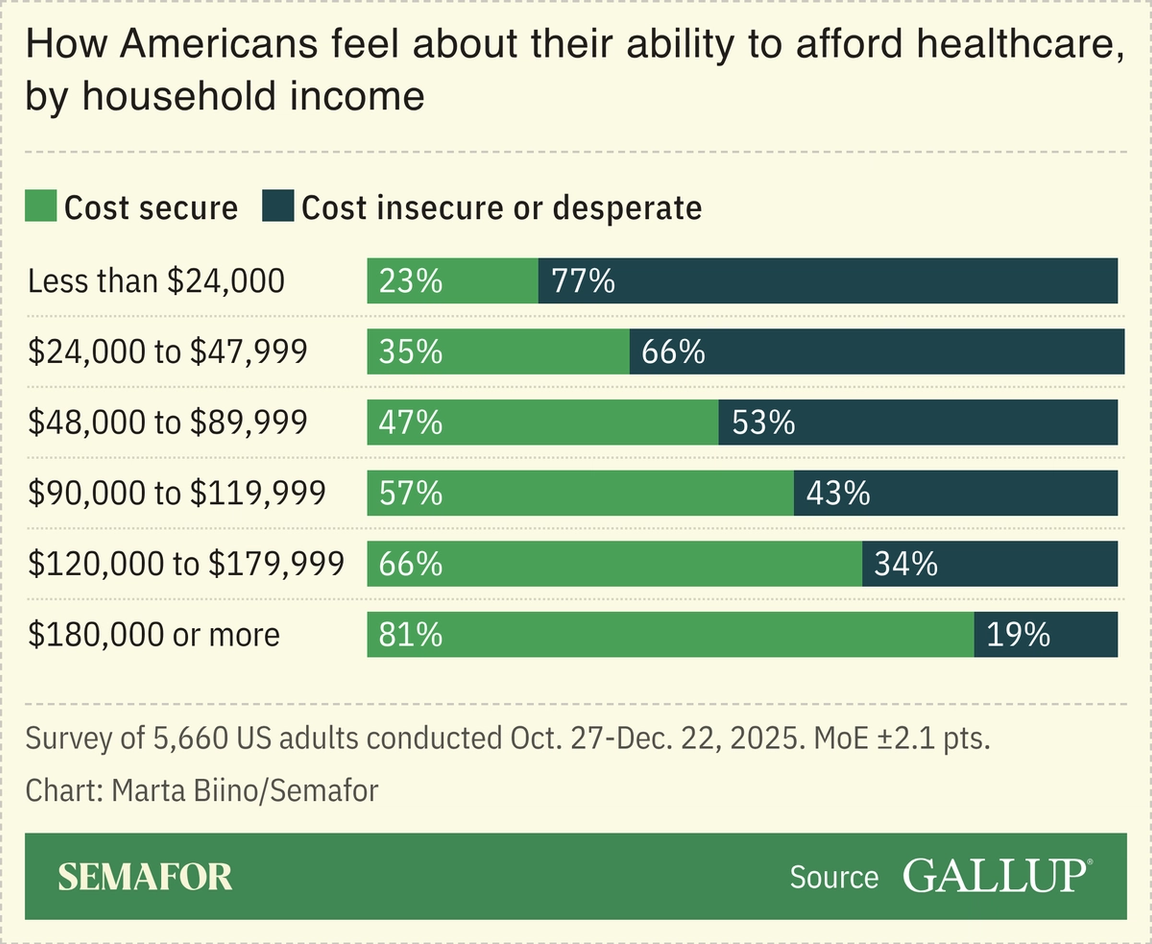 The share of Americans who are secure about their healthcare costs — meaning they can access quality healthcare and afford the medicine and care they need — fell to a five-year low of 49% last year, a new Gallup and West Health poll found. Forty-one percent are “cost insecure” — meaning either they don’t have access to good, affordable care or were recently unable to pay for care or medicine they needed. Healthcare costs promise to be a leading issue in the midterm elections, and they’re a challenge for Americans of all income brackets, to some degree; 34% of those living in households making between $120,000 and $179,999 aren’t cost secure. And while older Americans tend to be covered by Medicare, the share of adults 65 and older who are cost secure still declined from 69% in 2024 to 61% last year. |
|
Divided Montana Senate field helps GOP |
 Bodnar photo credit: Todd Goodrich/University of Montana Bodnar photo credit: Todd Goodrich/University of MontanaDemocrats and independents are divided between two candidates running against Republican Kurt Alme in Montana’s Senate race, according to a poll first shared with Semafor from Public Opinion Strategies. The survey, commissioned by The Political Company, shows Alme with a healthy 19-point lead because Democrat Alani Bankhead and independent Seth Bodnar are splitting the remainder of the vote. Alme has 44% support, Bankhead receives 25%, and Bodnar has 20%, per the poll. And while Alme’s coalition is composed of mostly Republican voters, Bankhead is getting more support from liberal Democrats, and Bodnar is strongest with independents and moderate Democrats. Altogether, the three-way race dynamic gives Alme a significant advantage — and Bankhead called Bodnar “the last person on the face of this earth I would ever drop out of this race for.” Republicans are also +12 on the generic ballot in the state. — Burgess Everett |
|
View: Dems’ post-Trump foreign policy |
| |  | David Weigel |
| |
 Annabelle Gordon/Elizabeth Frantz/Kevin Lamarque/Reuters Annabelle Gordon/Elizabeth Frantz/Kevin Lamarque/ReutersOn his way to the Yankee Doodle Day parade, Democrat Matt Maasdam tried to explain why his party had lost Michigan’s 7th Congressional District. Sen. Elissa Slotkin, a former CIA analyst, won the seat three times on her national security experience. But even as she ascended to the Senate, Rep. Tom Barrett picked it up for the GOP by touting his experience fighting in Iraq and Afghanistan while Trump carried the district on pledges to end wars in Ukraine and Israel. “People voted for no foreign wars and lower prices,” said Maasdam, a Navy SEAL turned candidate. “They got the opposite.” Now Maasdam is trying to stand for a break from Trump — but not a return to the pre-2016 world. To retake the House, Democrats will need to succeed in districts like his, where they had a breakthrough in 2018 with national security-focused candidates. |
|
 Live from the Côte d’Azur — starting next Monday, Semafor will be on the ground at Cannes bringing you the sharpest insights from packed panels, beachside conversations, late-night parties, and yacht meetings. Semafor is bringing back its popular Semafor Cannes newsletter, a free pop-up briefing covering the key moments shaping media and marketing’s biggest gathering. Whether you’re there in person or following from afar, consider it your insider guide to everything that matters. Subscribe to Semafor Cannes. |
|
 Stories that are being largely ignored by either left-leaning or right-leaning outlets, curated with help from our partners at Ground News. What the Left isn’t reading: The Department of Homeland Security said Immigration and Customs Enforcement agents arrested a Brazilian national with alleged foreign terrorist ties in North Carolina. What the Right isn’t reading: The Justice Department filed legal challenges to Virginia state laws that bar ICE agents from wearing masks and curtail cooperation between federal immigration enforcement and state and local authorities. |
|
 Beltway NewslettersPunchbowl News: “Who doesn’t like John Thune?” Sen. John Kennedy, R-La., said, as tensions rise between the Senate majority leader and President Trump. “If you don’t like John Thune, you don’t like golden retrievers.” Playbook: Sen. Elissa Slotkin, D-Mich., is introducing a bill that would “limit the president’s ability to deploy troops or armed federal agents to polling sites or seize election material.” Axios: A Republican operative said: “The people attempting to hurt [Vice President JD] Vance, by trying to brand the deal to end the war around him, must either be morons who don’t know how to read polling, or secret allies purposely trying to help his future political prospects.” White House Eric Lee/Reuters Eric Lee/Reuters- The Atlantic got leading algae experts’ take on the re-
|
|
|


