| | In this edition, Warsh moves the Fed back behind the curtain, and private equity is in for a reckoni͏ ͏ ͏ ͏ ͏ ͏ |
| |  | Business |  |
| |
|
 - A more secretive Fed
- Weaponizing oil
- Intel-Apple collab
- Vail brings in bankers
- Anthropic in crosshairs
|
|
 Private equity is finally eating its vegetables. For months, markets have been hand-wringing about private credit while quietly ignoring the obvious: equity sits below debt. Always has. “If you’re worried about private credit, and a lot of people are, you should be really worried about private equity,” I wrote in March. Ninety-eight percent of the loans in Apollo’s flagship private-credit fund are at the absolute top of the capital stack. At Blackstone, it’s 90%. Before these firms lose a dollar, the private-equity firms that own the companies they lent to will see their positions wiped out. It’s called first-loss for a reason. Now, the cascade of financial loss that happens when companies run out of money is in motion. Medallia, a software company that runs customer-satisfaction polls, was turned over to its lenders yesterday after being unable to pay its debt. In one of the biggest private-equity goose eggs on record, Thoma Bravo will lose its entire $5 billion equity stake. This is how it’s supposed to work. Equityholders, whether they are PE shops or public stockholders, bear the first loss when things go south. They are rewarded for bearing that risk with unlimited upside when things go well. Lenders, meanwhile, are more protected from wipeouts, but can only get their money back, plus a little interest, if the company thrives. Equally encouraging is how Medallia’s lenders, led by Blackstone, handled it. For months they allowed the company to pay interest in scrip — a kick-the-can approach that adds to the amount owed rather than collecting cash — but eventually they stopped extending the fantasy of a turnaround. That’s a functioning credit market doing what it should. 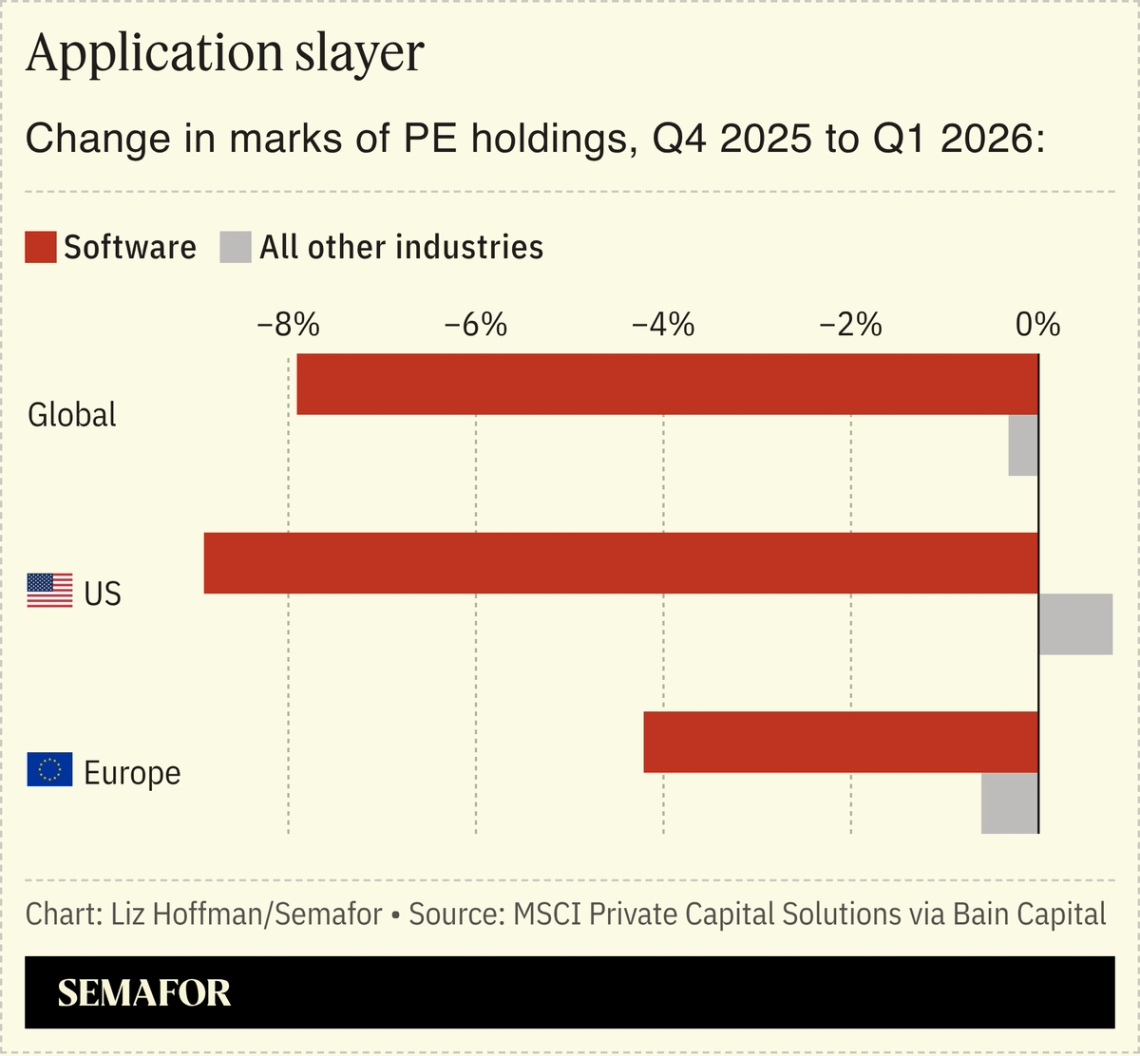 The watchlist for the next Medallia is growing but not alarmingly long. The SaaSpocalypse sentiment is easing, at least in the public markets. The enterprise software industry faces real challenges from AI, and the crop of 2021-2022 LBOs in this space will age badly; keep an eye on Coupa, a 2022 Thoma Bravo take-private, Zendesk, and Hellman & Friedman/Permira buyouts of the same year. But that’s fine. Lenders will take the keys and private equity will take its lumps, as designed. |
|
Warsh moves Fed back behind the curtain |
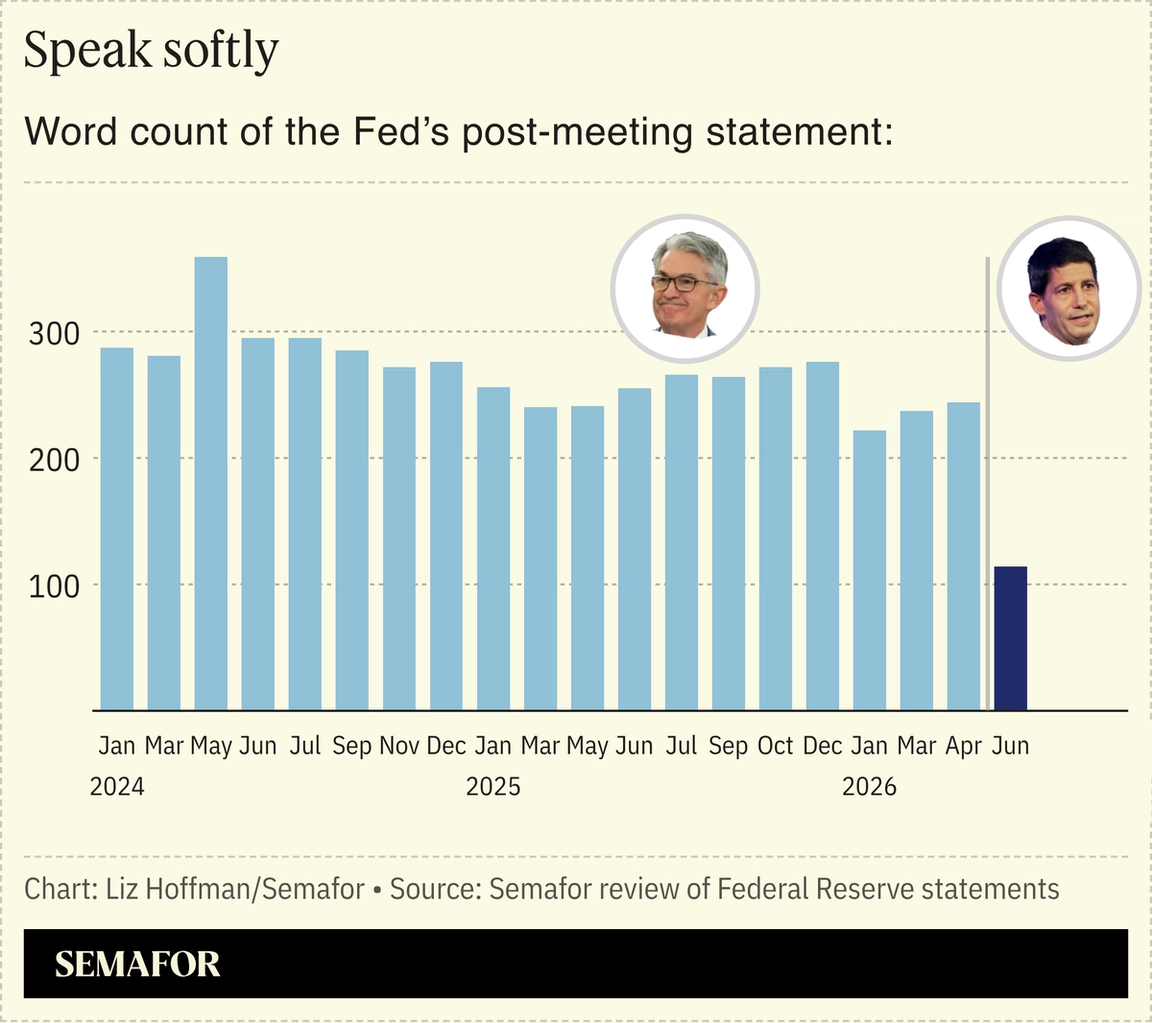 The Federal Reserve’s Warsh era began with a whimper. The US central bank held interest rates steady yesterday, as expected, with none of the noisy internal dissent of recent meetings. Its new chair, Kevin Warsh, followed through on his longstanding belief that the central bank should talk less. He didn’t submit a forecast on where interest rates are headed — the vaunted “dot plot” was one dot short of the usual 19 — and revamped its policy statement to be “a bit shorter, a bit simpler.” Warsh thinks the Fed’s post-2008 shift toward transparency overfed the market and locked it into stale positions. He prefers the ambiguity of the Greenspan years, which gave the Fed room to maneuver without dinging its credibility. |
|
View: Iran’s energy weapon worked |
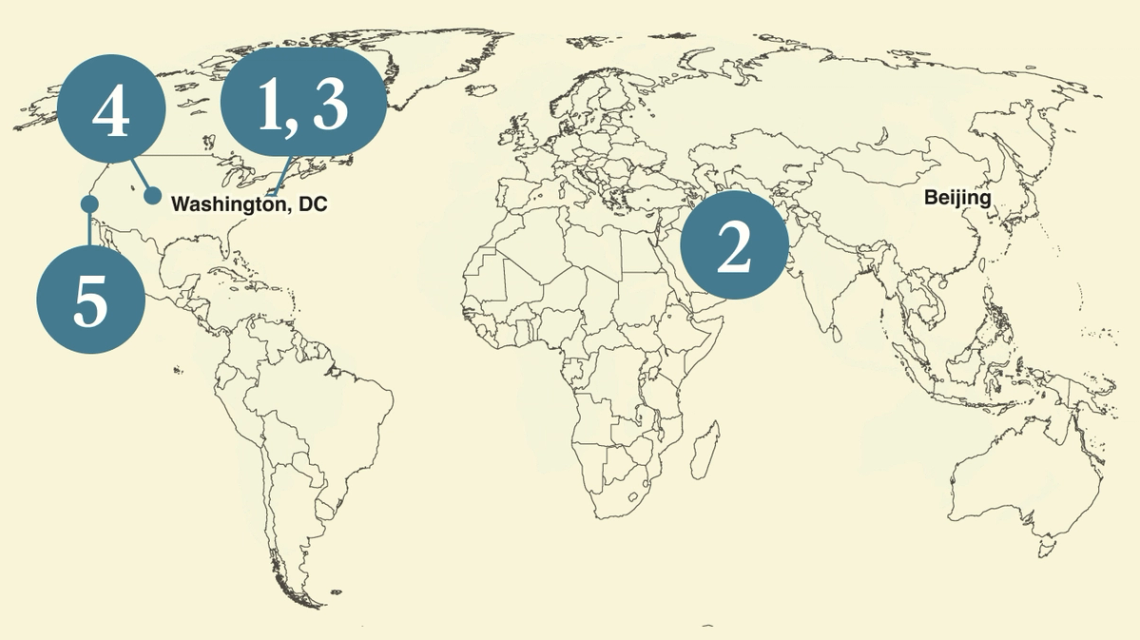
 Majid Asgaripour/WANA via Reuters Majid Asgaripour/WANA via ReutersThe war in Iran showed that the flow of global oil can be a weapon strong enough to match the world’s biggest military. But for how long? Tehran was able to bully Washington into a deal that changes little of the prewar status quo and will see the US back a $300 billion reconstruction fund that critics say will entrench hardline clerics. But the weaponization of the Strait of Hormuz is a “wasting asset,” one former security official told Semafor’s Tim McDonnell. Like every military asset, every time the energy weapon is used, the other side improves its defenses: Consumers, CEOs, and political leaders have reduced their exposure to fossil fuels and found cost-saving offsets elsewhere. In the years ahead, the leverage available to Iran will likely diminish — to “zero,” if the Emirates have their way. So will America’s ability to use domestic drilling as a shield or cudgel: “I don’t see many countries in the developing world, especially at this moment in time, trusting 100% of their energy security to the US,” an executive from American LNG exporter Cheniere said this week. |
|
Intel-Apple deal announcement surprised execs |
 Dado Ruvic/Illustration/File Photo/Reuters Dado Ruvic/Illustration/File Photo/ReutersPresident Donald Trump’s late-night Truth Social post announcing a US chipmaking deal between Apple and Intel sent shares of the chipmaker surging 9% in Thursday trading. Among those surprised were Intel’s own executives. Intel and Apple have been in talks about a deal to manufacture some chips in the US for months now, a person familiar with the matter said. The status of those talks could not be learned. An Intel spokesperson declined to comment on Trump’s announcement. An Apple spokesperson didn’t immediately respond to a request for comment. The US government last year took a large Intel stake, which was worth about $9 billion at the time. The stake is worth about $67 billion today. “When I walked in the door, they were a dumpster fire,” Commerce Secretary Howard Lutnick told Semafor in April. Now, “the fire’s out.” — Rohan Goswami |
|
 The Hustle is business as unusual. Get bold, bizarre, and brilliant stories from the far corners of the business landscape — no ads or recycled headlines. Join more than 1.5 million readers who are thirsty for new ideas and find traditional news boring. Subscribe now. |
|
Vail asks its bankers for help |
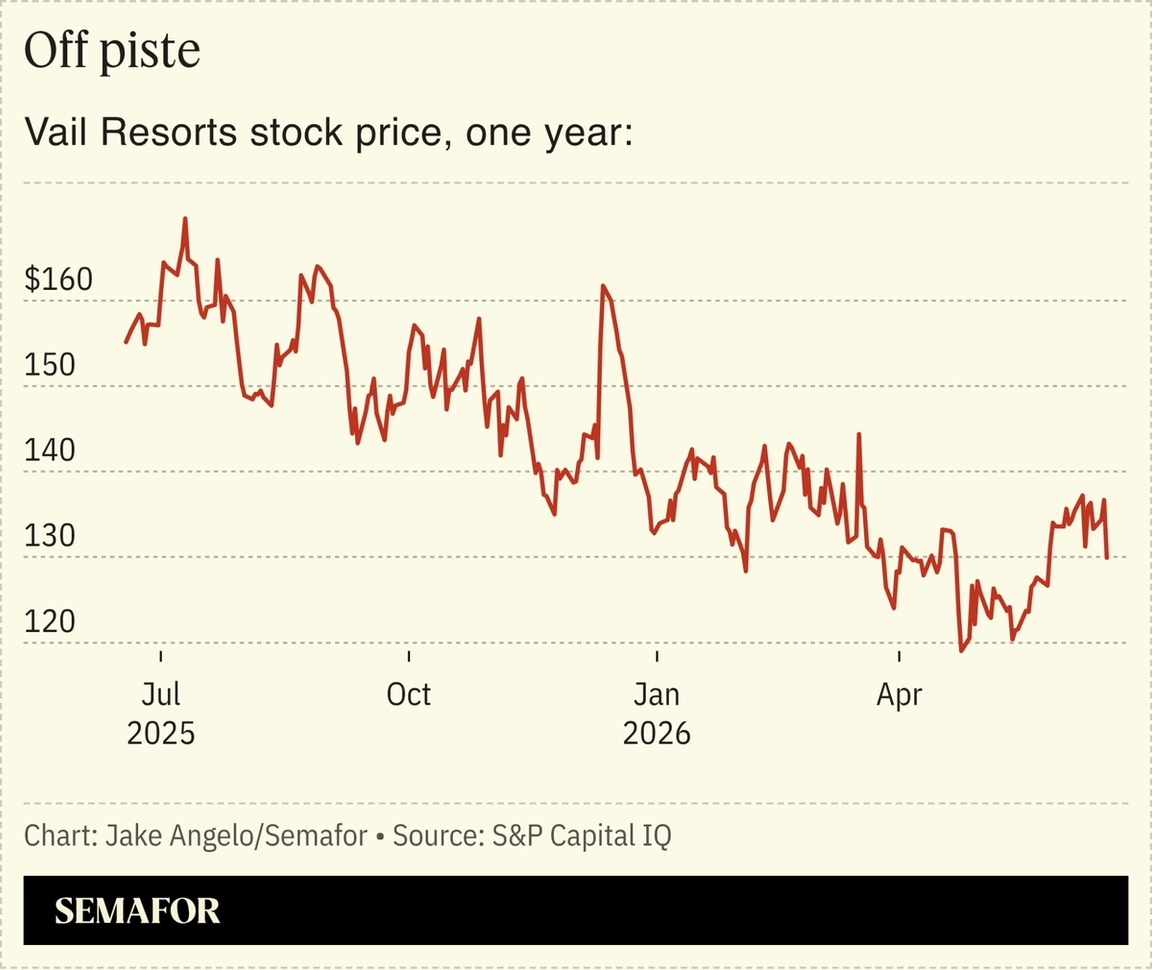 Vail Resorts is working with takeover-defense bankers to help it assess its vulnerabilities to everything from labor groups to an outspoken billionaire to Mother Nature itself, according to people familiar with the matter. No activist investors have made a play for the company, shares of which are down 14% over the last year. But there are signs it is preparing for such an event: In May 2025, Vail brought back Rob Katz as CEO, ousting his hand-picked successor. Katz has also been contending with Park City local (and Cloudflare billionaire) Matthew Prince, who has been pushing Vail to sell him Park City Mountain Resort since last spring. In June, Prince told a local Colorado paper that he was willing to invest $500 million in the resort, and said he has gotten calls from activist investors about Vail. He believes that the resorts company should pursue an asset-light model, serving as a partnership facilitator rather than an owner of mountains. Some of Vail’s conversations with its advisors have focused on Prince’s interest in the company, according to a person briefed on those conversations. — Rohan Goswami |
|
Anthropic chooses the path of most resistance |
 Jessica Koscielniak/Reuters Jessica Koscielniak/Reuters
Anthropic is once again in the crosshairs of the Trump administration. None of this is necessary. Anthropic isn’t fundamentally opposed to the current administration’s economic goals, Semafor’s Reed Albergotti writes. It isn’t the “woke” or anti-capitalist caricature that the administration and its allies like to think. It’s a startup on the precipice of a $1 trillion IPO that wants to make money and share at least some of the spoils of the AI boom. But the company has consistently miscalculated its communications, both with the Trump administration and the general public. CEO Dario Amodei’s comments about AI wiping out jobs stoked fears, rather than framing AI as a force of economic growth in a country that has the chance to lead the world on AI development. Its spat with the Pentagon hinged on the use of AI in mass surveillance of US citizens — something the military can’t legally do anyway. And by staking out the AI-safety moral high ground, Anthropic invited its current problem with Mythos and Fable 5, projecting a sense of locked-down security that surprised the US government when the model was inevitably jailbroken. In all of these instances, a compromise for uniformity was there for the taking. But Anthropic’s decisions to fight these battles set the company up for conflict. Amodei’s comments this week at a summit of world leaders, where he told them to “resist the urge to splinter,” are a step in the right rhetorical direction. |
|
 On Thursday, June 25 at Google Beach in Cannes, Semafor Editor-in-Chief Ben Smith and Media Editor Max Tani will sit down with Alex Cooper, host of Call Her Daddy and founder of Unwell, for a special live taping of Mixed Signals. The conversation will examine the radical changes in the media landscape through the lens of one of the industry’s most influential creators and entrepreneurs. June 25 | Cannes | Request Invite |
|
➚ BUY: Off-ramps. Oil prices fell to their lowest point since the start of the Iran war, and there’s talk of an oil glut in the back half of this year. ➘ SELL: Exits. Private equity firms are still having trouble selling the 33,000 companies they own, a record backlog, per Bain, though a resurgence in IPOs holds out some hope. |
|
 Companies & Deals- Fighting words: FT columnist Robert Armstrong ponders the point of Berkshire Hathaway, and whether it should change its model with Buffett gone and its performance edge eroded by soaring AI s
|
|
|


