Policy changes, but facts endure. AP delivers accurate, fact-based journalism to keep the world informed in every administration. Support independent reporting today. Donate. |
|
|
By Holly Meyer and David Crary |
|
| |
|
By Holly Meyer and David Crary |
|
| |
|
Greetings, World of Faith readers.
This week, we look at the World Cup players who readily share their faith, and how mistrust and misinformation induce some people afflicted with Ebola in Africa to seek healers instead of hospitals. Also, the Church of England has apologized for the role it played in forced adoption. |
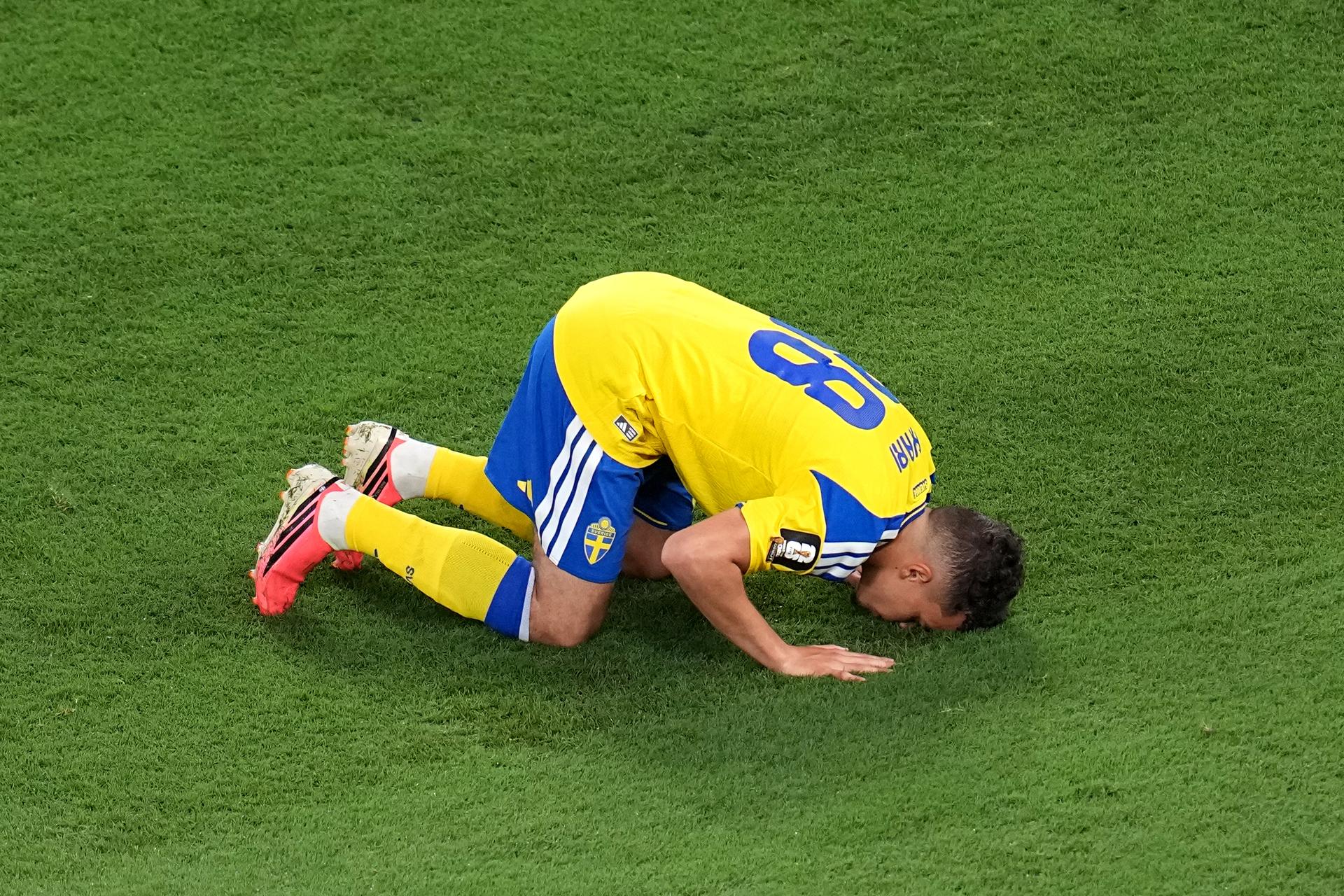
Sweden's Yasin Ayari celebrates after scoring the opening goal in Sweden's World Cup victory overTunisia in Guadalupe, near Monterrey, Mexico. (AP Photo/Dolores Ochoa) |
World Cup squads showcase faith and unity amid deep social divisions at home |
While many of the World Cup’s competing nations are wracked by social divisions, some of the teams offer strikingly positive examples of how players from different backgrounds can cooperate. The phenomenon is particularly notable among Western European teams. As those societies have diversified, so have the national team rosters — they feature Christian and Muslim players who are open about their faith. Read more.
|
|
|
England’s national squad for the first time includes a Muslim. France’s roster has players with Protestant, Catholic and Muslim backgrounds. Spain’s emerging superstar, Lamine Yamal, is a practicing Muslim. So is Sweden’s Yasin Ayari, who scored twice in a victory over Tunisia.
All four of those nations — like several others in Europe — have experienced political polarization related to the arrival of large numbers of Muslim immigrants. In some quarters, there are hopes that the diversity of the World Cup teams might ease the divisiveness. - Among the stars who’ve been open about their faith are Mohamed Salah of Egypt, Luka Modrić of Croatia, and Christian Pulisic of the U.S.
|
|
|
Africa's Ebola outbreaks are complicated by victims who prefer traditional healers over hospitals |
Whenever Ebola comes, some of those stricken choose the road to the nearest hospital. Others, often with devastating consequences, view the virulent fever as a spiritual event and take the path to the shrine of a traditional healer who can prescribe herbs or offer prayers. This is the case now in Congo, which is suffering its seventeenth outbreak of Ebola since 1976 in a remote eastern region. Read more.
|
|
|
Five decades later, the virus continues to mystify many of the sick in Africa while turning religious leaders into first responders in a deadly emergency. The current outbreak’s victims include health workers without protective gear as well as pastors and worshippers who gathered while Ebola was spreading.
Ebola spreads through close contact with sick or deceased patients’ bodily fluids. The current outbreak is particularly worrisome in a region where many are distrustful of health workers and refuse to seek care.
The disease is challenging in communities with deep religious faith. People insist on burying the dead according to established custom. Pastors who stake their authority on the ability to heal the sick are expected to perform. Traditional healers face similar hopes.
|
|
|
Church of England apologizes for role in forced adoptions |
The Church of England has apologized for its role in forced adoptions as recent as the mid-1970s, acknowledging the painful experiences of many unmarried women at so-called mother and baby homes in the U.K. that were affiliated with the church. Archbishop of Canterbury Sarah Mullally, the first woman to lead the church and the person seen as the spiritual leader of the global Anglican Communion, issued the apology as the church released a report on conditions at the homes. Read more.
|
|
|
Many women and girls were forced to do menial labor as a form of “correction’’ for having children out of wedlock, and their babies were sometimes described as commodities available to meet the demand for adoption, the report found.
During the period covered by the report, about 185,000 children born to unmarried mothers were put up for adoption in England and Wales. It was a time when a “culture of shame, stigma and secrecy” surrounded unmarried mothers and their children, even as attitudes about sex and marriage were changing, the report said.
While church policies emphasized that unmarried women had the right to keep their children and the children had a right to remain with their mothers, staff often ignored this guidance and worked closely with adoption agencies, researchers found.
|
|
|
|