Don’t stop the clock on 60 Minutes, Bangkok’s luxury real-estate boom, and we explore artist Paula Rego’s work in Cascais.
|
Monday 22/6/26
|

|
|
London
Paris
Zürich
Milan
Bangkok
Tokyo
Toronto
|
|
|
|

Good morning from Midori House. For more news and views, tune in to Monocle Radio or visit monocle.com. Here’s what’s coming up in today’s Monocle Minute:
THE OPINION: Don’t stop the clock on 60 Minutes
PROPERTY: Bangkok’s luxury real-estate boom
HOUSE NEWS: Monocle Radio at Almedalen Week
DAILY TREAT: Explore artist Paula Rego’s work in Cascais
THE LIST: Stories you might have missed
|
|
Storied US news programme ‘60 Minutes’ might be old but it doesn’t need to change
By Tomos Lewis
|

|
The recent upheaval at 60 Minutes – the US’s longest-running news programme, which airs on Sunday evenings on CBS – amounts to a straightforward political story. In October 2024, Donald Trump, who had long characterised much of the mainstream media as an “enemy of the American people”, sued the network over a pre-election interview with Kamala Harris on the show that, he alleged, had been edited to make her look better. He demanded $10bn (€8.7bn) in damages and called for CBS to be stripped of its licence. In July 2025, in an attempt to appease the president and usher in new, deep-pocketed owners, CBS’s parent company, Paramount, agreed to a $16m (€14m) settlement. A new senior editorial team was installed soon afterwards. Helmed by columnist and TV news novice Bari Weiss, the change has steered 60 Minutes towards more White House-friendly territory.
Cue the unceremonious firing of long-serving senior staff; the decision to allow Israel’s prime minister, Benjamin Netanyahu, to cherry-pick his interviewer; and the showdown between incoming executive producer, Nick Bilton (also a TV newbie) and seasoned correspondent Scott Pelley, which led to the latter’s firing by email.
| |
|
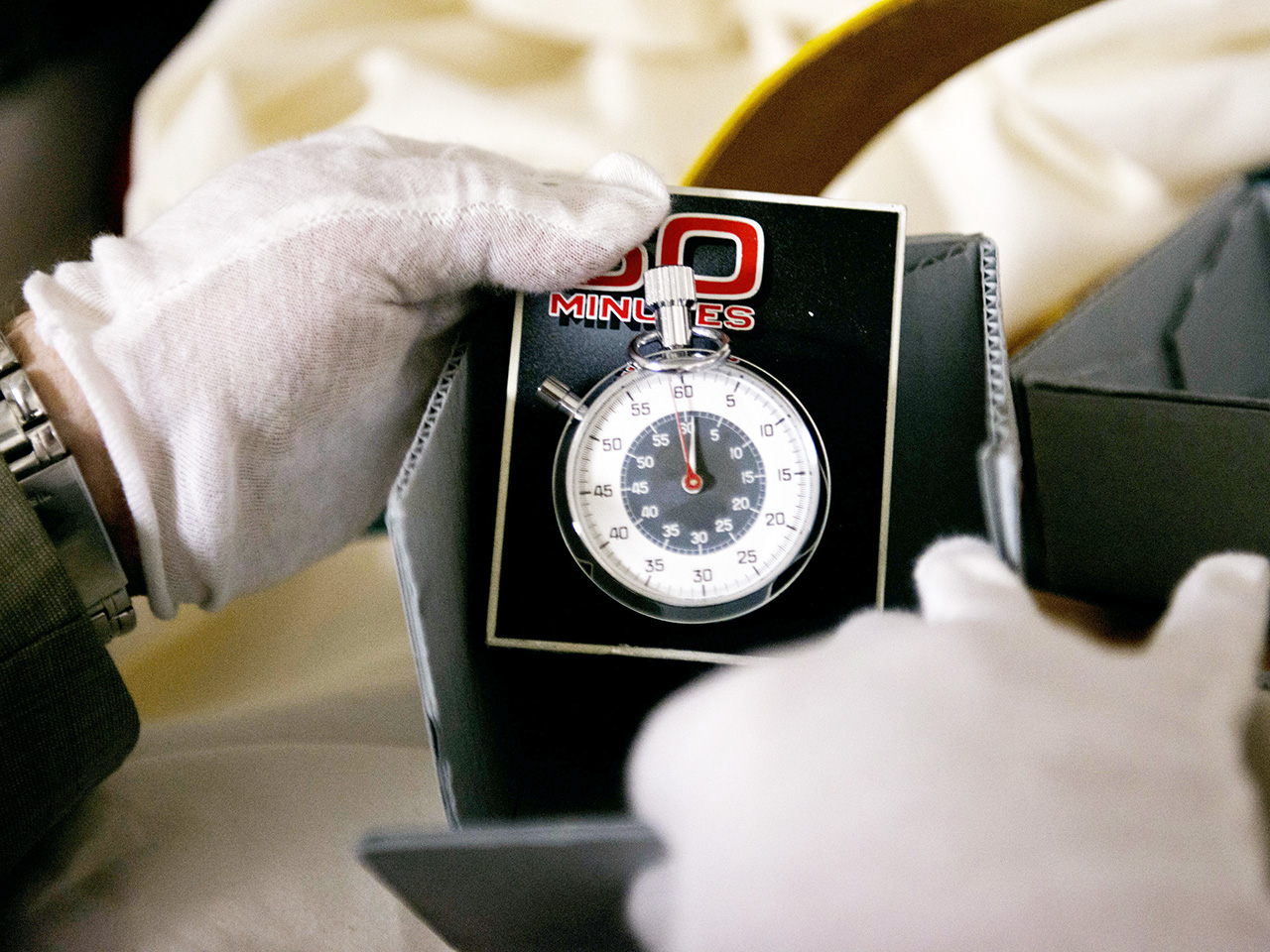
Final countdown? The original stopwatch from ‘60 Minutes’
|
|
Yet this almost 60-year-old show, with a format hardly tinkered with until now, is still the most-watched news programme in the US. And its audience still seems to be growing. It has forged a reputation as television journalism’s north star for good reason. Within the parameters of its famous format – the motif of a ticking stop-clock, the scripted segment introductions – 60 Minutes has continued to reshape the idea of how to report the news on TV and which stories to tell. Nielsen, the ratings-tracking agency, reported that the number of viewers tuning in had increased by 9 per cent over the past year.
“It’s a very old-fashioned formula,” the programme’s then executive producer, Bill Owens, told me in Toronto in 2023. (Owens resigned in April 2025, citing concerns over editorial meddling in the output of 60 Minutes under Weiss’s stewardship of CBS News.) “It hasn't changed at all over 55 years,” he added. “We’ve profiled everyone from Beyoncé to Bruce Springsteen. Actors, thieves, poets – you name them. People scream and curse at us from the right and the left. We like it that way. That’s why we remain important in the lives of American news audiences. It’s part of the fabric.”
Well-established news formats have an advantage over newer ones when it comes to their relationships with audiences: trust. The assumption that a long-standing title, particularly if it’s still popular, must be reinvented just because it is old couldn’t be lazier. A newsroom is only as strong as its bond with its viewers. Once that’s lost, it’s difficult to get it back.
Yes, audiences are changing. Owens acknowledged this. “It’s challenging,” he said. “We’ve also lost share of the audience but that’s because the entire broadcast television audience has gotten smaller. Where we have seen dramatic gains are on our digital platform and our Youtube numbers have doubled this year. If people are still getting the quality journalism that 60 Minutes has been bringing people for more than five decades, they’ll continue to tune in.”
But changing tastes need to be catered to carefully, particularly in a news ecosystem where information, often of dubious origin, is more readily available than ever. Under its new management, the clock appears to be ticking on one of the US’s most successful and lucrative news formats. It would be a mistake to let it stop entirely.
Tomos Lewis is Monocle’s Toronto correspondent. For more opinion, analysis and insight, subscribe to Monocle today.
|
|
property: thailand
Capella Hotel Group unveils a healthier vision for real estate in the Thai capital
Despite Thailand’s sluggish economy, Bangkok’s luxury property sector is in fine fettle (writes James Chambers). The latest international brand to enter the market is Singapore’s Capella Hotel Group, which is already a well-established name in the city’s hospitality scene, thanks to its award-winning riverside hotel. The group’s new president, Roland Fasel, was in town on Friday to announce the first Capella residences in the Thai capital, overlooking Lumpini Park. While all high-end developments promise comfort, luxury and security, this one goes a step further by helping residents to lead healthier lives. It’s a noble objective: after all, reaching 90 is only fun if you can still enjoy walks in the park.
| |
|
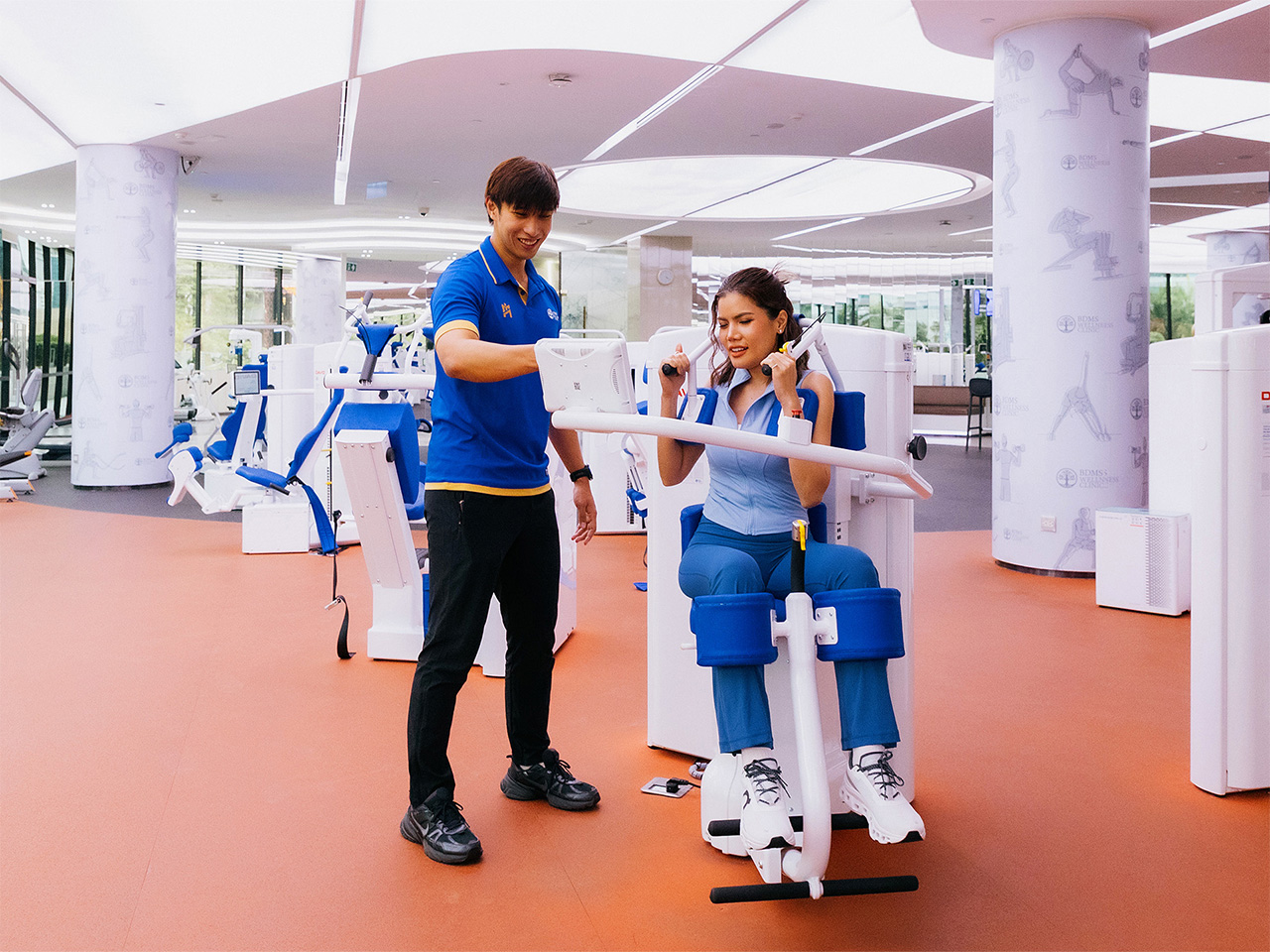
Core principles: BDMS Wellness Clinic
|
|
For the project, Capella is partnering with BDMS Wellness Clinic, part of Thailand’s leading private hospital network and health-care provider (for more on BDMS, pick up a copy of our July/August issue, out on Thursday). The 262 residences in Lumpini will form part of Wellera, a vast health-themed complex that will include a clinic, retail, fitness studios and restaurants. The ambitious development will consist of two connected towers designed by architecture practice KPF. It will cost about €1.2bn and is expected to be completed by the end of the decade.
Fasel frames Wellera as the next stage of luxury hospitality. Wellness is the fastest-growing travel sector and many affluent globetrotters already expect treatments and services to be tailored to their personal health goals. Residents at Wellera will have access to a concierge, nurse stations, regular health checks and a helicopter on standby. The goal is to turn looking after our health and wellbeing – via a suite of blood tests and body scans – into a daily routine, rather than something that we only focus on during a retreat or detox. Sounds like a habit worth picking up.
For more on Capella’s riverside hotel in Bangkok, buy a copy of ‘Thailand: The Monocle Handbook’.
|
|
house news: gotland, Sweden
Monocle goes to Gotland for Sweden’s biggest political forum
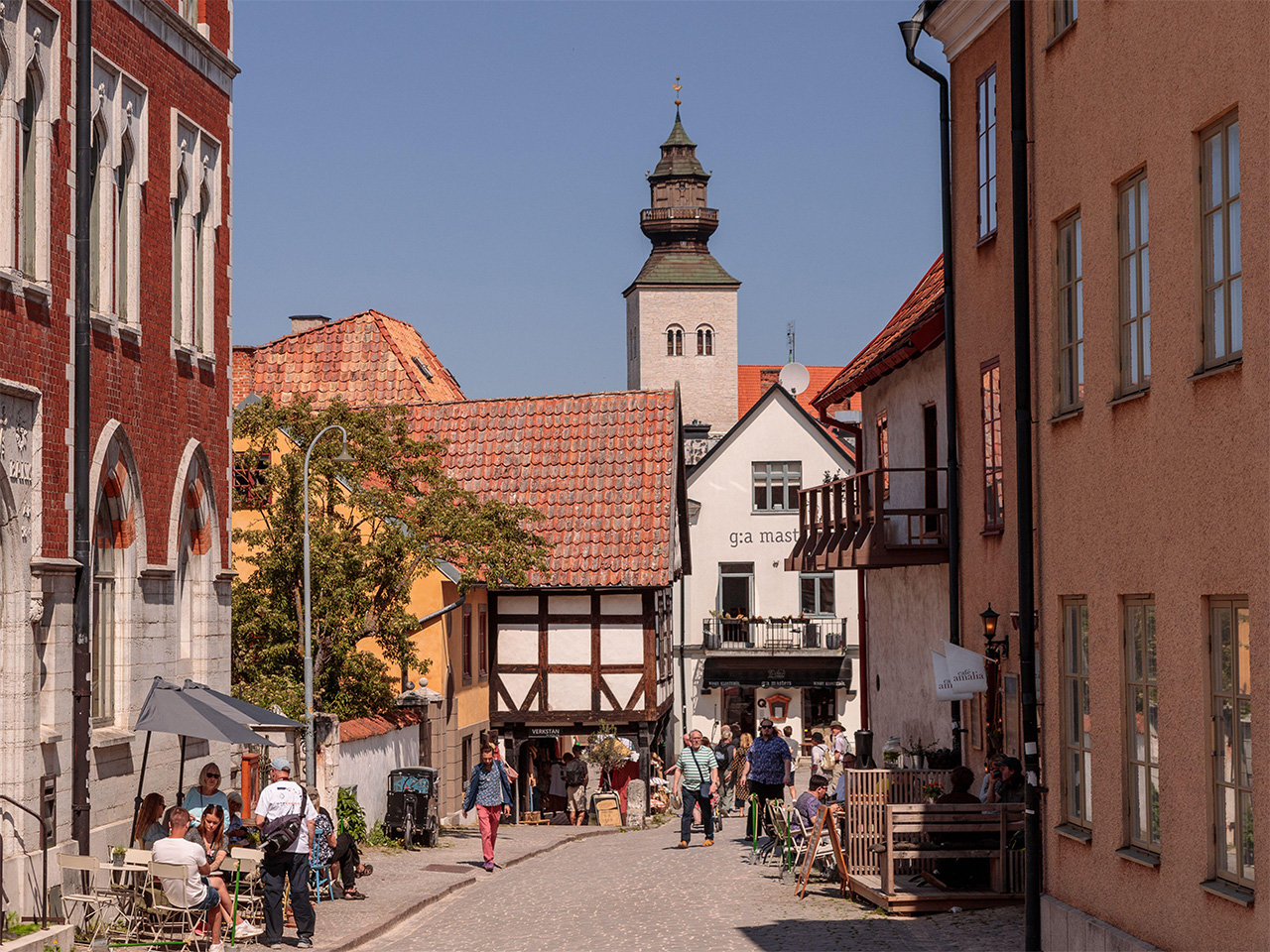
This week the Monocle Radio team is in Gotland (writes Andrew Mueller). The occasion is Almedalen Week, the annual Swedish political jamboree that involves representatives of all of Sweden’s parties, in government and out, who gather to talk, argue and network in a park in Visby, Gotland’s biggest town.
| |
|
Meeting of minds: Visby, Gotland, Sweden
|
|
Almedalen Week dates back to the 1960s, when Olof Palme, later a long-serving prime minister, took time out from his family holidays to address passing Gotlanders. It is now attended by more than 30,000 people – a select few of whom will be fished from the throng to appear on our programmes.
On Tuesday and Thursday, The Monocle Daily will broadcast from Visby. We will also collect interviews for all our news shows and the coming episode of The Foreign Desk. On Wednesday night there will be an event in association with our sponsors, Hitachi Energy. It will be Monocle Radio’s first time at Almedalen. We’re not entirely sure what to expect but we’re looking forward to it. And if you will be there yourself, come say hello – we’re at Donnersgatan 6.
|
|
• • • • • DAILY TREAT • • • • •
Pay a visit to Paula Rego’s playful Casa das Histórias
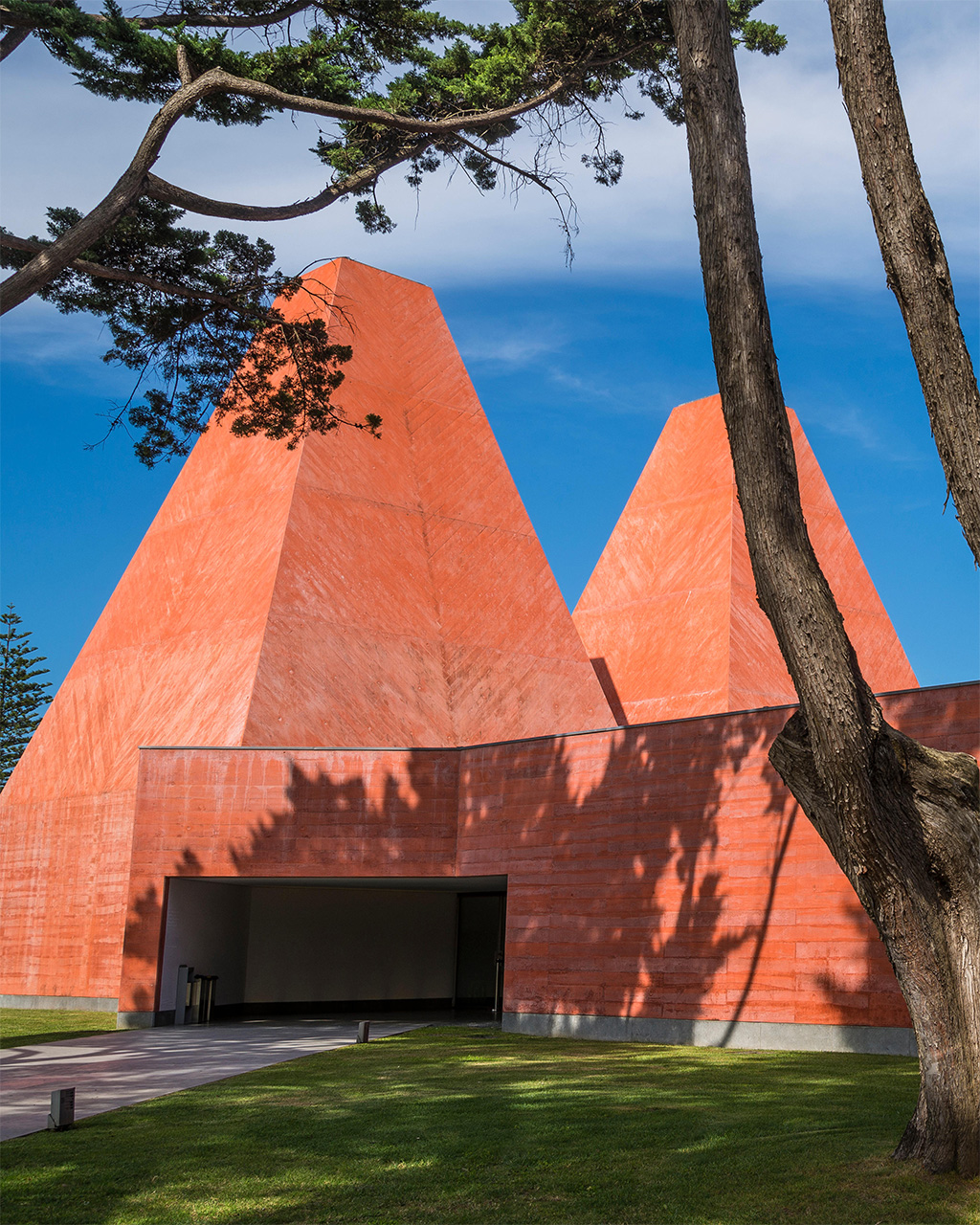
When the late Portuguese-British artist Paula Rego was looking for an architect to design a home for her work, she hoped for something “fun, lively and mischievous”. Rego chose Eduardo Souto de Moura, renowned for his minimalism and bold forms, for the task.
The result is dazzling: a temple in terracotta-toned concrete that’s both playful and calm. Opened in 2009, the Casa das Histórias Paula Rego comprises four wings arranged around a central exhibition space. Most striking, however, are its two pyramid-shaped towers. The contemporary structures were inspired by the white conical chimneys of the Palácio Nacional de Sintra. If you’re in Cascais, it’s not to be missed.
visitcascais.com
|
|
the LIST: FROM monocle.com
City Guides you need to check out
|
|
| | |